

Day 11
Return to Lhasa I
We're returning to Saga: the monastery of Darhyeling with its law tablets... Buddhist.
From Darchen to Saga
These achievements don't restore energy to the body, and the altitude sickness isn't a psychological feeling that can be overcome with a dose of good cheer. The alarm clock finds me awake and ready to go again. Today we will spend most of the day sitting, until Saga. We will make just a few short stops to stretch our legs and comply with the local speed regulations. For lunch, we'll stop at a teahouse where you can get a glimpse into local society. The management is typically "family-run": a mother with three young children opens the door for us, and we sit down at the table while they offer us tea. At the end, we will leave whatever remains, plus a tip for the service. This is how things are done around here. Some of the tents are blue. with Chinese writing and were distributed after the earthquake. They are insulated against the cold, have solar panels that charge a battery, which is used to power things like cell phones, TVs, radios, etc. Nomads come here for the season and act as makeshift campsites. They were particularly useful until a few years ago when it took only two days to travel from Saga to Darchen. Not to mention the 1990s, when due to the lack of roads, an adventure could take even a month. The few routes were unpaved roads that required fords and other dangerous paths.
Teahouse and monastery of Dargyeling
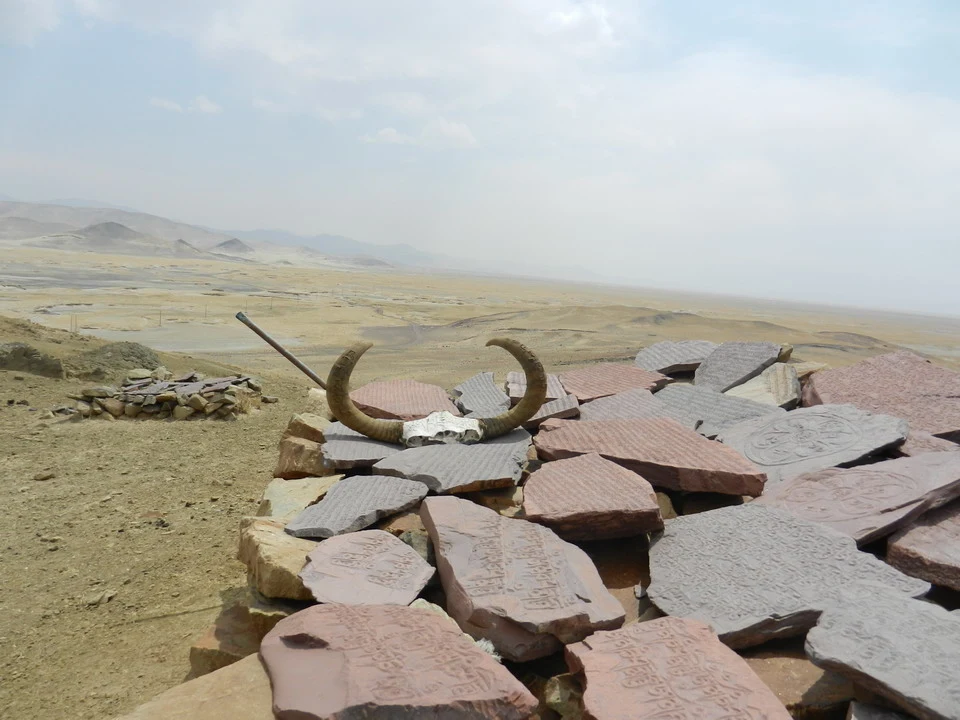
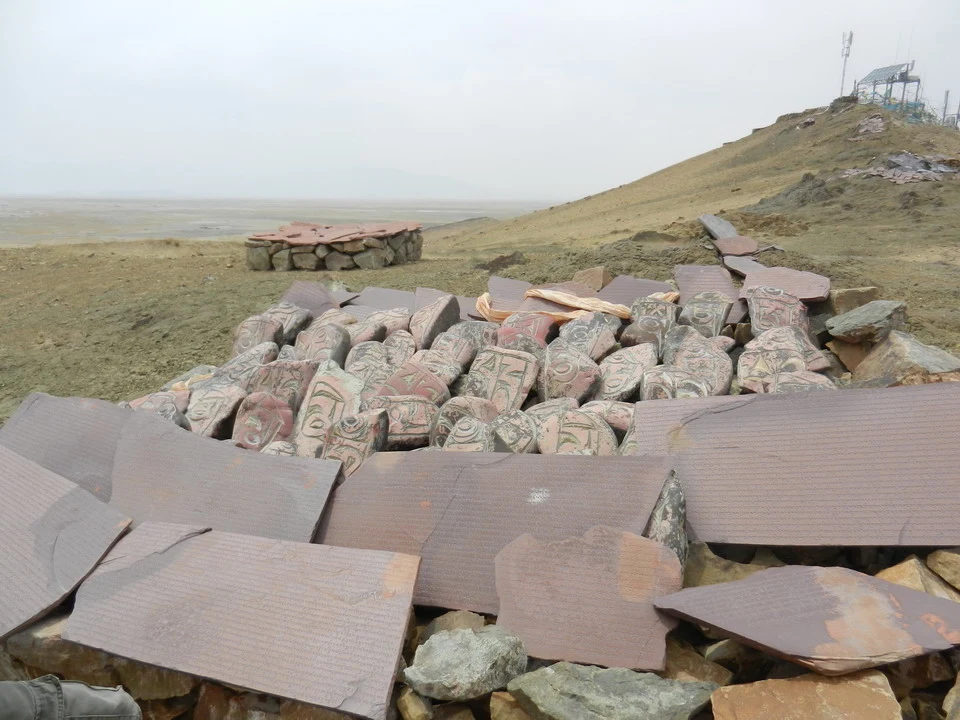
Here follows a pleasant break from... Dargyeling monastery, located on a hill where we could say are Buddhist law tables. Actually, it's full of loose stones on which I am un set of incomprehensible mantras but harmonious to our eyes. Some are in high relief, others in low relief. Occasionally, you can see the skull of a yak with its auspicious meaning. We attract the curious gaze of the artisans who are renovating the monastery, while we remain equally impressed by their manual skills, which have long been lost in our latitudes. Around 6 pm, we cross the last hill that includes today's route and reach Saga. The hotel has almost new rooms and even exaggerated for this sad town at 4,600 meters, while the bathrooms still need to be renovated and still have the "old style". The only problem is that there is no water, which is obviously secondary for the austere Tibetans, but essential for Western purposes. We stage a near-cultural revolution and the hotel managers are able to reassure us by offering a shower in the public restrooms nearby. The compromise suits everyone, and we end the evening in a Chinese restaurant, where the Chinese community is now the majority, even in the small town of Saga. Saying that there is nothing to see perfectly describes the existing landscape; living here would be more than a nightmare. Despite the thermal blanket, we wake up at 9 degrees in the morning, fortunately we didn't measure the temperature before going to bed.


