Day 8
Saga
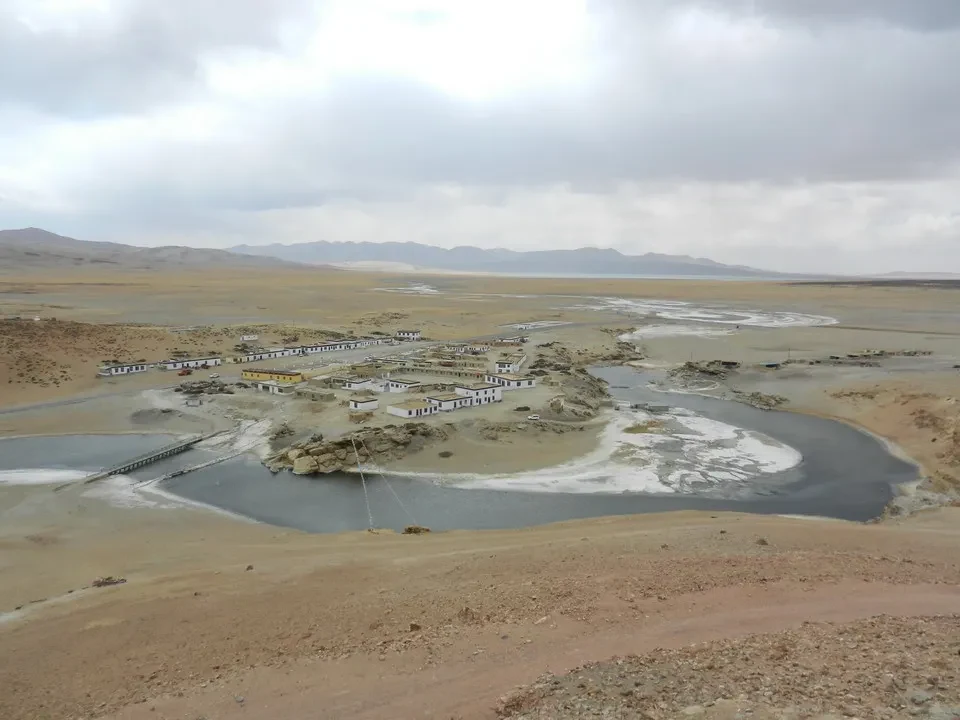
Transfer to Saga, a desert at 4600 meters, and difficult lives (ours and those of the locals).
From Saga to Darchen
Another day of traveling, although the arrival in Darchen doesn't involve a significant altitude difference, which is already a positive aspect. Departure at 8:00 AM. sand desert, small villages, stray dogs wandering around, herds of yaks grazing in the emptiness, a straight road through low mountains, even though we are at 4,600 meters. Checkpoint at Zhongba, we need to cover 110 km in 1.55 hours. We have been traveling for two and a half hours and are already at the fourth exhausting checkpoint. Every time, we have to get out and present our documents. So far, no one has asked for our passports, but it's just a matter of time. The landscape doesn't change; monotonous, flat steppes alternate with rare herds and some houses along the road. We stop for about half an hour at the dunes, which offer a more purely desert-like experience. They are not very extensive, but it's another way to pass the time between checkpoints. The morning fog doesn't allow us to see far, but we find ourselves at the source of the Yarlung Tsangpo River, also known as the Brahmaputra. Afterwards, we stop in a village that is divided by both sides of the road, to help us pass the time while being checked for speed. People are busy with household chores, dogs wander from side to side, and there are several billiard tables under the sun. It seems that this sport was introduced by the Chinese to give Tibetan people leisure activities. They can relax after work and think about other things. Lunch at a tea house; the name might even sound misleading if combined with the logo we have in mind as Europeans. The tea is served with added salt from a thermos, while the "house" is simply a nomadic tent. Once the linguistic aspects are clarified, we can say that these are positive experiences, but especially life lessons that should be remembered when we return home. Even though we don't have the opportunity to talk to the locals, it's always nice to spend time with them and see how they live, learning details about their way of life. This could also be a mutual feeling, but we can't ask. We consume the picnic that our cook has prepared skillfully, while drinking salty tea. We don't eat much, but this is mainly due to the altitude and our weakened physical condition. These are all secondary experiences that shape a journey, making it real and helping us grow by improving ourselves if we are able to understand them. In the meantime, outside, light snow begins to fall, at the same time fine and dense. It's dry snow that immediately settles on the ground and then evaporates without leaving any trace of moisture.
Manasarovar, Chugompa and the first view of Mount Kailash
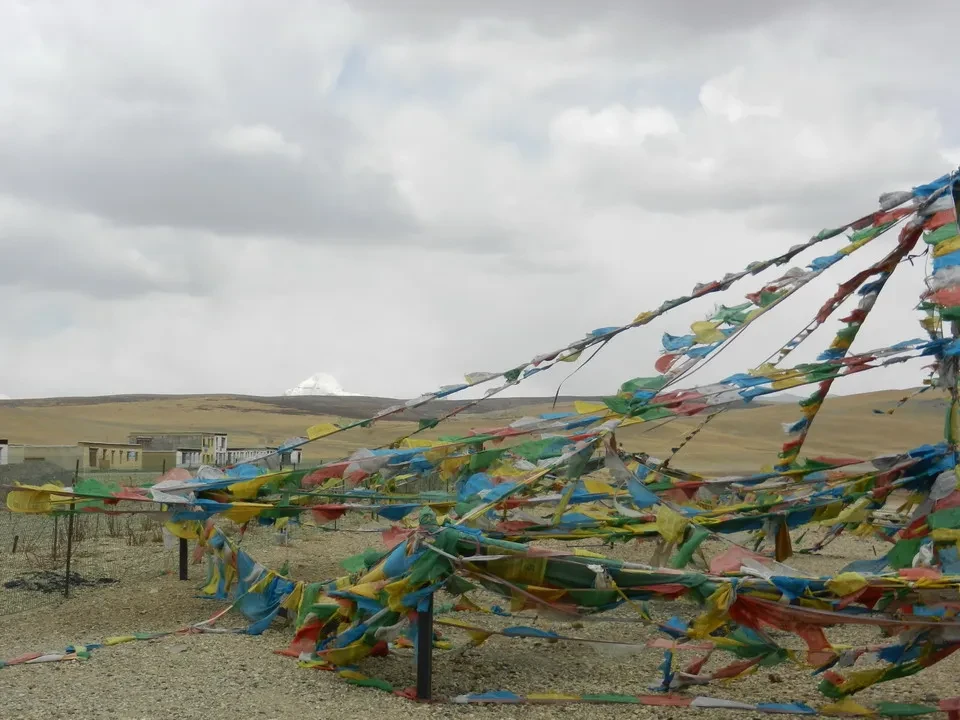
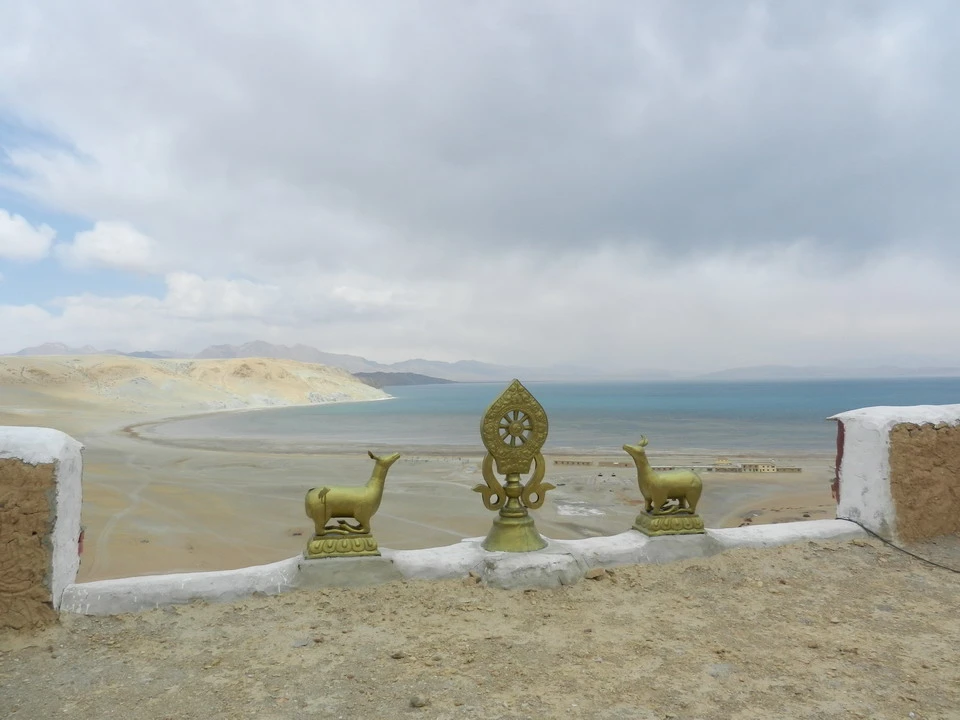
We continue our journey towards Horchu, which is the first point from which you can see the Kailash. It's just as in the photos, towering with its white peak that cuts across the horizon. The veil-like appearance gives it further sacredness. We are standing before the Mountain, for which we undertook this challenging journey, silent and awestruck in its presence while around us... the prayer flags flutter Some pilgrims knelt down, while we remained still, almost mesmerized. A few photos and then we continued to the banks of the... Manasarovar lake: the light isn't great, the pearly sky makes it difficult to see. crystal-clear view of the waters but we are always facing the sacred lake and, respecting it, we stop. The Chugompa monastery It offers a glimpse of just a few hundred meters inside, inviting us to test our hiking skills at higher altitudes. We then follow the road leading to the viewpoint and discover that we can climb the 80 meters without getting winded.
Darchen and the eve of Kora
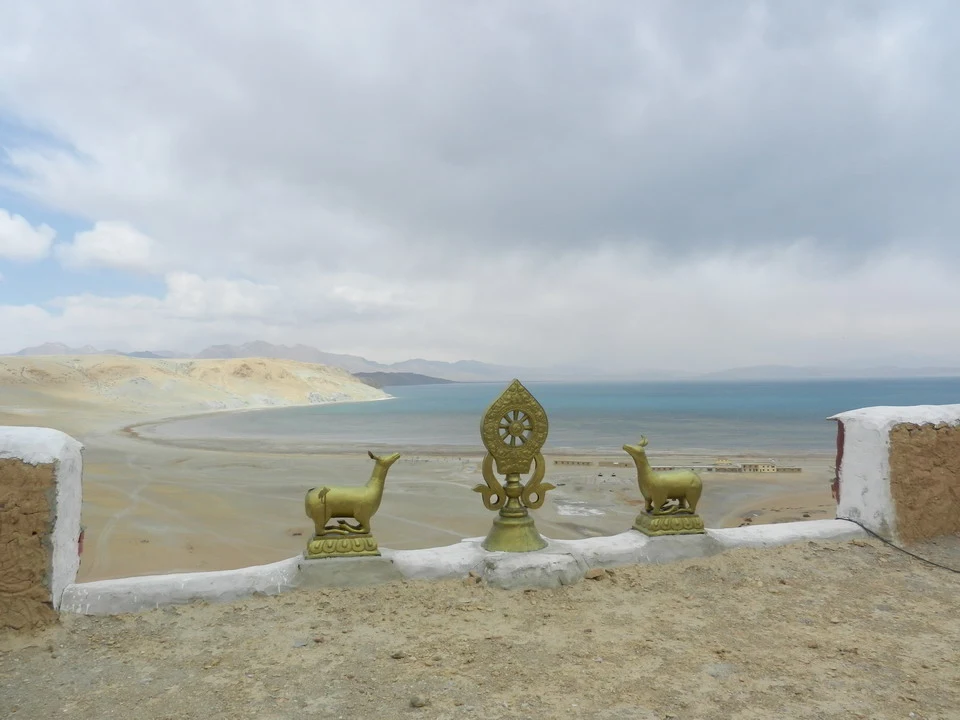
Over the next few days, things will be more challenging, but we'll start well. The monastery doesn't offer much to see besides the stunning view of the lake and the village below. In the distance, Mount Kailash watches over the visitors who have approached it respectfully and from tomorrow, they wish to circumambulate it, completing their kora. We ask him for permission to approach and to allow us the strength to complete the circuit, and we show respect not only to him but also to what he represents. It's difficult to feel the same way about the government authorities who insist on checking passports, visas, documents, and various cards at every moment. The distance from Darchen is no longer great; here, we will set up our small base for the three-day Kailash pilgrimage. The hotel where we are staying. It's modern, airy, and situated against the mountain as if it were a monastery. The small rooms are carefully furnished, with a thermos of hot water on the bedside table between the two beds. Simple but tidy, in a place where luxury is absent but essentials are not lacking. The dining room is heated with yak manure, which provides the necessary energy for the day. The rooms also have stoves, but they are not used. There was an unwelcome issue when it became doubtful whether we could use yaks to transport food and bags in the coming days: it's early season, and they might not allow it. In any case, the path is snowy, and it's likely that the animals won't be able to complete the entire loop. As always in these cases, everything is referred back to government authorizations. We responded that it doesn't matter at all whether or not the yaks are stamped, the agreement is that there will be human or bovine logistical support, and that must be respected. The Tibetan guide only raised this issue now, when the program had already been defined for months, and he will have to resolve it himself. Everything was resolved quickly; the permit appeared, and the yaks arrived tomorrow. If we can't get them to cross the Drölma-la due to the snow, we will find a way, we don't want anyone to suffer. The cook just arrived with his truck and immediately started making us tea, then he began cooking. He also found accommodation in a nearby place, and seeing him sitting there, stirring pots and pans between one pot and another without burning anything, is impressive. On the truck that passed through Kerung, with all the usual customs complications, they brought everything: from gas to stoves, to pots, to every kind of ingredient. Including those suitable for sensitive Western stomachs, to allow a more comfortable approach to Kailash. What more could you ask for from people who can even anticipate your needs? The term "professional" wouldn't be appropriate, as they are unable to fully understand the true value of these young people. It would be shameful not to finish the dishes that are offered, but eating everything would be detrimental the next day and the night itself. Let's try not to overdo it; no more beer tonight, a valid two-day commitment. The hot tea is more than enough to keep us warm, while the lentils provide the necessary energy. The night is similar to the previous ones: the heart races on its own, the mind wanders with disconnected thoughts. The fear of not being able to cope begins to materialize as the "Great Black One," the terrifying deity looming over our limits. And this further disturbs sleep. Half a pill is enough to lull the mind, breathing becomes difficult almost to suffocate.