Day 3
Wadi Bani Khalid and Sharqiya Sands
In the land between sea and sand
Morning at Wadi Bani Khalid
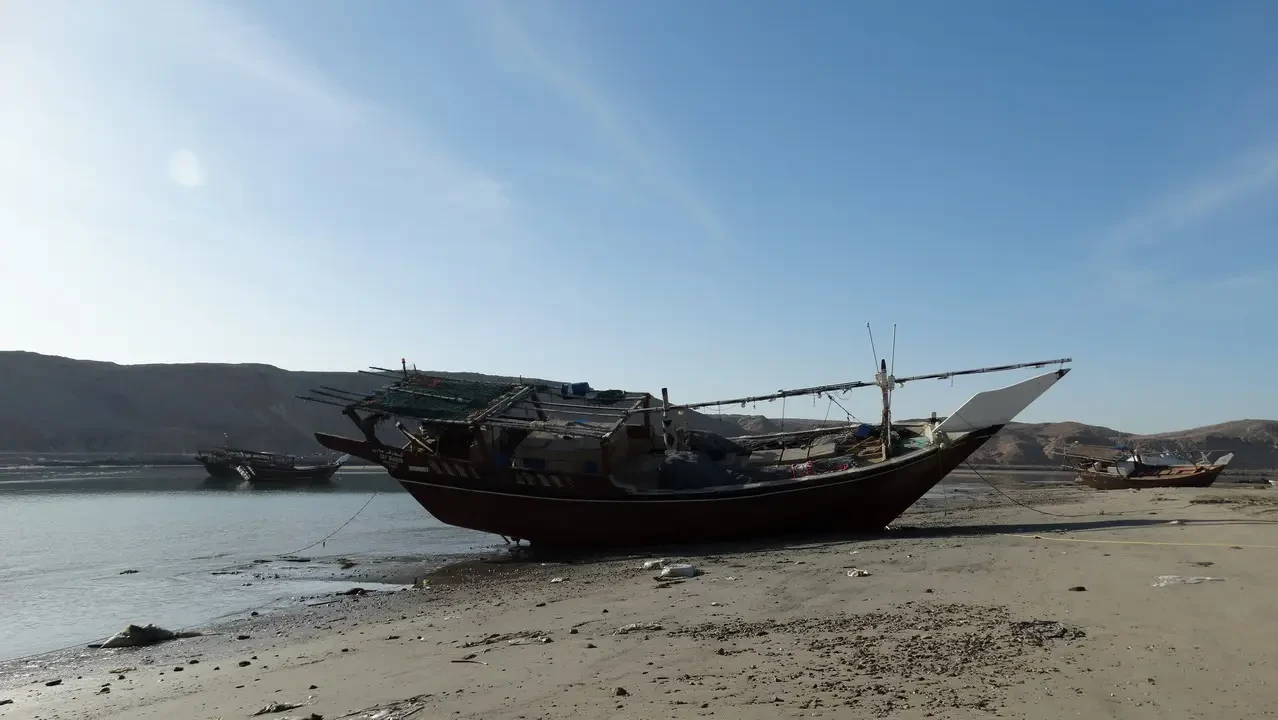
Quick breakfast in the room and we set off at 7:30, just as the sun was beginning to rise. During the day – especially along the coast – you can see some interesting features, but particularly in the area of… Khor Al Batar Bridge (photo) where there are many things to see. The suspended bridge itself is a kind of miniature Brooklyn, but it's the traditional wooden boats or those beached by low tide that make the place special, as well as the shipyard where master craftsmen are building new vessels. We take a quick peek over the nets and here too, it feels like we're going back in time, when wooden boats were the norm. On the other side of the lagoon is AyjahHere too, the ancient far surpasses the modern, which is limited to some infrastructure. And here too, we see few people around, a tranquility broken only by the waves crashing on the coast. We find a prominent spot that requires an easy climb and allows us to encompass all the beauty of the place in one view. We can't quite tell if it's an old minaret or an observation tower; it's amazing that there are no paths or access routes. But we're here now, and all that remains is to admire the flexible bridge below us, the coast of Sur, the fortifications, and the lighthouse of Ayjah. The white houses reflect in the sun as if they had just been repainted. We descend carefully, being careful not to attract the attention of an elderly woman who is passing right beneath us, and we go to the center of Ayjah, from which the sea and the beach of Sur can be indistinctly observed. Here too, the impression of abandonment is very evident: few people around and apparently empty houses; this place feels like a very old fishing village. The restored public buildings and sidewalks are a desperate attempt to keep people here, in addition to attracting some tourists. In general, it should be said that Oman seems to have only recently discovered tourism: apart from the classic places to visit, there is a lack of what makes the traveler feel like they are in a well-equipped destination, from signs and shops selling souvenirs to refreshment points aimed at satisfying the tastes of vacationers. All this adds further positive points to our already positive opinion of the country. Just a few kilometers away, we find ourselves in a context focused solely on local trade, even when that is not the case.
Even though we could have immediately turned inland via a convenient highway to the Sharqiya Sands, when planning the trip, we decided to go even further south and explore the coast up to Al Ashkarah. To do this, we needed to pass through... Ras al Hadd, located on a cliff overlooking the coast of the Gulf of Oman and the lagoon. Khawr al Hajar... which we reach with a short detour. We are greeted by a wide sandy beach and sparkling sea. Throughout this wonderful scenery, we don't see a sleepy driver on board his car, to whom we ask without much expectation if it is possible at this time to find some turtles that have lost their way to the sea and are still nearby. Receiving the expected negative answer, we return to the main road without even going to Ras al Jinz... which is located a few kilometers away and is the ideal place for turtle nesting. After receiving no particularly positive feedback, we found the nighttime activity of shining torches and using various lights to disturb the animals unpleasant. We decided that it wasn't worth seeing. The fact that it was one of the most popular attractions, frequented by a specific type of organized tourism on conventional routes, made us reconsider (they allow 200 people per day). If we had seen one from a distance, we wouldn’t have denied ourselves a photo. There wasn't one, and that was fine: we could imagine them swimming freely in the Gulf. Just before reaching the intersection to return to the main road, we take a walk through the village of Ras al Hadd, a forgotten village. We are particularly drawn to the fort; after taking a tour around it, it seems closed and we decide to go back to our car when a small door within the large wooden gate opens and a young man tells us that we can enter. The atmosphere is straight out of a Western movie, with round towers at the top of the walls and a large courtyard inside. Its restoration is now complete, but it's easy to imagine what life was like in this desolate area, between the endless expanse of the sea and the desert. Before leaving, the young guard from Bangladesh will offer us Omani coffee accompanied by excellent dates. We exchange a few words with him: he is here looking for work and good fortune. We say goodbye as if we had known each other forever.
We see blue tanker trucks everywhere: they are the small trucks that transport water from the silos to the various villages. In the past, there were wells, but now they are replaced by this much more convenient service. While in our area, delivering water is a rare event, here it must continue throughout the year with a significant amount of energy, so that people can stay in areas where life would otherwise be very difficult. They are seen in such large numbers that they have become essentially part of the urban landscape.
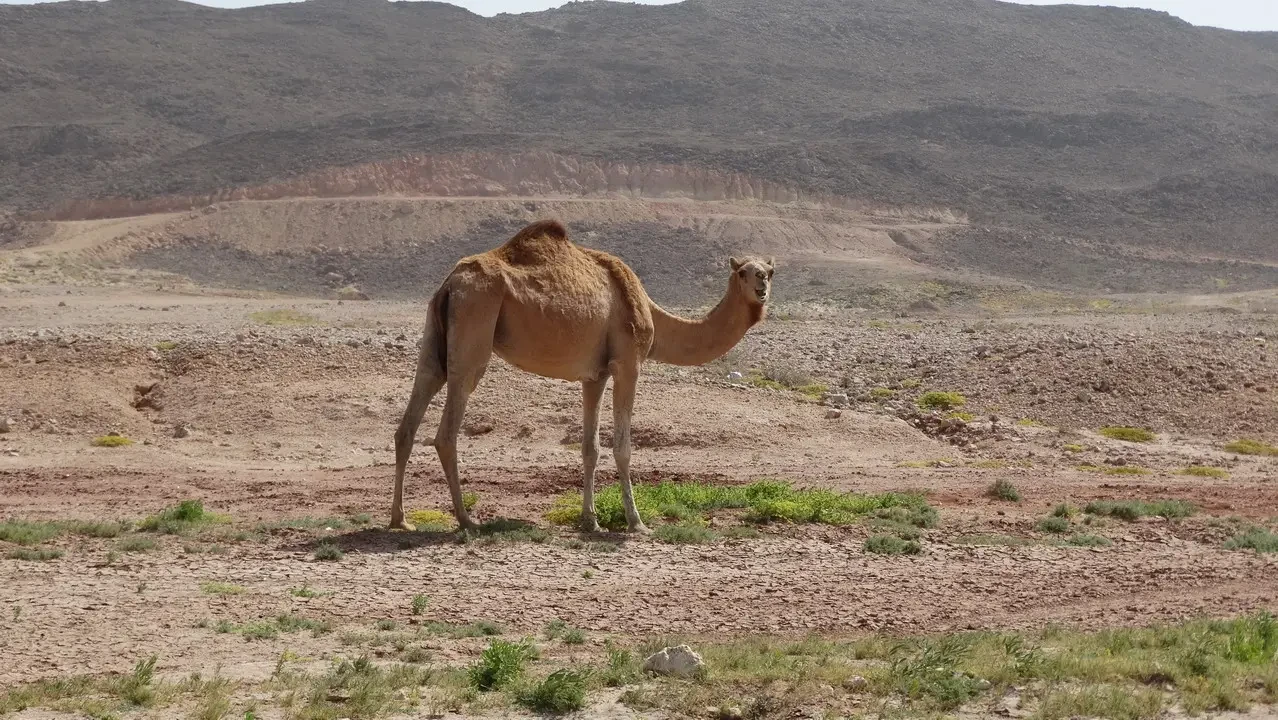
The coastal road continues south, following the coastline and often passing by rocky islets that jut directly into the Arabian Sea. When it turns inland, you can see camels (actually dromedaries, as they have only one hump) grazing peacefully in the lush vegetation. To prevent some from escaping, their front legs are tied with a rope at ankle level to force them to take only small steps. Along this stretch, there are no towns or signs of human life; it is the desert meeting the sea, two seemingly flat and calm worlds that meet on a beach that never seems to end. As you progress, the first fishing dhows appear, followed by a vast expanse of white, sparkling water: it looks like a diamond field, but in reality, it's natural salt flats where the seawater has deposited sodium chloride, which the sun has separated from the water. It’s a sight that seems like a mirage.
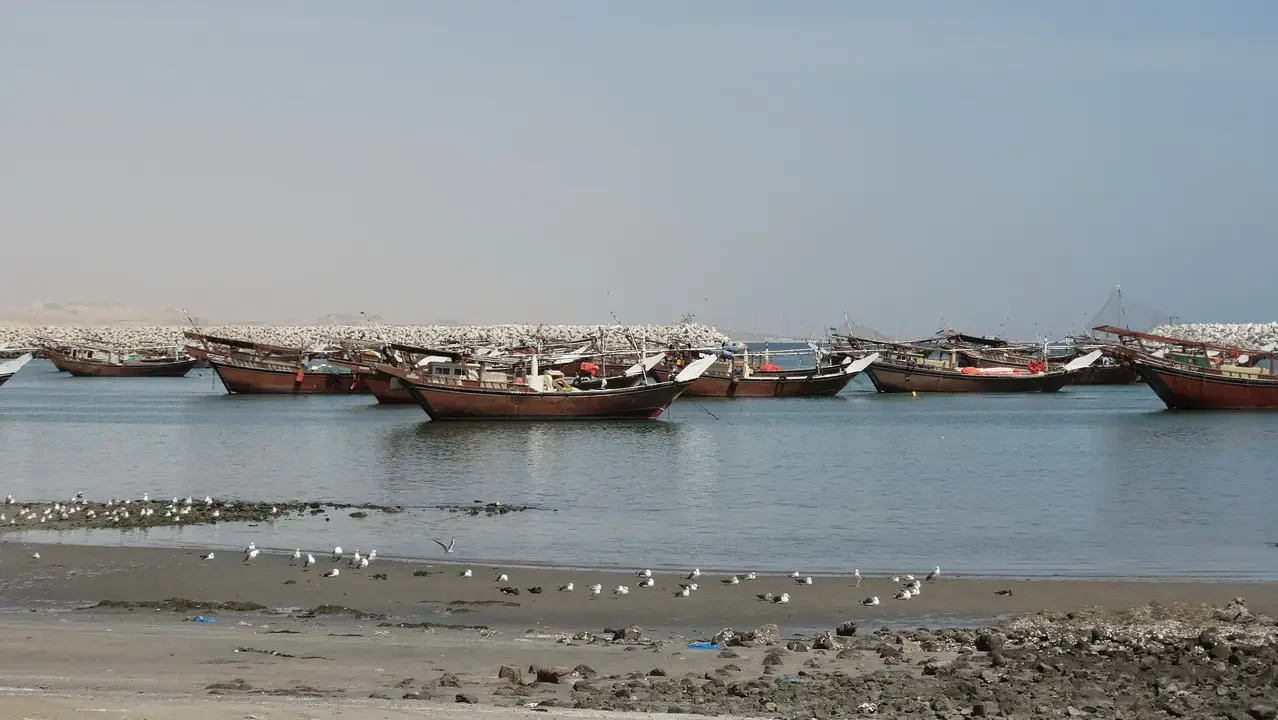
We have finally arrived at Al Ashkarah, nothing touristy but a very interesting everyday experience. Docked in the harbor, we see an endless army of dhows, skillfully sheltered by the pier. A fascinating sight, it feels as though we are living in a time that has long passed. Right next to this view, we stop at a small cafe where the owners seem surprised by our pale faces entering to try something. We won't make a mistake ordering a fruit juice (today we'll try guava) with ice cream, which is prepared simply and naturally. Fresh fruit is blended and mixed with ice cream. The purity of the first complements the freshness of the second, all while being rich in nutrients, it doesn't weigh us down when we need to continue our journey sitting. And indeed, now we are heading north-east on Route 35, a route that we had imagined would be free of traffic but which turns out to be quite lively from this point of view. Lined with small, lush bushes, we encounter a couple of towns along the way, which, as we have already seen in recent days, are... Jalan Bani Bu Hassan and Bu Ali. We will only stop at At Al Kamil... where a treasure hunt will begin to find accommodation for tonight.
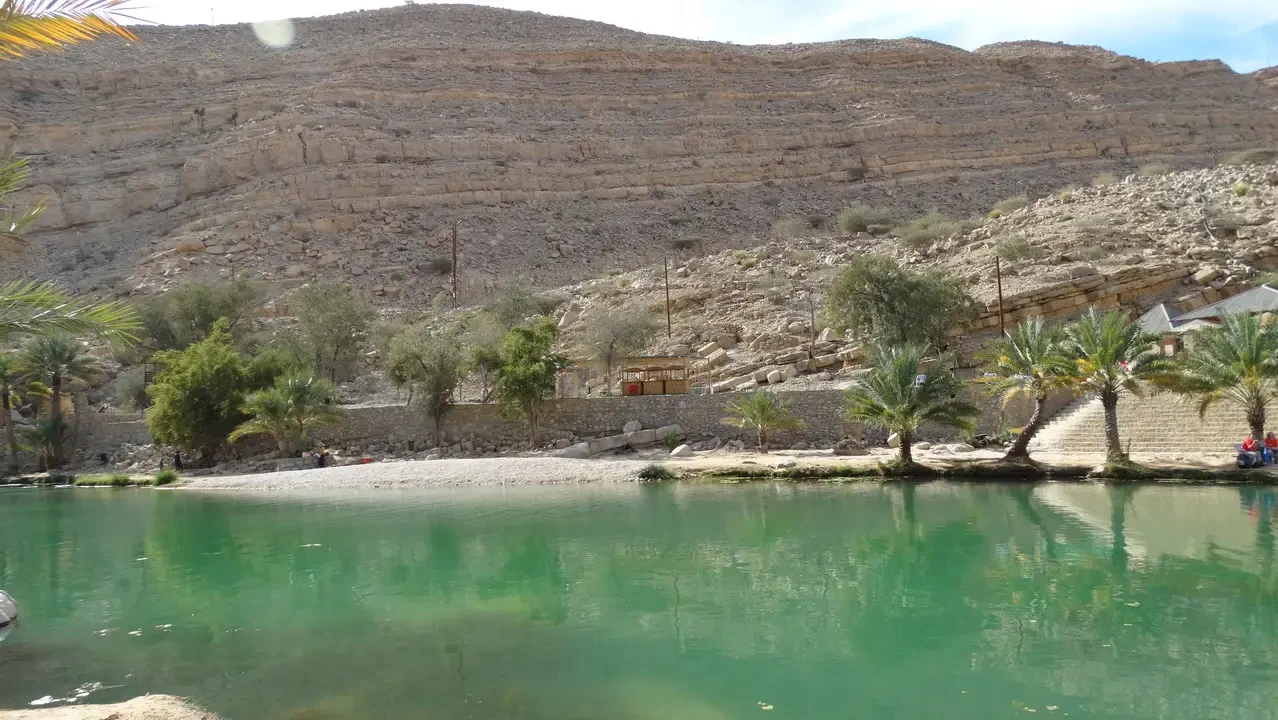
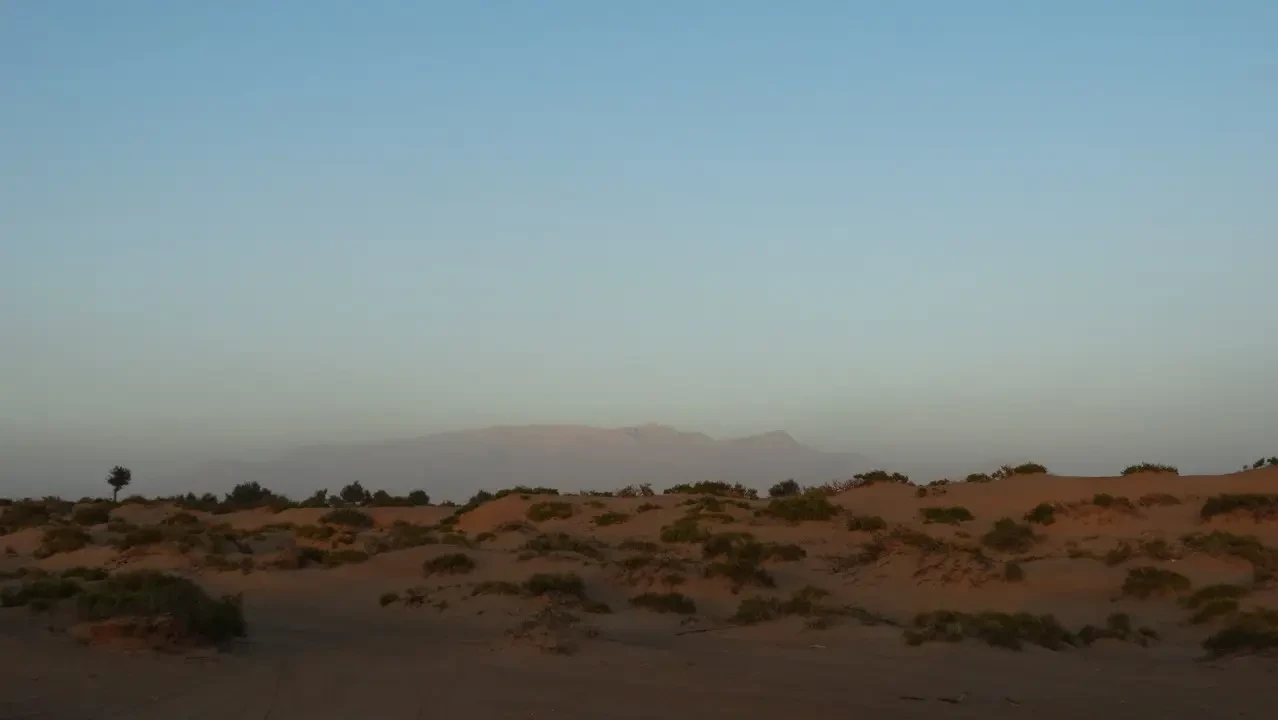
But first, let's go back to see the Wadi Bani KhalidOnce you cross Al Kamil, the road ends at a perpendicular where you have to choose between Sur and Ibra; we obviously take the second one and drive for about forty kilometers on a new highway, which is still under construction in some sections. We exit and travel along a beautiful road that winds through a landscape of colorful red and green rocks (due to the presence of copper). This will be another thirty kilometers, sometimes with steep climbs and descents on the other side, equally pronounced. We arrive at a parking lot and from there we walk back up the wadi for about one and a half kilometers, also passing by pools of water where children are having fun. Just walking a few hundred meters takes us away from the inhabited area and puts us once again in the quiet tranquility of the wadi's bottom. The water appears and disappears almost miraculously, disappearing underground for long stretches and reappearing in stunning natural pools. We will reach a point where the gorge narrows and a cave opens up in the rock. Al MuqilThe entrance is relatively narrow and requires squeezing to reach a dark cave that the LP doesn't particularly highlight. We therefore follow the reverse route while admiring the amount of water that seems to emerge from nowhere. The whole area is characterized by a valley with large rocks and walls rising like stone skyscrapers. The vegetation is minimal due to the rocky surface, but also because we are still in a riverbed, and when floods occur, they take everything away. Sheltered by the rocks, we find plants similar to oleanders. When reaching the lower part of Wadi Al Khalid, it's a symphony of green from palm trees and lush crops. Everything is always surrounded by arid mountains. We return to the hill we previously climbed and, as afternoon approaches, we are back at Al Kamil. To reach the camp in the desert, we have some photos accompanied by descriptions sent to us by the manager, but especially two GPS points that he provided via WhatsApp. To reach the first one, we need to travel on a sandy road flanked by gardens that somehow manage to irrigate; there are many detours and, in a couple of cases, we get lost from the Maps route and have to return. Surprisingly, we reach the point, which turns out to be on an asphalted road, but everything corresponds both in terms of coordinates and photos. To reach the second one, the system plays a trick on us: we continue on the same road and when Maps tells us we've arrived, we are actually in the middle of a couple of Bedouin houses. We try to talk to them, but their English is limited to a few words. We write to the camp via WhatsApp, but it's not easy to find our way. One of the locals kindly calls the camp and at least he understands where we are; at this point another offers to accompany us, also getting on an off-road vehicle. This involves going forward for three kilometers on the asphalt road, turning right onto a good dirt road in the middle of the desert for about ten minutes, and finally turning left for one kilometer on a sandy road. The last crossroads requires a moment of reflection because the sign is placed exactly in the middle and there are no indications about which direction to take. We were told that it was not necessary to deflate the tires, and with the 4x4 supported by some prayers, we reach the camp. In the meantime, we witness a spectacular sunset, enjoying it while keeping an eye on the setting sun and the road ahead. After a warm welcome, we cannot forget the local (friendly, although we only share a few words, but his appearance seems to come from a horror movie) who we take home with us. We return to our starting point, say goodbye, thanking him, and this time we return to the camp alone when darkness has already taken over the desert, adding further magic to a wild, barely illuminated by headlights. Finally, we take possession of our bungalow, relaxing in a shaded area where tea with local sweets is served, including date juice. The company consists of a French family unable to control their children and a German couple, all strictly accompanied by drivers. Since we have not come here to discover the characteristics of Europeans, we take advantage of this opportunity to chat with the young and friendly manager, Mohamed. Mohamed is a Sudanese from Khartoum, where he studied English, and has been in Oman for about a year and a half. The camp season ends in April when everything is closed due to temperatures that can reach 51°C, so there is no space for tourists. He intends to change jobs and go looking for his fortune in Nizwa or elsewhere. Around 8 pm, we prepare for dinner at a very inviting buffet: hummus (which cannot be missing and is always appreciated), sauce with eggplant, vegetables, BBQ with skewers, chicken with masala (you can see it immediately from its red color), bakura (balls filled with flour and spices, while the outside is covered in fried onions), somosa (triangles fried and filled, similar to lies). The Omani cuisine is very rich in spices, a clear sign of historical trade with countries in the Indian area.