Day 8
Dubai
The city of the future, without a past.
Morning in Dubai
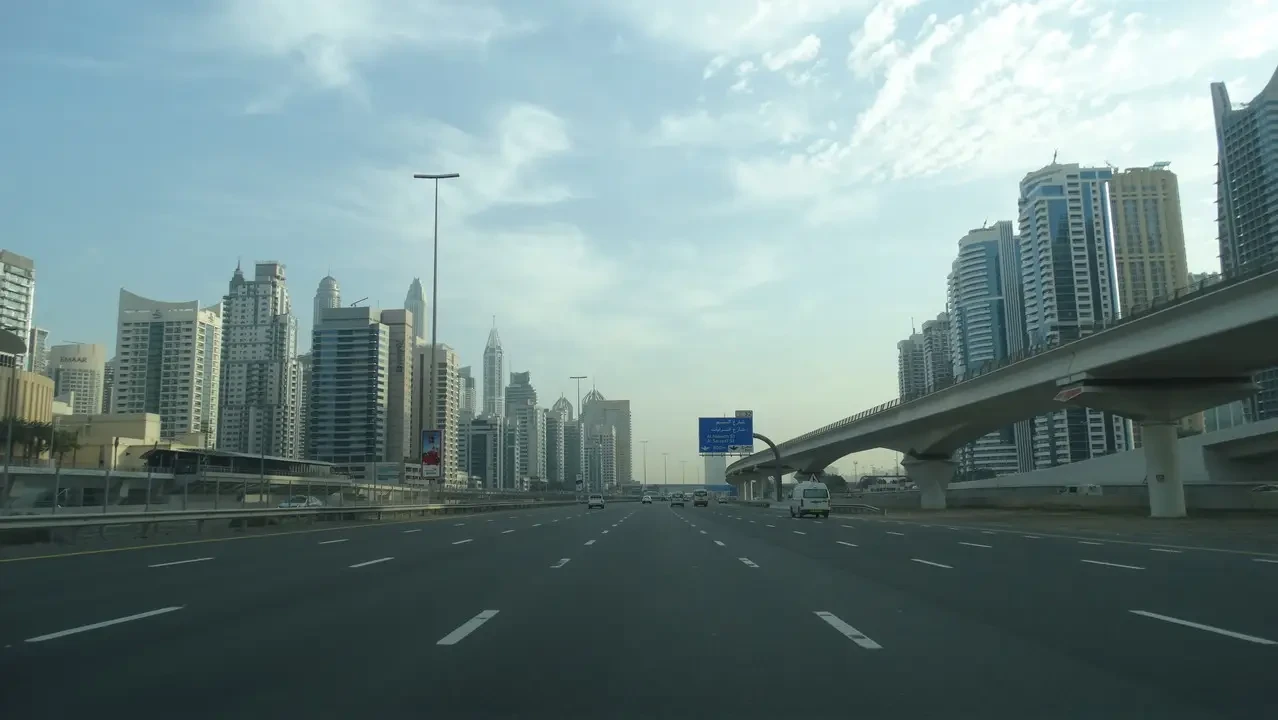
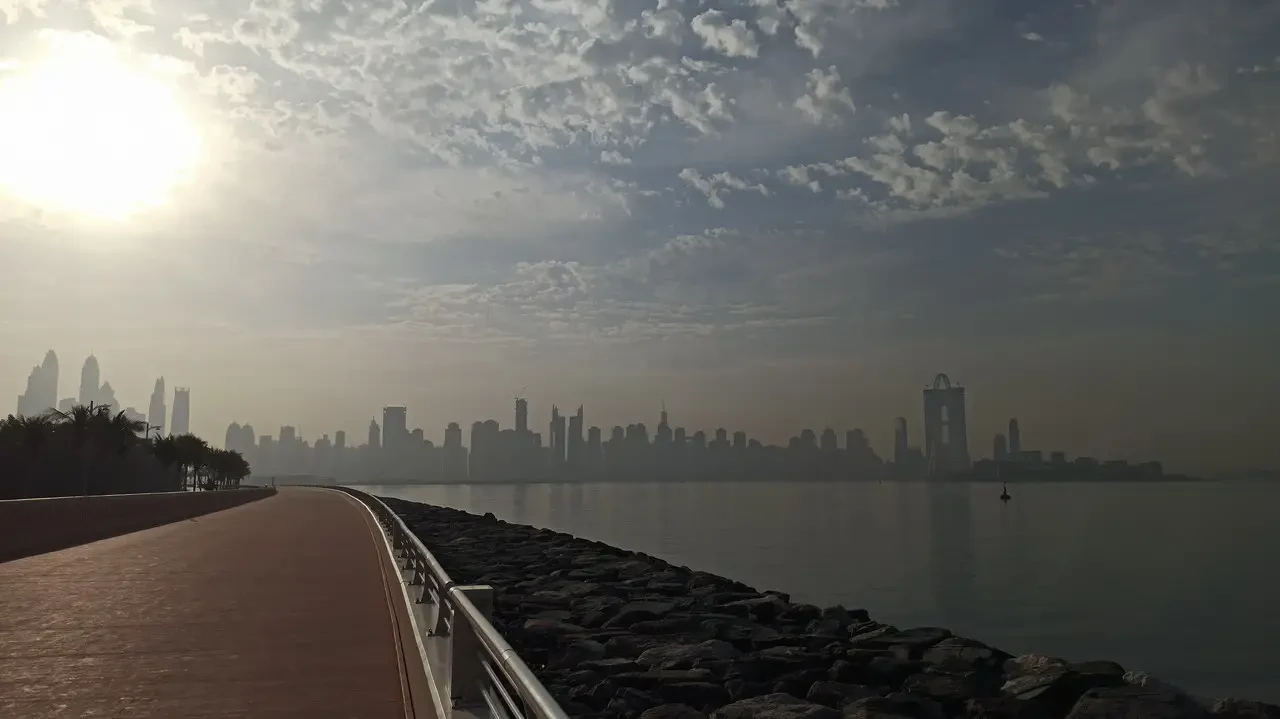
Also, breakfast in the room and then off to explore. Dubai, taking advantage of the holiday and the light traffic at this time. Having seven lanes all for us It doesn't seem real, only a few services are bothering us. Our first destination is Palm Jumeirah. It’s not just an artificial island; it's a palm tree created by reclaiming land where the sea used to be and surrounding it with a huge circle. A double bridge allows access to the complex and leads you along the main road, which resembles the trunk of the palm tree; the branches (referred to as "Frondes" on the signs) are private residences, while a tunnel under the sea takes us to... outer ring consisting mainly of residences and luxury hotels. Everything is quiet, with only a few security guards, some staff delivering items, and a few women jogging. An extremely tranquil environment where aristocrats, wealthy individuals, and the newly rich meet. Dubai is a meeting point for this human puzzle. A timid fog outlines the city's skyline still quite grey but not without some charm. Everything is extremely clean and tidy, nothing left to chance, almost creating a paradise-like atmosphere despite being extremely far from Bedouin and Arab culture. Also the columns of the highways They resemble trees that support the asphalted artery, in an explosion of creativity with no limits. A quick visit to nearby Dubai Marina before everyone wakes up, as it's the only place where, if you want to imitate European cities, the buildings are low, the streets narrow and parking is non-existent. Ideal for walking around. We get back on the Expressway to see the Burj Al Arab in its best and most natural tone, white, and then towards the true center. Finding parking under the mall is not difficult, but it will only become so if you don't have the correct coordinates for where your car was parked. This is apparently not uncommon, as large posters invite you to download an app that allows you to find your car. We are immediately in the mall, with 1200 stores opening and within which there is the aquarium with beautiful fish swimming inside (including races and sharks) and the skeleton of a dinosaur Okay, here's the translation:
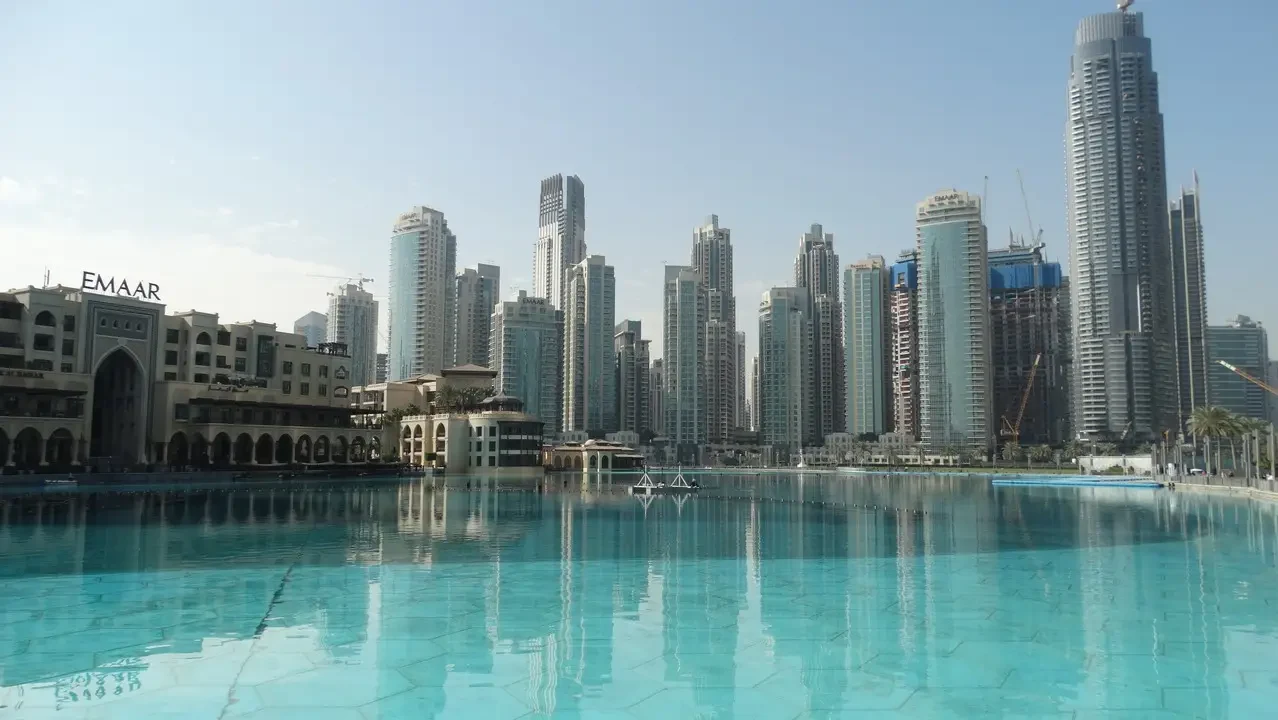
true. The ice hockey rink, a large internal waterfall and other extravagant amenities further enhance the appeal of the place. Outside, there is The Fountain, an artificial lake where several fountains dance, demonstrating wealth through abundance of water, and in the background, that metallic needle built literally to reach the sky is... Burj Al Khalifa, almost a kilometer high and therefore the tallest building in the world. While the first tourists are starting to arrive, we believe we have seen everything we needed and, with our sense of direction, quickly found the car without using any apps.
A quick look at the Jumeirah Mosque and we're heading to Bur Dubai to explore the neighborhood more thoroughly. Al Fahidi... along the Dubai Creek. It feels as though you are no longer in Dubai, but rather in this historic and well-preserved area, which emerged at the beginning of the last century thanks to Persian merchants who came here to take advantage of the tax benefits granted by the Sheikh, a time when there was even no mention of oil (because consumption would not have been particularly high). The buildings are low and neatly arranged along a main axis with all the necessary docks along the inner harbor, sheltered from the dangers of the Gulf. It is interesting to note that even today, exactly on the other side, dhows still dock to transport goods into the city. Different origin and different contents, but the same methods. Walking among the houses and shops takes you back in time; the neighborhood has been spared from the land scarcity that has affected the city in recent decades, it is strongly defended and renovated to accommodate shops, restaurants, and everything related to leisure. It's a great opportunity for both residents and tourists to escape from the verticality of the buildings and find themselves in a more rational setting. Some objects are deliberately displayed (trips, old bicycles, even lobster traps, etc.), which add another a touch of antiquity to the area, while the wind towers or badgir They tell us that the construction was carried out by Persians from the other side of the Gulf. To remind us that we are still in Dubai, you can see them in the distance, or even just on the other side of the Creek, the concrete and glass monoliths that host some multinational companies. While the craftsmen are working outside their shops, there was a constant bustle of tourist boats Take a boat tour for those who want to see the city from the water. A compelling contrast between the old and the new, also from a human perspective, as groups of women wearing burqas: Dubai is also this.
The urban face of Dubai
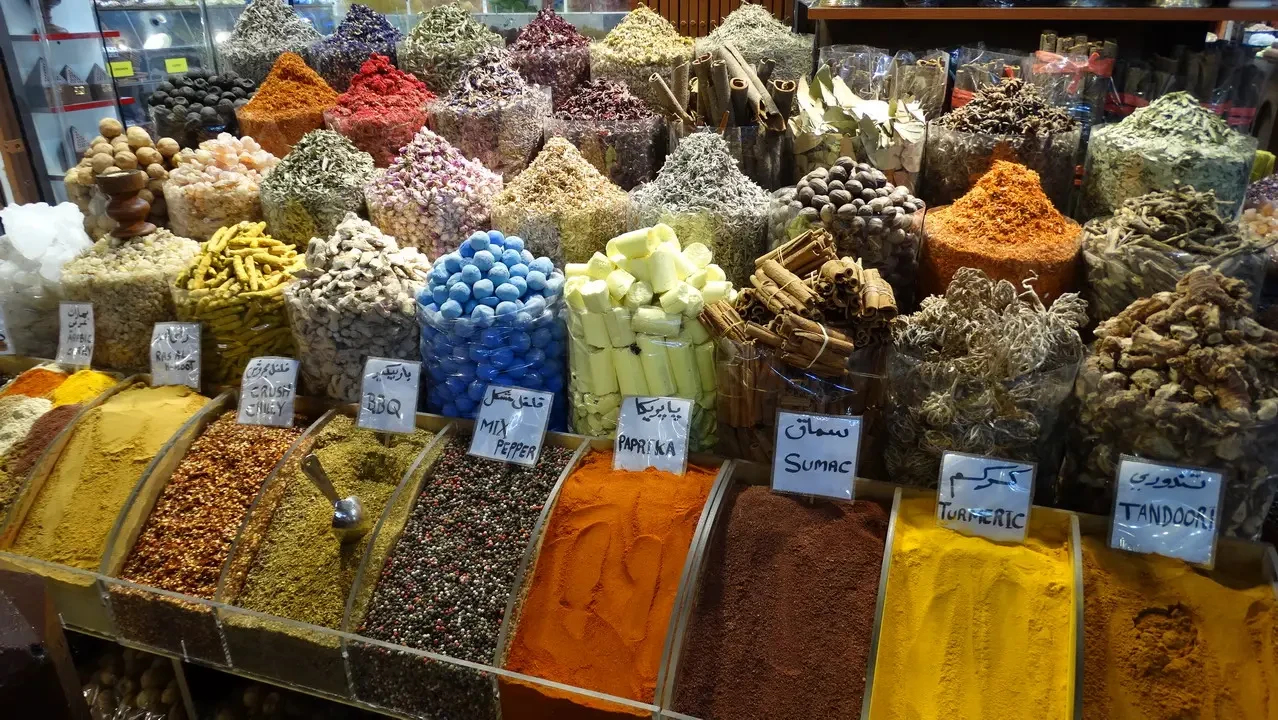
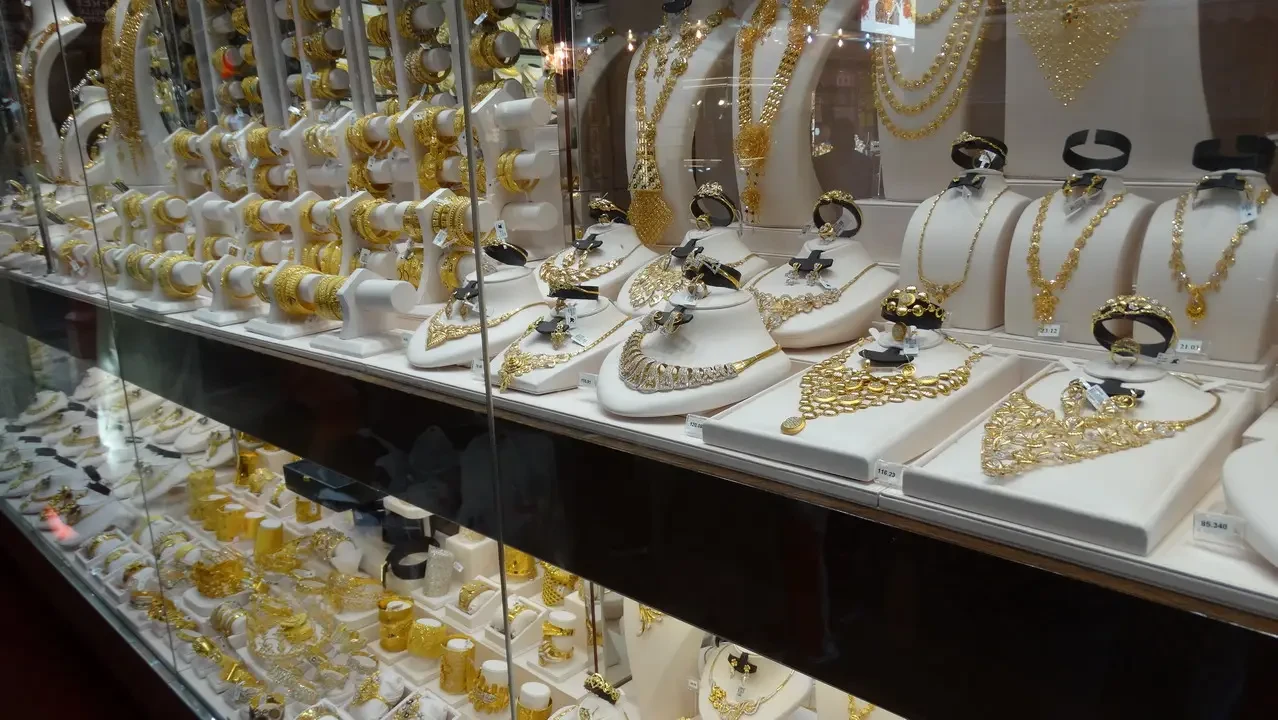
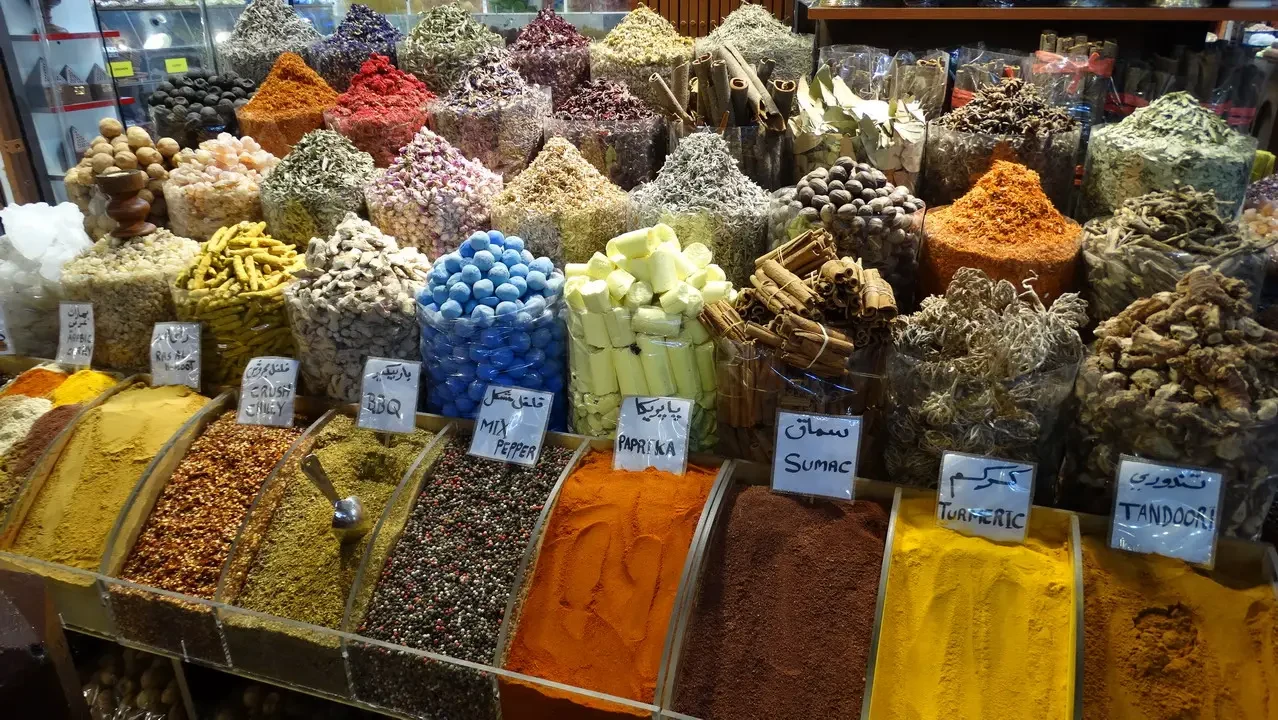
Not far away, on the same side of the creek, is a neighborhood not very different, that of Shindagha, where the upper class lived, including the beautiful house of Sheikh Al Makhrum. The location was splendid, with the houses facing the bend in the waterway. Although this area was once richer than Bur, as it housed luxurious homes opposite those of Persian merchants in the other neighborhood, it has not developed so much from a tourist perspective and ultimately appears to be of lower importance. We cross to the other side thanks to an underground tunnel into the lively Deira district, which is actually quite quiet when we arrive: it's Friday afternoon, and we are clearly at siesta time. It is a decidedly popular area inhabited almost exclusively by Asian or colored immigrants. One would need to be cautious, as we are in a country where petty crime is heavily prosecuted. Thanks to the GPS, we reach the spice market, very colorful, with a whole series of unknown varieties or also known as, but in which we could not recognize the properties: we find dry lime, myrrh, sulfur, dried rose petals, carnade, various dried herbs such as rosemary, sage, laurel and oregano. The chromatic aspect is certainly what attracts the most attention. Much more than the adjacent gold market... where necklaces, rings, crowns and all kinds of jewelry are neatly displayed: their shine even seems monotonous and cold compared to the imaginative variety of spices. The only advantage is that there are no persistent merchants who stand a meter apart reciting the usual sales pitch to attract potential buyers. Although it may sometimes seem cheesy, the weight of these jewels can be worth a treasure in some cases. In both souks we find several Western tourists, which is clear evidence that bus or ferry tours land here as an ideal shopping destination. After this interesting visit, we pass by the already mentioned port, where The dhows are still moored. and various materials are being unloaded, with a particular focus on technological products. The pleasant weather that characterizes this area allows for the use of the dock as a permanent storage space.
At the end of the two-day trip to the opulent Middle Eastern metropolis of Abu Dhabi, it proved to be the most interesting, with more attractions, and also slightly less hectic than its northern counterpart, located about 100 km away. Dubai presented striking features, with deep urban canyons along wide roads, where glass buildings made you feel like a fly running towards nothing. The palaces offered similar views, despite the architects' frantic efforts to differentiate them from each other. Bold arches and extravagant forms concealed offices and residential buildings. Speaking with a Turkish waiter, he highlighted a city without soul, where business and profit are not the rule but the imperative. Good for working, less good for living. In fact, the idea of spending several years there seems almost like a sentence; many people stay here out of necessity to make some money and then leave it for others. For us, one day was sufficient, although interesting and useful in understanding the reality of a metropolis with little history, but with a significant present and an unknown future. These are experiences that you enjoy once and even find enriching, but now it's time to see what the other Emirates offer. Satisfied with this adventure between modern and ancient, we take the Sheikh Mohammed Bin Zayed Road, which runs for several kilometers along the coast towards the north, and travel about 100 km; along the way, we see people having picnics while cars speed past nearby. In a few minutes, after passing Sharjah, we find ourselves in a completely different environment: the desert and arid land have taken over, and soon the palaces give way to more modest houses. Ras Al Kaimah It is the perfect example of what the United Arab Emirates would be like without oil. It's strange to see so many differences; there is no visible poverty, the streets are well-maintained, and you get the feeling of a generally acceptable standard of living, but one that must be earned through daily work rather than creative finance. As a result, you can find shops of all kinds and sizes, some medium-sized industries, and people busy with traditional clothing from Arab countries. We are in the city (shortened to RAK by everyone), mid-afternoon, so we still have the idea of going to see the Jebel Jais (the highest mountain in the United Arab Emirates), of course easily accessible via a comfortable highway. The traffic is very heavy, as are the speeds, but it's still only 50 km to reach the destination. We quickly see that there are signs of flooding on the edges, and the riverbeds have been washed away in several places, along with parts of the road. The heavy rains from a month ago completely flooded the valley floor, creating disasters in an almost desert area where it never rains. Even though there are two lanes for climbing with good maneuverability, the journey is long and we fear not reaching a good vantage point before sunset. But luck is on our side this time too, and we arrive just below the summit (closed to heavy traffic and pedestrians) to find parking among a crowd of cars on either side. We discover that it costs the equivalent of one euro to access the actual pass on foot, where a stylish and precise Emirati balcony has been built, from which you can see forever, were it not for understandable fog below us.
Politics and society in Dubai
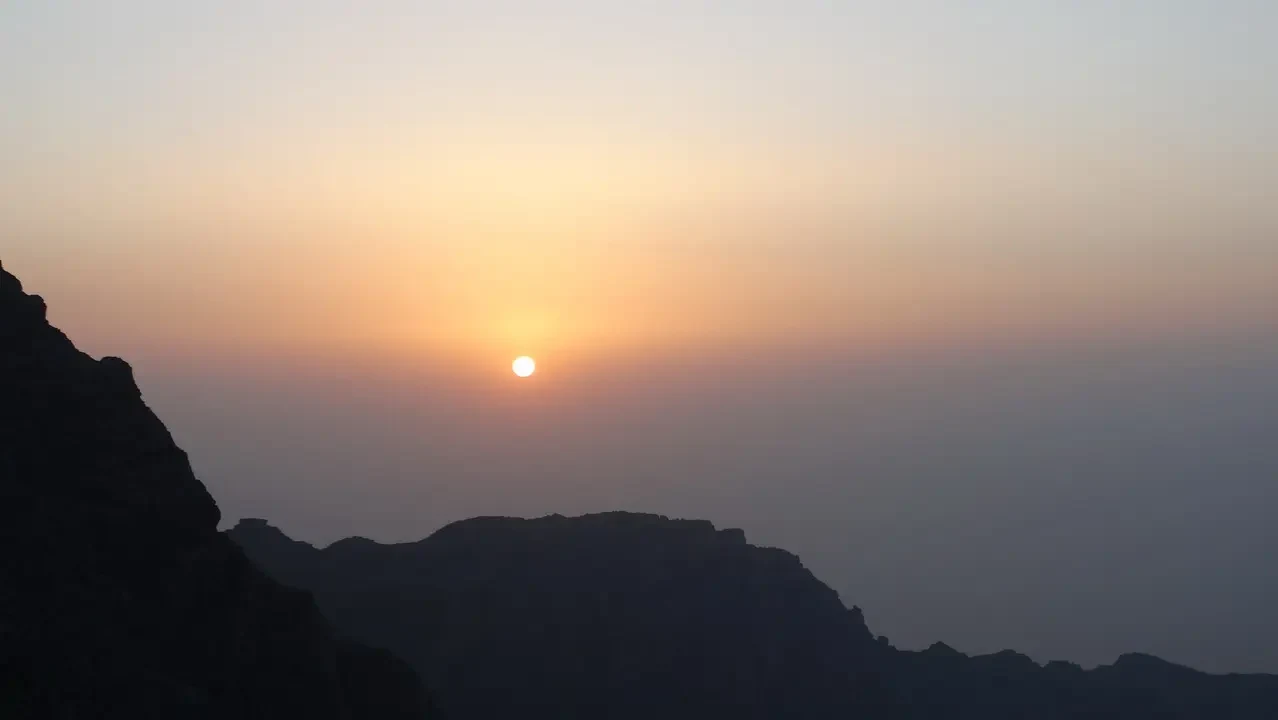
We still have a wonderful view of the ridges nearby, shaded by a light veil. At the bottom, you can see some port city with a calm sea that caresses it, but above all we can watch the sun, orange like never before, while it tends to disappear in the distance, creating even greater contrasts and depth between different mountain ranges. Given the late hour, along the road we encounter several cars descending, but many people are still up and most are having a picnic outdoors, oblivious to the approaching darkness; even during the descent, when it is already night, people continue to enjoy the coolness of the moment; there are 19°C, but the temperature is expected to drop, when we reach the bottom of the canyon, it's around 28°. This is mainly due to the locals or Indians who live here; Western tourists are truly few: perhaps they prefer the urban verticality to these sunsets. There is also a balcony on the other side, from which we took the bus: from here you can see other mountain ranges, colored red by the sunset and stone, and the curves of the road that climbs in wide turns. We are in the extreme north of the United Arab Emirates, a few kilometers from the Omani enclave of Musandam, and consequently from the Strait of Hormuz, whose strategic importance has become particularly significant in recent years of regional instability. It is a reddish mountain, with many ridges; we could almost call them wrinkles; a mountain that smells of age, not just the typical dryness in these cases; only at the bottom there are some bushes, which will quickly wither under the scorching sun. We are tired from the journey, so we can return to find the hotel and then go to town for dinner. The hotel is nice, but it surprises us with the suspicion they have towards guests: they require a deposit for any damage or theft in the room (or rather, the spacious apartment that we have), as well as conducting a check the following morning to ensure everything is in order. Clearly, our experiences haven't been particularly positive. In town, we can see a few illuminated buildings and many people having picnics in the gardens; it's curious to notice women in separate groups from men. We have dinner with fish at a quiet restaurant: the only problem is that they don't accept credit cards and we don't have enough AED. We remember that we are almost on the border with Oman and discover that they also accept OMR: we can eat here tonight too. walk along the promenade to see how the residents of RAK spend their festive evening, with children running around and playing football, a sign of positive globalization.