

Map
Oman and Emirates map - complete itinerary
If you squeeze the desert sand in your fist, you won't be able to hold it. If you leave your hand open, it will fill with sand.
(Arabic proverb)
Two years after Iran, we felt it was time to see what lay on the other side of the Gulf. And already, the first differences emerge: some call it the Persian Gulf, while others refer to it as the Arabian Gulf north of the Strait of Hormuz. While the memory is still fresh, it's easier to discover the identities and differences between two similar but not identical populations, linked by a firmly rooted culture in religion, yet divided by history, especially recent events. It is this latter that marks the most striking contrasts: obscurantism opposing an enlightened view of power, the substantial poverty of one people against ostentatious wealth actually enjoyed. This paradox is further emphasized if we consider that Iran floats on oil while Oman has far more limited resources. The Ibadi religion, based on a strong traditionalism, has significantly impacted daily life, as well as architecture and political strategies. Sultan Qaboos reigned for 50 years, bringing the country from near-total medieval backwardness to a level of development compatible with fundamental principles. Cancer ultimately killed him last month, so upon our arrival, flags were flown at half-mast in mourning, and they will remain that way for 40 days until February 19th. He is likely to be remembered as the benefactor of his country, loved by the vast majority of the population, who correctly saw him as the one who guided Oman towards a balanced civilization. At the time of his death, the family had three days to appoint the new Sultan, otherwise a sealed envelope containing Qaboos's nomination would have been opened: out of respect, it was immediately opened so that his wishes could be respected. The new ruler is called Haitham bin Tarek and has already announced the continuation of his predecessor's policies. In this far from easy region, which has seen much of the conflict of the last century, an attitude of non-interference and mediation would be highly desirable, essentially serving as a model for the entire Middle East, torn apart by religious and hegemonic divisions. The delicate but important mediation work of Oman seems therefore destined to continue.
Oman has successfully combined financial resources with reasonable development criteria, as has happened in other neighboring countries, while meeting the needs of the people without distorting its noble past. This is a story that goes from Sinbad, the legendary sailor of One Thousand and One Nights, to a strong trading tradition possible thanks to the country's strategic geographical location, passing through the Bedouin tenacity in surviving in a nature made hostile by the desert and heat.
Oman benefits from significant oil reserves, but considerably less than its neighbors in the Arabian Peninsula. Nevertheless, it has managed to invest these revenues intelligently, avoiding waste and extravagance. It ranks only 19th among producers, with one-tenth of Saudi Arabia and a third of the UAE, within this region. The Sultan's foresight, combined with economic stability, has led to significant progress over the past decades. Difficulties arose with the global crisis of 2008, when, as part of an expansive economic policy, the country (Dubai fared even worse, and the emirate risked bankruptcy) had to curb spending. Removing privileges would have been difficult, given the habit of native Omanis (approximately 40%) of living in conditions guaranteed by the state.

From a certain perspective social We essentially see men around, while women – although they don't appear to live segregated lives – seem to exist in their own world. Out of ten people we meet on the street, at least eight, or even nine, are male. All the women are dressed in the typical black abaya and have a headscarf of the same color. They are usually seen in groups with each other or alone. It is rare to see them accompanied by a man, even their husbands, unless during family picnics or festive outings. Even on cool evenings, it's not uncommon to see groups of women sitting together chatting on the grass in parks, with another group of men nearby. These are often seen at the playground with their children or doing grocery shopping, which indicates that they are interested in family matters and that women enjoy respect, as harassment and violence against women are strictly prosecuted. Even during driving lessons, female instructors accompany only the students. Overall, we get the impression of parallel lives that intersect and intertwine only within the domestic sphere. In terms of dress, some women wearing a burqa stand out, in stark contrast to girls in the capital dressed in Western-style jeans. Generally, men also wear a white tunic (dishdasha or tobe) with a decorated cap. The distinction between men and women is even more apparent from a chromatic point of view. The rules for local establishments apply only to foreigners: men and women must cover their shoulders and knees (this rule is most strictly observed in the province, less so in Muscat), but it is not required for women to wear a headscarf unless inside places of worship.
The Omanites I am generally very discreet people: not loud at all, they never make curious or annoyed glances, but neither are flirtatious. If asked for information or curiosities, they show themselves to be available and kind, offering any type of help. However, don't expect them to initiate a greeting with a stranger, with rare exceptions and mainly from the children, who may then be followed by the adults.
Among men, it is customary to shake hands even when meeting someone for the first time, perhaps just to ask for directions; this opportunity also means an encounter to be sealed with a handshake for them. We did not see anyone doing this with women.
Regardless of the dress code and behavioral rules imposed by unspoken norms, we notice that everyone pays great attention to personal grooming. Beyond seeing well-groomed people, we also observe this in the large number of barbers (especially for men) and bespoke tailoring shops. There seems to be an abundance of these, with almost 14 on both sides of a 200-meter street in Seeb alone. It remains to be seen how everyone manages to make a profit.
A particular feature that immediately catches the eye is construction type The houses are represented by the high perimeter wall built a few meters from the dwelling, surrounding it but also closing it off like the yurts in Mongolia, as if the domestic space should be a place where one doesn't look out or be seen. This is already noticeable in some cities in Namibia, although there are obvious security risks. Here, the crime rate is among the lowest in the world, and it is probably related to a Bedouin culture that aims to define property boundaries as well as an atavistic form of privacy. It should not be forgotten that until 1970, the entire country lived in a closed-off context from the rest of the world, and perhaps some legacy remains in the building style, not in the minds of its population.
The shop signs They always have both Arabic and English writing on them. We wonder why, since this is a habit found everywhere, regardless of the tourist appeal of the place. It's not therefore that: instead, we think that more than half of the population comes from other countries and usually doesn't have a particularly high level of education, just consider Pakistanis, Indians, or Bengalis who come here to do humble jobs. We certainly can't expect them to speak Arabic, so English becomes the only possibility for communication, at least in terms of characters. This says a lot about the difficulties of adaptation and integration that await immigrants from poor areas.
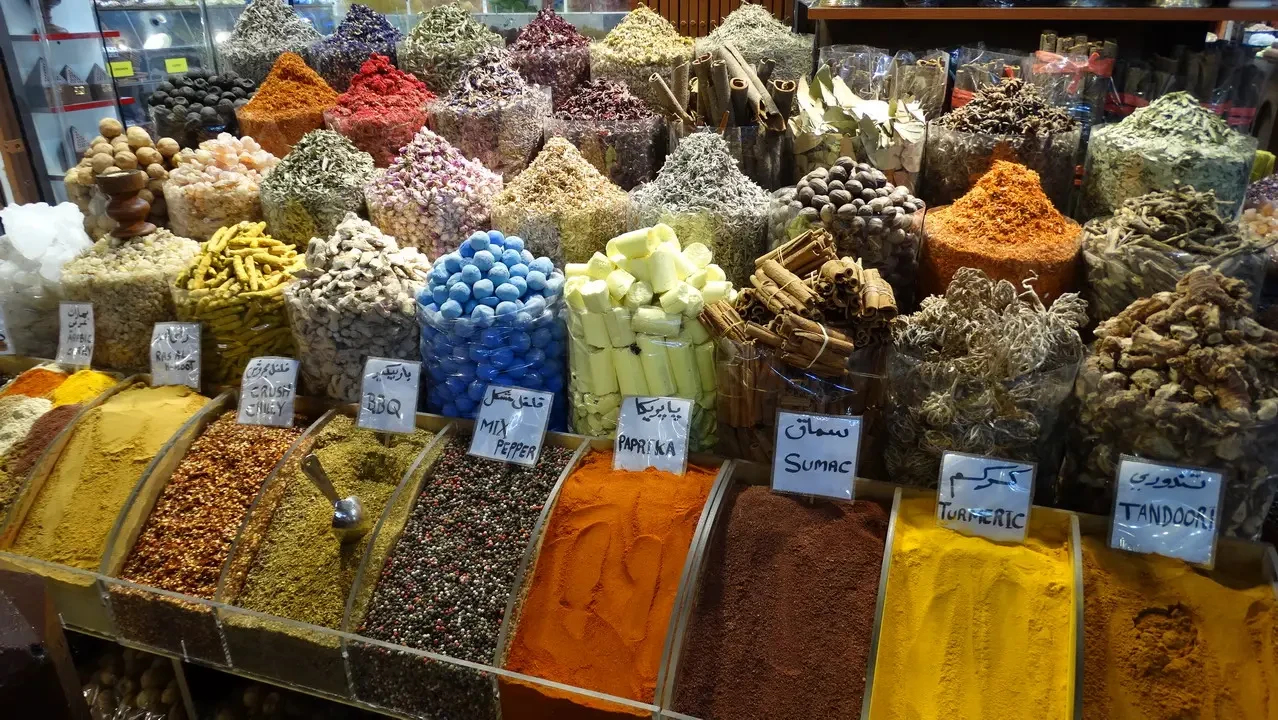
Talking about food... we can experience a varied and well-balanced cuisine: alongside the excellent fish, which is enjoyed both fresh and dried in various cooking methods (grilled, stewed, fried, carpaccio), we will find excellent chicken, beef, and lamb. The vegetables, which are varied and offered raw or cooked, accompany the other dishes with taste and creativity. The desserts are also excellent, often made with a predominance of dates (a true symbol of Oman) and/or pistachios. Honey is produced in large quantities, as well as tea and coffee, often flavored with flavorful and fragrant spices such as cinnamon, ginger, and cardamom. The latter is used to prepare a dark-colored coffee with a subtle flavor: however, it's best not to mention this to the locals, as it represents a source of pride. The production of saffron is also very good. We will also try some excellent local cheese. The vegetables can be quite small (eggplant or peppers) or have much larger sizes than we are used to, for example, cabbages and pumpkins. The fruit includes mangoes, pomegranates, bananas, and papayas. These are often used in the preparation of delicious and refreshing juices, which are also used to accompany meals: our favorite will be lemon-mint juice with lemon and lime, with added mint, to quench our thirst!
Unfortunately, regarding... environmental awareness Oman still has many areas for improvement. Apart from the litter scattered everywhere, there is also room for improvements in urban planning. It seems that there is no regulatory plan, so houses are built wherever it's convenient, at distances and alignments that apparently don't follow any logic. This clearly has an ancient origin: for example, in Qalat and Al Ajyah, the streets form real slalom courses between square-shaped houses built centuries ago with raw bricks and covered in mud. A car barely passes through, and you need to pay close attention when turning immediately behind the wall.
Traveling in Oman It's not that difficult, you just need to adapt the Italian driving style to a different form of creativity typical of Arabic culture, and then it's done. This is made easier by the highways, which have up to 6 or 7 lanes. The turn indicators seem to be optional, used at the driver's discretion, within a context of mutual respect among drivers. Perhaps the worst aspect of driving is the insufficient presence of road signs indicating directions to cities or tourist attractions. You need to be especially careful in less urbanized areas. In these cases, GPS is very useful.
The English. It is quite common, and the surprising availability of locals to assist foreigners, using gestures to compensate for a weak command of the language, makes the trip much more relaxing. If you prefer not to relax and want to see more, visiting a variety of places will be very beneficial.
From a certain perspective affordable The country is very expensive, although everything can seem justified. To escape the purely tourist circuits, a 4x4 vehicle is necessary, while accommodations are often limited, which reflects controlled and still nascent tourism. Meals and fuel costs are relatively low.
Regarding the fuel, of course the prices are definitely lower than those in Europe, and the petrol stations (Omanoil, Shell, Al Maha) sell petrol at around 0.21 OMR/liter (around 0.50€/liter), while diesel is only used for supplying trucks. The situation is similar in the United Arab Emirates.
Speed limits on the road The rules vary and seem to be inconsistent with our standards. On some highways, it is permitted to travel at 140 km/h, but they are usually 120, which are often not respected. The same speed is surprisingly allowed on the busy Expressway, which represents the main artery of Muscat, except for certain sections at 100 km/h. In urban areas, speeds are maintained at 50/60 km/h, reinforced by frequent speed bumps placed just a few dozen meters apart, almost forcing drivers to stop. Although not a particularly pleasant method, it undoubtedly proves effective. There are many speed cameras on the highways, and it is difficult to determine whether they actually work or not; people tend to drive slightly over the limits as locals do. The production of energy does not pose a problem; all roads – including those leading to the remote villages in the Hajar mountains – have public lighting. This also represents a sign from the Sultan to keep people tied to their native places and limit urbanization, which is a major global issue.

The cars The majority of the cars are Japanese brands, plus some high-performance German ones that we rarely see on our roads. Those who don't have a lot of money usually buy a Chinese car or use public transport.
In both Oman and the UAE, we notice a particular feature of the traffic lights: they are typically located at intersections between major roads with no less than 3 or 4 lanes. The green light operates independently for each direction, while the other three remain stationary. This allows all vehicles to proceed without having to yield, and in some cases, pedestrians have a separate turn specifically for them. They last quite a long time, and even though the wait can be lengthy, when the green light appears, a huge number of vehicles pass through.
The power outlets I am of the English type, so an adapter for three-pole square English plugs is needed. Credit cards are accepted but not in small hotels or restaurants; a 5GB SIM card costs 5 OMR for a validity of 10 days.
Itinerary
Travel days
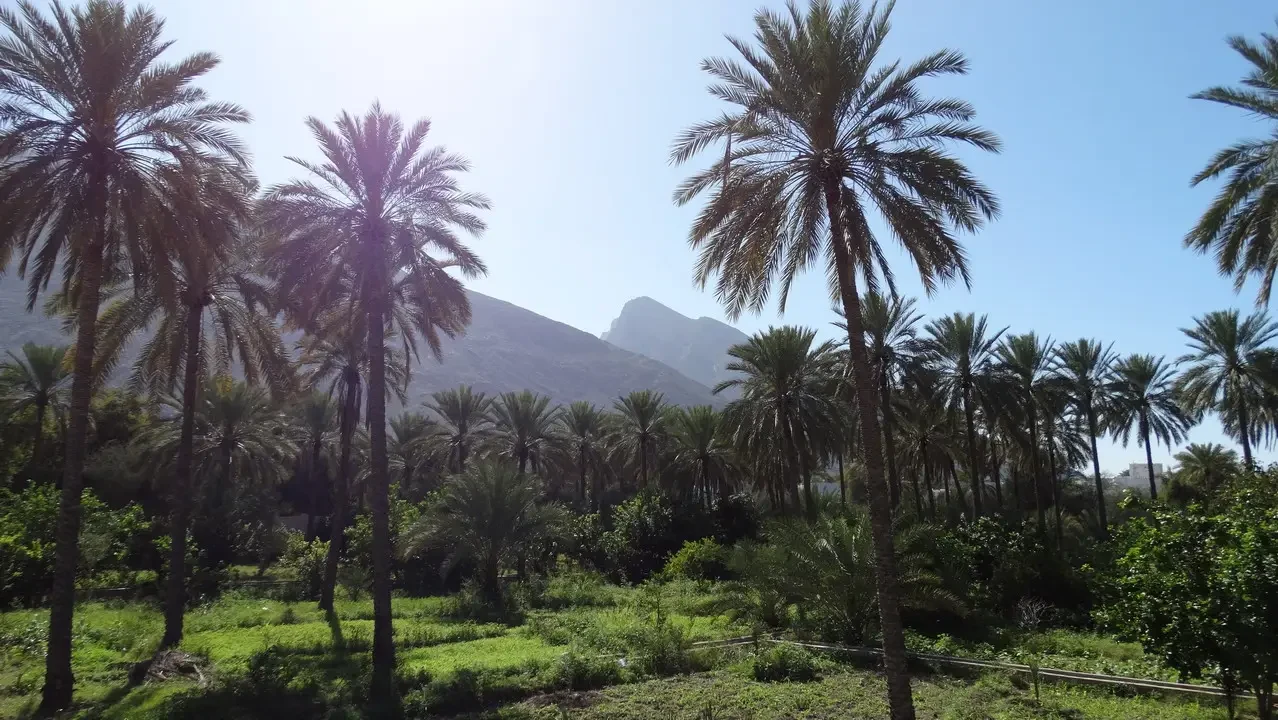
Eastern Hajar
The adventure begins among the wadis.
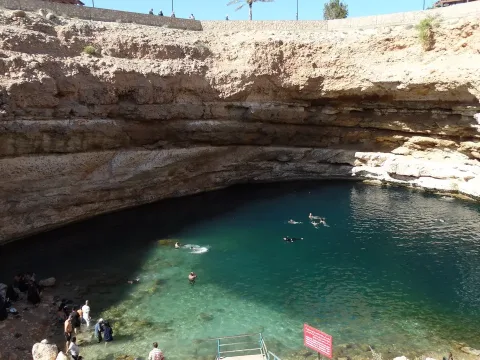
South of Muscat
Coast and wadis: water in all its forms.
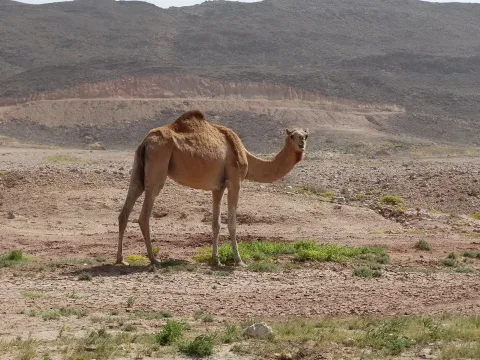
Wadi Bani Khalid and Sharqiya Sands
In the land between sea and sand
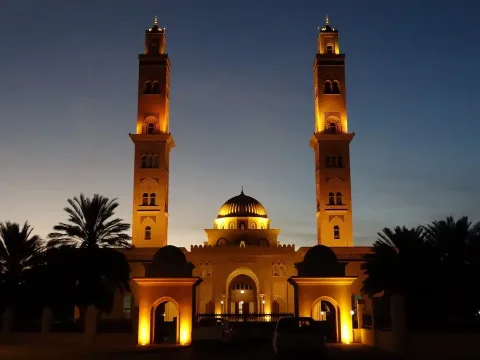
Jebel Akhdar and Nizwa
The most traditional Oman, where time seems to have stood still.
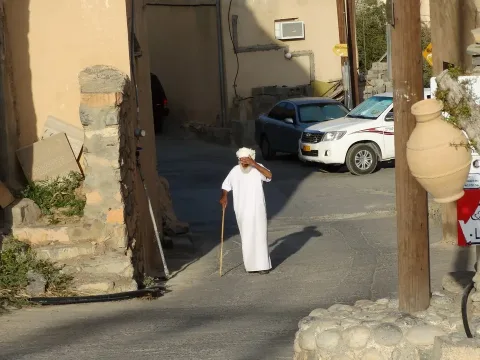
Jebel Shams
The day of the highest mountains in Oman
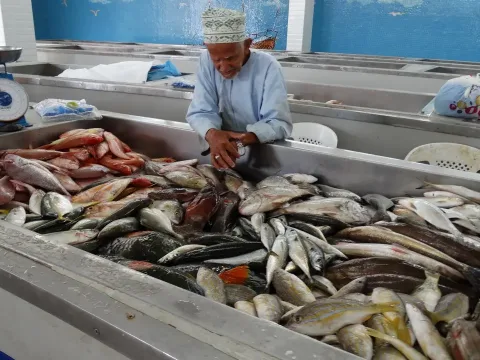
Muscat
The peace of Misfat, the balance of Muscat and the modernity of Abu Dhabi all in one day.
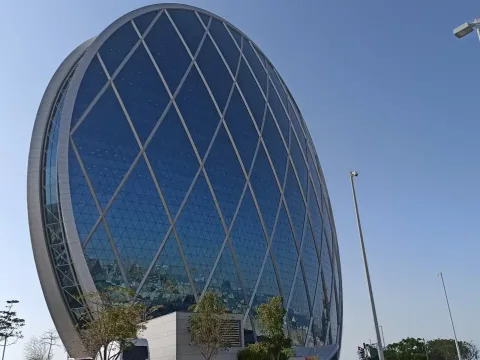
Abu Dhabi
Wealth and luxury of the United Arab Emirates
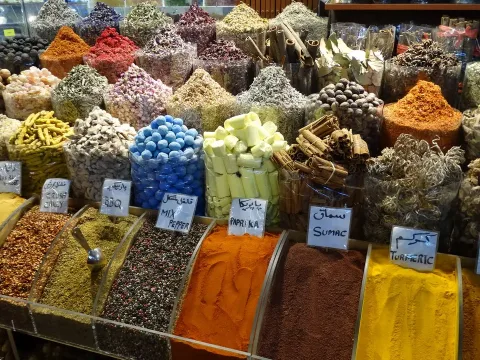
Dubai
The city of the future, without a past.
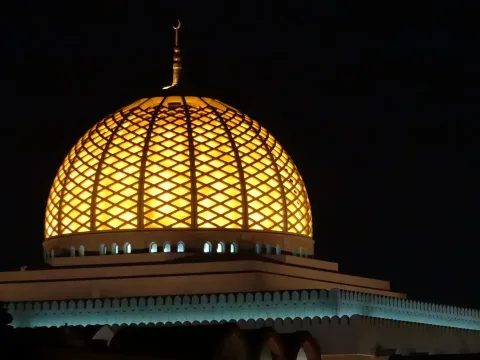
The other Emirates
RAK and UAQ: The poor relatives – Ajman and Sharjah: The wealthy relatives
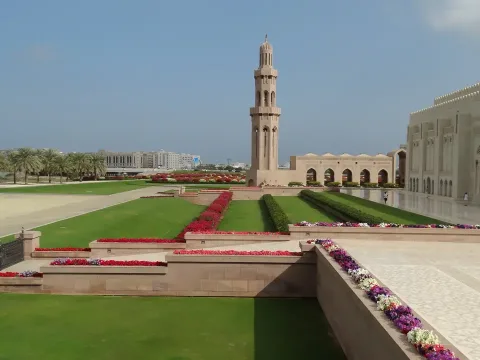
Muscat
Religion and music: Muscat, the noble city.