Day 7
Abu Dhabi
Wealth and luxury of the United Arab Emirates
The urban face of Abu Dhabi
Of course, when visiting two countries with similar histories but different present and future orientations, comparisons immediately come to mind, and it almost becomes a game to highlight the similarities and differences between two populations that originate from the same Bedouin culture but have chosen different paths at the time when oil brought them immense wealth.
We should also be careful not to consider the United Arab Emirates solely as a kind of Las Vegas in a Middle Eastern form, where everything is permissible and the only imperative is to do business and have fun. We must not forget that we are in an Islamic country, and therefore, civil life cannot run separately or even parallel to religious life. Here, Dante's rule of two suns does not exist; the commingling between religious belief and daily life is inseparable, and its consequences are inevitable. There are also strict rules for foreigners, such as having a blood alcohol level above a certain minimum immediately leads to severe penalties, while insulting someone rather than harassing women is punished with imprisonment regardless of nationality. We are assured that prisons do not go hand in hand with the luxury of certain hotels, so it is fine to have fun, but within the limits of what is permissible according to Islamic culture and tradition.
The clothing styles between Oman and the UAE immediately highlight the social differences, not so much because local women wear different clothes (men rarely wear the dishdasha), but rather because the indigenous population makes up less than 18% of the population, therefore the vast majority are foreign, especially Asian. They are not required to follow local rules, so you can see women wearing traditional clothing from their home countries, while younger people tend to follow Western fashion trends.
Regarding religion, there are definitely fewer mosques compared to Oman, which indicates a moderately secular society. However, we will hear the call to prayer from the loudspeaker in the evening on our departure as we go through security at Dubai airport.
The United Arab Emirates represent the union of seven emirates that, with the support of Great Britain, united in the early 1970s and created a state. They include Abu Dhabi (the capital, whose Emir is the son of Sheikh Zayed, the protector and unifier of the UAE, who also serves as Head of State), Dubai (whose Emir functions as Prime Minister of the Union), Sharjah, Ajman, Umm Al Quain (UAQ), Ras Al Khaimah (RAK) and Fujairah, on the eastern coast near the Omani border. They share the same currency, foreign policy, and military, but remain very different in terms of opulence and wealth. The first ones boast several records in terms of wealth and excessive luxury, while Sharjah and Ajman appear to be excellent suburbs of the first, with imposing skyscrapers, shopping malls and luxury hotels, whereas in the last three, one can still clearly see how life was when oil had not yet been discovered.
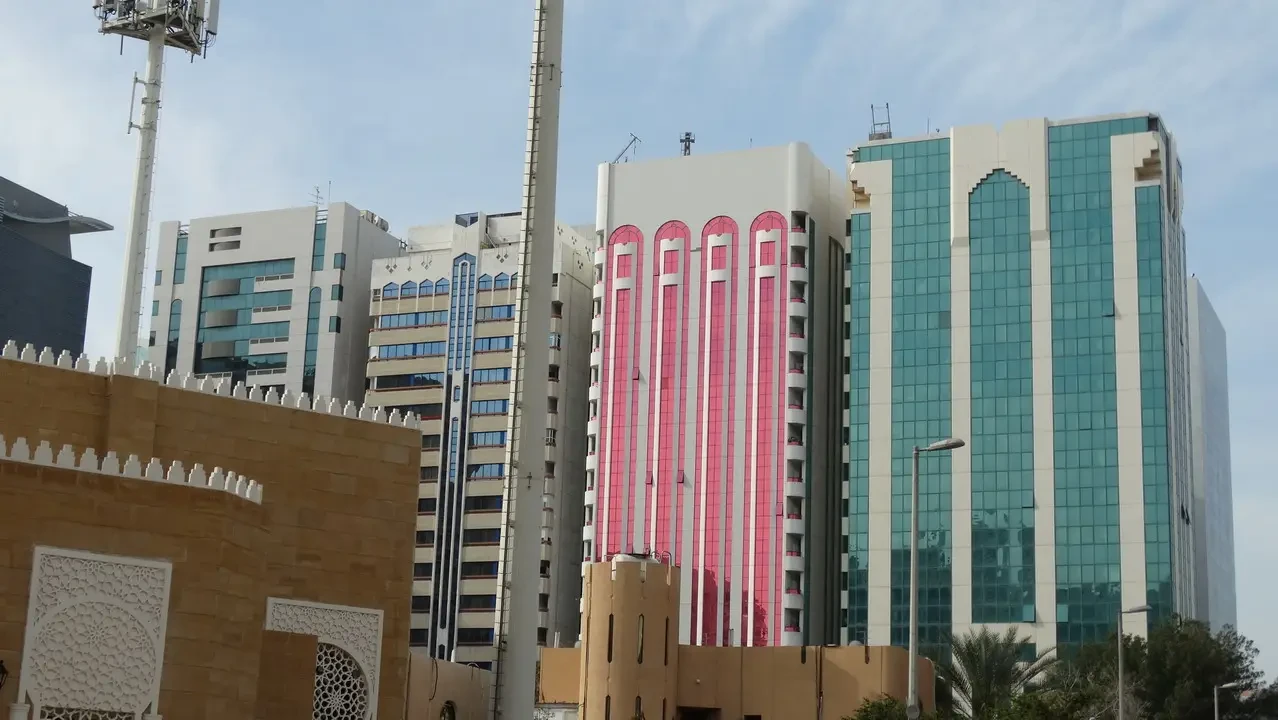
The two major cities obviously have little to show in terms of history and are a showcase of glass and concrete, with buildings and skyscrapers featuring the most modern or extravagant shapes and colors, all in an attempt to outdo each other by setting new records.
It's hard to understand how and why so many properties and businesses need offices everywhere, as if every company in the world must have an office on-site.
Arrival in Abu Dhabi
The hotel is one of those that offers a wide range of amenities, but we are here to explore rather than indulge in the comforts offered by tourism with a distinctly international style, where all five continents and human races are likely represented. A good breakfast will help us recharge our energy and go on an adventure to discover... Abu DhabiWe have a detailed plan of the places to visit, so we immediately move a few kilometers north to explore the central area, starting with the Al Markaziyah district, which is the heart of the city center.
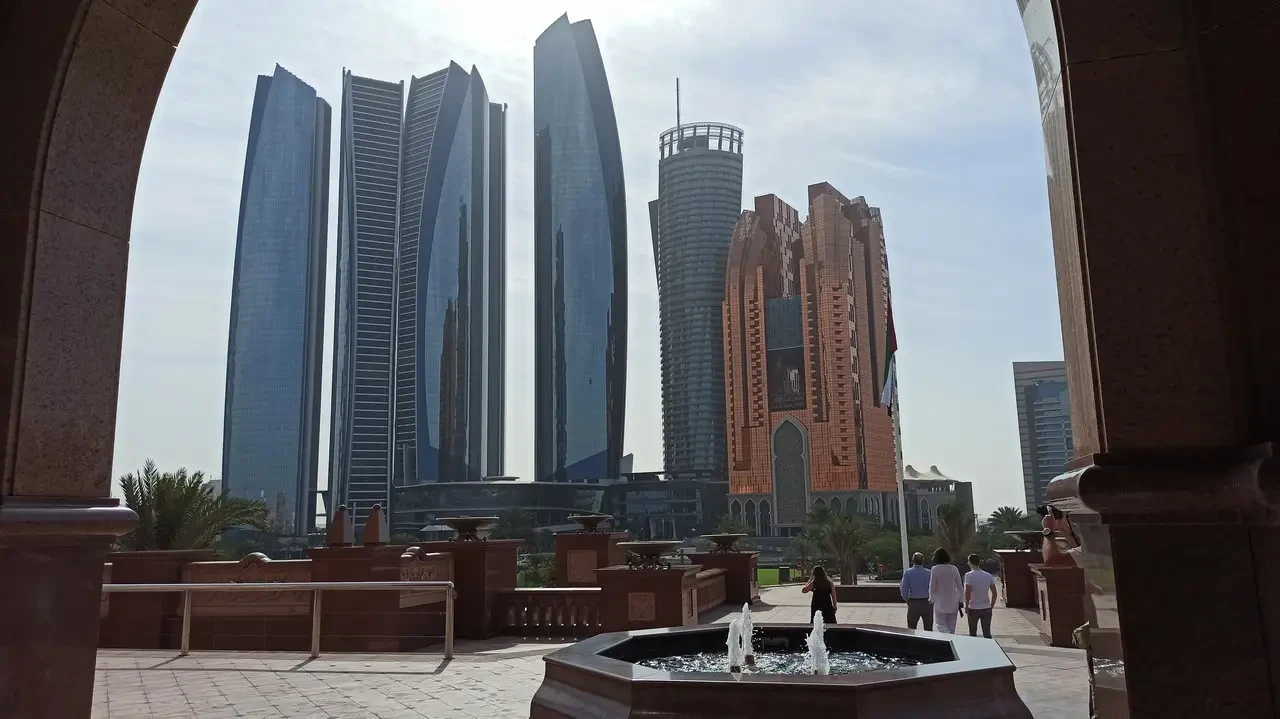
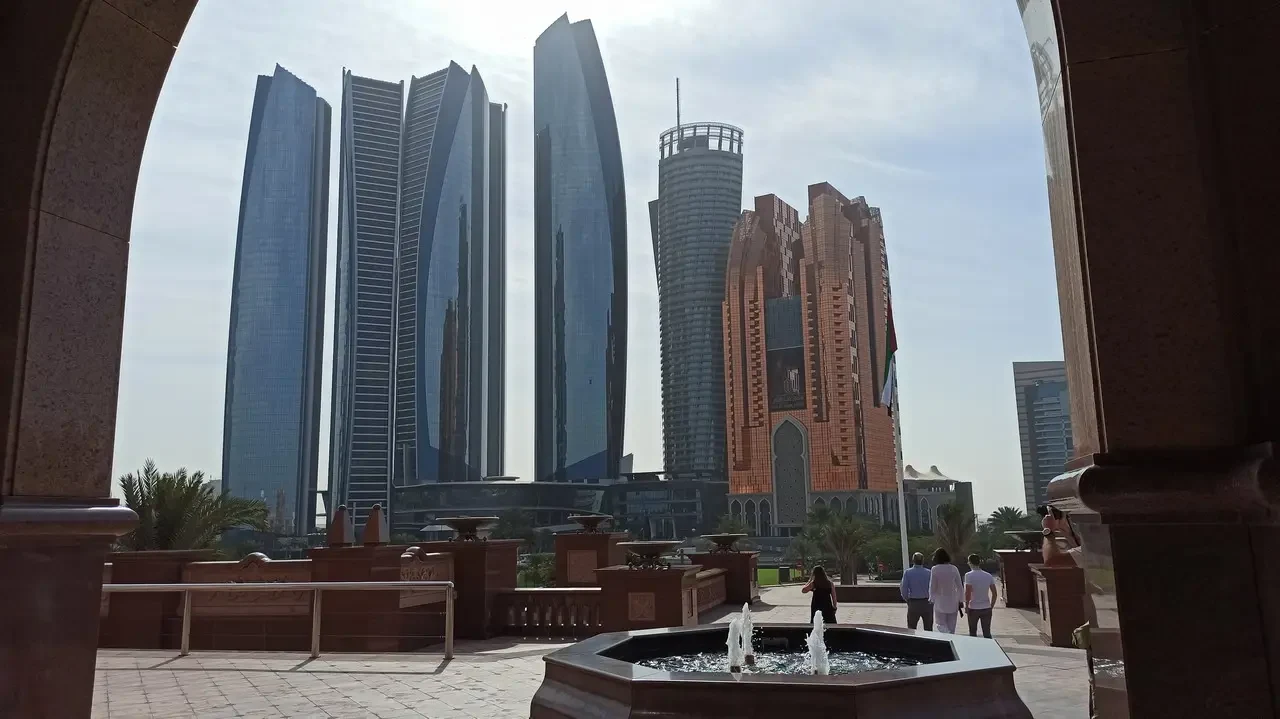
Burj Mohammed bin Rashid: There are two skyscrapers with a sloping top on the diagonal.
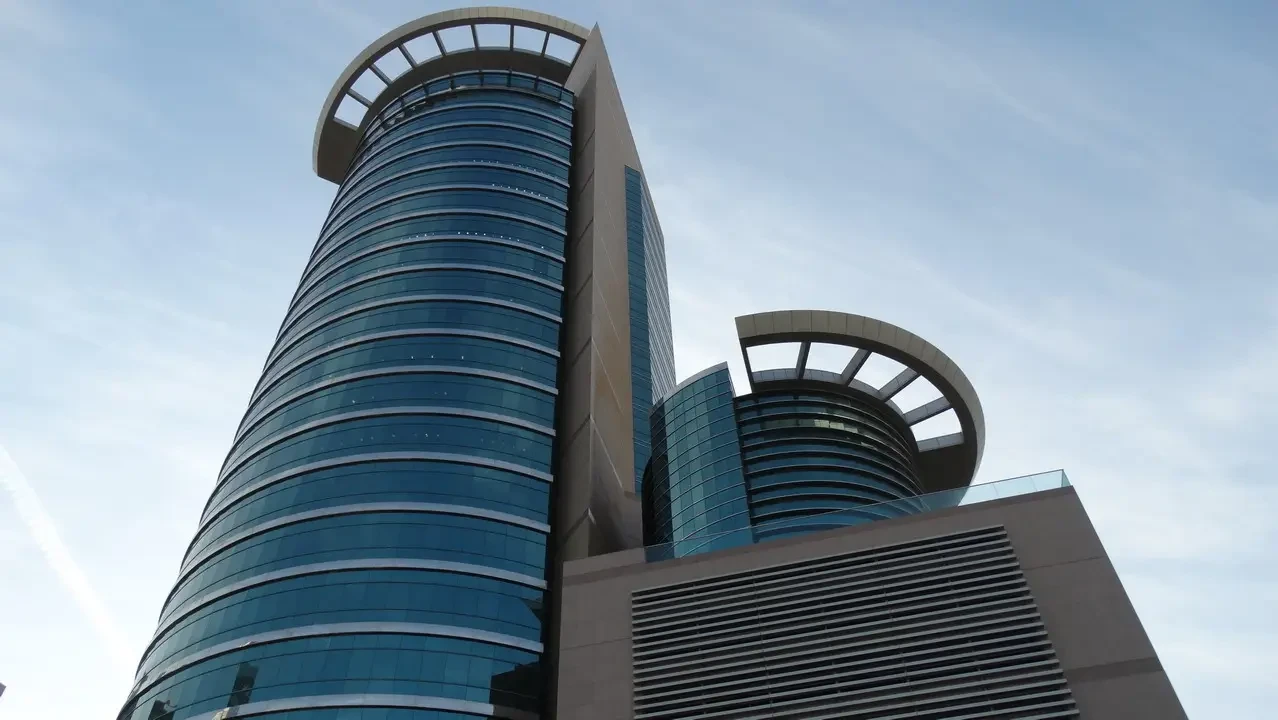
Etisalat Headquarters Another building with unusual shapes, featuring the classic, enormous golf ball on top. Headquarters of the telephone company of the United Arab Emirates.
Qasr Al Hosn: perhaps the only piece of city history, a fort built at the beginning of the last century to defend a source of fresh water. It will be interesting to see an old photo (i.e., from the seventies!) at the Heritage Village showing only the fort, protecting a well of fresh water and some mud huts amidst a sandy expanse. Now it almost symbolizes the urban center, and the small houses have been replaced by skyscrapers It seems unbelievable that this is the same place.
We move to the area known as Breakwater:
Emirates Palace: a 5-star hotel, where you are allowed to enter and admire the luxurious decor. lobby. There aren't many visitors yet, and the Ground floor view This alone is enough to make us realize the wealth that exists within, just looking at the furniture, paintings, chandeliers and decorations.
A.D. Heritage Village: an open-air museum where you can discover Bedouin culture and the history of Abu Dhabi, with a beautiful view of the city skyline from the beach, a Bedouin tent and a camel for taking photos on the red sand.
UAE Flagpole: the second highest flag in the world
We walk along the promenade, where other impressive buildings with bold architecture stand out, some of which are still under construction.
A quick visit to the Al Zahiyah district and the island of Al Maryah, particularly with the Global Market Square, which is mainly home to shopping centers.
We cross a stretch of sea that extends into the mainland to reach the Cultural District on Saadiyar Island, where are located the Louvre A.D., recently opened
Manarat Al Saadiyat, a very popular cultural center.
UAE Pavilion, beautiful construction resembling sand dunes, to recall the historical, geographical and cultural heritage of the United Arab Emirates.
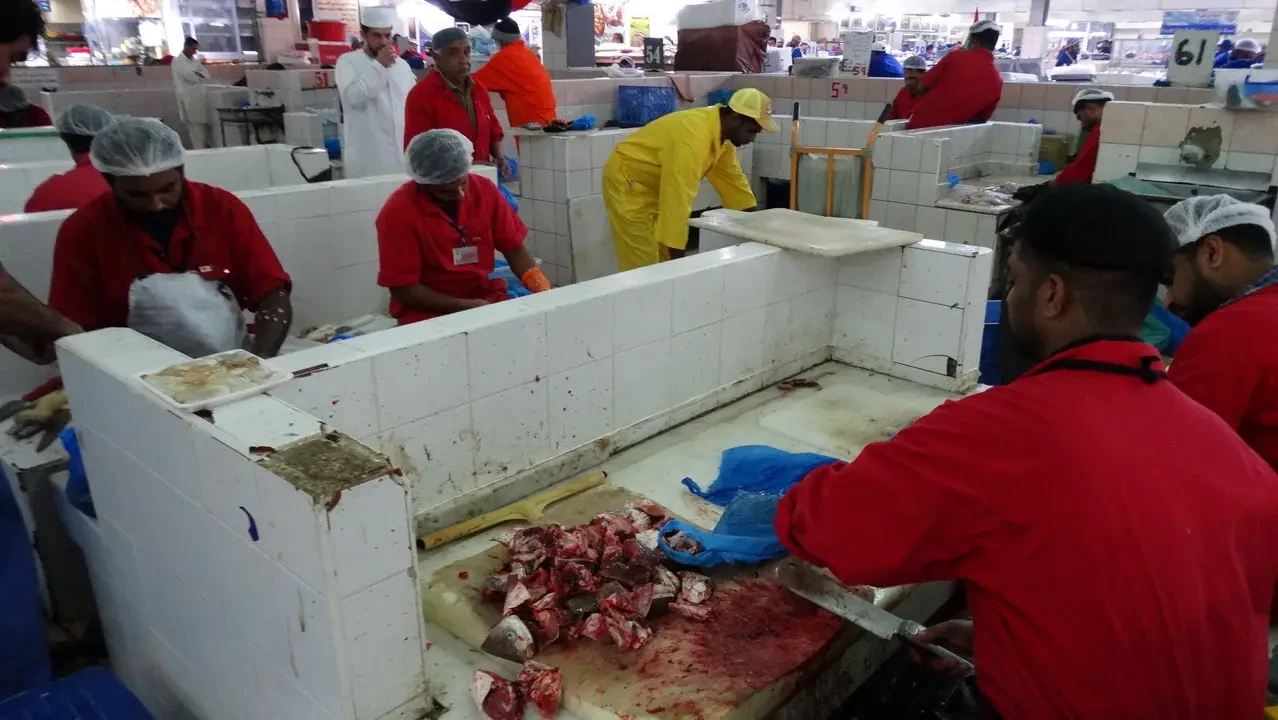
We move to Al Mina, a port area with an amazing fruit and vegetable market, although the fruits and vegetables are imported and there aren't many new varieties available. Not far away is the fish market, once again stunning and mouth-watering. Everything is perfectly organized at the stalls displaying fish of all kinds. In a designated area, men in red uniforms are waiting; they seem to be players about to enter the field. We will discover that they are " fish cutters and cleaners”: once purchased from the stall, buyers provide the fish so that they clean and prepare it according to the variety. They do this with remarkable skill and speed; it's also clear that the aprons are completely covered in scales, blood, and other debris from the cutting process. I imagine that after the market closes, the cleaning must be particularly thorough, as all you can smell is fresh fish. For those who want to complete the cycle, there are also frying shops on the inner edge of the market, preparing the product ready to eat. A chain from freshly caught fish to the customer's mouth in just a few minutes. It's truly amazing! Just a few hundred meters away, you can find the dhow harbor, even more distinctive with the backdrop of skyscrapers. The sea reveals Caribbean hues.
Probably due to the financial crisis that affected much of the world about a decade ago, and particularly economies more exposed as they were linked to the investment sector, it is not uncommon to encounter dilapidated buildings, abandoned to the elements, which are real ecological monsters that will neither be completed nor demolished.
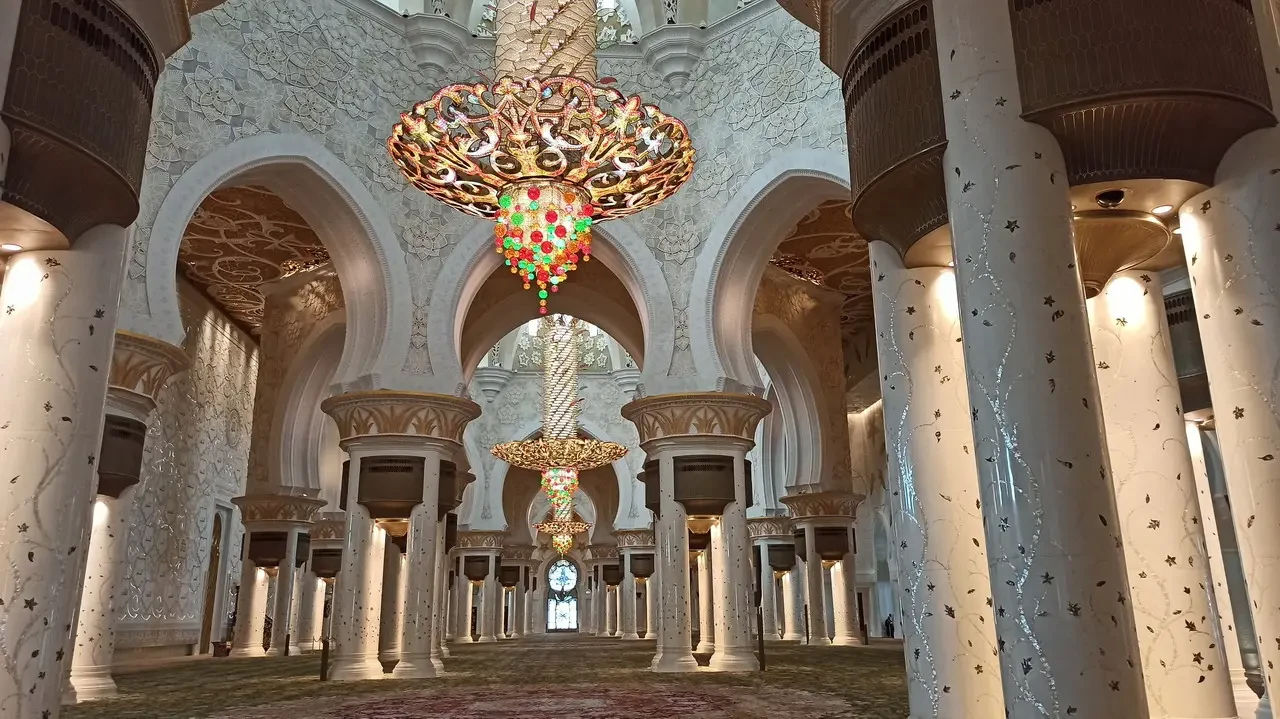
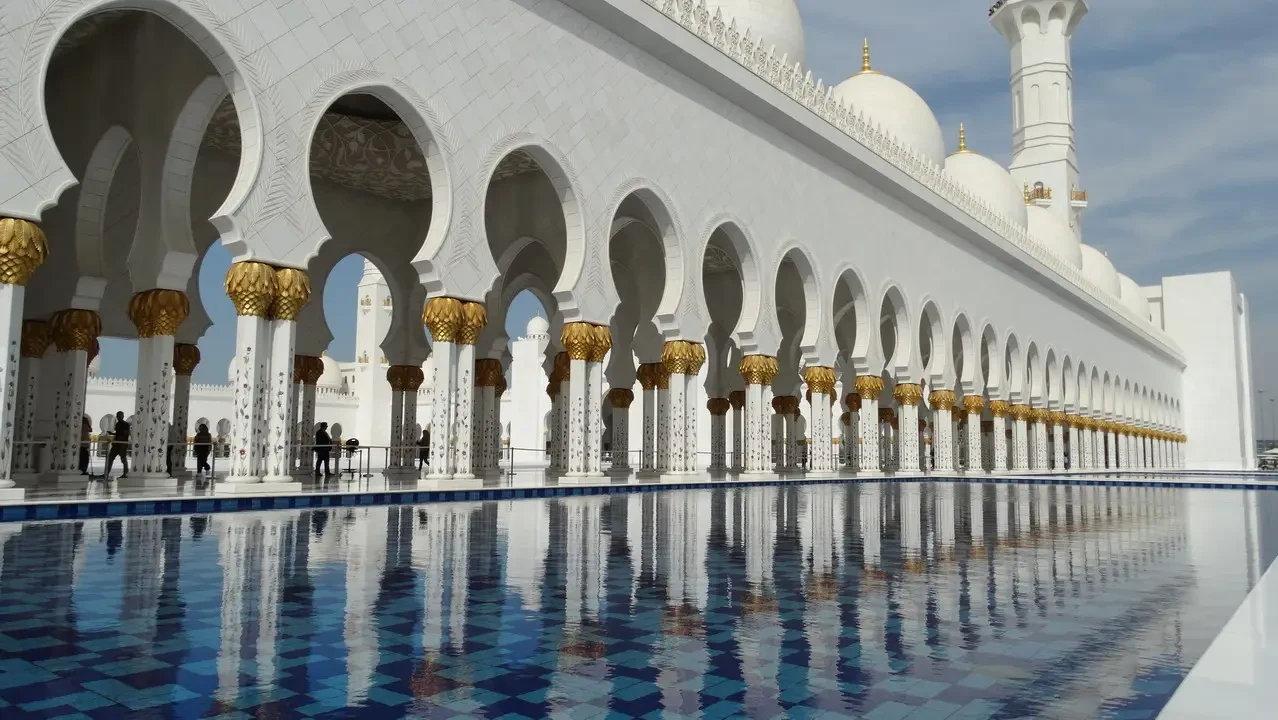
We move south, exiting the area that we could call the center, to take a couple of photos at Capital Gate... another skyscraper, but this time built with the characteristic of being the one with the greatest tilt in the world, something that would make the Leaning Tower of Pisa look insignificant. After admiring this latest oddity of the profane, we're going to face the only visit to the sacred (but is it really worth it?), the Sheikh Zayed Grand Mosque The entrance is free for everyone, including non-Muslims, but to access it, you need to be careful about how you get there and follow a fairly extensive series of checks. By car, we follow the various parking signs to reach an underground area that leads to a commercial zone. We find shops of all kinds, wondering if perhaps we have made a mistake. We go outside to see the mosque from the outside and return to look for the entrance. After walking through a long underground tunnel, we arrive in the area where a sheet with a QR code is handed out (which will be checked at least twice) and the initial checks on clothing are carried out: shoulders and knees must be covered, while women must wear a headscarf and clothing that does not allow for the visibility of body curves. Next, you go through the metal detector check, like in an airport, another moving staircase, and finally we find ourselves facing the majesty of the building, a bright white under the blue sky. We are all lined up along a guided path, but there is silence and we can observe everything very well. First, courtyard with tiled floor and marble columns (more than 100,000 tons of material were used), all beautifully decorated with intricate floral designs, then we move inside where the immense carpet, the largest in the world (which, with over 2 billion nodes, has surpassed that of the Grand Mosque of Muscat), and the wonderful chandeliers by Swarovski. A place that will impress you with its contemporary opulence. Seeing the wealth, one might think that Sheikh Zayed, the founder of the United Arab Emirates and a follower of development thanks to the revenues from the oil industry, wanted to thank the Supreme being and dedicate part of his wealth to him. The ambition to be first and the pride certainly played their part, but it remains a work of art that definitely expresses a strong sense of power, both divine and earthly. The visit is organized in such a way as to suggest hidden corners where the best photographs can be taken. It is never necessary to remove your shoes. It's interesting to find yourself facing columns from which air conditioning with a completely invisible system comes out. We will see this system again at the Grand Mosque of Muscat.
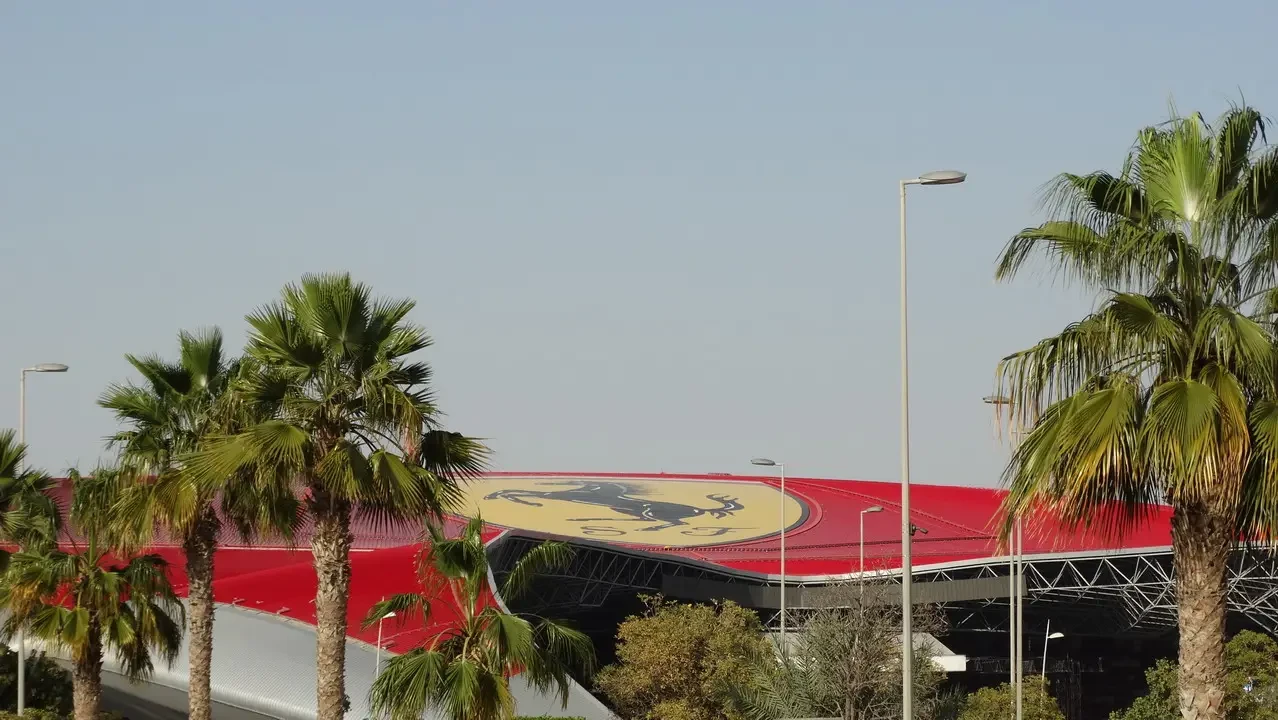
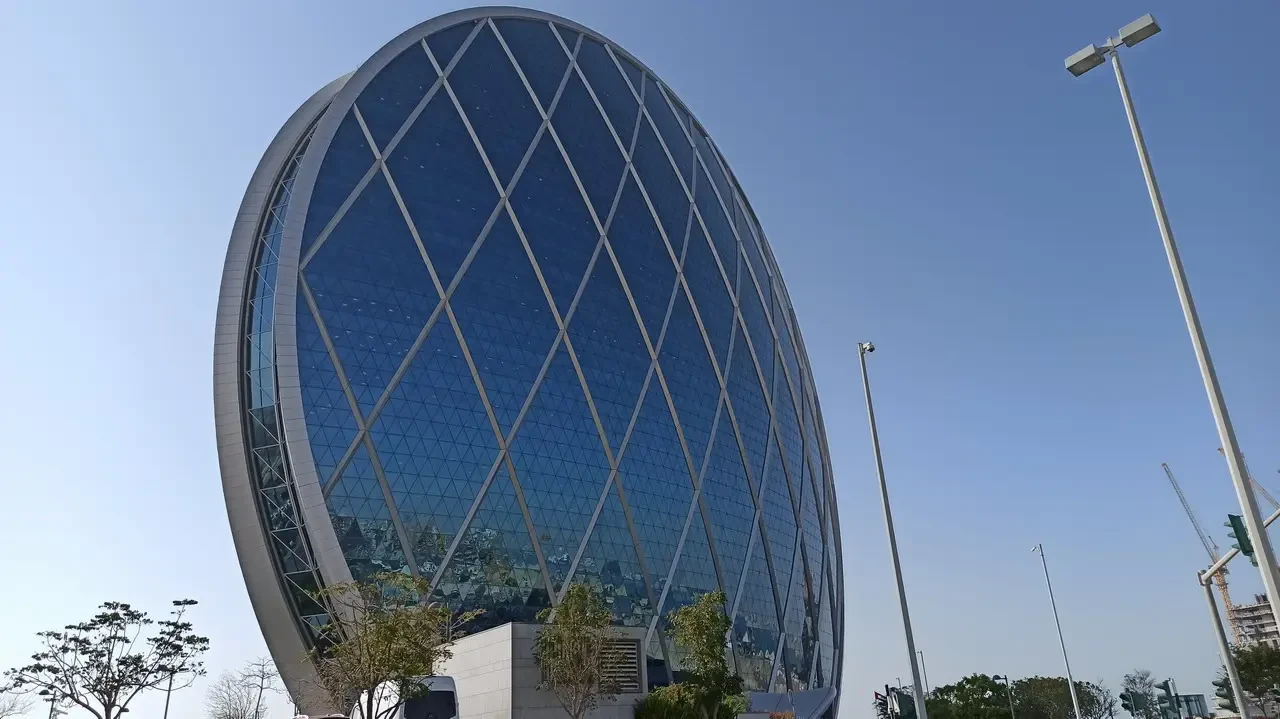
We cross the Sheikh Zayed Bridge, a modern and plastic boundary that takes us out of the island where Abu Dhabi is located, to see the latest extravagance, the Aldar HQ. The Coin, the building shaped like a coin. That money represents excellence in this area was well known before we arrived, and that oil has greatly contributed to its abundance, was also widely understood; but dedicating a structure such as a monument and warning about money must have required considerable effort from the architects who designed it. There is no doubt that they were well compensated! Around are construction sites intended to house new spaces, their purpose is still uncertain. A new crisis could make them empty shells, while a period of growth would turn them into new golden eggs. Before leaving Abu Dhabi, let's quickly visit Yas Island to see from the outside the Ferrari World, which was inaugurated a few years ago and is aimed at an audience seeking intense artificial experiences.
By the end of my trip, I will have a positive impression of Abu Dhabi, including the people I meet. At first glance, it seems like a multicultural environment that works well, although it is immediately clear who is in charge and who carries out the tasks. However, there is a sense of order and mutual respect in the roles played, relative to the social status one occupies. Conversely, it will be impossible to observe the tenets of Islam as seen in Muscat; perhaps there is simply no interest in doing so.
It's time to leave the steel and glass of Abu Dhabi to see the steel and glass of Dubai. But at least for the 120 km that separate them, we can spot some desert land. The natural desert develops horizontally, while the urban one prefers vertical ones. The first is quiet, the second is noisy; the first is reflective, the second is chaotic; and we could continue to create dichotomies that unite or rather divide these two empty spaces. But it's important to be careful on the road, as we are approaching the weekend and traffic is very heavy. All four or five lanes are full of vehicles moving in the same direction, changing lanes requires quick reflexes and eyes that look everywhere. Finally arriving in this metropolis will be a sort of relief, and the hotel in the southern part saves us from urban traffic for now. Check-in and start living the night in this city that never sleeps. A major artery cuts through the city from north to south, called Sheikh Zayed Road, with a number of lanes that, if counted, could lead to an accident. It seems there are no fewer than six per lane, an enormous asphalt strip with a speed limit of 100 km/h (and we're in an urban area), which is not always respected. It feels like being in a world of indifference: lives that run or slide parallel, indifferent to each other except during business hours. The only common denominator of this society, where the so-called "real Arabs" are a small minority, against a massive Asian presence for low-skilled labor or managers from developed countries, is… Interesting fact: It seems like a place where you can find both high-end and budget options. Despite the coldness of the buildings and the obvious sense of opportunity that connects the inhabitants, it gives an impression not entirely negative. It's clean, it doesn't seem like the classic haven for poor or rich people, there is mutual respect that is very Eastern and little Western. In the end, we will be impressed by how, despite all this official indifference, the ordinary person is always kind and willing to help, providing information or searching for them if he cannot do it himself. Perhaps a society like this has its own unwritten rules that are respected better than those found on parchment filled with codes. From a color perspective, we had imagined it as something like Las Vegas in Arabic style, but the neon lights or more modern LEDs give way to sober white lights that illuminate the gray of the buildings, making them seem… classic outfit, almost like a rush hour. The traffic is heavy, just like on Saturday evenings here, so a walk around the city center ( near the Burj Khalifa) translates into a careful observation of the surroundings from the car. Dinner time finds us at a Turkish restaurant in Jumeirah, where we enjoy a mixed meat dish. The evening continues, or rather ends, with a visit to some buildings that we had only seen on TV before, including... Burj Al Arab, the sail, the seven-star hotel costing over a thousand euros per night and that, despite the price, claims it would not be able to cover the necessary investment for its construction if it were fully booked for 50 years. After all, luxury items have their own cost. Almost on top is the platform which serves as a landing pad for helicopters and hosted a legendary tennis match near the sky. We see it illuminated with changing colors, which seem to make it look different depending on the time of day.
The tiredness had taken hold of us; the urban heat of around 30° Celsius demanded its toll in terms of energy, but we still need to go shopping at the mall integrated into the hotel. A covered tunnel connects us and in a moment we are in the world of shopping.