Day 4
Jebel Akhdar and Nizwa
The most traditional Oman, where time seems to have stood still.
Jebel Akhdar
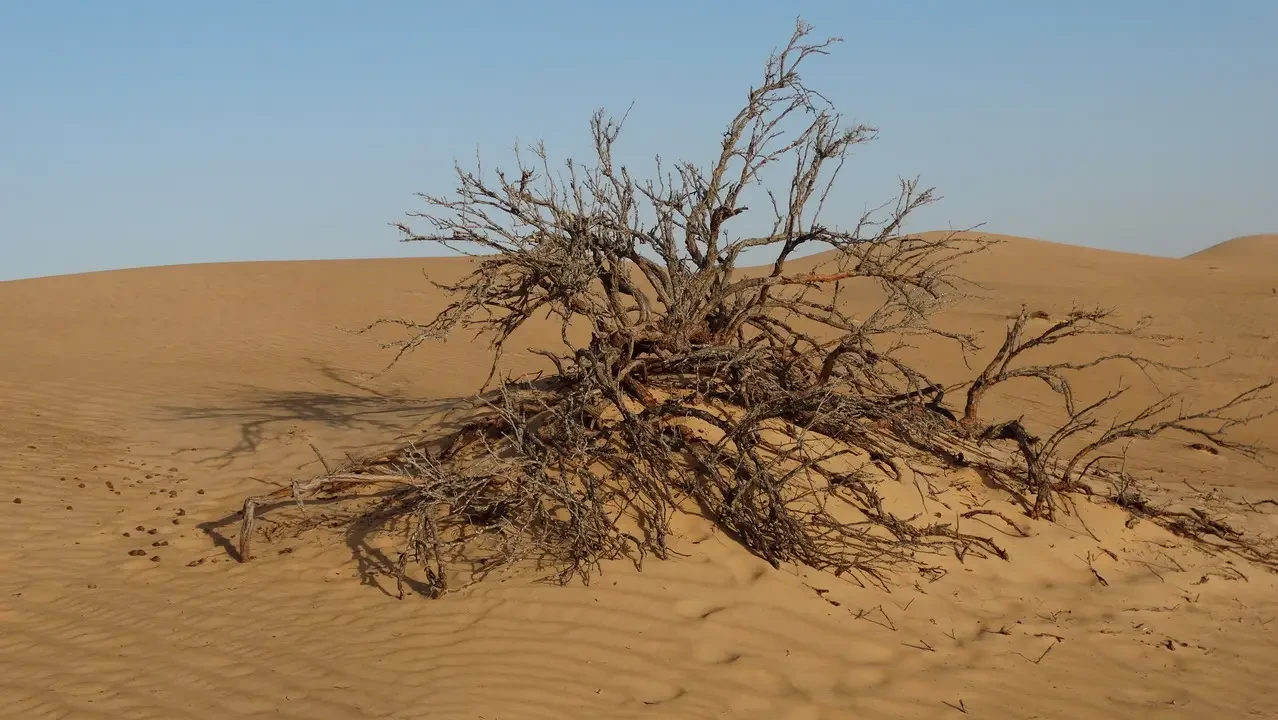
Sharqiya Sands (Bidiyah/Wahiba Sands). This is an area of long dunes, stretching for 200 km in length and 100 km in width, extending south of the Eastern Hajar mountains to the Arabian Sea.
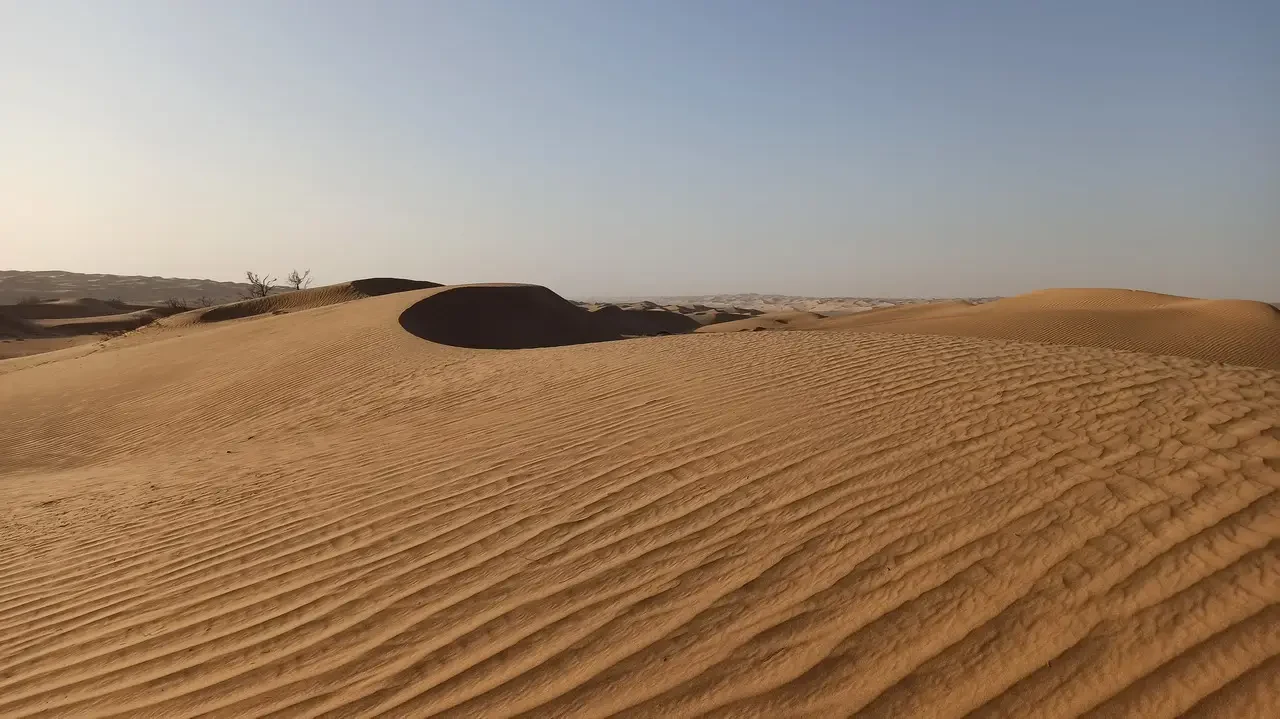
Sunrise in the desert often doesn't evoke the same sense of magic as sunset. The humidity (the off-road vehicle is covered in dew) evaporating creates a mist that blurs the horizon, so when the sphere emerges from the line between sand and sky, it illuminates the landscape in an unusual way, softening the colors we would expect to see. Sunrise is expected shortly after 6 am; we leave the bungalow about twenty minutes later and head straight for the dunes to watch the spectacle. Indeed, the east is illuminated and its warm colors are reflected around us, but nothing comparable to yesterday evening's sunset. The sand has a coarser grain than the deserts I have seen before, but the silence is accompanied by soft curves sculpted by the wind on the dunes, they express a moment of absolute beauty. Some plants struggling to survive, with their roots deeply embedded in the sand; wooden skeletons, which shows how difficult life can be in this area. However, one wonders how such a lifestyle could have thrived in such an inhospitable environment. This suggests that nature strives to take root and adapt to any condition. Time passes, we look around admiring a view always the same but always different; at some point we remember that it's time to pick up our tracks, which have been erased by the wind, and return to camp, pack our bags, have breakfast, and start the day at 8:30.
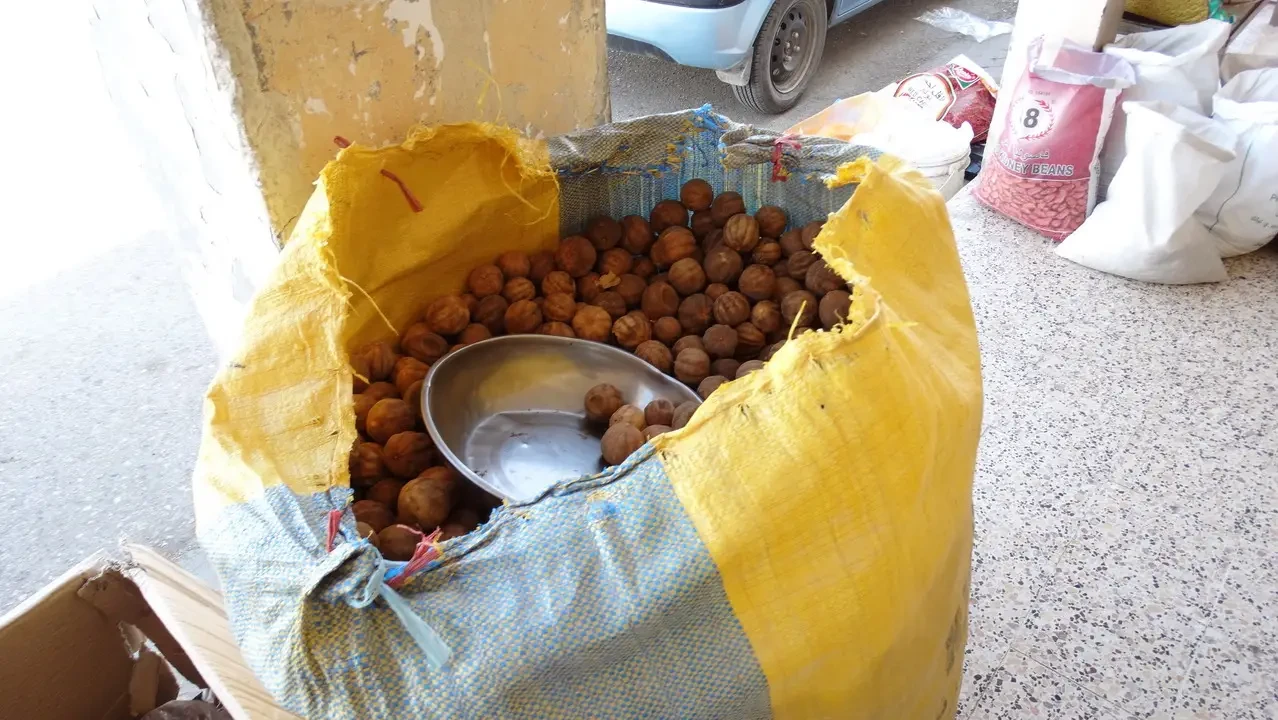
We easily reach the paved road by driving along the mostly sandy dirt track. From here, we return to Al Kamil and try a rough terrain route; the navigation systems find a shortcut, and within a short time we are back at the starting point of yesterday. We will arrive in the city on a good road in about fifteen minutes, from there we continue on Hwy 23 again towards... Ibra... via the newly built highway, which is still under construction in some areas. Upon arriving in town, we take a short visit to the local souk, which is quiet and full of interesting goods. Outside a butcher's shop, there is a camel head... a macabre reminder of the type of meat sold inside. This is not a proper market, but rather an area with parallel streets, on whose sides are located the shops At this point, the navigators advise turning sharply north on Route 27, then taking Route 15 almost in reverse to avoid leaving the highway. Instead, we continue on the Sharqiya Expressway for about 40 km, exiting towards the south towards Lizq (without reaching Sinaw), and from there, using good secondary roads where you can travel at 80 km/h or more, we reach another road that we take in a northern direction through this Omani countryside: we find ourselves in an area of small rural villages, where authentic Oman still lives, closely tied to its ancient way of life. Among the low-slung roofs, minarets stand out from which loudspeakers occasionally broadcast the call to prayer by the muezzin. This chant fits perfectly into the landscape, while men and women wearing traditional black abayas continue their activities as if it were background music. The landscape alternates between barren desert stretches and green valleys where goats and sheep graze peacefully, sometimes accompanied by camels or donkeys, proving that when the land is irrigated, it can produce vegetation, including fenced-in gardens. We should expect that within a couple of months, all the wild greenery will inevitably turn yellowish during the hot season, perhaps even beyond. A quick lunch with freshly squeezed fruit juice and ice cream cools us down for a moment from the heat of the plain.
Before reaching Nizwa, we take a right turn to go along the Jebel Akhdar and to reach SayqThis is an interesting experience: starting from 400 meters, we need to reach a comfortable plateau at 2000 meters, passing through an extremely rough area. To do this, a superhighway has been built without sparing any physical or financial effort. Despite the risks, there is a police toll booth at the beginning to check the vehicles; only 4x4s with all-wheel drive can proceed. A well-equipped visitor center provides information on both the route and the attractions of the area. We then proceed cautiously along this wide and well-paved road, which has a constant slope, although it rarely dips. It will be a fascinating 30 km journey, where humans have managed to tame a wild and hostile environment to reach the town of Sayq. Here we find a construction site in great transformation: cranes and trucks everywhere; something is being built senselessly and even incomprehensibly. Of course, at 2000 meters, it's less hot (at this moment, we measure 32°C against the 19°C of the plateau), but we are far from civilization and it is difficult to understand the real reasons for living there, since it is beautiful but certainly not a resort area. Perhaps it will become one, given the high number of luxury hotels that are opening. The vegetation is anything but lush; steep and rocky walls descend from the surrounding mountains, unlike our concept of an alpine landscape. We reach the edge of the plateau to take some photos and admire what lies before us, which is remarkable. In our search for the best viewpoint, we find ourselves descending along a secondary road, which we will "appreciate" for its steepness at the moment of reversing to climb it. Several tires on the bottom indicate that powerful means are needed: a car in front of us makes a quick getaway to overtake and manages to climb. We wonder what would have happened if it hadn't been able to reach the top. The road actually climbs so much that we see the hood almost vertically above us, and at some point it seems like the car will roll backward. Of course, this is just an impression, but for those of us who are not used to driving on certain roads, there is certainly a sense of awe. From a position slightly above the Diana Viewpoint (The Princess had come here on a visit) we admire the wonderful scenery, with the vast expanse before us, a small village just below, offering stunning views. well-maintained terraces, a patch of green amidst the barren landscape. We continue to the other side for a view of the opposite front, and here we see... View from above We discover that they are building a completely new neighborhood and the police station, whose perimeter wall should not be less than 1 kilometer, in a country that is decidedly peaceful with almost non-existent crime rates.
We were expecting to find simple shepherds tending their flocks, while returning from a small town that is rapidly moving towards the future. We carefully descended for at least half an hour, using engine braking and gently applying the brakes when necessary. But the real heroes are the truck drivers who navigate this road with enormous loads, almost challenging the laws of gravity. We are still 180 km from Muscat, and it seems that this could help those sensitive to heat to relocate and create a community at higher altitudes. The vegetation remains sparse even in the highest areas.
The urban face of Jebel Akhdar
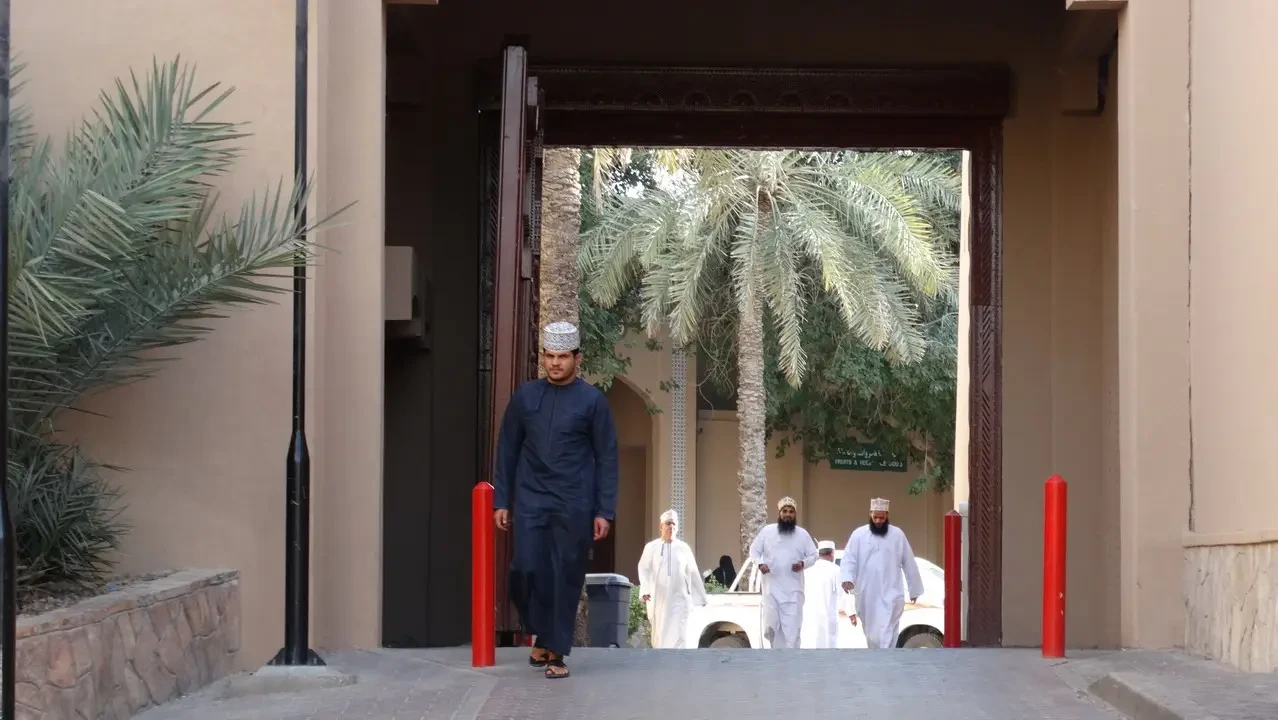
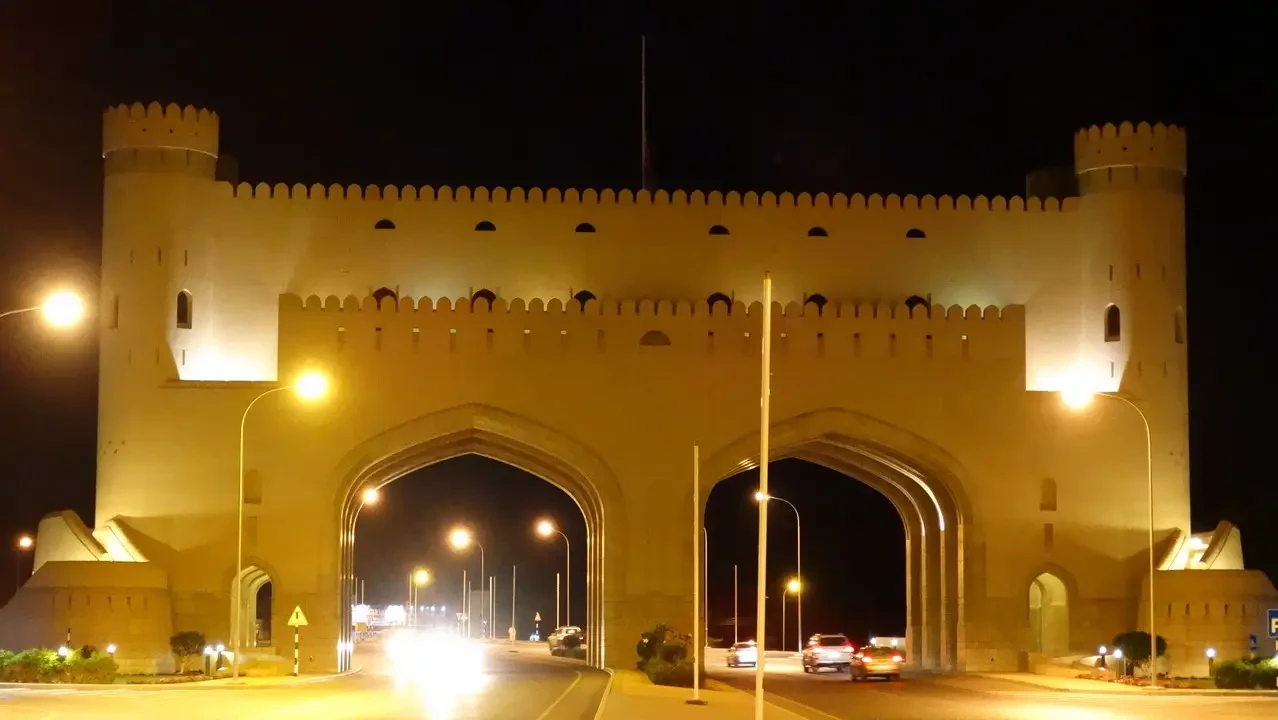
Just a few kilometers away, we are at Nizwa, while the shadows tend to lengthen over the already warm colors of the fort and the surrounding walls of the souq. Nizwa is one of the most beautiful cities in the country, well restored and partially surrounded by high walls with the ancient entrance on the large square. It has a conservative city history, so that it is still seen today as a stronghold of tradition: the few women who are seen wear strictly black clothing and a veil to cover their heads. The historic center revolves around the mosque and also strong... this one characterized by a large circular tower, the Bin Seif Tower from 1650, from which you can enjoy a beautiful view. You can see tourists walking around the small shops and the most interesting areas of the souk, surrounded by walls with beautiful wooden doors. It is divided into sections for... spices, of meat, of fish, antique shops and goats (only present in the morning). The whole place creates a well-organized image, designed to separate various activities and also protect them from an hygienic point of view.
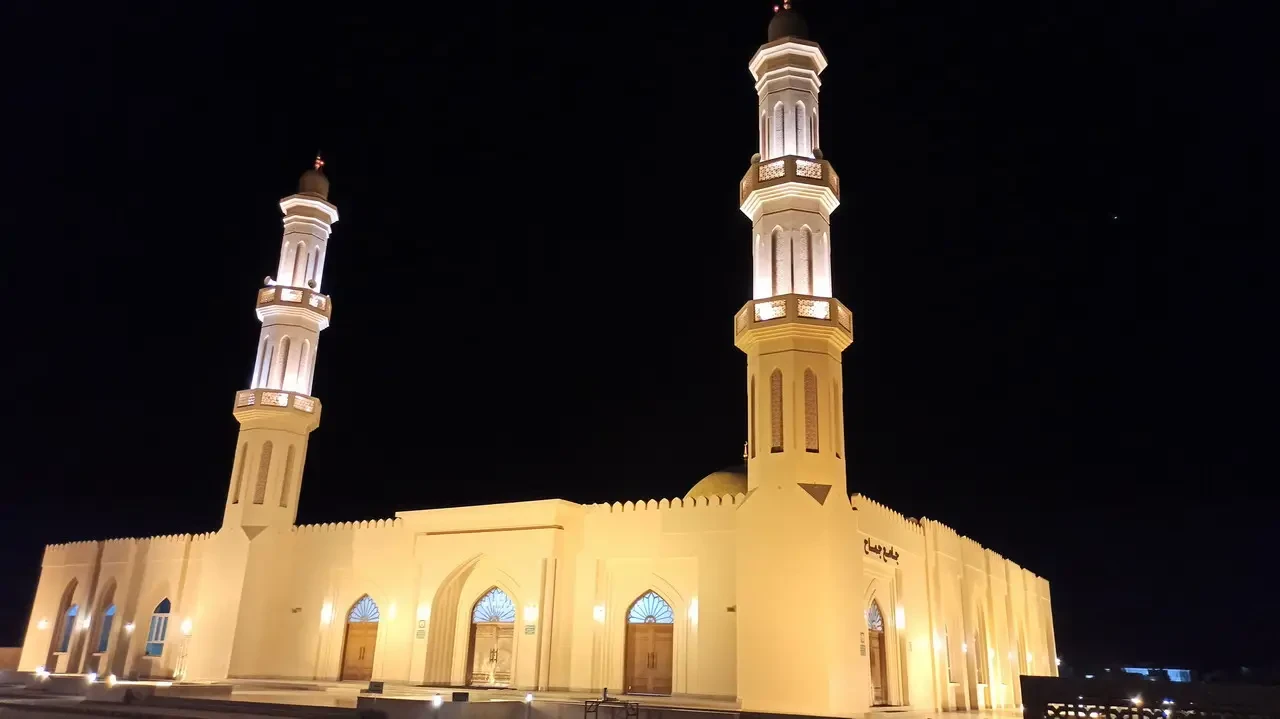
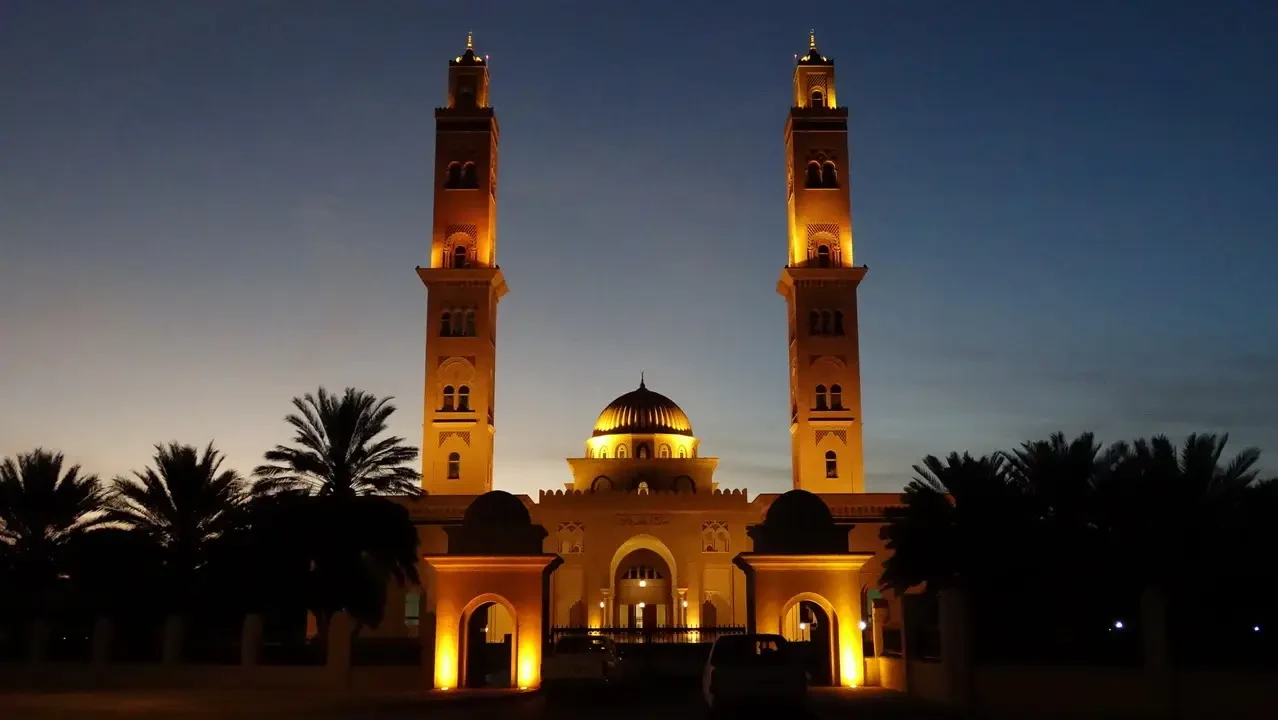
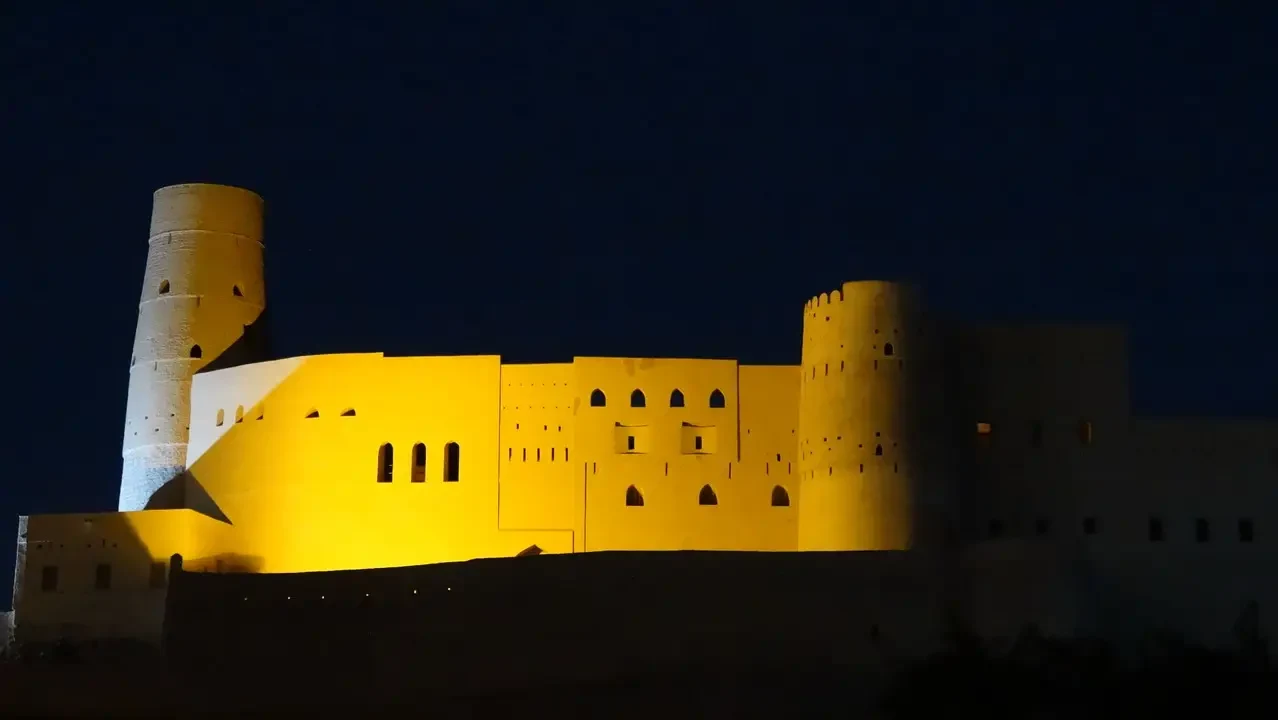
Just a short stretch while the The sun disappears behind the Hajar Mountains, we arrive at the outskirts of Bahla, where we take our seats at the hotel to immediately start again and make the most of the perfect time for taking photos. In fact, it's a great opportunity to... Bahla that Jabrin (photo)(located 9 km away) boast beautiful forts, the first of which was more focused on defensive activities, while the location of the second suggests a greater residential use. In Bahla, we take a stroll through the peaceful souk; the city was surrounded by a wall that was 12 kilometers long, protecting it from invasions, and has been declared a UNESCO World Heritage Site. Now it is night, and... mosques They are glowing, with their enormous arms reaching towards the sky, which are the minarets. While there is a lot of emphasis on the nighttime illumination of places of worship throughout, this seems particularly interesting to us, even though it's located on the outskirts of Bahla. We park so we can take some photos of the exterior when the muezzin calls out the prayer: it seems like everyone has agreed and the situation takes on a significant intensity. Any music or sound becomes meaningful and touching when it arrives at the right place and time.
It's time for dinner and we have a suggestion for a simple Yemeni restaurant: no-frills but with good food, where you can enjoy a Great kebab.
Regarding Yemen, during the trip we learn from people with origins in this country that the bloody conflict that has been tearing it apart for years seems to be heading towards a solution. Both Saudi Arabia and the United Arab Emirates apparently decided to disengage from its internal affairs, in light of the failures following the Houthi uprising. Unlike what we know, it appears that the two Gulf nations were the ones who initiated the conflict, defending the Sunni part of the population. This country, which has always been poor among the rich, has literally plunged into crisis due to the civil war, despite boasting much more history and civilization than all its neighbors in the Arabian Peninsula.