Day 5
Jebel Shams
The day of the highest mountains in Oman
Jebel Shams
The hotel room for tonight included a full apartment, which we only used minimally. Breakfast in the room with tea and pastries purchased yesterday evening from a bakery. The pastries are truly delicious (especially the pistachio ones), and we certainly wouldn't trade them for a croissant.
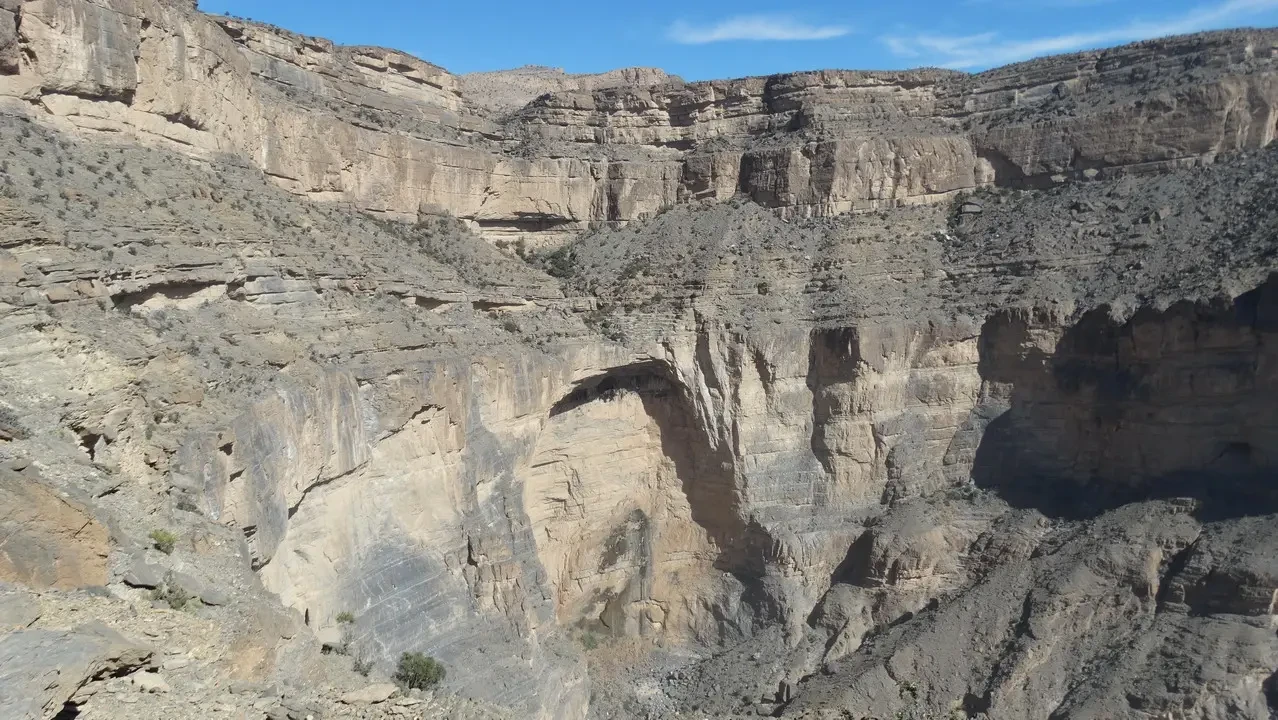
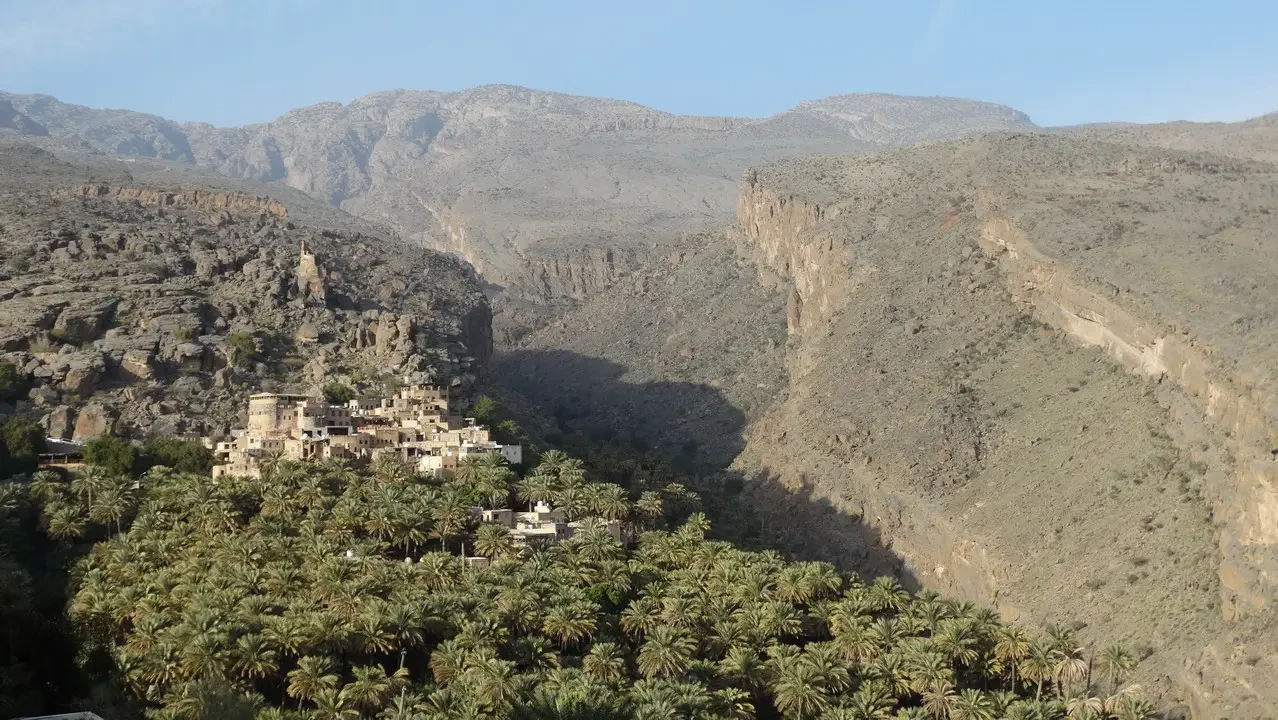
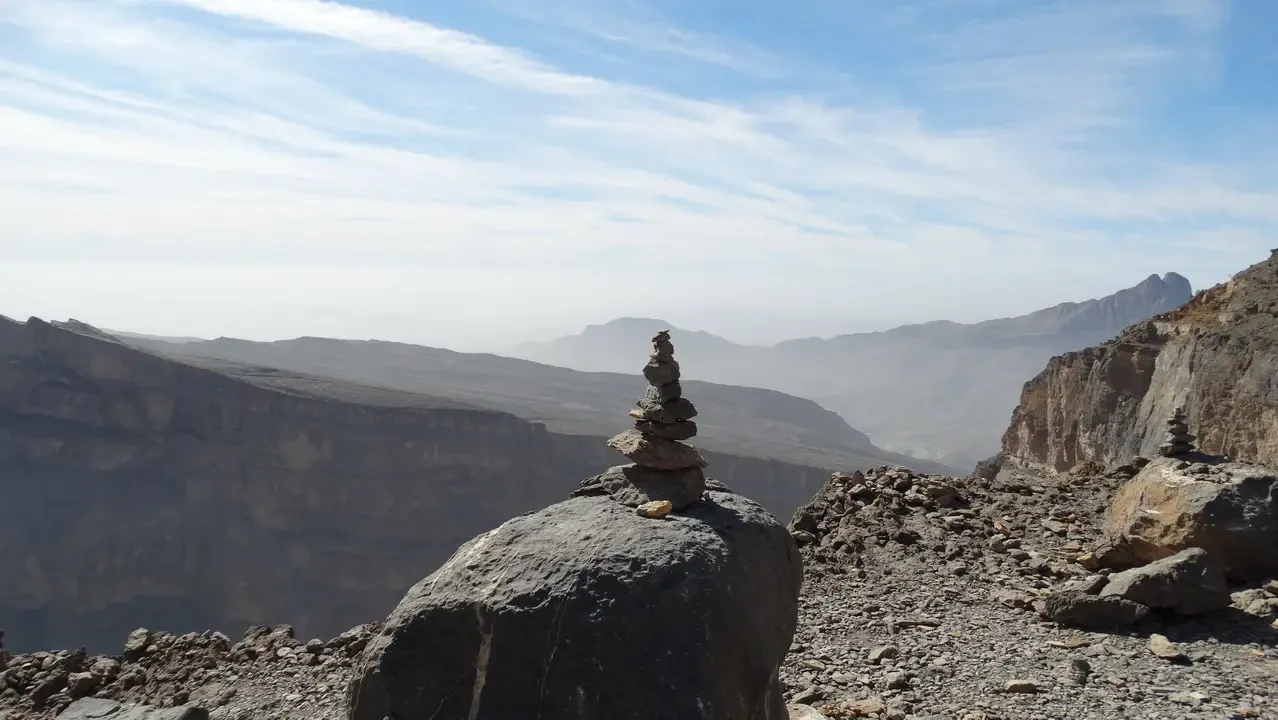
Today's destination is one of the most scenic areas in all of Oman. Jebel Shams, the "mountain of the sun", near Western Haras. At 7:30 am, we depart; the day is slightly overcast, with very light clouds, and we hope for improvement. We follow the lower part of the Wadi Ghul, with the small town same name, surrounded by palm trees. The sun on red rocks take on a completely different meaning. The climb is a mix of good asphalt, followed by a rough road that is far from ideal, another stretch of asphalt, and finally a dirt track where a 4x4 becomes very useful. We see some ordinary cars attempting to navigate the challenges of the route, and we certainly wouldn't want to encounter them during our next rental. It's early and there aren't many people around yet. There are a couple of viewpoint that open onto Grand Canyon of Arabia and we realize how impressive this is crack in the ground, it's about 1 kilometer deep, with terrifying jumps. We are now at an altitude of 3,000 meters, which is the highest peak in Oman, but from a mountaineering perspective, there is no glory as you can reach it by car.
Towards Jebel Shams
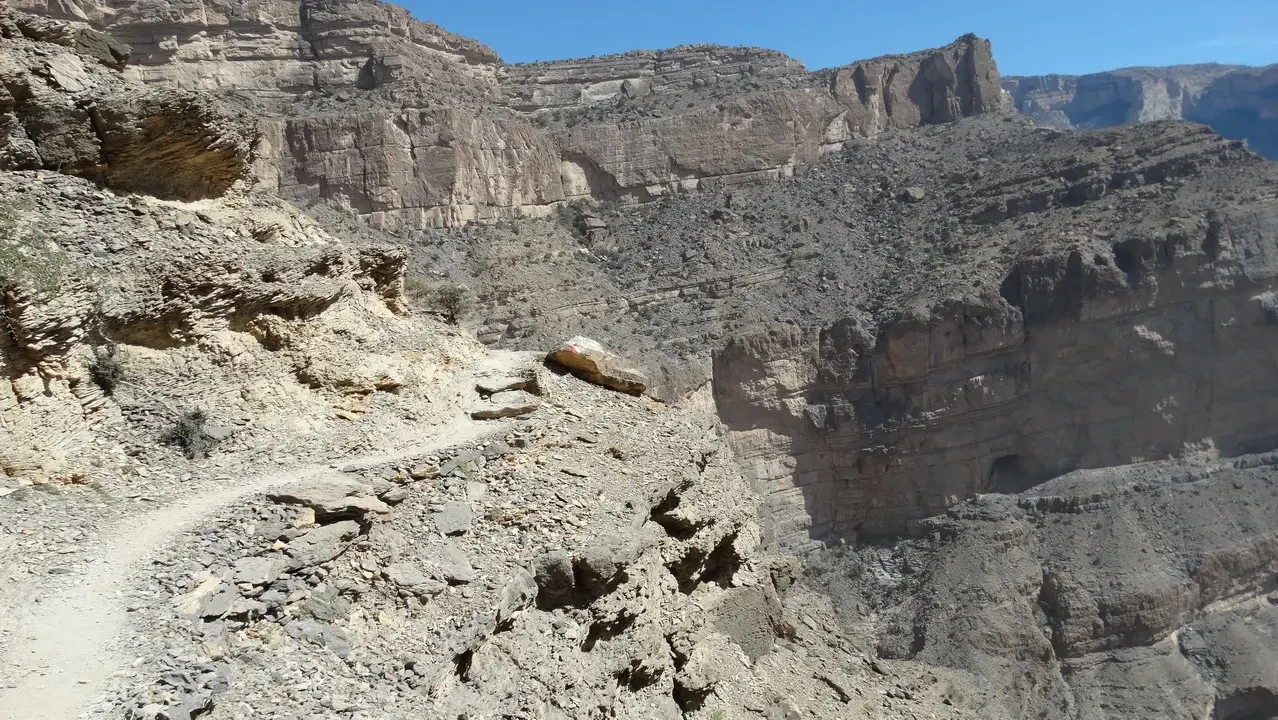
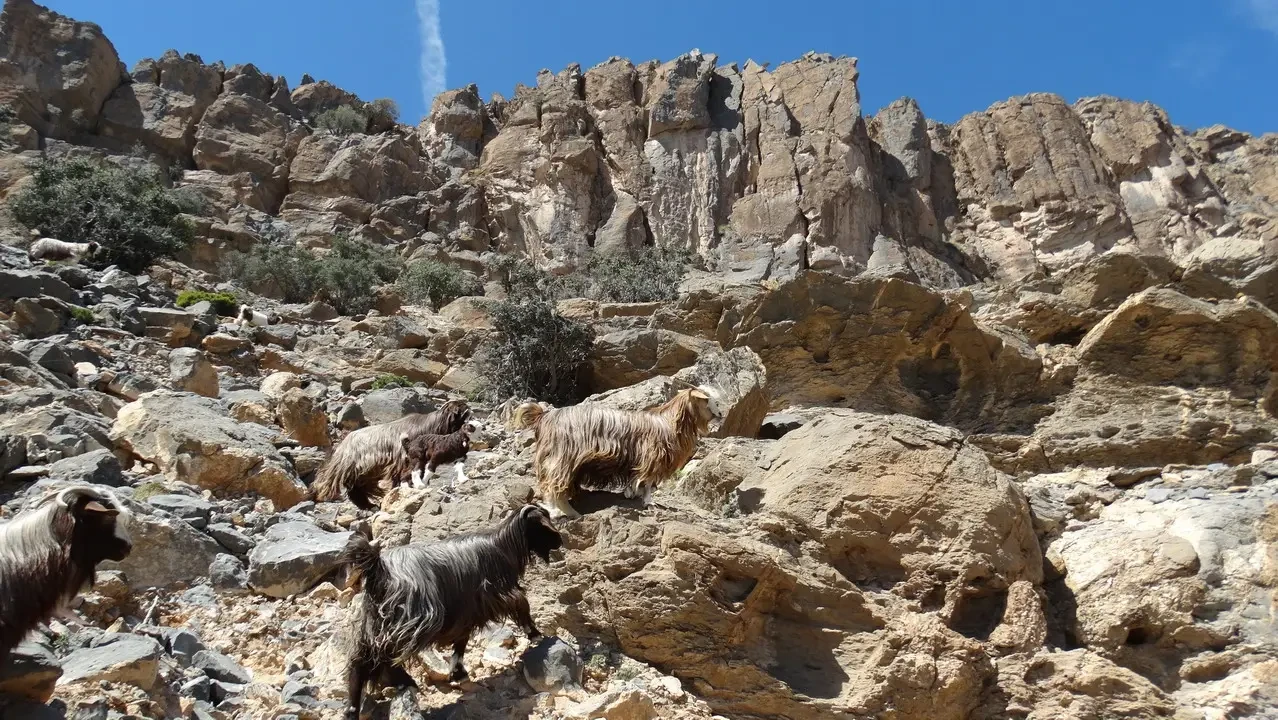
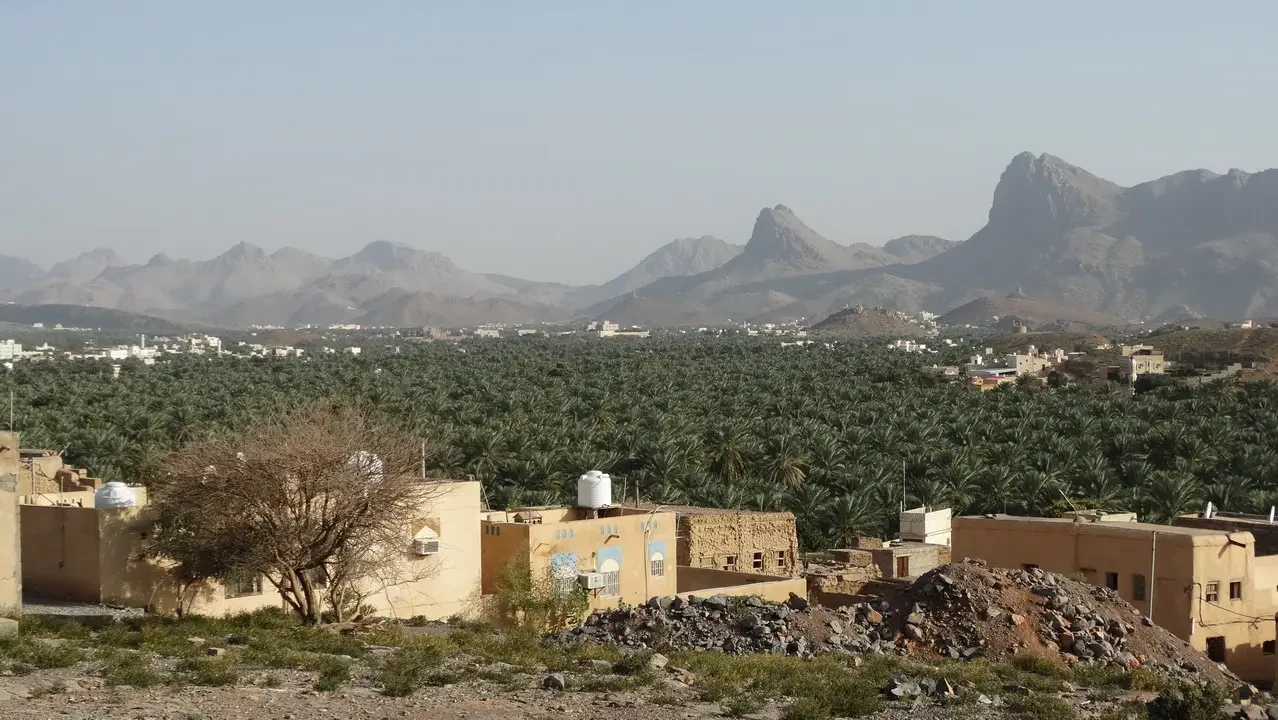
We reach the cluster of houses where the road ends, and we manage to park without any problems at Al Kithaym and we set off for the Balcony Walk, the sky has now turned completely blue, probably due to the layering being related to the evaporation of overnight dew, due to the humidity that characterizes nights in desert areas. The path is something unique in its kind, as it passes with some ups and downs halfway through the canyon, positioning us with part of the abyss at a right angle above our heads and hundreds of meters below our feet. In front of us opens a narrow strip of land and easy to navigate, slightly uneven but not particularly dangerous. However, it would be enough to stumble or suffer from dizziness, and immediately the "game over" message appears. Walking at a good pace, but without giving up on observing the spectacle that unfolds before us, photographing and filming it extensively, we take about an hour to reach a place that our imagination had never even conceived of. When the wall creates a cavity comparable to a large C and a space opens up not more than ten meters wide, then the stones appear neatly stacked. simple accommodations; a little further on there are some balconies which in the past provided crops for those who lived there. None of us would have had the courage to tend the garden, given such exposure. A simple slip or a misstep and you could easily fall into a void of at least three hundred meters. Some goats We strolled around, curious and asking each other what we were doing there. We explored the humble stone structures, seeing remnants of fireplaces (the nights here are unlikely to be very warm at this altitude), and discovered the reason for the settlement: a small stream of water falling from the wall. Some drops continue to fall, as they have in the past, making it possible to live with some vegetables and milk/meat from goats, despite the harsh conditions. These dwellings have been uninhabited for quite some time, but we still wonder what reasons might have led people to settle in such an inhospitable place. We can't find an answer, even by asking some locals who speak English. The only option is to imagine people fleeing, with a good reason to hide, and this place could certainly be a safe haven, since there would be no chance of arriving here by accident. Next to the small settlement, a small flat area with some trees provides a pleasant space to sit in the shade and enjoy a snack. Who knows if the inhabitants also used to spend time here? Who knows what they talked about. We return along the same path, carefully watching where to put our feet, but also closely observing the stone horizon with this large basin in the middle. The parking lot is now full; we had already guessed this from the people we met on the way back. We try again to find a quiet spot and we find it during an unplanned walk: while we stop for a break at the viewpoint right next to the path, we have a conversation with a local guide who is helping two bored Italians who are too busy taking selfies and other photos of each other. The man realizes that we are there to admire and understand the surrounding nature, not ourselves; he begins to provide us with useful information, advising us, for example, to take a circular route from Krub and Al Marrat"It says the road is in good condition, but at some points it becomes narrow and there isn't much activity around that area. Thanks to his information and the equipment provided by technology, we embark on this adventure. When the unpaved road ends and the first paved section begins, instead of descending, we turn right to climb until the road reaches its highest point: on the right, towards the summit of Jebel Shams, it is a military zone, so no access. Continuing straight leads us to Krub, a cluster of poor houses with nothing around. In total, we will have to cover about 40 km, but after just 6 km, we wonder if it might be more convenient to turn back. The road becomes dusty and steep, especially because there is no one around. We desperately hope that no one comes from the opposite direction. The off-road vehicle is a real climber, and compensates for our lack of experience: on the ascent, we manage reasonably well on foot, with skis or a mountain bike, but we are not very familiar with driving. Slowly, the road becomes smoother, but at this point, below us opens up an abyss. We descend again in the direction of Al Marrat (about 15 km) and here the music changes. There's always something to be careful of, but we can relax for a moment and enjoy the wonderful view, with magnificent tufts of green where the water can flow. We don't see anyone here either, but the village has much more beautiful houses. We even wonder how that could be possible, small bushes along the road are bursting with colorful flowers, and spring is definitely in the air. We head towards the Sunrise Resort, a eagle's nest only accessible by off-road vehicle, and then continue on. There's no one here, and we would have gladly asked for confirmation about which road to take. At some point, a friendly young man with an Indian accent approaches us and tells us that we need to get off at a fork in the road Located a few kilometers downstream. Upon arrival, we descend and see the road leading uphill in the distance, so we calmly descend, stopping occasionally to take photos of the few oases present. Next to them, small houses and a few mosques indicate that life here is not particularly easy, but once again, water makes what seemed impossible possible. On this stretch of road, trucks struggle to transport materials to the construction sites (including Sunrise, which is also undergoing renovation). It's natural to wonder what reasons led to building a resort in such a remote location, even for those intending to visit Jabel Shams: certainly, lovers of tranquility will be rewarded. We complete the loop by returning to the uphill road and shortly we are back in Bahla, near the hotel where we stayed overnight. We continue our journey, visiting... Al Hamra to see the old part, built with raw bricks, but inevitably falling into ruin. Only a few artisans have managed to restore some houses. The sun will continue to batter the others until they are completely crumbled, returning the bricks to their native soil. In the valley floor, there is a huge palm grove.
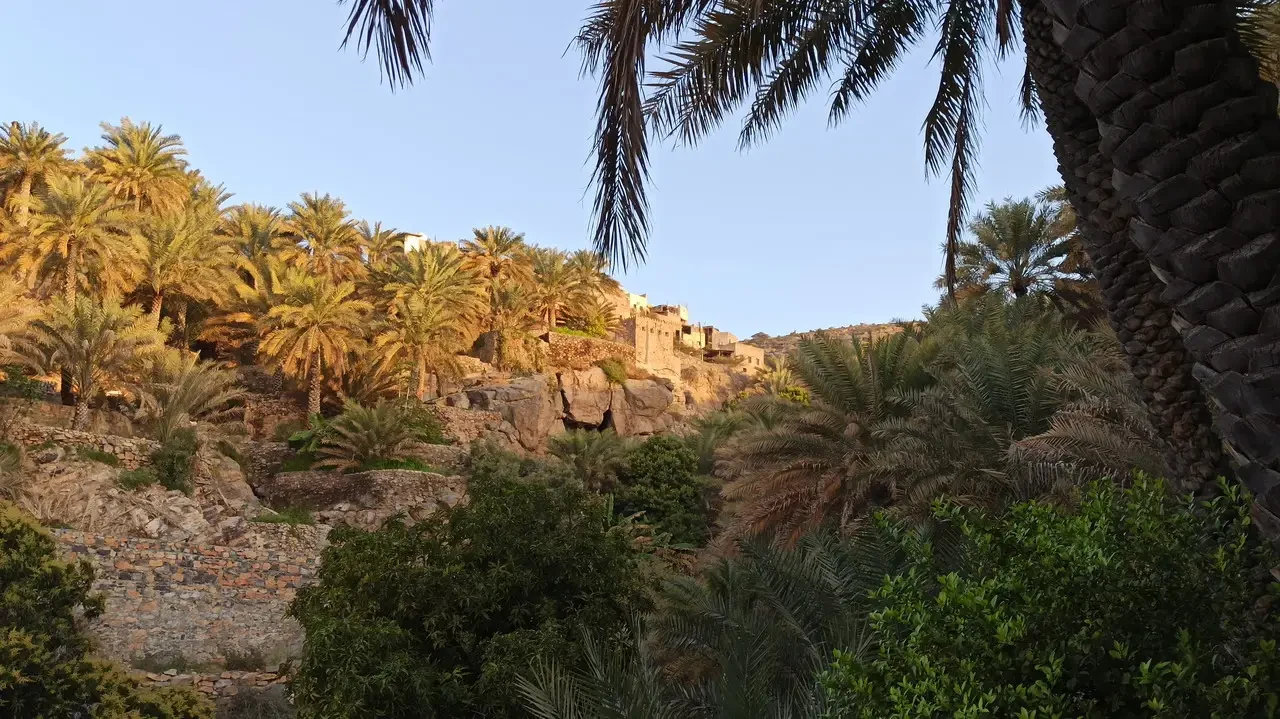
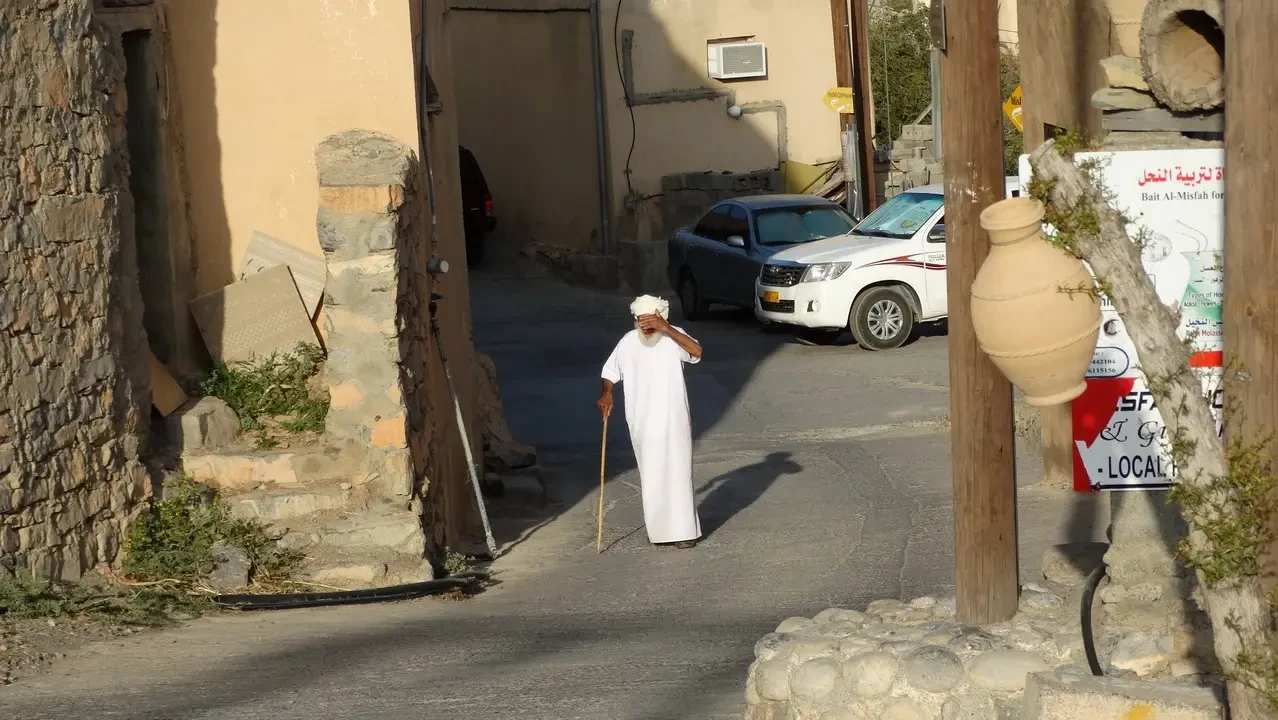
The perfect ending to a wonderful day is arriving at Misfat al Abriyyn. Announced as a charming little village from the Omani province, thanks to the intelligence of its inhabitants, has managed to combine tourism that combines the presence of foreigners with the preservation of customs and housing. Whether it is a conservative village, you can see immediately by reading the... signs which encourage visitors to dress with their shoulders and knees covered. We take our seats in the guesthouse we had booked, finding ourselves facing a single room small and cozy, it feels like taking a step back in time. The owner, Ahmed, provides interesting information, as well as pointing us to the ideal spot to watch the sunset: it's located near a cylindrical tower, somehow we manage to reach it with just a quarter of an hour remaining and everything has now become vibrant colors We remain silent: everything around us seems to speak in an harmony that the fiery sphere responds with warm tones. Misfat, below us, is fading into shadow, as it has been for a few minutes now for the palm tree underneath. Soon we are enveloped by this too and say goodbye to the sun. That sun, which timidly hid behind white clouds this morning, has then imperiously risen to illuminate the walls of Wadi Ghul and has illuminated us for this wonderful day. Now all that's left is to have dinner with a buffet: grilled tuna, chicken, ratatouille, hummus, yogurt with eggplant and garlic to accompany rice, salad and various desserts, with mountain herb tea useful for digestion. Everything created with delicate hands at the guesthouse and enjoyed on the balcony above our room, with a view of the… the other part of the country where the mosque is located. There is no Wi-Fi because recent rains have damaged the repeater, but we will easily find an alternative. Strangely, this year the rainfall has been abundant and the crops have benefited. This proves that the climate is changing: we are told that up to one meter of snow has fallen in the mountains in northern Saudi Arabia. Another walk through town, descending into that paradise that opens just below, where dim lights illuminate the water of the falajs that flow to irrigate gardens and orchards. The large palm grove is surrounded by silence, and in silence we return to our home.
Our room, beautifully decorated in a local style with carpets and antique furnishings, welcomes us like a cozy retreat.