Day 4
Denali by Bus
Wake up at 4:30 with frugal but abundant breakfast in room to catch the shuttle that travels the only road into the park.
In Denali among buses, wildlife and vast spaces
Wake up at 4:30 with a frugal but abundant breakfast in the room to catch the shuttle that travels the only road in Denali National Park. The Parks Hwy is a single winding road 91 miles long that crosses the heart of the park and only official buses can circulate on it. The shuttles are school buses that in summer are used for this purpose, with the possibility of getting on and off at your discretion. Traveling it entirely means 13 hours to the end of the road, round trip. Instead we have booked the tour up to the stop before the terminus, that is to Wonder Lake.
As indicated we choose the seats on the bus that face south because the view is better on that side. The driver, Mike, cannot be considered a great charmer, but that is precisely where his interest lies. He is an enigmatic yet spiritual person, typical of the far west which here would be the far north. He is very educated and practices his profession with a spirit of attachment to the natural environment that surrounds us.
Thanks to a microphone he provides useful information to that mass of amorphous, impalpable and often disinterested tourists, rightly unworthy of such a paradise. He instead, with a warm voice, which almost seems like a whisper so as not to disturb the environment we are entering, explains with great passion the life of the park, stopping every time we are faced with some animal or noteworthy landscape. He is a person gifted with great attention and care for life in the park, as if he were walking on tiptoe.
The tourists instead continue to eat their snacks to further thicken the walls of their arteries, attentive only to photographing the animals when the opportunity arises. Sometimes it seems like participating in a safari zoo trip, with the only difference that the environment surrounding us is Nature in the superlative and that what we see around us enjoys all its freedom. On the return trip he even circulates an album of his photographs taken during excursions in the area, a sign of how at ease he feels in his environment.
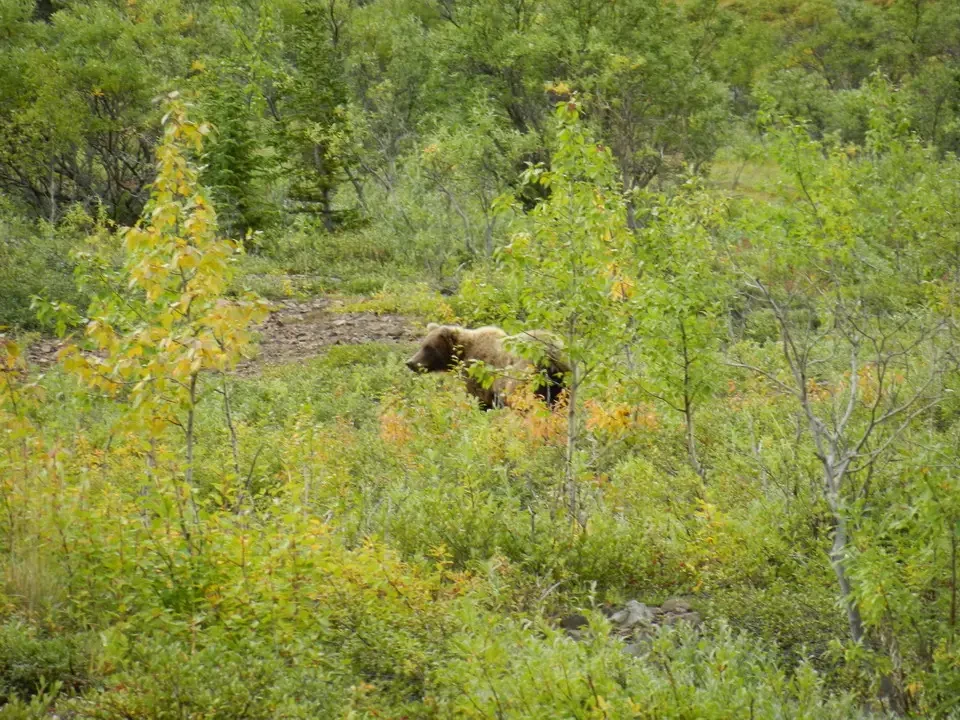
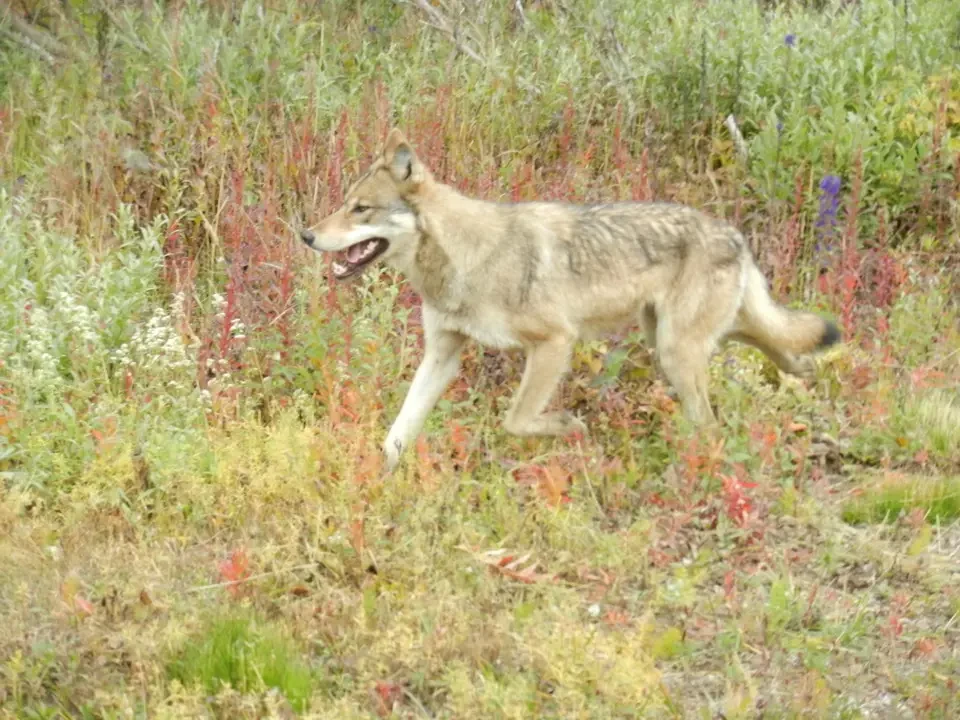
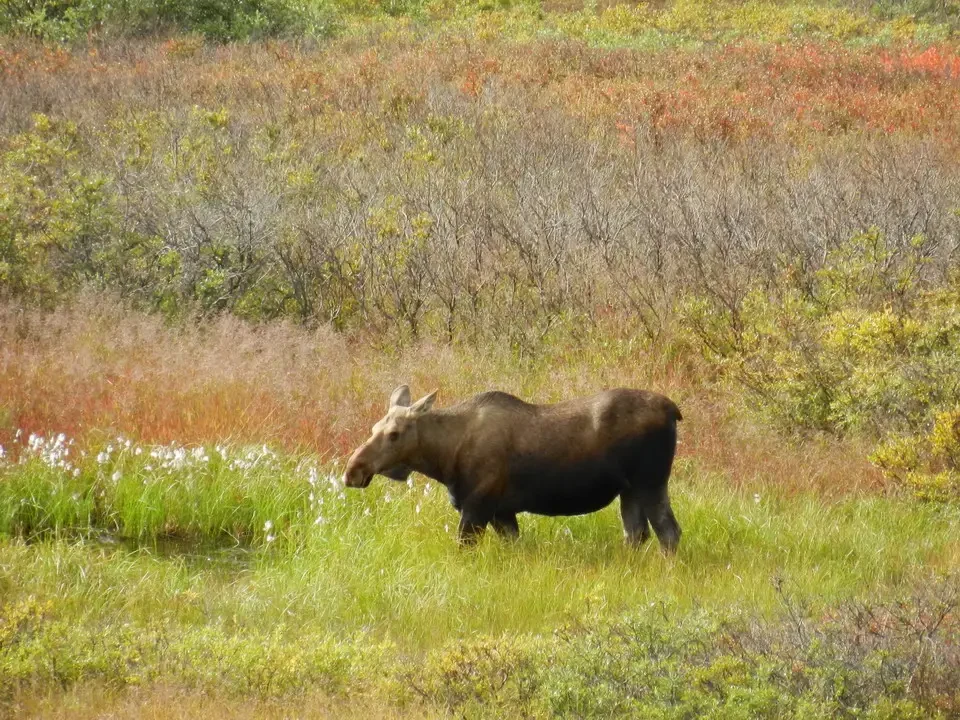
Our photographic hunt materializes with a haul of 3 brown bears, 3 moose, two foxes and a wolf. The latter accompanies us, or rather guides us on the return road for about twenty minutes in a scene that is incredible: it appears along the road and travels in front of us at a light trot while we astonished watch the unplanned event following it with the bus, aware that it has the right of way. In the distance we can clearly see the white Dall sheep, while they look for salt seeming to hang on the cliffs.
The day is essentially beautiful, every now and then high clouds appear that only disturb the camera lenses. The surrounding peaks are clearly visible, except for McKinley still angry with us for the discourtesy we played on him two days ago.
From Polychrome Pass to Wonder Lake
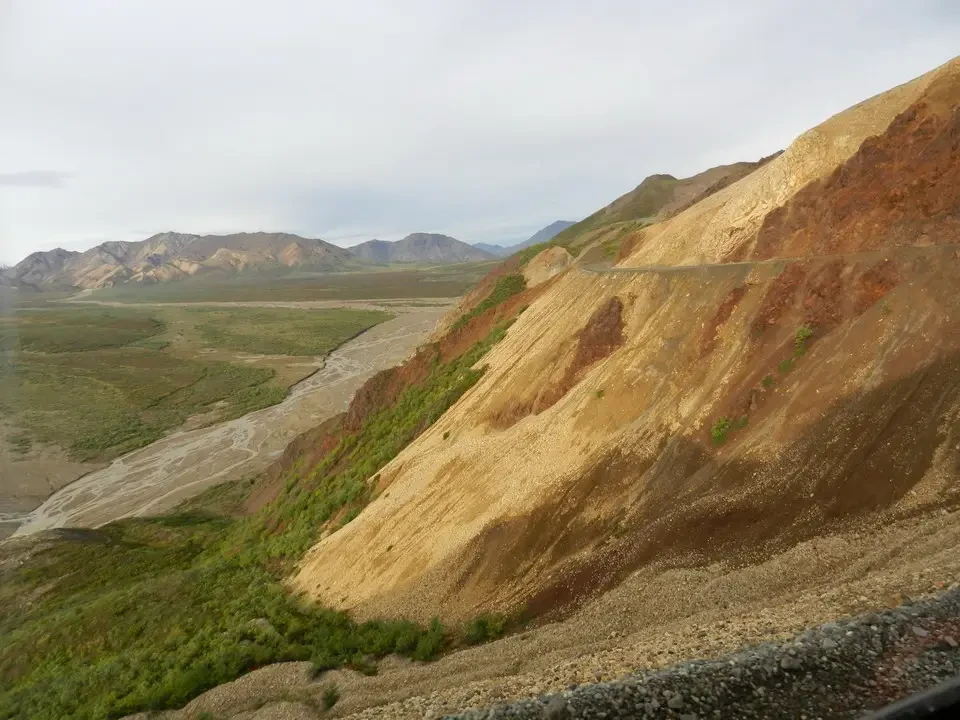
The route winds with frequent hill crossings, at the bottom of which there are usually rivers with vast beds flowing impetuously. The background is dotted with glaciers and high peaks. We pass Sable Pass, to arrive at mile 47 at the Polychrome Pass Overlook, where a great variety of colors is given by the minerals in the rocks.
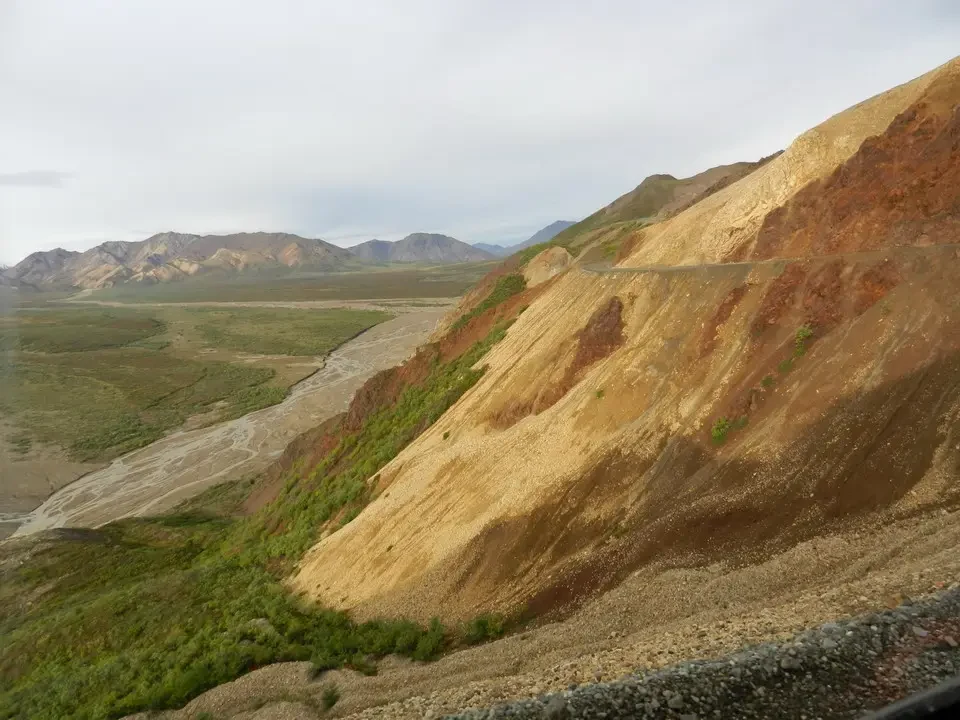
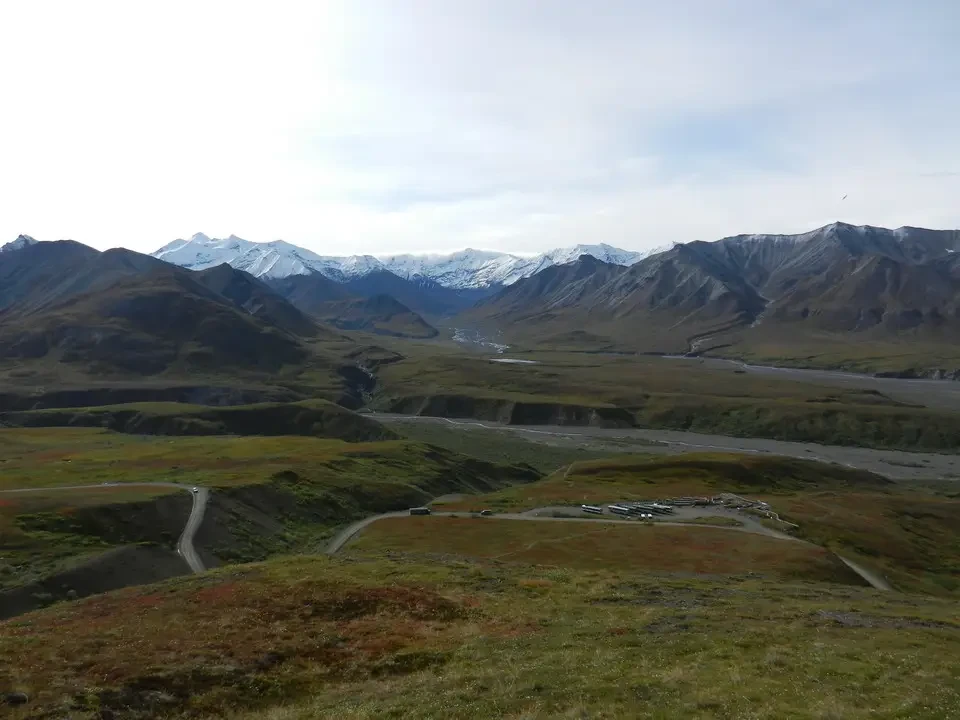
There is a vast panorama of the Alaska Range. At mile 66 is the Eielson Visitor Center, from which there is a nice view of McKinley (at 33 miles) but, as mentioned, we are only allowed to see the lower half. The Center was recently built, using all the ecological and environmental measures that technology can offer. There is a nice scale model that allows you to locate the various points visited and the expanses leading to McKinley. We take advantage of the stop to stretch our legs and climb to a panoramic observation point about a mile away. So as not to miss Mike's shuttle and have to wait for another, we make a quick run both up and down.
We continue to what will be our terminus and place designated for a frugal snack, Wonder Lake at mile 84 and only 5 miles from where the road ends near Kantishna. The view of the lake is certainly interesting but does not take priority over other delights of nature seen so far.
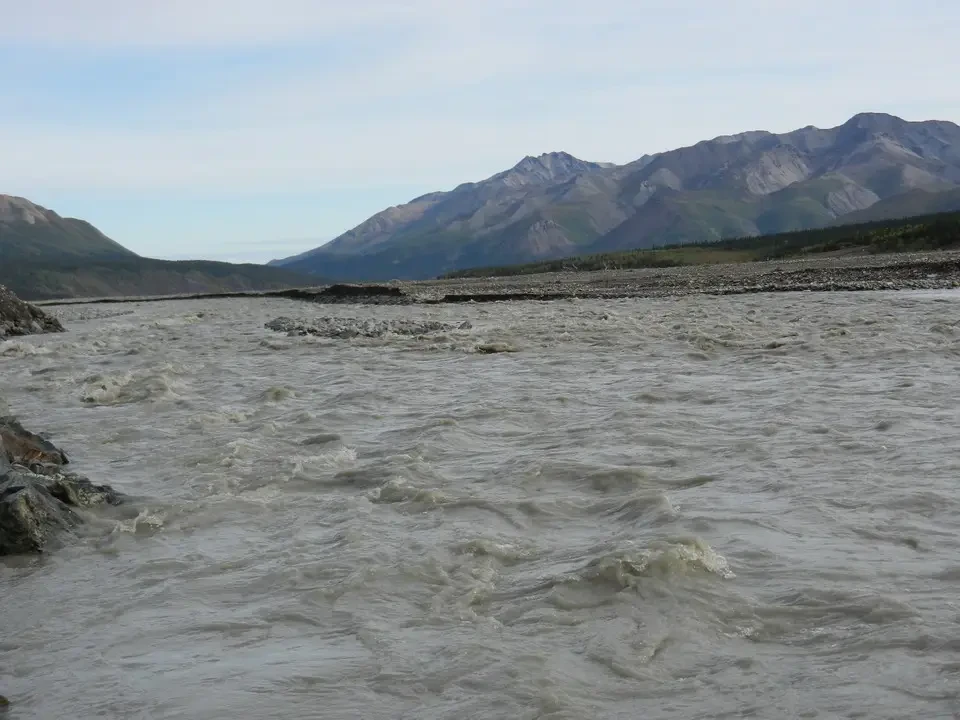
Overall it is impressive to find yourself in front of such vast spaces in succession, enormous valleys descending from looming mountains rich in sinuous glaciers, until they are lost in lush rivers gray in color from glacial melt. They do not yet have a great flow but it is the impetuosity that makes them majestic.
In this regard we also notice the Muldrow Glacier over 30 miles long, whose terminal part is so covered with earth and debris that it carries on itself and with it a thick layer of vegetation rich in conifers moving on the glacier. In the late afternoon some downpours descend that alternate with patches of sun and leave space for excellent shots. We are not yet tired enough when we return shortly before 6 PM and go to watch an interesting 20-minute film about the construction of the Denali Road.
Evening between Glitter Gulch and Healy
Tonight we dine in the village that serves as a service center for the park, Glitter Gulch. There are restaurants, rentals of all kinds of vehicles (kayak, quad, planes, etc.) and shops that offer trinkets as souvenirs of the park for distracted visitors who have not been able to appreciate the real souvenirs left in the mind by what surrounds us. The libations are of a fish nature, in particular it is grilled salmon at the Salmon on the Bake, the name of the restaurant already says a lot about what the specialties of the place are.
While returning to Healy we see the wreck of an old city bus that we seem to recognize. In fact it is exactly the one on the cover of the book Into the Wild.
It starts to rain when we return to our log cabin on the Ridgetop. Talking with the lady who hosts us we learn further details about their isolated but not desolate daily life. Coming to the subject of moose she speaks of the female that lives in the area almost in terms of neighbors; it seems that when she gave birth she came close to their house almost to introduce them to the new creatures. She nevertheless emphasizes the danger of the animal in certain conditions and how they defend their territory. Curiously the area has always been inhabited by females. They have a nice garden protected from animal intrusions by fences, where raspberries, potatoes, cabbages and other vegetables grow.
She did not know that the school bus that made Healy famous had been brought back to the village and is convinced that it was the right thing. Last year she had guests who wanted at all costs to make a “trip” to the place with their seventeen-year-old son, without knowing the risks they would run into. Clear sign of how the mass media can condition weak minds. She speaks in fairly positive terms of the unfortunate boy, although the people of the village considered him half crazy who wanted to challenge an environment without the necessary experience and preparation. Probably both theses contain many truths.