Day 3
Northern Scotland
Morning experience at a whisky distillery, north-east coast and landing on the Orkney Islands.
Speyside between distilleries and cathedrals
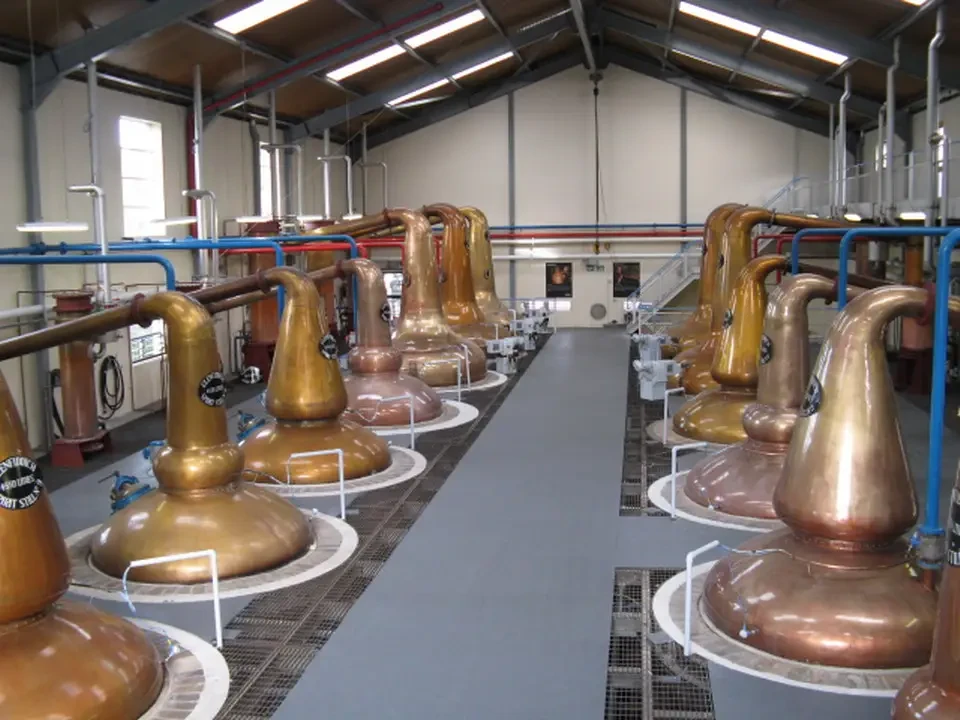
We start off really well with a visit to the Glenfiddich Distillery, where the first guided tour departs at 9:45 am and at 10:30 am we are forced to eat some biscuits that we had in the car and drink plenty of water to mitigate the cheerful behavior that follows the tastings. The weather is covered and the temperature ranges between 8 or 9 degrees. Everything starts with a video that shows us the history of the distillery: they are in the fifth generation and they really care about demonstrating the tradition and connection with the territory. The reasons for why the distillery is located exactly there are explained: firstly because the water is very pure, and to maintain it, they have bought 450 hectares of a watershed. In any case, the whisky produced from that water is sold much more expensively. It is one of the most famous distilleries in the world. They have 24 fermentation tanks made of Canadian Douglas fir wood, five meters high each, containing 50,000 liters each, where the mashing of crushed malt takes place. As it dissolves, it produces a sugary solution that is then extracted for fermentation, which begins with the addition of yeast to the cooled wort. The yeast transforms the sugar into alcohol, producing a clear liquid. After fermentation, which lasts approximately three days, the liquid passes through the stills. Only the core of the product is taken here, as the upper part is too light, while the lower part is too heavy. These two are then mixed to make more whisky. Only an aqueous residue is discarded. There are two stages of distillation: in the first stage of evaporation in stills The liquid comes out at higher temperatures around 30 degrees, and after the second distillation, it reaches about 45 degrees. To make it slightly less alcoholic, water is added to bring it down to around 40 degrees. The distillation process separates the liquid: the newly condensed liquid goes into three containers that collect its head, heart, and tail. The stills are heated strictly with wood fire. The whisky is then placed in oak barrels. These barrels can come from Spain, where sherry has previously been aged, or from America, where bourbon was previously stored. There is approximately a 1-2% annual evaporation of the whisky once it is aging inside the barrels. The barley is mostly Scottish and entirely British. Due to space constraints, the conversion to malt does not take place here. By law, a whisky must be aged for at least three years; they age it for at least twelve, but also have some that are fifteen or eighteen years old, reaching over thirty. When the liquor is produced, it is transparent. The color comes from aging in barrels, taken from the pigmentation of the wood. A characteristic of the taste comes from the barrels themselves, which can be reused up to approximately sixty years of overall aging. This can be understood by looking at the traces left in the wood itself. In essence, you can see from the wood if a barrel can still be used or has reached its maximum limit. To renovate the barrels, a flame is passed through them, which opens the pores in the wood, allowing it to transfer flavor back to the liquor. There are special glasses for drinking whisky, which, when turned several times, allow the aromas to rise so that they concentrate at the exit of the glass and can be perceived by smell. This allows you to distinguish the various aromas, although each has its own sensitivity and the rules regarding tasting seem very specific depending on your nose. To help oxygenate the liquor, a little water is added. Whisky should be drunk at room temperature, not too cold, otherwise you risk ruining the taste or trapping the aromas in ice. In some areas, especially where evaporation and aging take place, it is forbidden to create sparks, even with a camera, because the presence of alcohol in the air is very high. Fire extinguishers also have copper exteriors. Glenfiddich is the only one that produces or refines the barrels inside its own factory, to guarantee the authenticity of the product. Currently, the trend is to use single malt whisky; the alternative is blended whisky, which consists of a mixture of different malts, up to fifty.
Not far away, we see the bottle factory of Speyside Cooperage and the visitor center of Glen Grant, another renowned distillery located in Rothes.
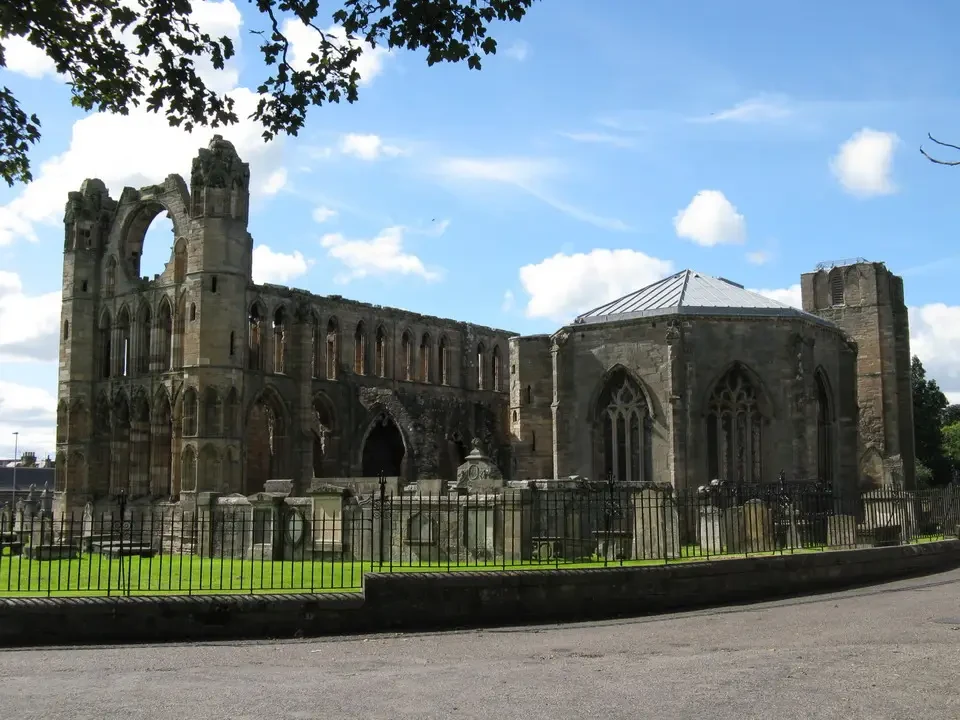
We arrive at Elgin with a beautiful sun, which rarely hides behind fast and white clouds. The cathedral is one of the most beautiful in Scotland, was also known as the Northern Lighthouse, and even here one cannot help but think about the magnificence it must have had before the destructive forces of religious conflict reduced it to a mere skeleton.
From Culloden to Duncansby Head
We pass through Nairn and arrive at the battlefield of Culloden, the last theater of a bloody conflict on British soil, in 1746. There isn't much to see: it's just vast fields surrounded by gentle hills. You simply need to close your eyes and imagine what might have happened and what the scale of the carnage the Scots had to endure was. This battle marks the end of Scottish independence and its integration into the United Kingdom under the auspices of London.
We are now on the shores of Loch Ness, but perhaps because we were cautious or more likely because we didn't want to hunt for the monster, we head towards Inverness Inverness, the Gaelic name for this area, refers to the estuary or mouth, where one can cross the impressive bridge over the firth and finally head north. From a viewpoint, we observe the rapid movements of the tide, while a group of tourists are searching for seals, dolphins, and other marine animals that inhabit these fjords. We had expected to see a cold northern city, but as we descend from Culloden, we realize there are several villas on the hillside with views of the fjord, and thanks to the good weather, we enjoy stunning vistas. Off the coast of Tain, we can see offshore platforms at the mouth of the Cromarty Firth. Both in the Elgin area and continuing into Easter Ross, the landscape is characterized by undulating terrain where livestock graze. There are also several fields of cereals, likely barley. The forests are scarce, and urbanization is more extensive than we expected, particularly the cities of Elgin and Inverness, which are very busy. However, from this point on, we will lose track of the traffic lights.
After Dornoch, the landscape begins to change and we start to see the real Scottish Highlands that we were hoping for. Less traffic, narrow roads with many curves, and more wild vegetation with large pastures dotted with sheep. The only constant is the dense presence of heather. The road runs along From time to time, we would go out to sea, then return a few kilometers away. We would stop to take a look at the Dunrobin Castle, where a lit fireplace creates a pleasant warmth upon entering.
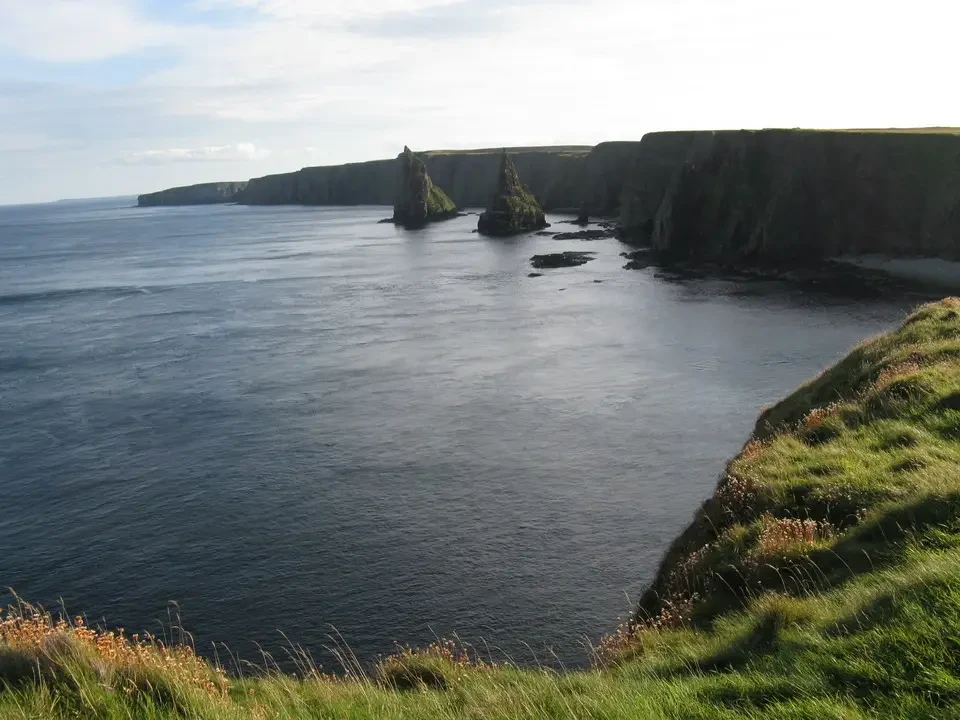
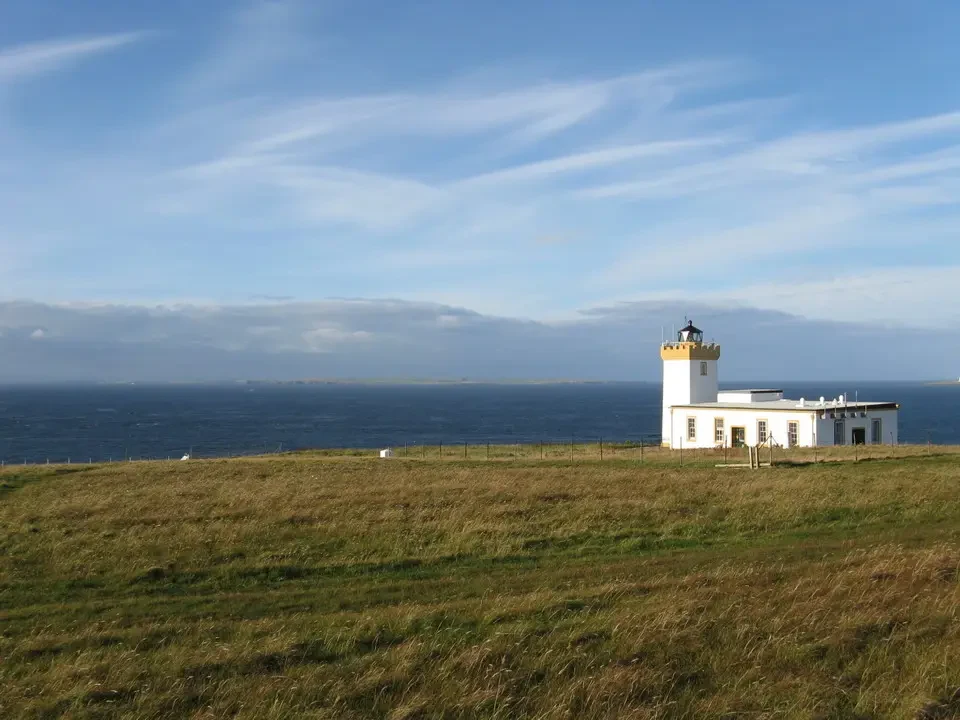
Let's take a detour to see Lybster... with a beautiful harbor, where two fishermen are casting their nets. Lobsters and crabs for a method of farming inside the classic baskets. Some panels illustrate instead the history of the country, which originated with fishing and preserving herring in salt. It was founded at the beginning of the nineteenth century by a wealthy businessman who wanted to relocate people displaced from the clearances. Thanks to the herring, there was a real boom; large schools pass through these parts in March, June, and September. This has provided a lot of labor for salting and preserving in barrels, especially on the part of women. It is estimated that an experienced woman could process up to 60 or 70 herring per minute. Fishing initially took place with sailboats, then with motorboats. Perhaps due to changes in the Gulf Stream, but mainly due to increased fishing activity, the sector went into crisis and those who remained have a subsistence economy based on sheep farming or fishing and raising crabs and lobsters. Following the coastal road, we reach John o'Groats, which cannot even be considered a country. It is actually just some houses scattered by the wind in a disorderly manner, with a terminal for the Orkney Islands, only for passengers. However, it is worth taking a walk to Duncansby Head, where you can find a remote lighthouse and deep fissures that create tiny fjords, while two emerge from the water cone-shaped rocks They reached a height of about fifty meters.
Sunset over the Pentland Firth and arrival on the Orkney Islands.
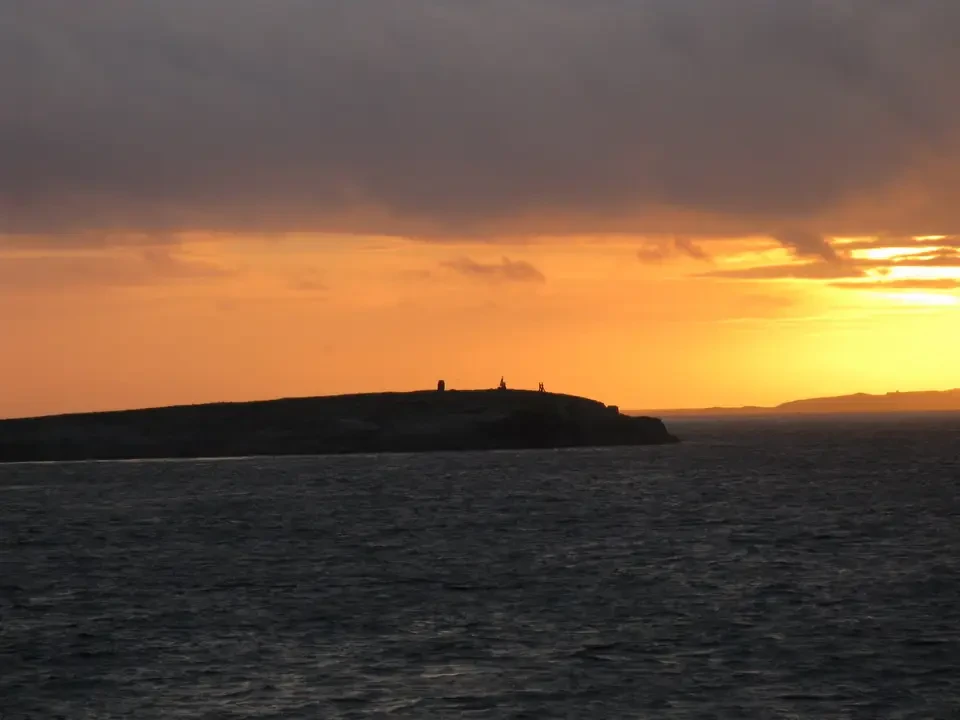
Our daily journey ends tonight at Gill's Bay around 7 pm, half an hour before departure, which will take us to the Orkneys after we had previously booked. This allows us to board the last ferry to the islands, there are three that depart each day at 7:30 pm, crossing the Pentland Firth. Destination: St Margaret’s Hope. We witness… a magnificent sunset Under the warm sun reflecting on the cold waters, at this meeting point between the Atlantic and the North Sea. However, the end of our journey leaves us completely disappointed: the boat trip lasts just over an hour, during which we booked a B&B in the port area. Unfortunately, it's already 9 pm and the only pub-restaurant in St Margaret’s Hope accepts last orders at 8:45 pm. We are already half an hour late and there is no way to get a dish with something inside. They tell us about a Chinese restaurant that is supposedly located 20 km away. But, for principle's sake, in the land of salmon, one must eat local food, and our emergency supplies are certainly better than the dragon fruit served somewhere else. Luckily, we still have some cheddar cheese, two oranges, and we have dinner with it, accompanied by butter cookies purchased in the afternoon at Glen Grant. The B&B is nice and quiet, but that's typical for this area. The house isn't even locked, after all, there are no thieves who would bother to come all the way out here to these desolate lands. It reminds us of the same amazing experience we had in Gander, Newfoundland, in eastern Canada – it's a shame we can't experience that too, at our latitude.
On the other hand, the 420 km traveled on roads that seem like narrow strips of asphalt are already more than sufficient. The habit is to return home early in the evening and settle down in the living room to read, watch TV or knit for women. We notice this from the very first evenings, as the windows, often enlarged with bay windows, are generally uncovered, so it becomes easy to observe other people's affairs even unintentionally. It’s interesting how the people who invented the concept of privacy are also the ones most exposed to intrusions by strangers. Even though it is still summer and we have mostly good weather, there is no one around in the evenings. Perhaps one of the reasons is that there are very few young people left, while older people prefer a comfortable armchair. It's also difficult to see anyone out before 9 am. Despite all this, the light is still present. By 6:30 am, everything is perfectly illuminated, and by 8:30 pm, you can easily take a walk without needing public lighting. Without the effect of the Gulf Stream, the archipelago would be mostly ice for most of the year, but farming and agriculture are practiced here.