Day 9
Edinburgh
Edinburgh on a Sunday morning at the end of summer... and the end of vacation.
Last hours in Edinburgh
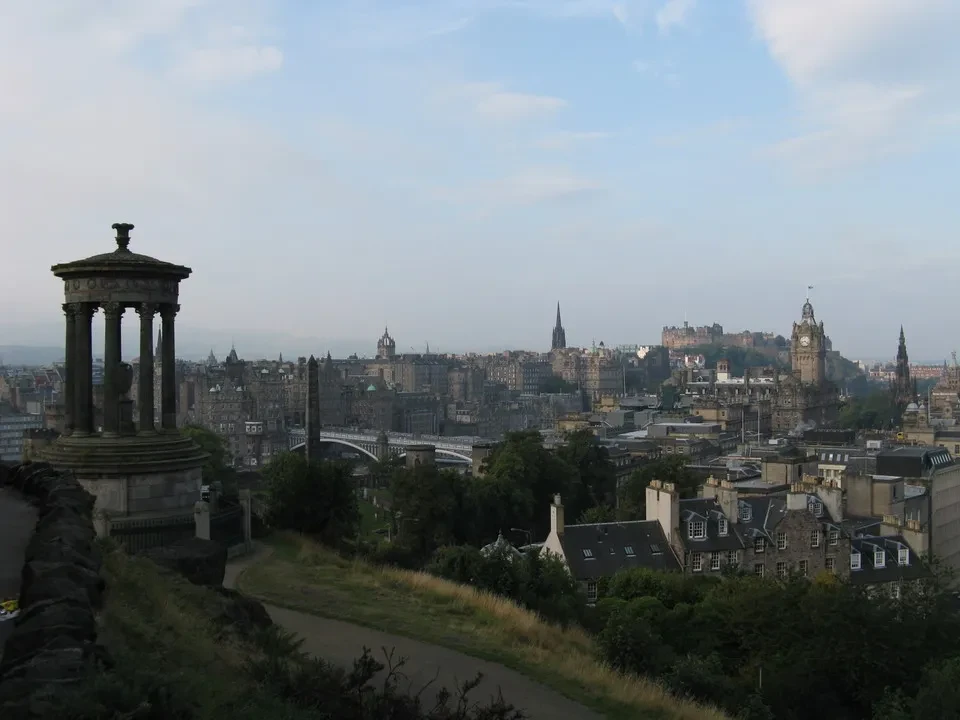
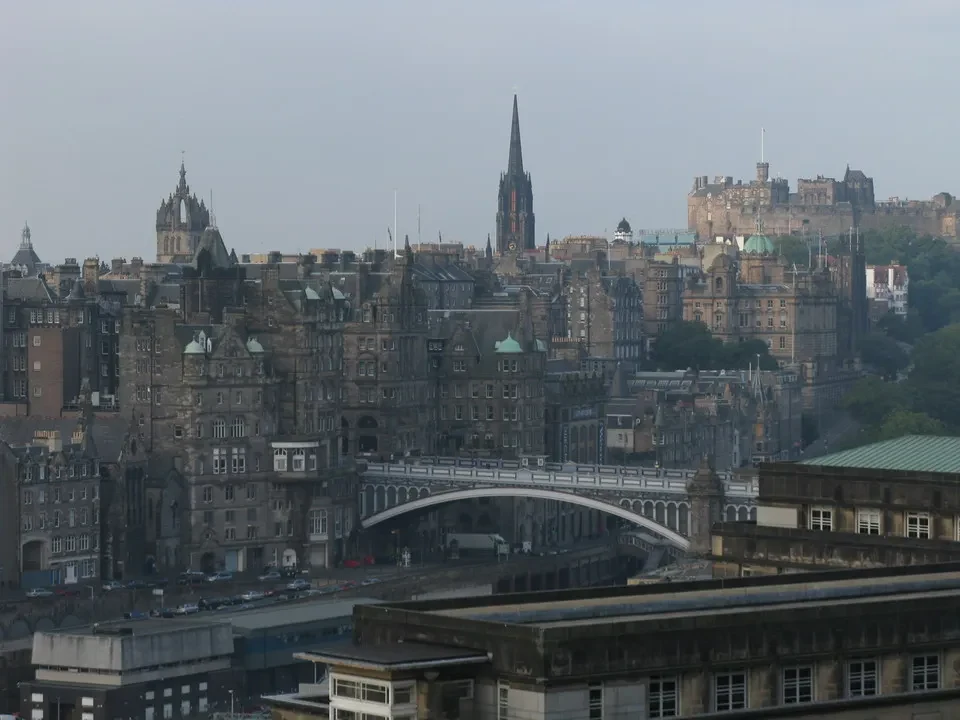
We have a few hours to visit Edinburgh In the daytime, we take advantage of this by having a quick breakfast in our room shortly after 6:30 am, as the official one is only served from 8:30 am. While the city is still waking up and there are only the urban cleaning trucks busy clearing up the remnants of Saturday night, we head to the port to see the Britannia, the Royal Panfilo, which was docked in 1997 when it was taken out of service by the royal family. Apparently, its interior is furnished with as much luxury as one could imagine, but regardless of the time, we are not at all interested in paying our respects and expressing our admiration to the rulers of London. We head to the hill of Calton Hill for a great view, worth a short climb to reach such a podium. Finally, we head towards the city center for a walk along the most popular routes for tourism The New Town is worth a visit, but you could easily explore it by car. The area located below the castle rock seems much more interesting. gardens It's something truly enchanting, especially because they have... castle as a backdrop.
Royal Mile and farewell to Scotland
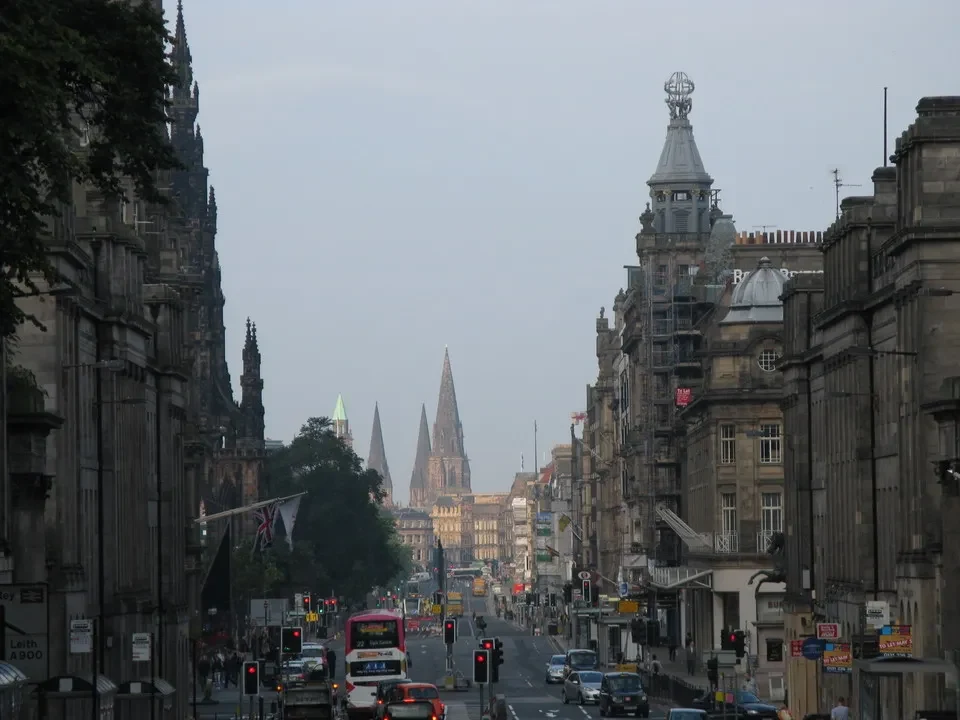
There is a whole series of works underway to prepare the evening fireworks display. Unfortunately, we won't be there, but in eight days it feels like we have already seen quite a bit of this country, about which little is spoken, but which preserves beautiful traditions, tourist and cultural attractions that are among the best you can find in Europe. One last glimpse dedicated to Royal Mile and to the square facing it the castle seal everything and leave a magical memory of a proud country, while also appreciating its modest treasures.
General considerations
GENERAL CONSIDERATIONS:
The Scots, from whom the name Scotland derives, arrived from Ireland in the 6th century, when other populations such as the Picts in central-north and the Britons in the south already existed. From the 8th to the 12th centuries, the north was the territory of the Vikings. Very little is known about the populations that inhabited the northern islands, leaving clear archaeological traces. Everywhere you find castles, residences or places related to Mary Stuart, the unfortunate queen of Scotland who reigned in the 16th century. Scotland is part of Great Britain since 1707 and was subjected under colonial conditions in 1746 after the Battle of Culloden. Currently, a devolution process has been underway, which has allowed the establishment of a parliament from 1999, as well as extensive autonomy.
The cathedrals were destroyed by the extremist egalitarianism of John Knox, a reformist preacher, and his followers, who thought it was right to destroy everything that existed before. One thing we can't understand is how these treasures of British art haven't benefited from reconstruction. Centuries have passed, in some cases even half a millennium, without anyone taking care of the complete renovation. Furthermore, in certain cases, poor maintenance and leaving everything exposed to the elements has caused deterioration. However, the scenic effect of the yellow or red sandstones on the green meadows is still very pleasant, and when it happens, against the blue sky.
The castles are usually still owned by local nobles, so some have areas that are off-limits to the public because they house residences. In reality, it's more likely that the nobles use them primarily for celebrations or ceremonies and prefer a lifestyle closer to the comforts offered by the city. The Scottish nobles typically originate from clan chiefs who once divided the country, constantly in conflict with each other, at least during periods when they were not fighting against the English. In short, Scottish history is rich in divisions and wars, which have only somewhat subsided after the unification that occurred at the beginning of the 18th century.
Streets, bed and breakfasts, and daily life in Scotland
The roads are always narrow and lack side sidewalks almost everywhere. This requires constant attention to avoid encroaching on the opposite lane or ending up on the dirt shoulder or in the frequent potholes that appear along the edges. The speed limits are 60 miles per hour, which can decrease to 30 or 40 depending on the type of urban area.
Many houses, especially the older ones, have two fireplaces at opposite ends, which can be quite spacious.
Breakfast at the B&Bs is served in a classic British style: eggs and bacon, to which beans with ketchup, tomatoes or mushrooms are added. Everything to start the day with plenty of energy. Of course, for those who prefer, there are also cereals, jams with lots of butter, and various drinks. Only a pint of beer is missing.
The vegetation is lush, with a lot of ferns in a dense, low-lying thicket. This often mixes with the ubiquitous heather. Every now and then, you can see completely purple meadows.
We saw many sheep with the characteristic black face. These sheep were brought here in the 18th century because they were more resistant and were intended to help colonize the new lands that, as a result of the clearances, had forced many inhabitants to find difficult and unsuitable areas for grazing. They are called "blackface" sheep.
Many families own dogs, usually two. Ideally of the same breed but also different in some cases. What is certain is that the dogs should not be left alone.
On one hand, there is great respect for children and considerable organization, also from a tourism perspective, for people with disabilities, including strict road restrictions near schools and other measures aimed at protecting them. On the other hand, there is a lack of pedestrian culture in general: pedestrian crossings are almost completely absent, even in large cities, and there are no sidewalks where one can walk on foot. In addition to the usual road space, there is usually a narrow strip of grass and immediately next to it you find fences or walls. Cars are often parked directly on the street, which causes traffic congestion, but this is normal.
On the radio, we listen to Radio BBC Gaelic, which usually broadcasts Celtic music and speaks in an incomprehensible Gaelic dialect. While it's not easy to understand much from the fast-talking English speakers, in this case, we can truly appreciate just the music. We are amazed to discover that in Gaelic, the word "Scotland" translates to "Alba".
In the northwest, both fjords and lakes are called "loch". While to the east and south, fjords are called "firth". In areas where Gaelic is spoken, road signs are bilingual.