Day 8
Castlebar, Athlone and Clonmacnoise
A lovely museum of rural history, a modern city and one of the best archaeological sites.
Morning in Rosscommon County
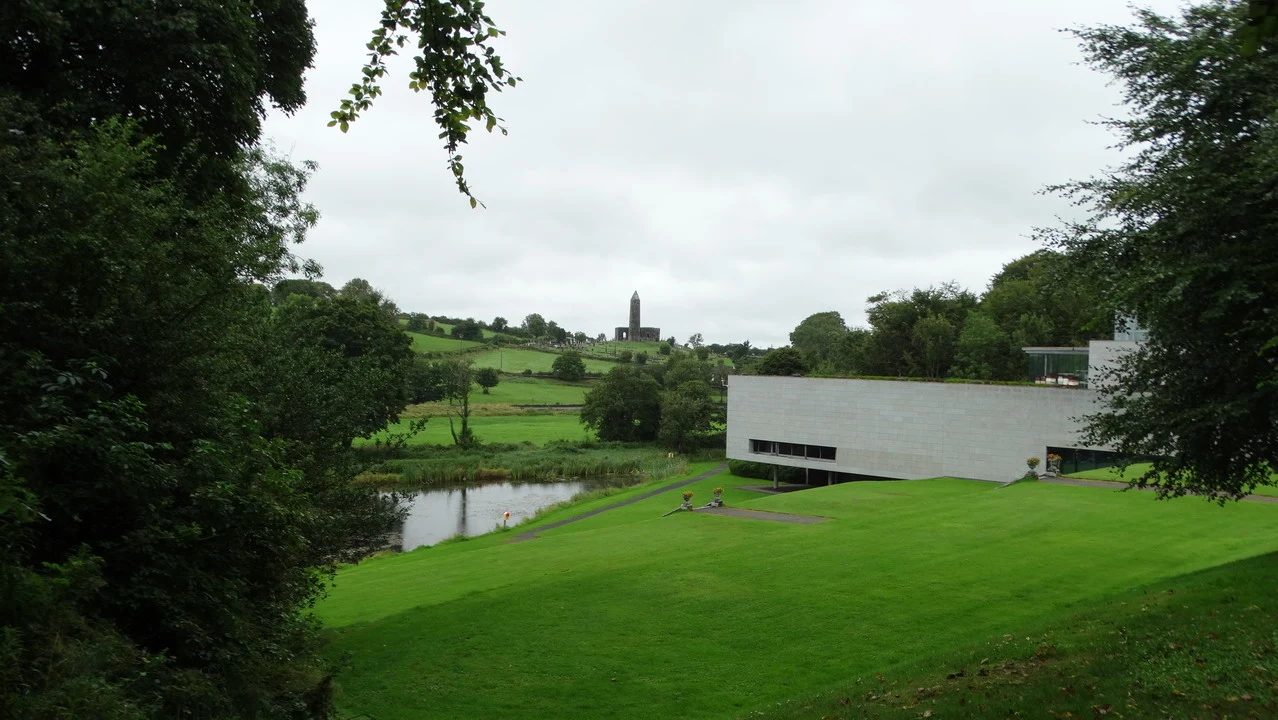
Breakfast at 8:30 with blackcurrant jam. It's raining heavily during the night, and the weather forecast for the next few days doesn't look promising. We abandon the idea of going to Donegal, as the coastline is not at its best in the rain. We will try to combine this border region with Northern Ireland on a future trip when we can finally explore this part of the United Kingdom and see the entire Ulster region. In fact, the term usually used to define Northern Britain actually refers to the entire northern part of the island. Apart from the terminology, aiming for the extreme north would be inconvenient, especially because there would be many natural landscapes to visit, which are clearly much more impressive when illuminated by sunlight. Under a fine but persistent rain, we head towards Castlebar, where the friendly owners of the B&B recommended the excellent local culture museum located in part within a modern building and I depart on a elegant accommodation With a beautiful park attached. The facility brings together the key moments in Irish history, including the independence movements that led to the country's emancipation exactly 100 years ago. It will be a very worthwhile half-day trip to understand the daily life of rural Ireland in the past and present: everyday routines, education, religion, festivals, as well as naturally a significant section dedicated to the famine of the mid-1800s. A hard life, marked by the changing seasons, where often the work was not enough, and many were forced to emigrate in search of better fortune. This aspect highlights what was done month after month, so that we can better understand how there were no breaks between phases. The section where daily tasks are literally listed, with times and durations, for various seasons, divided between men and women in the families, is also very interesting. It is also interesting to learn about the techniques used to build cottages with straw roofs. Near Castlebar, as we were told last night, is the site of one of the many battles between Irish and English people, with French support for the locals to maintain the border. We look for a supermarket to buy some local specialties and have a quick but enjoyable lunch; along a wide road, but in the rain, we arrive at Strokestown.
Rosscommon County
ROSS COMMON COUNTY
one of the cities most affected by the Great Famine, where you can find the most representative museum on the subject, which unfortunately turns out to be closed. The landscape becomes increasingly flat, while still maintaining its undulating features, allowing for some additional agricultural cultivation. We set off towards Athlone.
WESTMEATH COUNTY
WESTMEATH COUNTY
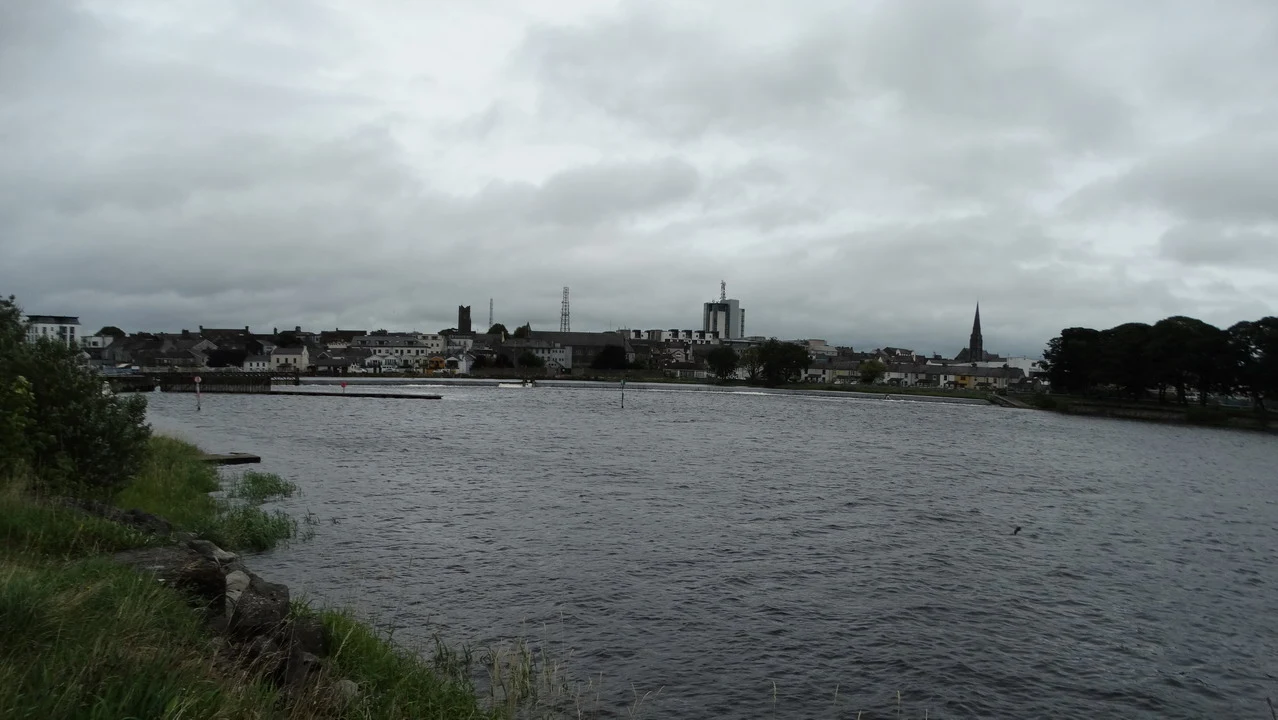
split into two by the Imposing Shannon And with the usual equally impressive castle, featuring round towers; we take a walk along the river on a somewhat worn path, while it's worth noting the beautiful neoclassical church.
Offaly County
OFFALY COUNTY
Towards Rosscommon County
We finally arrive at the Clonmacnoise Monastery Site Passing through more pronounced hills, which are still dotted with large meadows and the inevitable farms, here animal husbandry is dominant, even more so than pastoral farming found in the western counties. This is easily evident from the frequency of farms, mechanized equipment, and tractor dealerships/service centers. It's 4:30 PM, and we thank the sky (literally) for the fact that the rain has almost stopped, which allows us to clearly see this historical site – an old religious center destroyed by wars, with only the perimeter walls of the buildings remaining amidst the green meadows; it remains a mystery how they manage to display such emerald colors despite the gray sky. In the background, the Shannon River flows slowly, almost as if to signify both the slowness and the inevitability of history's passage.
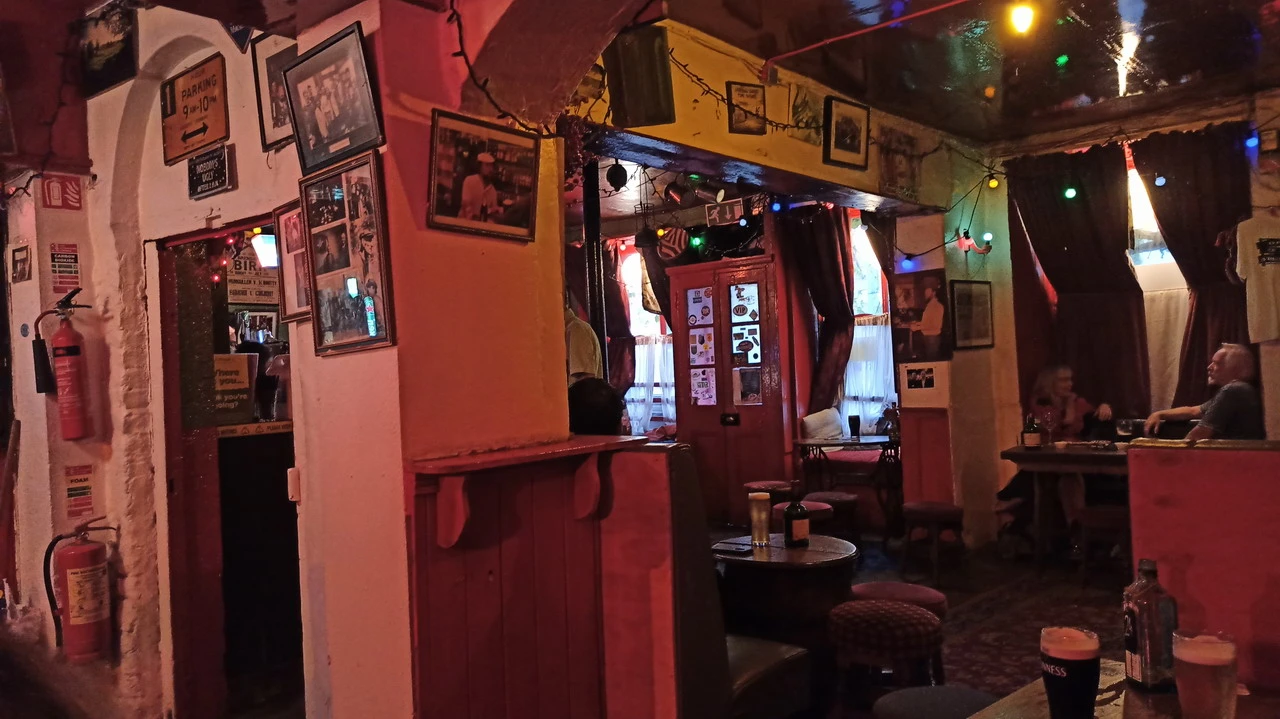
At this point, we were looking for accommodation and found a B&B in the countryside, run by a friendly elderly couple who welcomed guests to supplement their pensions but mostly to stay active and meet people. We chatted with them about various topics; they were very religious, and he boasted of having shaken hands with John Paul II during his visit to Clonmacnoise (proudly showing us the photo). They also told us that July had been beautiful and worryingly dry, so much so that the grass turned yellow; an experience that should shock the Irish. It was a missed opportunity for us, but we enjoyed atypical days of good weather in the Baltic countries at that time. In many homes, we proudly saw the Catholic faith displayed, perhaps as a legacy of when being "papal" meant ostracism and marginalization, transforming it into a sense of pride and belonging. It was time for dinner, and we were advised on some places to eat in the town of Banagher, which is only about ten kilometers away. Unfortunately, the recommended restaurant was full, and we were directed to another where we ate a delicious salmon, experiencing a curious situation related to drinks. When ordering our usual Guinness (what else?), the friendly waitress pointed out that they couldn't sell alcoholic beverages while allowing consumption. This seems absurd at our latitude, but it is nothing extraordinary in the British world. Knowing that we could buy it in the nearby store, I went outside to get the longed-for beer, when I was told that drinking beer was not allowed in the restaurant. At this point, I easily switched to a bottle of Australian Shiraz, respecting the rules and culture. Of course, finishing the evening without our usual dark drink seems sad, suspecting that addiction has taken over. Just a few dozen meters from the restaurant is a pub that couldn't be more typical As for style, cleanliness, and lack of lighting. And it's there that we finally enjoy our evening ritual with Guinness (and an Irish Coffee). Always under the rain, we return to our room for a night of rest, while the raindrops falling from the roof create a soothing rhythm that helps us sleep.