Day 3
Cashel, Holicross and Blarney
Impressive ruins of churches and castles. Blarney, a manor house and gardens of great interest.
Tipperary County
After the first 24 hours in Ireland, we begin to identify some key characteristics of the Irish people. The centuries-long British influence is clearly evident, both in architecture and daily life. However, the friendliness and warmth of the locals on this island contrast with the more serious, British-style demeanor of their counterparts. This, combined with a somewhat melancholic appearance and a fondness for beer that helps to bring out their inherent sense of camaraderie, provides another perspective.
Breakfast at a Centra supermarket with American coffee and cappuccino, accompanied by a couple of pastries in Kilkenny, enjoyed outdoors as the rain started to fall. We had some difficulty paying the toll on the Dublin motorway; we will try again in the coming days.
TIPPERARY COUNTY
Traditions and spirituality
We travel along the gentle hills towards Holycross, where a peaceful morning on Sunday allows us to see the eponymous religious complex; it's more of a series of undulating slopes than actual hills, while in the sky we start to see glimpses and the temperature remains around 15 degrees.
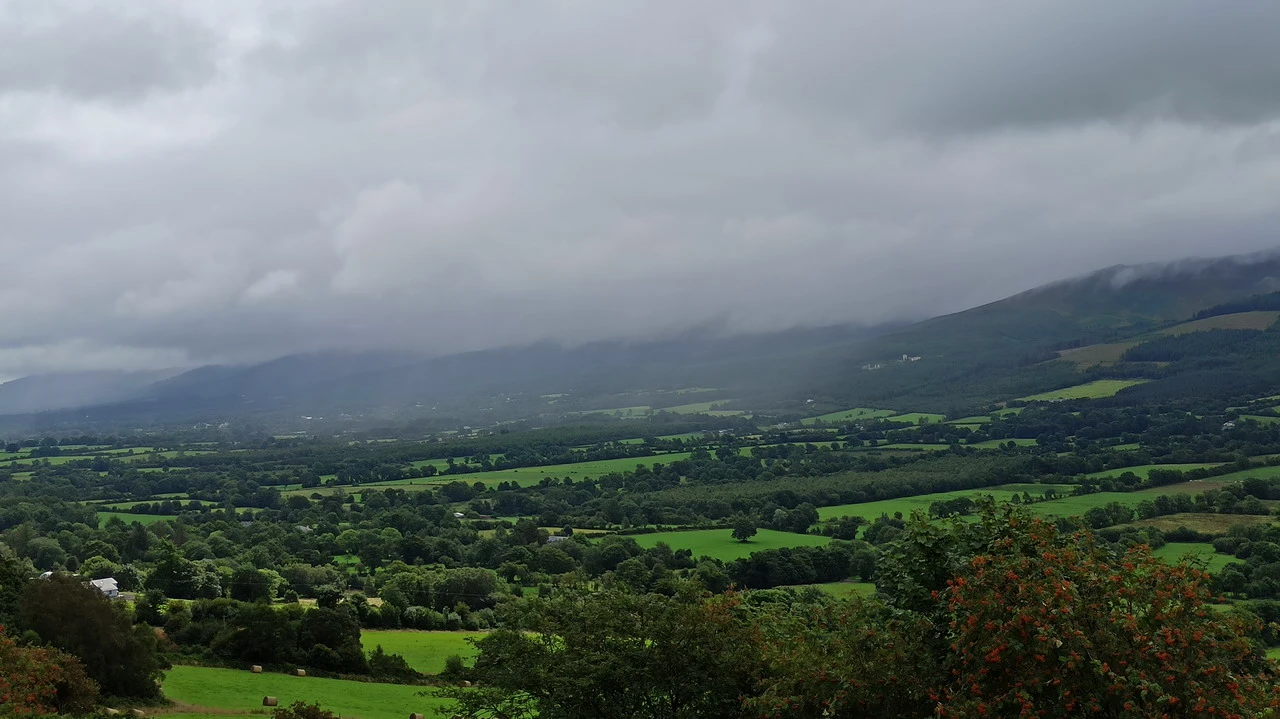
Glen of Aherlow
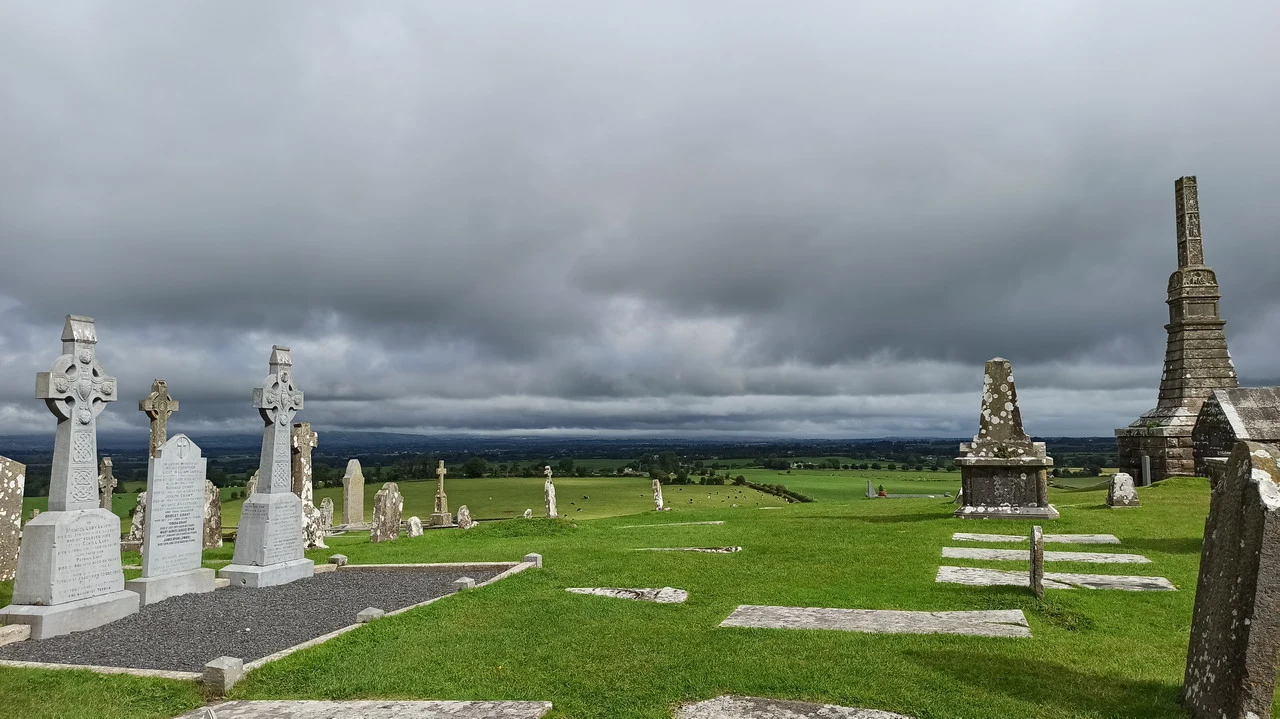
The atmosphere is quite unique today, as it's also August 15th, a public holiday here, but there's still no sign of activity. The Medieval Grandeur The complex, surrounded by a large cemetery where stone crosses grow like trees, takes me back in time. The silence helps to immerse myself in this atmosphere, where history seems to come alive again. The austerity of the stone buildings has a particular charm, a sense of order that makes even the smallest structures majestic. We venture into courtyards and cloisters to escape from where we are and return to the year we live in. With a short walk, we arrive at Rocca di Cashel, topped by a Romanesque church in ruins but it remains grand in its walls and with the typical round tower. It is no longer used for worship since several centuries; the fact that certain places of worship are not restored on one side is disappointing, as we can barely imagine what Cashel was like in its splendor. However, it also indicates the passage of time, creating a complex sense of mysticism. The walls, made up of private roof structures, force the mind to imagine how the monument could have been, had it been well-restored; instead, we would only focus on the beauty of the present. The bare interiors leave hope that treasures are in some museum, more prosaically there is a belief that they ended up somewhere unknown, perhaps as spoils of war. The reasons for the conflicts, however, have never been lacking, usually covered by a thick veil of religious pretexts. We move silently through the empty spaces, walking on gravel instead of marble, which has been moistened by rain; looking up instead of the dome, we see the starry sky. But it is not the Sistine Chapel, as here the painting changes every few minutes. A walk in the center of Cashel gives us a visually beautiful impression, even if everything ends on the main street. A detour that doesn't cost even many kilometers takes us to Glen of Aherlow; these are not real mountains, they are rather sparkling green hills after the inevitable rain and despite the still cloudy sky. Cahir It is a medieval village with a castle situated on an island in the river. Within the complex, on the island, there is a beautiful and well-maintained park where you can admire a "sword in stone" and some stone equipment. There are also a series of tables and benches that offer the perfect setting for an August 15th lunch consisting of Irish cured meats and cheeses!
Cork County
CORK COUNTY
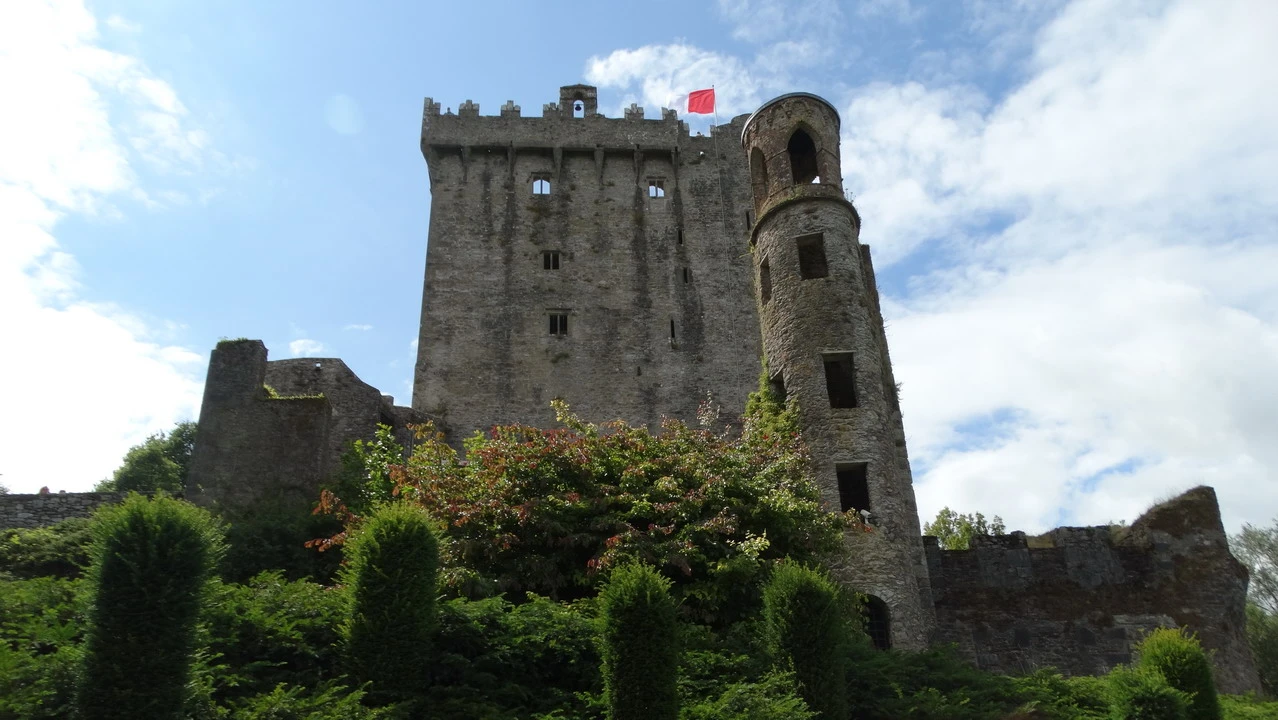
The relentless schedule forces us to abandon the southern coast of Tramore and other nearby villages, heading directly to Blarney, where we access the famous... castle and also in gardens annexes. Within these, the following sections stand out: carnivorous and poisonous plants, a truly fascinating lesson on this branch of botany I hadn't encountered before. The visit to the castle is also very interesting for understanding the life of the Irish nobility (or rather, the English nobility in Ireland) in past centuries. Finally, Rock Close deserves a more leisurely visit; it’s an area with rich semi-tropical vegetation, where streams and waterfalls of all kinds flow, amidst rocky formations that seem deliberately arranged to provide a backdrop for the flora and water features. A definitely useful visit, both culturally and scenically, even with permanent sunshine.
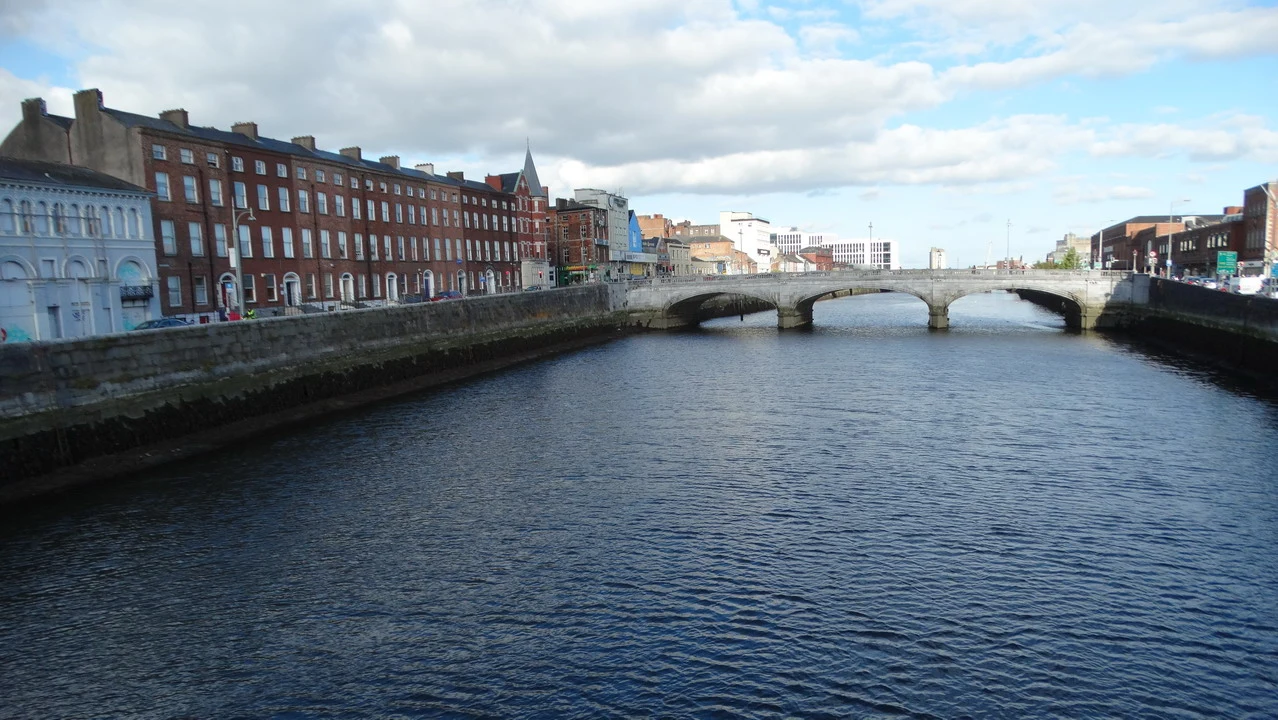
The final stop of the day is Cork, which we reach with a short stretch of 10 km. Despite being the second city in Ireland, we don't really make a big impression: the center is rundown, even amidst the lively and crowded atmosphere of late Sunday afternoon, as people stroll through the numerous restaurants on the main streets. It’s here that the contrast is most noticeable, with the abandoned upper floors, which are uninhabited and increasingly deteriorating. We don't know if it was the strong 2009 crisis that particularly affected urban centers, but the fact remains that the center has two faces: the street level is lively and active (at least during this part of the week), with a succession of shops, while the upper floors and neighboring areas are in disrepair. We notice this along the promenade as we visit the St. Fin Barre's Cathedral... while admiring impressive historical buildings alternated with old popular homes. The cathedral is magnificent; we ask to enter as a religious meeting has just ended; the guard tells us to wait for a couple of minutes and then allows us in for some photos inside this French Gothic masterpiece, but not only. We return on foot to the historic center, thinking that the city has an intrinsic beauty enhanced by the two rivers that surround it, although it could certainly benefit from better maintenance, as its architectural and landscape features are undeniable. This will be a constant theme of the cities we see in the coming days, including Dublin to some extent. One might almost say that the Irish are not really cut out for city life and prefer to keep their countryside villages tidy, where there is almost absolute order due to unparalleled civic sense. In some cases, we can see renovations that clearly aim for modern styles, often in pleasant contrast with older buildings but even less so with very old ones. We have dinner at a table outside, along the bustling street, which also serves as a way to observe and understand the social anthropology of the local residents.
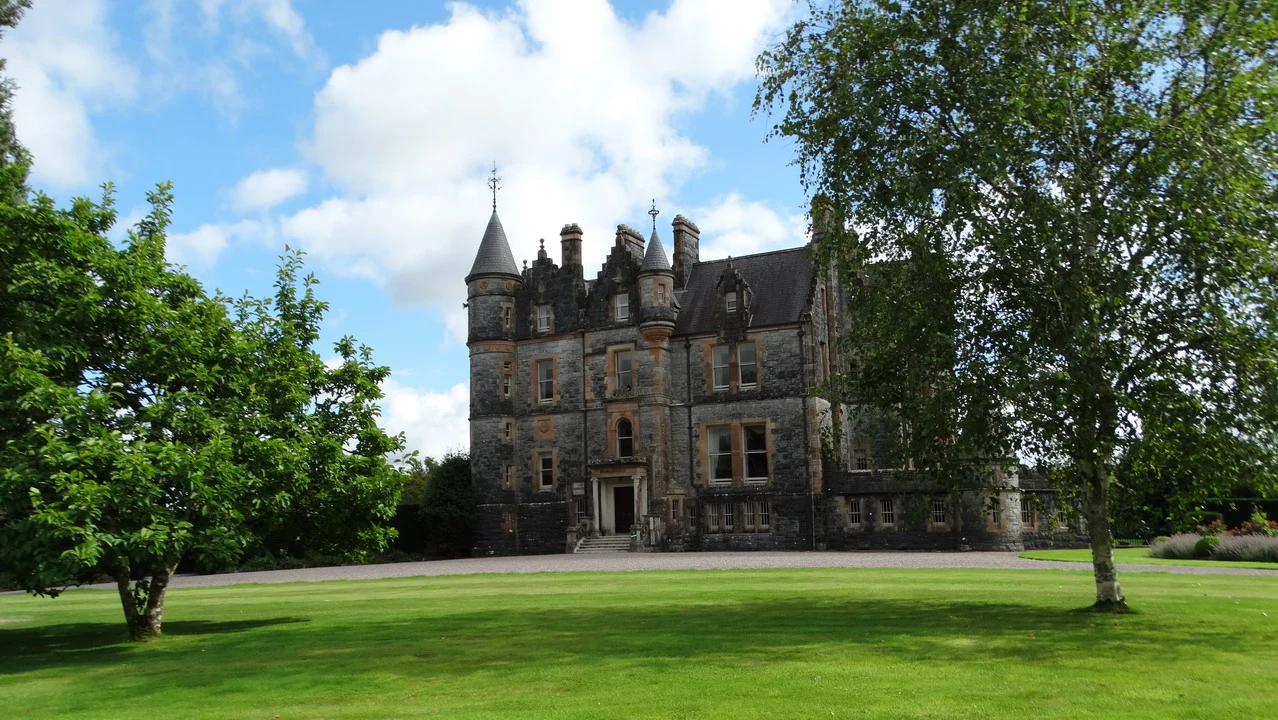
The urban landscape of Tipperary County
The accommodation will be in a room of the luxurious villa booked in the afternoon via Airbnb in a wealthy neighborhood not far from the city. We are provided with a room with an ensuite bathroom, and this is exactly what we need to spend the night. This type of accommodation also offers the possibility of talking to the owners, which can sometimes be less demanding than B&Bs that somewhat require you to adhere to their breakfast hours. Furthermore, being able to observe people's lives in their homes helps us better understand their habits and daily routines. Generally, we always find large, impeccably equipped kitchens, fully stocked with dishes, cups, glasses, and everything else imaginable. The bathrooms are also very spacious and equipped with all the comforts, filled with towels and every item of toiletries you could need. In the gardens, you can see hammocks, cushioned swings, and chairs of all types, illuminated in the evening by romantic strings of lights that also decorate flower pots and trees.
Today and in the coming days, we will encounter many banners celebrating the local favorites in anticipation of the recently held Tokyo Olympic Games. In some cases, you can even see congratulations for the achieved results. Here, we notice photos of rowers and don't have any difficulty understanding why, given the vast basins dedicated to training and competitions.
Another constant feature of the Irish landscape is the hydrangeas: large and vigorous bushes surround houses, forming dense hedges with colors ranging from lilac to blue, passing through various shades of purple, which are also bright under the dark sky. It would almost seem as if they were the national flower of Ireland, although this is not the case. shamrock, the shamrock.