

Day 5
Atlantic Ireland and Killarney
Slea Head Drive, at the most eastern point of Europe. Killarney, residences and corresponding park.
Morning at Connor Pass
Dingle, besides being the westernmost town in Europe, is also a pleasant little town where tourists are starting to explore after breakfast, but the real highlight is along the eponymous peninsula, particularly when driving the Slea Head Drive. A fantastic environment; every turn reveals... breathtaking scenery, in a state of suspended animation between sea and mountains. The mists that shroud the peaks always obscure the colors, but at the same time create a sense of mystery. The Faraglioni dive into the Atlantic, sometimes with vertical jumps, other times descending from green hills and ending with a few minor issues. Beautifully inlaid into this coastal landscape, here and there a beach opens up The strikingly contrasting colors make them visible from a long distance. Another distinctive feature of the mountains is their conical shape, with ridges forming parabolic curves, similar to those found in the Norwegian Lofoten islands.
Arrival at Connor Pass
We arrive at the western end by winding through gentle hills that seem to have been painted with an artist's skillful hand. The architecture is also impressive, with its beehive-shaped houses and dry stone walls that appear to stretch towards infinity, namely the sea. To return from the northern side of the peninsula, we cross Dingle again and ascend (a gradient of 7.5%) towards the Connor Pass at an altitude of 456 meters; it seems to have been designed to offer views of the valleys that open on both sides. Today, the sun doesn't seem to want to be seen, it's not raining, but the clouds are a constant presence: one can only discuss between dense layers and a landscape that is darker or thinner with more subdued colors. Instead, it seems like pure magic when the rays manage to filter through, highlighting panoramic details or creating unique light effects, especially when reflected in the Atlantic. During the descent from the hill, the road becomes to a single lane And from there, the restriction on bus, caravan, and camper traffic becomes clear right from the start. Despite the late season, the blooming of gorse and heather offer stunning color variations, which a full sun would have further enhanced. A small country road with beautiful, narrow, and steep climbs leads us back to the southern coastline; luckily, we encounter very few vehicles traveling in the opposite direction and always in easily avoidable places. At this point, we return to Killarney via other side roads: the town thrives on tourism and does nothing to change its character, offering opportunities for adults and children to visit and have fun. It is clear that it is a popular destination both for day trips and for holidays, and the activities offered allow you to spend time in the right way. We buy some local ham (we also bought Spanish and Italian ham in previous days to satisfy all our taste buds), accompanied by cheddar cheese and scones as dessert, having lunch in front of the Ross castle dating back to the 15th century, which we will see from the outside shortly after. We get back into the car for a few kilometers and park near the abbey, which we will see at the end of our tour. Now our interest is focused on Killarney National Park, within which, in addition to the lake with the same name, there are also Muckross House and the Torc waterfalls, with a height of 20 meters.
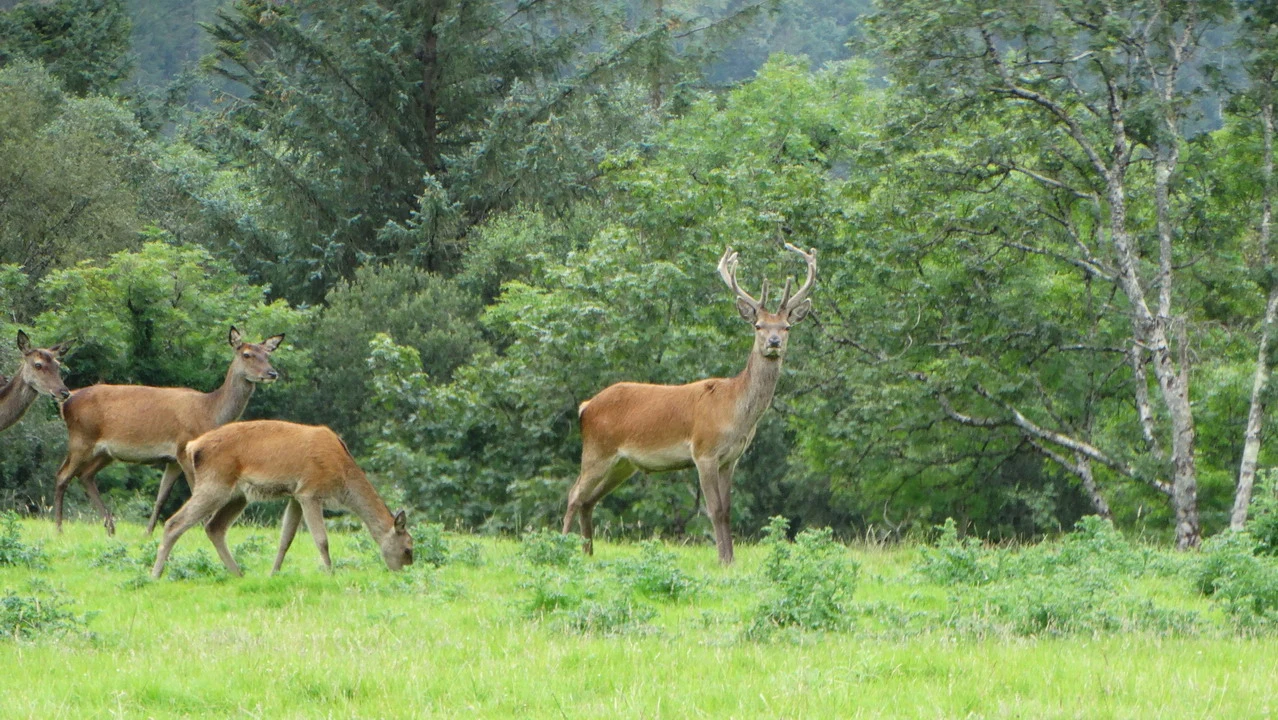
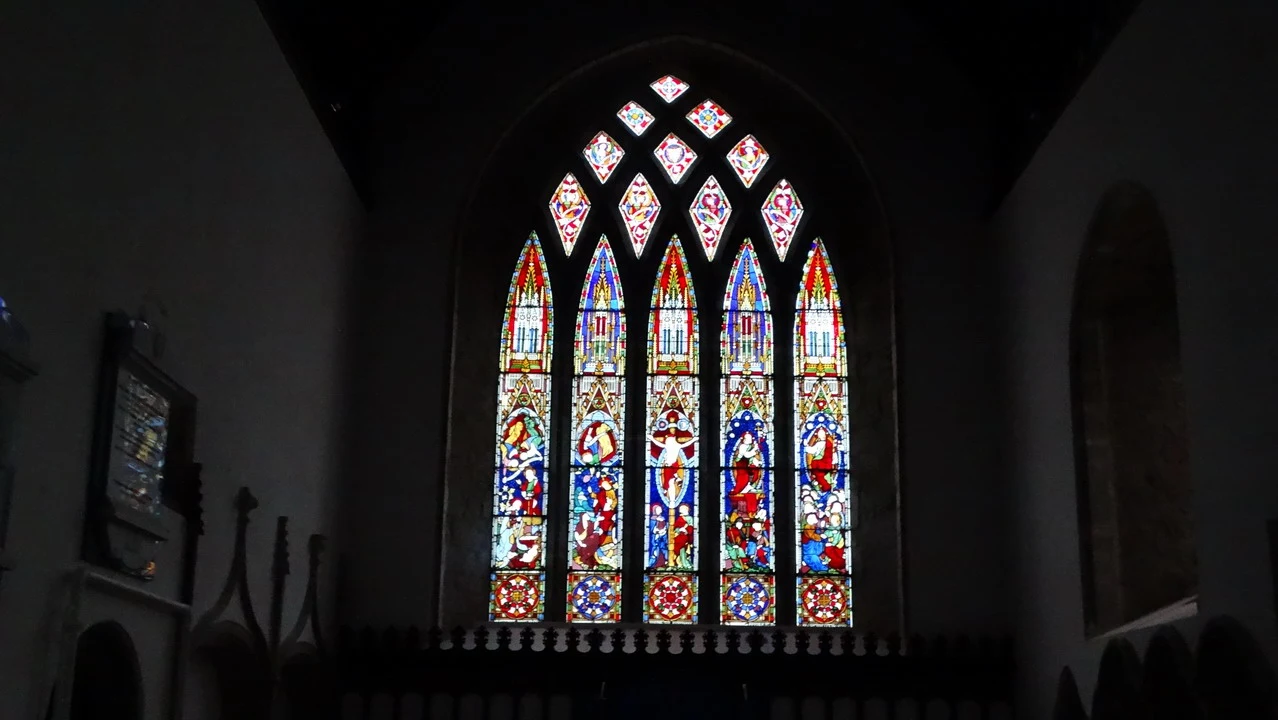
We walk along the pedestrian/cycling path and at some point, the magnificent House appears before us, surrounded by perfectly manicured lawns. Another pleasant walk brings us to the waterfalls, which are interesting even though nature offers something better; a total of about 4 km one way. The return journey offers a pleasant surprise: while everyone continues along the road that borders the lake, we choose to go through the interior and into a clearing in the forest, where we find a dense herd of deer I am planning to have a snack. The park is beautiful and, despite the large number of tourists, it manages to retain its originality, thanks also to the civil behavior of visitors, and especially their children who play and have fun without taking up too much space with shouting and running around. The Abbey is what we would call a ruin, without a roof and with a large yew tree, which demonstrates that the building's covering has been missing for several centuries. Despite this, the place doesn’t give the impression of being “abandoned”, but rather left to time without any deliberate intervention: a particular feeling envelops us as we walk through the now empty spaces, but which seem to tell countless stories from the past. We then head to the Knockkreer Gardens, which are little more than a lawn with views of the lake, and the beautiful St. Mary Cathedral, quite ordinary from the outside but whose grandeur is appreciated once you pass through the modest entrance; here the stone walls They rise like the Atlantic's Faraglioni, topped only by the slender Gothic arches. As an option, the program also included a climb of Carrauntoohil, Ireland's highest mountain, but the idea of walking much of the route in fog and seeing nothing once we reached the top doesn't appeal to us, so we decide not to do it before even leaving. Given how interested we were in Killarney, all that remains is to head towards Limerick for about 90 kilometers on a fast road with a speed limit of 100 km/h, while the sky has cleared despite the presence of clouds.
Limerick County
LIMERICK COUNTY
Not far from the city, we still wanted to see the village of Adare, which is both picturesque and famous for... rooms with straw-covered roofs, perfectly tailored: it's a particularly vibrant Irish art form in this area. Having seen an interesting-looking restaurant with an appealing menu, we decided to stop for some cod and lamb chops. As we left the village, we were pleasantly surprised by another sight: our attention was drawn to the beautiful St. Nicholas Church Let's turn around and ask the kind sacristan to show us, he says it's closed but hands us the keys, so we enter and in complete silence immerse ourselves in the history of this monument, where you don't even need to close your eyes to start dreaming about the past.
Today's accommodation is located northeast of Limerick, within the university campus, where rooms are rented to tourists during the summer holidays. It feels like we are experiencing something different for a few hours, surrounded by some young people, sports fields and school buildings in this university town.


