Day 6
Whitehorse
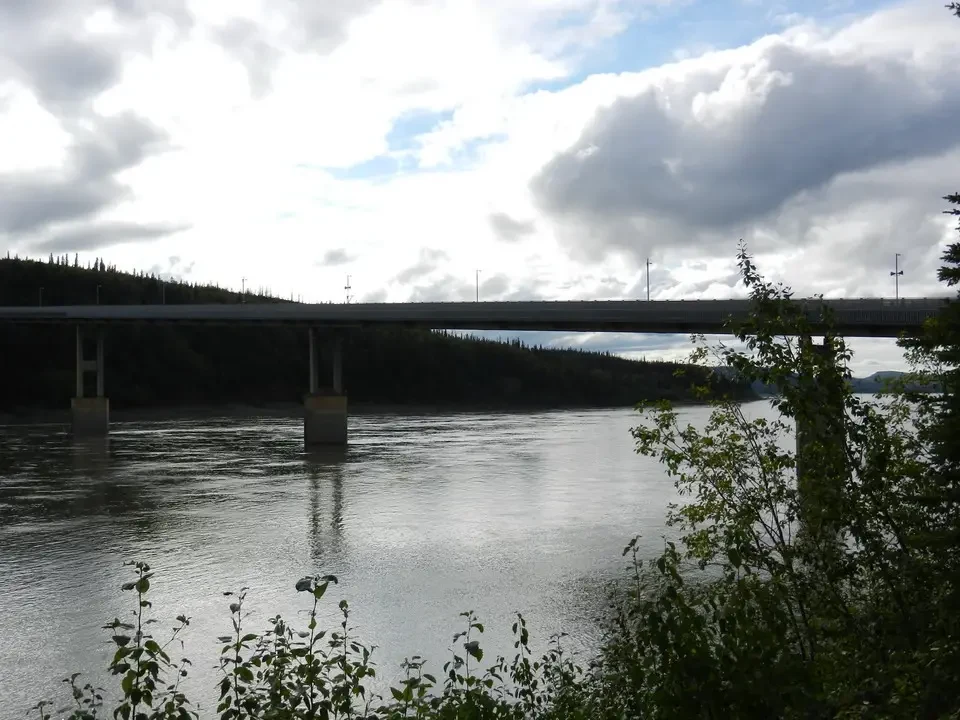
Yukon Territory: the city of Whitehorse and again alone on the Klondike Highway along the Yukon River.
Morning in Whitehorse
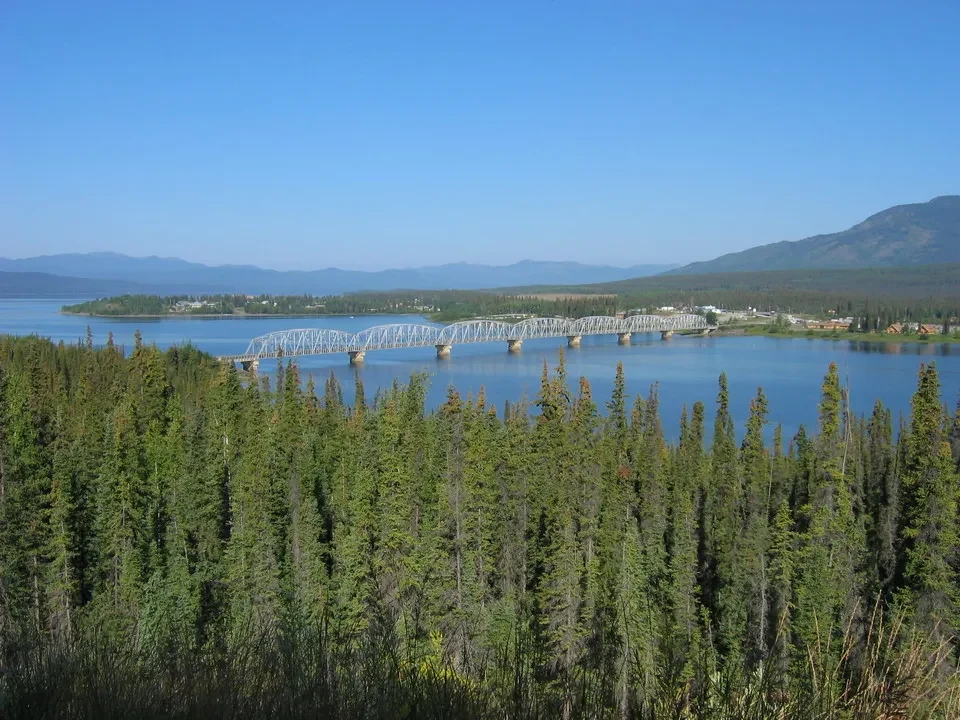
We wake up early, but there is no electricity and therefore no water either. We are told that they are carrying out maintenance in the area and that the entire area is without power. Luckily, we still have enough fuel to reach the Rancheria, about eighty kilometers away, where we can fill up our tank, wash our faces, and drink a coffee. Refreshed, we continue on Alaska Hwy 1 towards Teslin in a hilly landscape, covered by the boreal forest with mirror lakes that reflect them. The peaks of the surrounding low mountains are covered in snow. About 80 km from Teslin, we encounter a large pine forest that has recently been burned. Even this morning, the temperature was around 10°C, rising to 25-26°C during peak hours; the presence of the sun is undeniable.
Arrival in Whitehorse
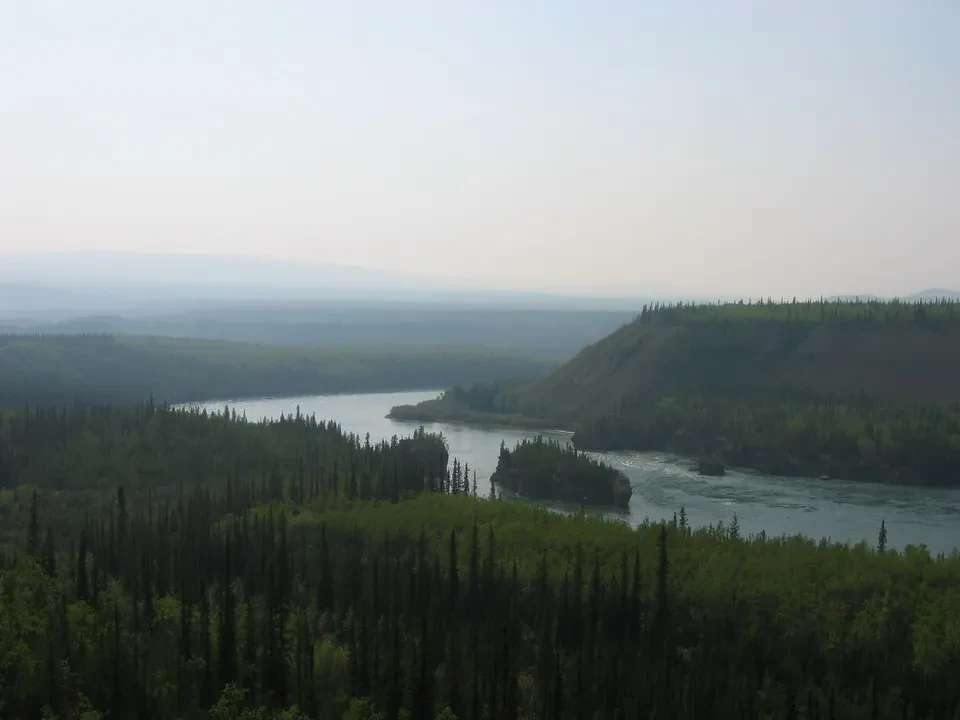
The Alaska Highway in this section is beautiful, with a speed limit of 100 km/h, but it can be driven comfortably at 120 km/h; the views are stunning. After passing the Yukon River We arrive at the Hyles Canyon, where the river narrows due to high rocky walls that significantly increase the flow of water. This created major problems in times when there were no roads and the Yukon was the only means of communication. We arrive in Whitehorse, the capital of the Yukon, which with its twenty thousand inhabitants seems like a metropolis to us. At the end of the century it was a quiet town of 500 people, today it is a mix of historical pioneer charm and modern urban planning. We see the historic SS Klondike (steamship in service on the Yukon until 1962), the Fish Ladder at With Horse Rapids Dam These are "steps" used by salmon to ascend the current in the area where a dam has been built, otherwise it would prevent the fish from passing through. We also see the tree-trunk skyscraper, which doesn't particularly impress us, and the Old Log Church (the only wooden cathedral). When leaving the town, we take Klondike Hwy. 2 north: the landscape changes to a decidedly drier terrain. Only birch trees and the usual pines grow here, tall and narrow. We follow Lake Laberge and Fox, to meet the Yukon River, which winds through a series of bends. The promontories along which the road runs seem to be deliberately designed for viewing. The temperature ranges between 30 and 32°. In the Carmacks area, there are signs indicating the years in which the surrounding forests were destroyed by fire, ranging from 1958 to 1998. The season appears very dry, with several birch trees already showing autumn colors. Where fires occurred, a vegetation of undergrowth is slowly starting to grow, while the charred pine skeletons remain standing for several years. Down below, we see Five Finger Rapids, which presented a real challenge to gold prospectors while they were navigating the river upstream.
At the visitor center in Whitehorse, we booked the hotel in Skagway (later we discovered that if we hadn't done so, our only alternative would have been to stay in the car) and the "lodge" for tonight. Given that mobile phones only work in the Vancouver area, these lodges don't even have a landline phone; instead, we call the operator and provide them with an alphanumeric code, which then connects us via radio. The Moose Creek Lodge is actually located in a sparsely populated area. The first houses are in Stewart Crossing (a service area), while the town of Dawson City is 160 km away. The truck delivering supplies arrives only once a week, and it's tonight. The Swiss woman from Thun, who bought it in 2002 (she emigrated 8 years ago), finds it ideal for this reason. There are no problems with neighbors, and she keeps the property young thanks to the winter temperatures that reach -50°C, but she spends the period in Mayo because there is no tourist traffic on the road, so no business is done. During that time, she simply packs handcrafted souvenirs to sell during the summer season. She is a true lover of the far north and doesn't mind doing business with good hospitality. Last year, the first snows started in September, while in October, there was abundant snowfall until May. The roads are also in good condition: the snow is regularly cleared, and there is no risk of ice. Yes, because for many months, the temperature does not rise above zero, so the precipitation remains in snowy form and you slip less. For this reason, they don't use salt, but rather sand. It is still a dry cold that can be tolerated, at least for those who are used to it. We are located in the permafrost zone; the ground beneath us thaws for about two meters, but below that, everything is frozen all year round.