Day 1
Melbourne
Melbourne: a southern metropolis in a typical British style.
The urban face of Melbourne
At 9 am, we are ready to start our tour of Melbourne. As the guides describe it, it immediately appears as an European-style city, almost Victorian, with a relaxed lifestyle. Even though it's Monday, there is hardly any traffic or people rushing around. Travelers stroll without stress, as if this were the ideal city to live in.
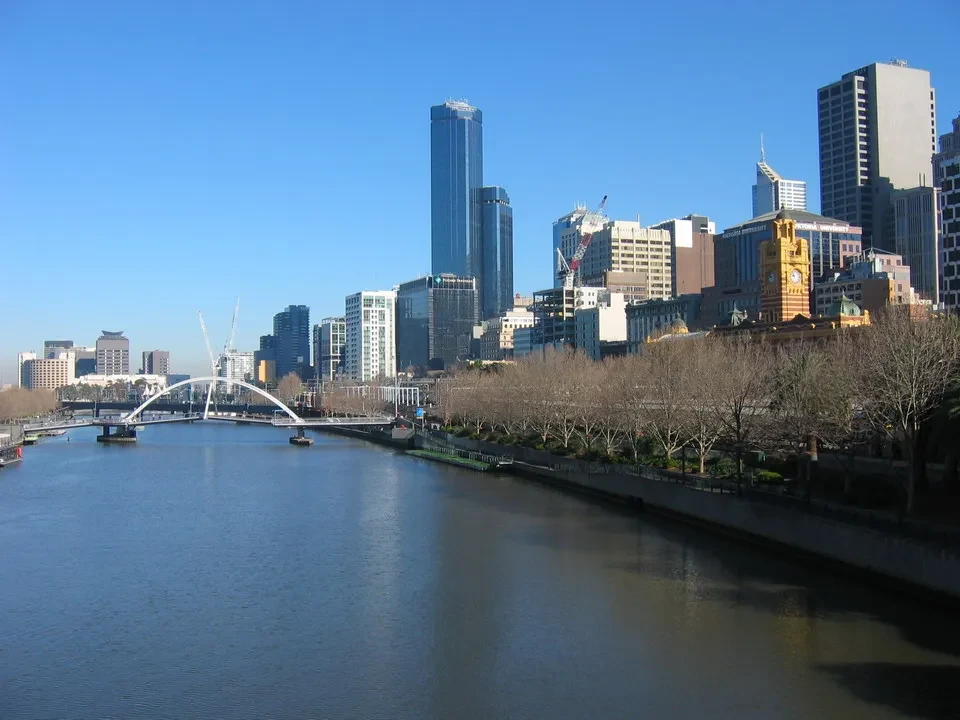
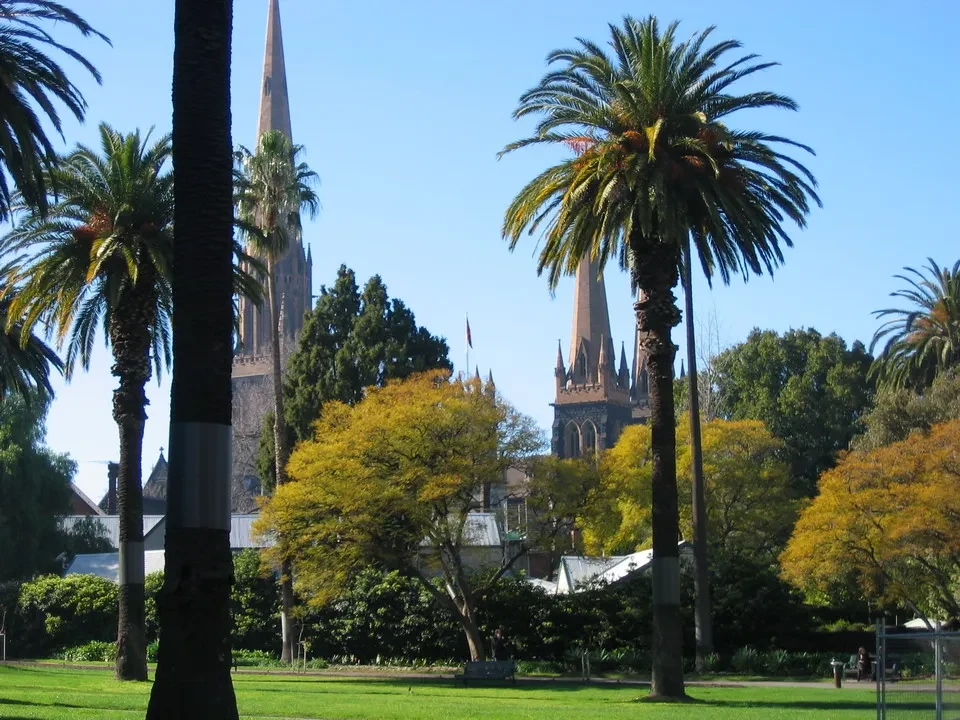
We descend onto Swanston Street, where some shops attract our attention with their interesting souvenirs. We continue on Flinders Street to the... key station located at Federation Square. Although it doesn't have a proper center, this appears to be the most attractive area of the city, with its colorful station facade, modern buildings nearby, and... Yarra River that borders it. We cross the Princes Bridge and head to Southgate to pick up some images of the city skyline We return by crossing the pedestrian bridge and take the Circle Tram, an old-fashioned tram that makes a circuit of the city center. We get off near the Parliament House to head to the... St. Patrick's Cathedral. It's a beautiful Gothic cathedral with magnificent stained glass windows Bathed in the soft morning light of early spring, the garden is filled with blooming camellias. Tall plants wait patiently for the next few weeks to reveal their full glory. It's fascinating to see the large rosemary bushes, whose flowers are considered a decorative element, along with lavender and medicinal herbs.
Towards Melbourne
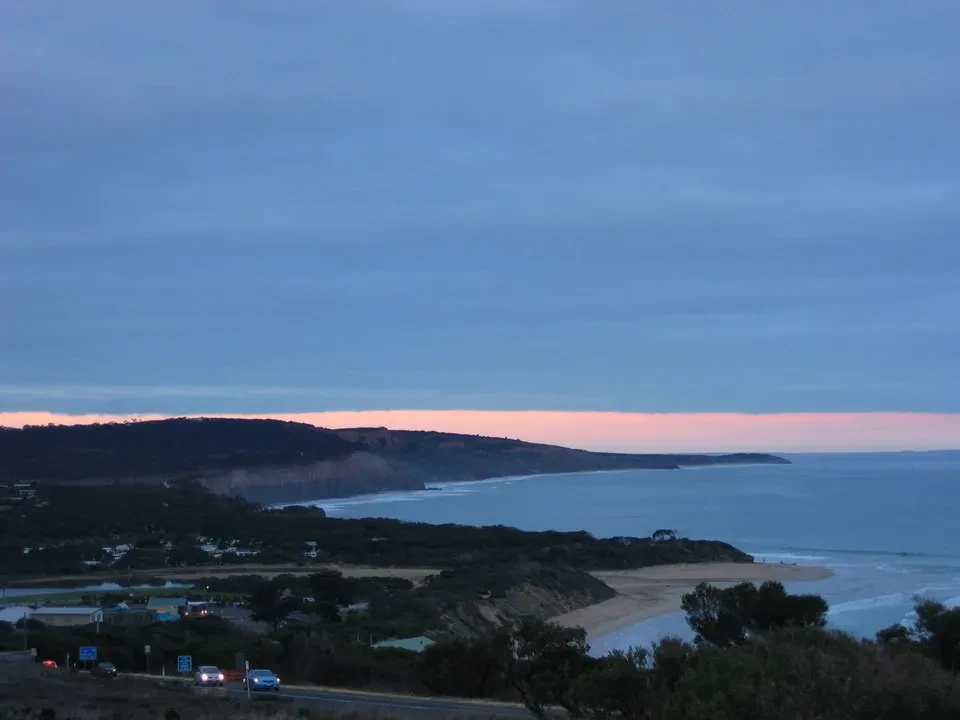
We return to Springs Street to catch the Circle Tram again. We head west towards Telstra Stadium, where the local football team's matches are held, then on to Docklands (a previously rundown neighborhood that has been skillfully renovated in recent years), and finally back onto Flinders St. to disembark at the point where we started, thus completing the circuit. We explore the narrow streets of the city center to visit the maze. of galleries that connect via pedestrian streets and avenues heading east-west: Royal, Block Arcade, The Walk, and Causeway. Here you find a variety of shops that make the city very European. In some respects, they resemble Genoese shops. After all, it is known that this is the most European city in Australia, and this is particularly evident in the Victorian buildings and the atmosphere of old Europe. Some galleries are covered and feature stucco and mosaics on the floor. We go up a few floors of the Manchester Unity Building to see what remains of the original structure of this building, which is characteristic of Melbourne's past, and which today houses professional offices. The austere Stottish and Baptist Churches stand next to each other, almost in competition with each other, although both are Anglican. A quick walk through Chinatown, which is not very large, and we return to the area of the galleries in search of lunch, which we have with a well-filled toast. We also find much English culture in these details. We return to the hotel to collect our luggage, and then we go on foot to pick up the rented Toyota Corolla. Being careful when driving on the right, activating the windshield wipers every time we intend to turn the steering wheel, and dealing with the manual transmission, we head to St. Kilda Rd. for Royal Botanic Gardens We park near the Strine of Remembrance, which commemorates the fallen from the various wars in which Australia participated. The gardens immediately offer a view of Australian vegetation. Unfortunately, they don't yet show the spring colors, but the sunny day highlights at least some of the characteristics of the vegetation. Plants with deciduous leaves haven't yet regrown, although there is a wide variety of tropical evergreen plants. A curious bird with a flattened head seems to be asking for our photo. We still don't know that it's the Kookaburra, the national bird, and therefore it won't be included in our photographic reportage, as we won't see it again. We take a drive to St. Kilda to see Melbourne from the bay, which has become one of the most vibrant neighborhoods. We return to the city after seeing the Spirit of Tasmania ferry, ready to depart for Hobart, and then head towards the M1 in the direction of Geelong and then the Great Ocean Road. We arrive at Anglesea We make sure to have an initial contact with the kangaroos, whom we meet at the local golf club. There are about twenty of them, but instead of playing golf, they simply graze on the grass after sunset. Although it's only 6:30 PM, it's already dark, so we start looking for accommodation.
We notice how, despite having plenty of space available, many houses are close together and although they are independent, they have very small gardens. This is a very different characteristic from the American style, which prides itself on its uniqueness and wants to share very little with its former motherland. Another difference is the emulation towards England. Several details remind us of this: from the colors used in road signs to the coins that replicate those of England (in addition to also featuring the queen's effigy). We can imagine that, in reality, this country does not want and especially cannot afford complete independence yet. It is too young and too vast to grow without the protection of the more experienced England. Australians often use phrases like "proudly made in Australia" to brand their products, but perhaps this also suggests that they psychologically depend on other countries. The United States, which shares many similarities with Australia in its western region, have a good market here, facilitated by the language and many products with common clientele from these areas (primarily American-style trucks), while Eastern Asia has found fertile ground for colonization with cars and labor, as examples of Japanese and Chinese companies.
In the Anglesea area, we see very few people around. The night falls early, and it's out of season for beach activities. We randomly meet a woman who owns Fruit Tree Cottage, a small house located on the hill behind the town center. While she is taking us to our destination, a kangaroo crosses the road: its moderate speed and habit of encountering others prevent an accident. For $150, we have the entire cottage: they light the fireplace (we didn't think these existed in this country but they are definitely useful!), and provide us with some food such as tomatoes and groceries for breakfast. We start to feel tired, and the idea of not going out to find a restaurant is appealing. The chef cooks whatever we have available. After dinner, we read books that tell stories about ships, often sad ones, that have crashed along these coasts due to the rocky seabed. Finally, we discover that thermal blankets are more common in Australia than in other northern European countries we have visited so far. Their presence is often appreciated to keep us warm during the cool southern nights. We have adjusted well to the time zone, but the day was intense, so we don't have any major problems getting on the road for a good night's sleep.