Day 6
Flinder Ranges
Exploring the Flinders Ranges, we head north. Coober Pedy: a unique opal capital.
Morning in Moralana
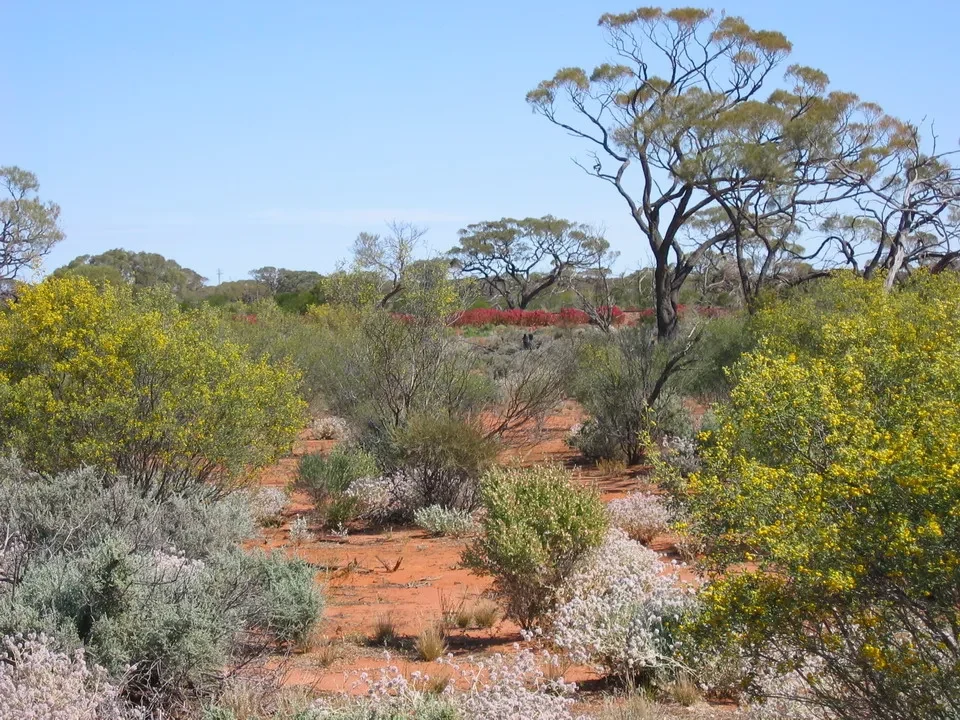
In the morning, we enjoy a cup of homemade tea (using the kettle conveniently located in the hallway next to our room) and a couple of muffins bought the day before. We leave early for the Flinders Ranges National Park. In Parachilna, we take the Moralana Scenic route. The traffic is not an issue, as we don't see any motorized vehicles until mid-morning. Moralana The road is completely unpaved and you travel at a cruising speed of around 50 km/h. But there's no problem, the beauty of the surrounding landscape encourages a relaxed pace. It's interesting to notice how... eucalyptus trees almost uprooted by the river floods, they cling to the few remaining roots and manage to survive in this so hostile environment. Occasionally, you can see kangaroos having breakfast, sheep grazing freely. and some emus. The vegetation is wonderful., ranging from individual flowers with intense colors to entire bushes or meadows covered in purple. Spring has arrived. in a series of colors that contrast with the arid landscape. We continue towards Wilpena, famous for its namesake. Wilpena Pound, an 80 sq km basin that significantly influences rainfall in the area. Returning on the road from Hawker to Quorn, we see several abandoned farms. In the 1840s, several pioneers settled here, attracted by the abundant grasslands, and built farms with large herds. After a period of prosperity, there were periods of drought, which are cyclical and can last for about ten years, forcing the abandonment of the farms and the slaughter of livestock. To this end, a sad industry has emerged dedicated to the slaughter of animals and the partial use of leather and other materials. In memory of this history, you can find the Nelson and Gordon Historic Site.
Also of particular interest is the Death Rock, where local indigenous people would go to die.
Arrival at Moralana
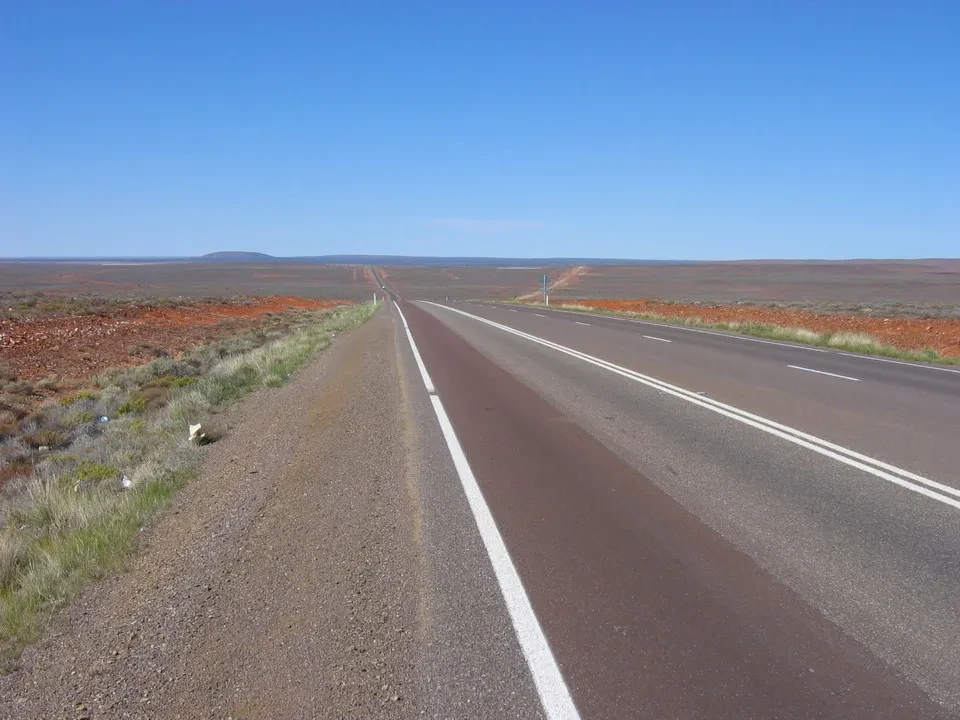
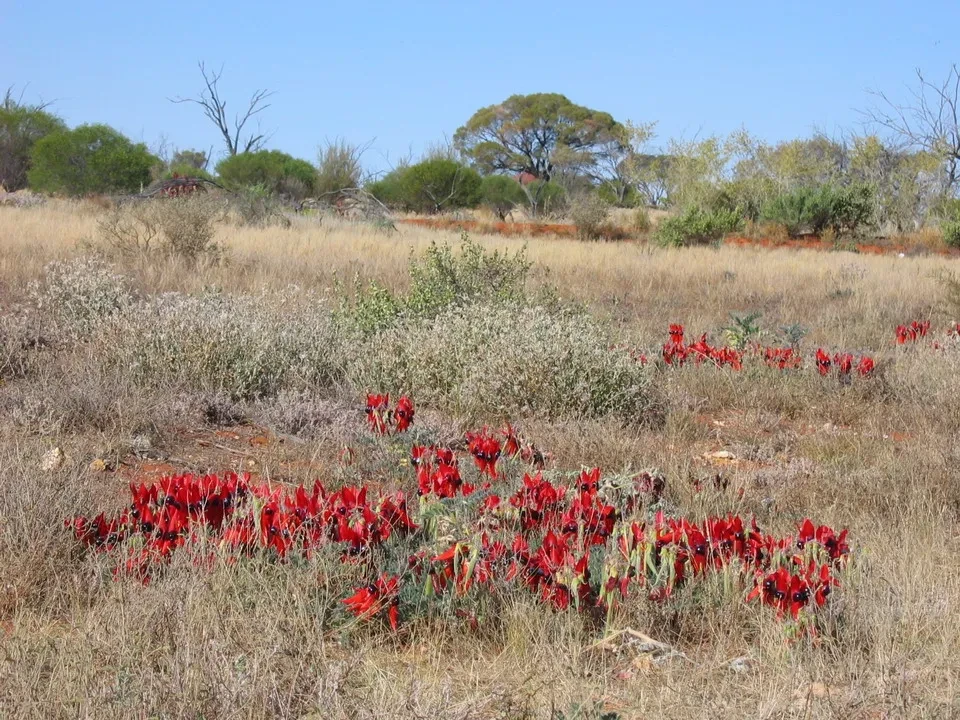
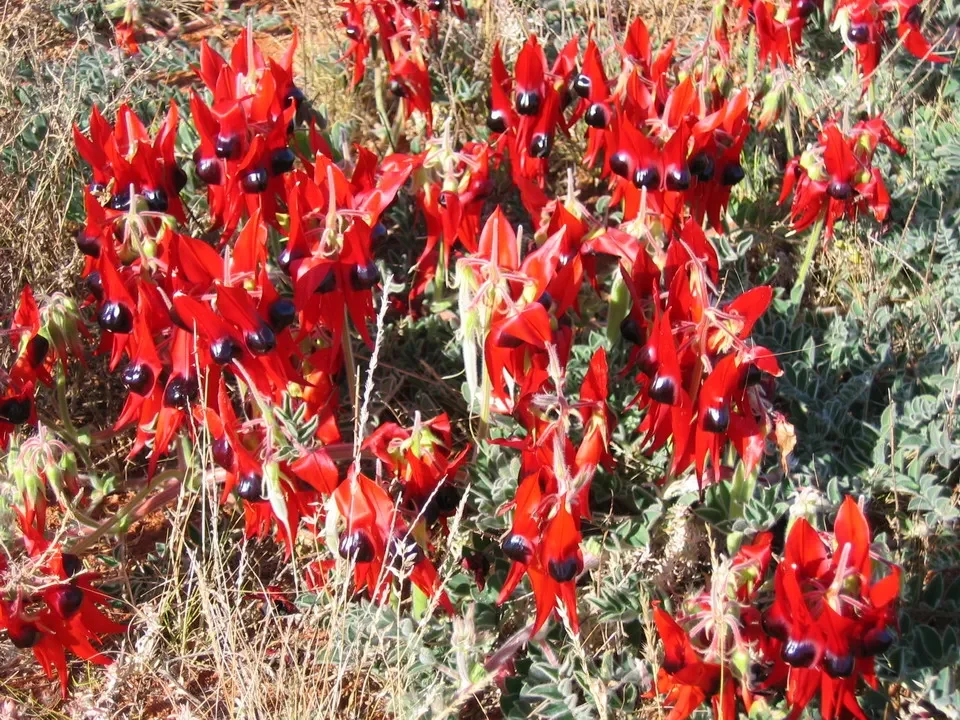
Before arriving in Stirling North, we pass through a beautiful hilly area rich in wildflowers, alongside the Pichi Richi Railway, which we see "whizzing" past us at a railway crossing as if it were waiting for us. This is one of the most classic railways of the pioneer era, now modernized and adapted for tourist purposes. Port Augusta appears to us as a beautiful town, quiet, with a bay on the sea, green as much as possible. We fill up with petrol and take the road that heads straight north. Stuart Hwy A87, not before photographing the fork that, when going left, crosses through southern Australia to Perth, while going right heads towards the center and leads to Darwin in the north. A sign warns that from there onwards for hundreds of kilometers we will be "alone with our thoughts". The landscape is immediately... A classic bush experience., with shrubs, gorse and dreamlike flowers, especially the Desert Pea Flower... of a deep red color that stands out against the less vibrant colors around it. It is also the symbol of South Australia. We often stop to take photos and unfortunately continue to see kangaroos killed on the side of the road. We encounter some lizards and small iguanas. This is the region with the highest kangaroo population, as they can drink from troughs where water pumped to the surface by wind-powered systems flows. These troughs are intended for grazing animals, but they take advantage of them. Similarly, they also benefit from the dog fence (see below) preventing dingoes from hunting them. We stop in the village of Woomera, which remained off-limits until the early 1990s, as it had been the operational center for nuclear experiments carried out in the surrounding area for decades. It is now or perhaps still is a detention center for undocumented migrants and could potentially house radioactive waste in the future. A pretty impressive record for a country that appears quiet and even beautiful, very Western in its well-maintained gardens and with plenty of green spaces for children to play, typical of compounds created in an attempt to make life more bearable in an extremely hostile environment. As a reminder of its past, there is an exhibition of military aircraft. The last 250 km are even drier and have very little vegetation. From an aesthetic point of view, they are less impressive than the previous stretch. We arrive at Coober Pedy when it is already late afternoon, taking possession of our room previously booked at Anne B&B, in a small boat, a unique and comfortable accommodation.
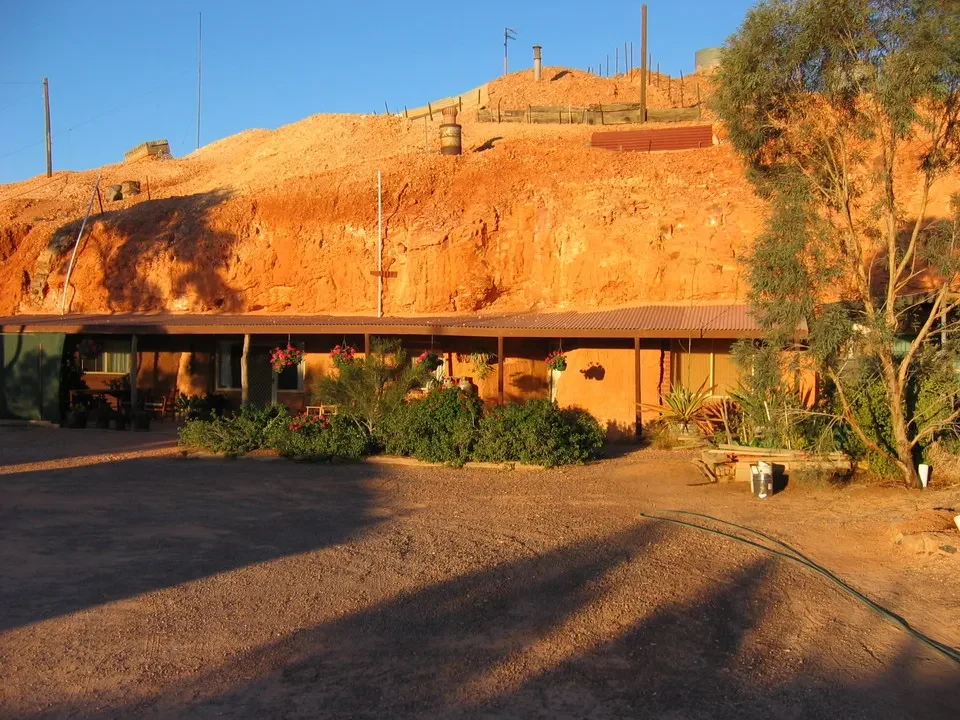
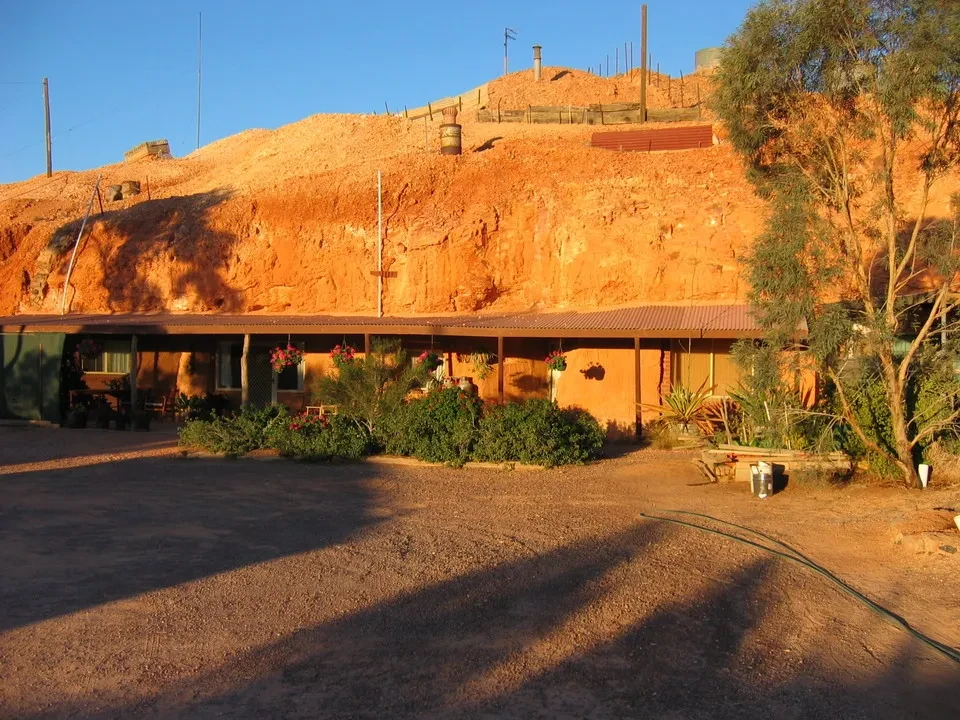
These are dwellings built inside the rock, excavated to search for opals (which boasts the largest global extraction), and later made habitable. They have a significant advantage: they maintain a constant temperature of around 25°C in an area where the heat can be suffocating for much of the year.
Let's chat: can you explain how the room where we will sleep was built as an extension, since there was a exploratory well for searching for precious stones? The entire large accommodation is located underground and there are two guest rooms. The town seems strange to us, less run-down than others we have visited so far, but it hides something mysterious.
The urban face of Moralana
Aside from the main road, both the roads and sidewalks are made of red earth. They quickly turn into a muddy mess when it rains. In fact, rainfall averages around 10 mm per month in winter and 20/25 in summer, but they always have a stormy character, and the roads transform into rivers of mud. It seems like a cruel irony that this little rain should fall in such a way. The vegetation is very sparse; the village looks bare, not only due to the lack of rainfall but also because of the infertile soil. We arrive just in time. to watch the sunset We had dinner at a restaurant run by Greeks (it's the best thing to be found in this area, but it's still very good), with grilled fish and barramundi (the national Australian fish). It was Saturday evening, and there was plenty of activity: young women were running around in a state of apparent intoxication, while some Aboriginal people were clearly drunk. Apart from that, everything was quiet. We returned early and had the opportunity to have a long chat with Anne. Besides exchanging general opinions, she told us about anecdotes from her interesting life and the country that has been her home for several decades. She was born in Oregon and arrived in the early 1970s when Coober Pedy was still a pioneering settlement. As soon as she arrived from America, she went to a "station," which is what they call the farms located in the most isolated outback areas, demonstrating that she was a person who had clear ideas about avoiding crowded places from the start. When she came to town, it seemed like a metropolis to her. At that time, taking a walk in the outback could even be dangerous; getting lost was easy. The signage eventually helped, but she told us how, as a young woman, she always informed someone of the route she intended to take. She is a very special person, a committed environmentalist, and a free spirit connected to this land. Although it's not her own, she has embraced it and fallen in love with it, even writing a book about the history and customs of the country, which is constantly changing. She married Joe, a Bosnian who also worked as a miner, like almost all the other men in this community. Five years ago, she was in Liguria (in Cipressa) for a month and visited her husband's hometown.
Here, water is an extremely valuable resource: they have to search for it at great depths, pump it, and desalinate it, as all the water they manage to bring up is salty. After all, a million years ago there was the sea here, and incidentally, they show us some shells that they found in the area. When they dug out the room, they found some pieces of newspaper at the bottom of the well, which they promptly photographed.
In Coober Pedy, 90% of Australian opal is extracted, which corresponds to 70% of the world's production. Life must be quite challenging due to the lack of nearby countries, so the limited opportunities for contact and activities weigh on people's character. Upon our request about how people can meet, even between boys and girls, she tells us about how rodeos or horse races are organized every year in different times, which involve the entire population, at least as spectators, and serve as a meeting and socialization opportunity. This is one of the few occasions that also helps to facilitate meetings between people of opposite sexes. When residents of "stations" arrive in town, they are called "bush people." She also tells us about a man who was with her at the station, who, having heard about a teacher who occasionally gave lessons in a remote farm where children learned via telegraph (the so-called School of the Air), got into his car and drove for a couple of hours just to meet her. This effort proved fruitful, as they are now a happy couple. This teaches us that one should not miss any opportunities in the outback. After several years, our neighbor moved to "town" where she met a much more modern life. Now, being retired, she spends the summer in the Adelaide Hills, where her husband currently lives. It seems that she enjoys a decent financial situation, although Joe has not made a great fortune as a miner. Few have become rich with opal, and those who have have wasted their money on alcohol, gambling, and poor investments. Unfortunately, there is a thriving drug market that finds easy customers among the Aborigines. According to her, this is why problems of public order have emerged, such as the two police cars being blown up. The witness also says that the police station was blown up. She tries to minimize what happened, denying some facts and claiming that the availability of explosives used in mining, combined with a few adventurous people, caused some problems in the past, but now everything is under control and Coober Pedy is a livable town. Undoubtedly, it was a frontier town where daring and unreliable people made it like the Wild West. It may also be that things have improved, but the past certainly does not favor a meeting of saints, which makes it even more fascinating and intriguing. Currently, one feels "in the middle of nowhere," with a landscape very similar to what images show us of Mars, plus the most venomous snakes in the world nearby.