

Day 11
Alice to Cairns
Desert Park: experiencing life in the desert – Flight along the Pacific coast to Cairns
Museums and memory in Alice
Today's itinerary doesn't include many kilometers, at least by car. We are going to visit the Desert Park, which is located near Alice Springs. Judging from some images, the Eastern MacDonnell Ranges don't seem that different from the Western ones, although they are very fascinating. This outdoor museum helps us learn more about the surprising life that thrives in such an inhospitable environment. We are provided with headphones and a recorder, which we turn on upon arrival at a specific number. We learn that by knowing some species of plants, it is possible to determine which ones absorb water from the soil and therefore trace the underground sources. The Aboriginal people were naturally skilled in finding water this way. We also realize how the desert functions as its own kind of supermarket or pharmacy, given the variety of plants whose fruits have nutritional or medicinal properties. The section dedicated to nocturnal animals is particularly attractive, housed in a separate building illuminated with special lights to avoid disturbing the animals. We see the famous Thorny Devil (a lizard that blends perfectly with a dry leaf), some pythons, mammals (wallabies, wombats, etc.) and birds. Shortly after, we had the opportunity to watch a performance by the rangers, who performed with some trained hawks, as well as a dingo that made an appearance Finally. Equally interesting, perhaps even more so, was the documentation center. To understand the variations in desert colors, there is a series of posters that illustrate the changing seasons and highlight how everything changes rapidly after the rare rains, returning to normal within a few weeks.
Arrival at Alice
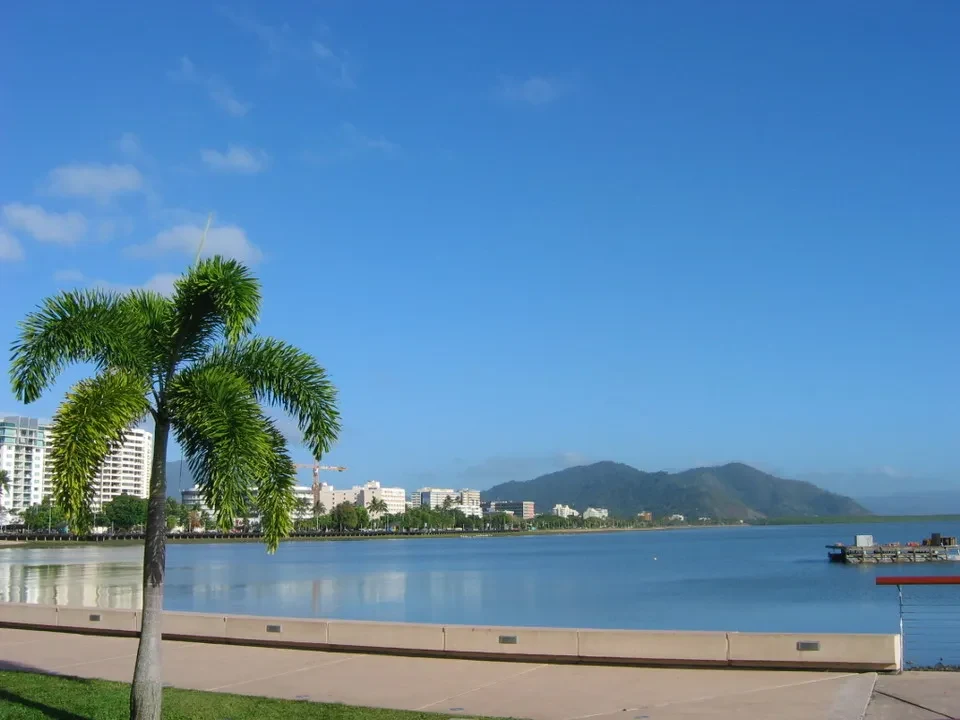
We head to the Alice Springs airport, leave the car and at 2:25 PM we depart for Cairns. The small airport is new and modern, with a series of drawings or photos that trace the pioneering history of the place, as well as carpets that recreate traditional Aboriginal art. We arrive at Cairns in Queensland At 5:00 PM (+ ½ hour time difference), the situation is very different: we occasionally experience a fine rain, typical of tropical areas, while the humidity is noticeable, especially for us who are arriving from the dry Red Center. It's easy to imagine how life is during the rainy season. We go downtown, where we had already booked at the Hotel Global Palace, which, despite its name, is actually a hostel. At first glance, it seems nice, recently built, and its central location allows us to easily visit the city. However, at night, it turns into a nightmare due to the thin walls and the guests who refuse to go to sleep at any hour. We have dinner with crocodile (delicious!) and a mixed seafood dish with squid and shellfish. The restaurant is located on the waterfront, very crowded, but the atmosphere is pleasant. A final walk along the Esplanade to see Cairns at night, particularly the lagoon facing the ocean and the wooden pier. Occasional brief showers accompany us, while an idea strikes me. We naturally go to the port where the catamarans that take you to the coral reef are docked, and we start asking for information in some of the many agencies offering tours. But we don't book... perhaps the sleepless night that awaits us will bring some good advice.
Cairns is a very lively and open city, perfect for young people who enjoy having fun at local bars and clubs. There's a large Asian population here, making it an attractive destination for those emigrating from East Asia. The downside is the rundown style and dirtiness you encounter outside the main streets: while there is certainly a vibrant atmosphere, it seems rather low-level. It's interesting to note how, especially in Cairns, but also in other towns like Alice Springs, there are numerous agencies offering trips and tours for groups. This is likely due to the size of the territory and the fact that tourists primarily arrive by plane, making it necessary to transport them to see various attractions. Therefore, in addition to the many initiatives dedicated to the coral reef, these agencies are full of brochures advertising day or multi-day bus tours to popular destinations nearby. Obviously, these formulas aren't very practical in Europe, where most tourists travel by car or bus, but not organized in advance near the places they want to visit.


