Day 2
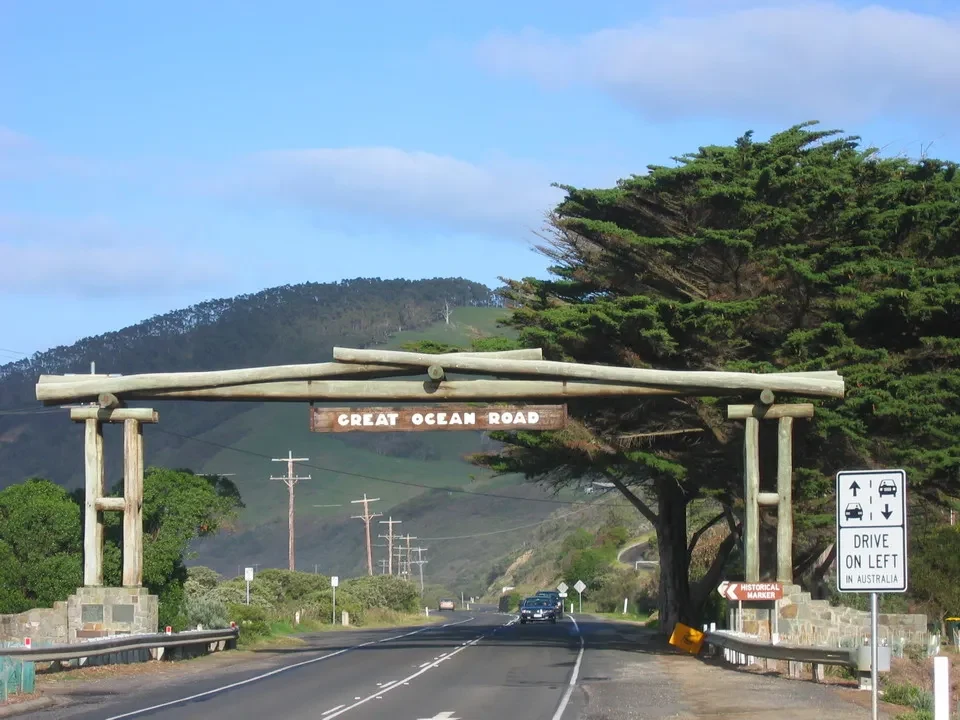
Great Ocean Road
Great Ocean Road and Twelve Apostles: impressive natural architecture.
Morning at Twelve Apostles
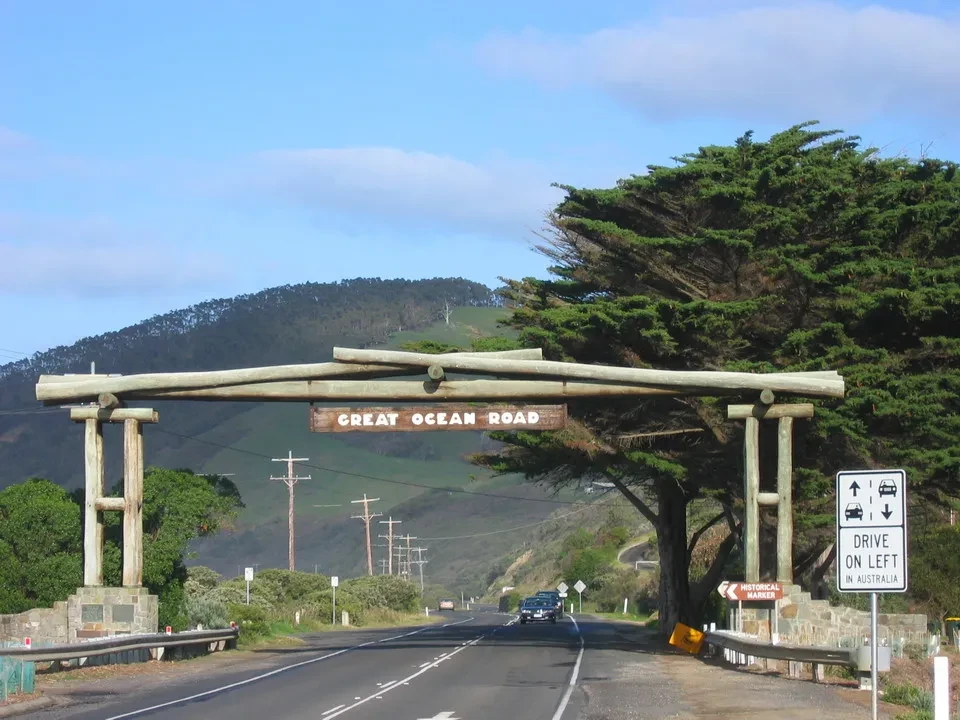
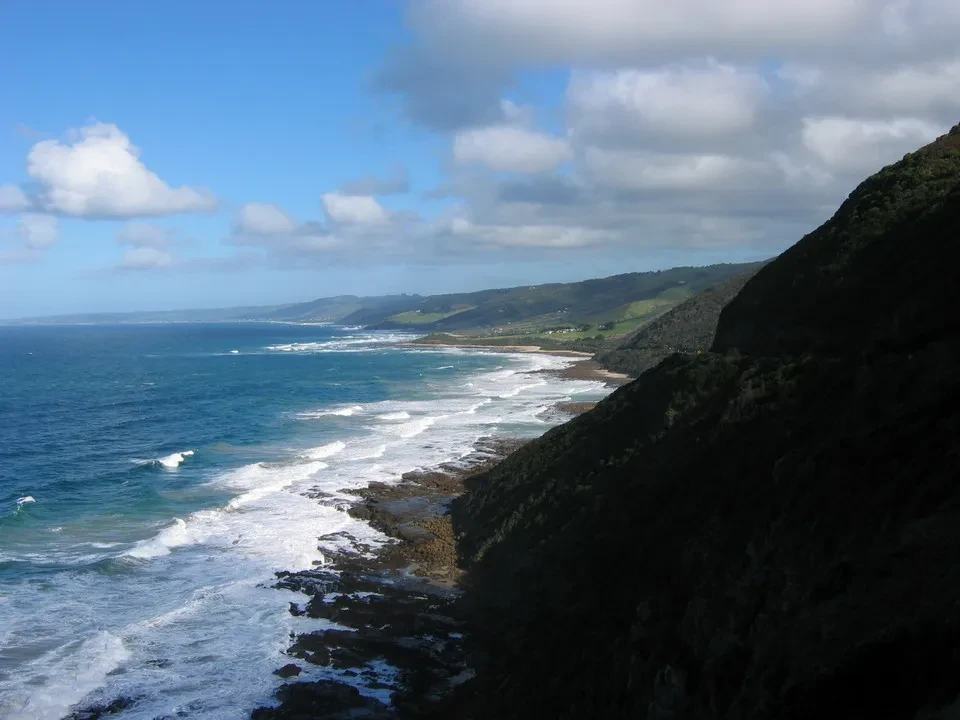
In the morning, we prepared a couple of toast with bacon ourselves and left at 8:30 to head off to... GREAT OCEAN ROAD (B100). We arrive in Lorne, which is quite unremarkable despite its reputation. We also find the same lack of excitement in Apollo Bay, where a cold wind adds to the unpleasantness of the area. The sea in winter This could be the perfect song for a place like this. The coastal vegetation is essentially eucalyptus trees, with rare pine trees and no palm or olive trees that distinguish our idea of a coastal landscape. The eucalyptus forest (at least those present in this area) gives the impression of being quite overgrown. The trees shed their bark, which often doesn't detach completely from the trunk and hangs down. The undergrowth grows in a chaotic way, disturbed by falling bark.
Often the streets are literally lined with them. The houses are usually not very renovated, but instead have large verandas, which clearly show how summer requires shade and ventilation. We take a detour of 12 km towards the Cape Otway lighthouse, which we don't even plan to visit, considering the request of $13.50 to see a lighthouse too high. However, along the way, we encounter some koalas peacefully perched on a tangle of branches, apparently asleep. It's difficult to find them doing anything else since they can sleep up to 19 hours a day. We observe one, who lazily opens an eye to see what is happening beneath him, where some people are gathered in silence. Whether it was due to the excitement of being in the spotlight or the annoyance of being disturbed, he starts defecating while asleep. Thus we discover another miracle of Mother Nature! Koalas sleep with their arms and legs folded, maintaining a vertical position that allows them to fulfill their needs without even waking up... In fact, this animal is the most charming and at the same time the most foolish creature on earth.
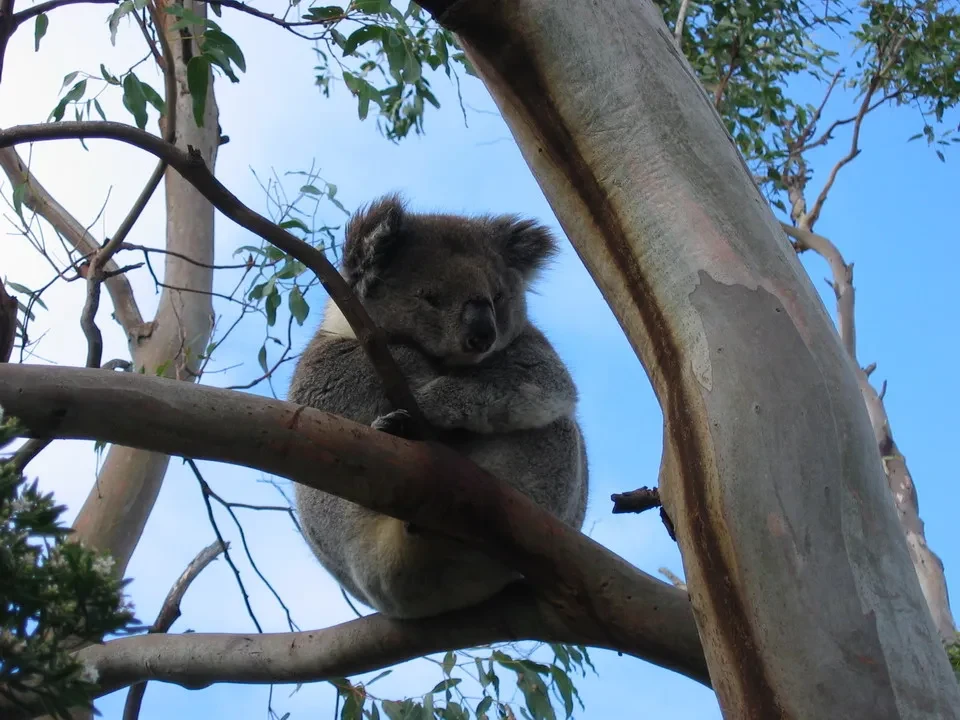
He has the expression of a perfect idiot, but at the same time inspires sympathy with his teddy bear-like face, to the point that he seems like a fictional character. However, he really exists and has its own peculiarities: it only eats eucalyptus leaves, and out of the 265 existing species, it only consumes twelve. The leaves are however harmful, and so are for him, therefore he must use particular gastric acids in order to digest them. It seems that this slow and complex digestion has prevented the animal from fully evolving, requiring it to expend a large part of its energy.
Along the Great Ocean Road
The road now heads inland, passing through the Otway National Park, and is lined with mimosas, which in this season create a stunning display of fragrant colors; they are sometimes present as small bushes. It's interesting to note how it's one of many wild trees that populate the forest. We continue along what is considered the most interesting section of the Great Ocean Road, where it runs alongside Port Campbell National Park with the Twelve Apostles, which we encounter in wonderful shape.
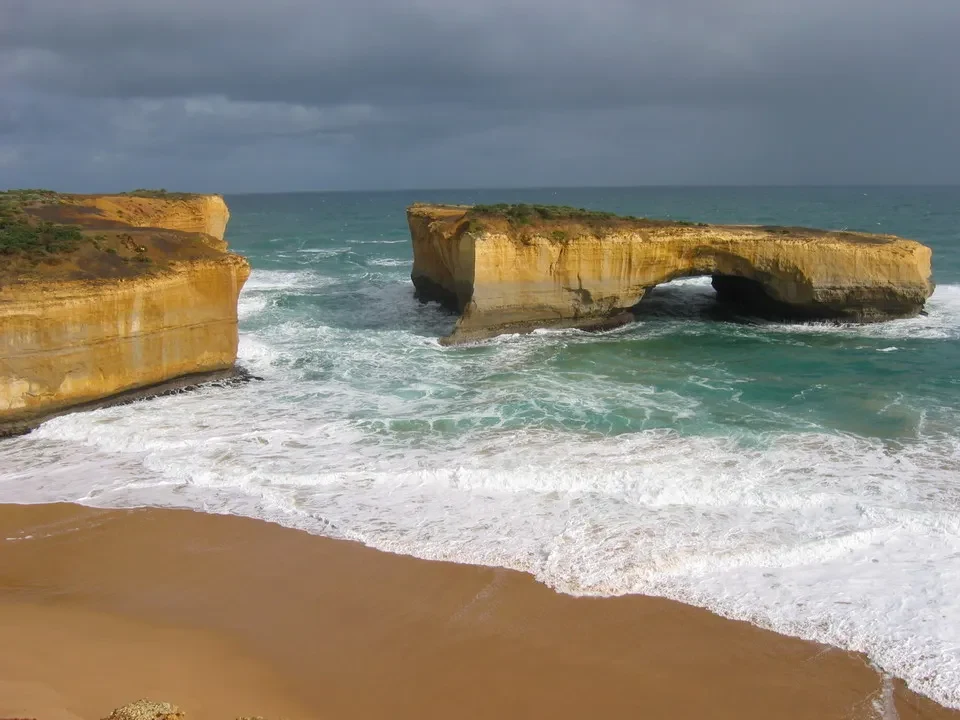
London Bridge
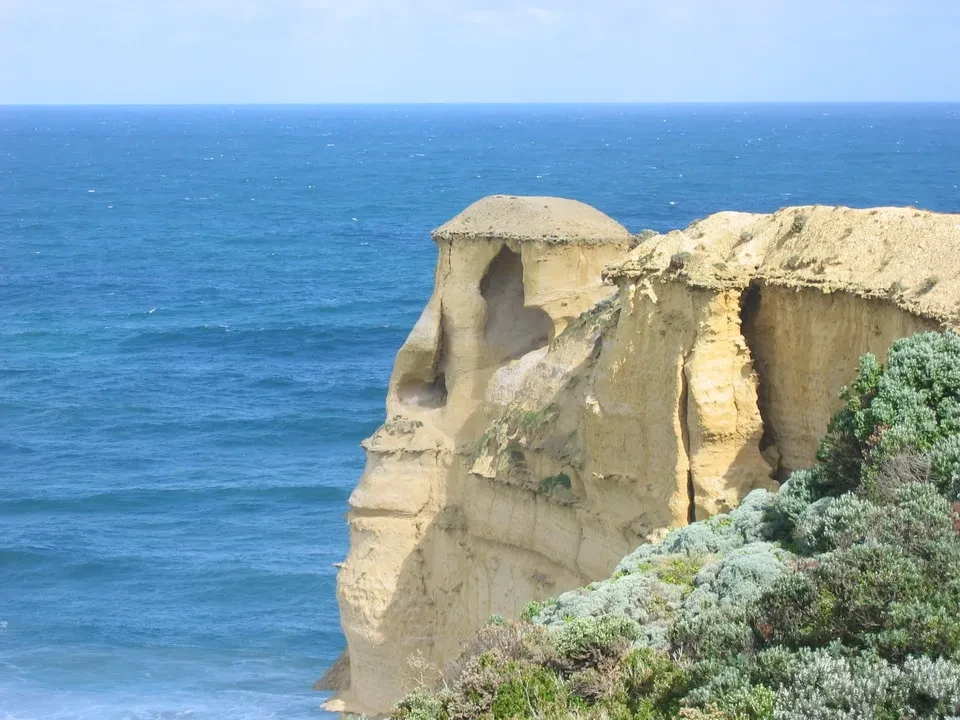
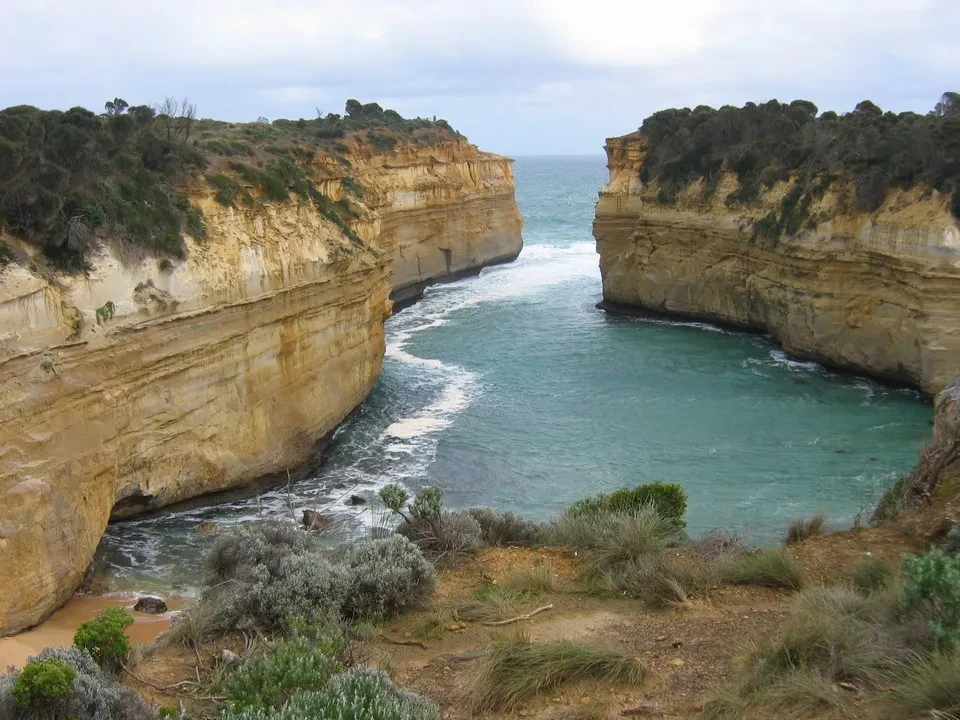
Some clouds goes back and forth, contributing to giving an surreal image to these enormous rock formations emerging from the sea like blades. The signs inform us that these rocks were formed through the sedimentation of marine animal skeletons when they were submerged. As the land rose, the sea began to crash against it, eroding and gradually removing the most fragile points, creating... these embers that fall vertically into the water. It's only a matter of time, and the sea will eventually win over them too. A recent case occurred about ten years ago, just a few kilometers further on, when the London Bridge... a promontory that extends into the sea for several dozen meters and forms two separate bridges, collapsed at the height of the first bridge, thus creating an island where the second one is still located. At the time of the collapse, there were two tourists on the newly formed island who were then rescued by helicopter, appearing stunned but unharmed. In addition to the Twelve Apostles, there are other places where these particular rock formations can be observed: London Bridge, Sentinel Rock, Loch Ard Gorge and The Arch. Some resemble enormous knives that plunge their blades into the sea. It is impressive to see the patient work carried out by the tides and waves over several million years.
We arrive in Port Campbell, where a quiet fishing bar seems the perfect place for a break with cappuccino and muffins. While the first stretch of road seemed disappointing, the one that leads to Port Campbell and beyond offers beautiful visual surprises at every turn. This is also the most worthwhile view from a historical perspective: here many ships ran aground during the 19th century, and their stories are told on specially designed signage. We even find the tomb of a shipwreck survivor. The high rocks that descend steeply are constantly battered by the sea, and the inland area is also pleasant to see, despite some areas having been devastated by fires, while the rock gradually changes from yellowish to reddish in color. The vegetation seems adapted to enduring strong winds and does not exceed 120-130 cm in height. Further on, the interior features pastures with related cattle farms (with long fur similar to that of bison), horses. and sheep (also richly covered in wool), particularly near Warrnambool, Port Fairy and Portland. The sea seems far away at these points, but it's just behind the low hills on our left. We also see several windmills, confirming previous assumptions. The eucalyptus vegetation continues, but in a milder environment, mixed with very characteristic pine trees with flattened tops. It’s almost as if they are forbidden from exceeding a certain altitude; when they reach the top, they spread out horizontally, creating the typical umbrella-like formation. At 5 p.m., we take a provincial road that leads from Portland towards Nelson and Mt. Gambier. Some clouds appear in the sky, and sunset is imminent. Kangaroos start to appear on the side of the road: they seem calm and relaxed, as if enjoying a walk. Unfortunately, a couple are lying on the side, having been killed by cars in recent days while crossing. We later discover that these are not isolated incidents, and that leaving the carcasses undisturbed is a common practice in Australia. We also see a bumper lying in a field, which suggests that, even though kangaroos usually have the worst of it, it's best to try to avoid collisions for various reasons. We also encounter several emus, which immediately run away as soon as we stop the car to observe them better. We check into the Hotel Nelson in Nelson. A room characterized by tranquility and simplicity. We chat with the hotel manager who confirms the danger of certain nighttime encounters, especially in this area so rich in kangaroos (apparently, there are over a million kangaroos in Australia). A car parked outside the bar still shows signs of the collision. Even a small animal can already cause serious damage to the vehicle. The hotel dates back to 1855: typical, historic, without the frills that are sometimes used to make a place look old. Here it seems as if time has stopped; even renovations or maintenance have been left untouched! We learn about some of the peculiarities of Australian rustic dining: you order at the counter, sit down, and when it's your turn, you are called to collect your meal.
The weather today was very changeable, with some light rain, almost like fog, alternating with sunny periods. The only constant is the cool, crisp air.