Day 8
The southernmost part of southern Italy.
Cadiz, Jerez and the Pillars of Hercules, also known as the Strait of Gibraltar.
Arcos de la Frontera and Jerez
Yesterday, the Av. de Juan Carlos I was very quiet, but this morning it is bustling with people in the bars. Knowing the Andalusian habits regarding early mornings, we were ready for breakfast at 8:00 am, assuming that was the opening time. In reality, at that hour, many of the bars are already full of people chatting and drinking coffee or other beverages. Paved with granite tiles, they resemble Western saloons in a European style, with a large space and a counter at the back: small groups of people stand and sit around tables, seemingly engaged in lively conversation. We were initially surprised, then fascinated by this small, ancient world that seems to go against the current. Having consumed what we had anticipated, we opened the door of what was once a farmhouse – now called a rural house – and went out to take the highway, immersing ourselves in the hustle and bustle of Seville's rush hour, a large modern world that we absolutely missed. After overcoming the short traffic jams, we moved onto the A4 towards Cadiz, alternating between sunshine and fog amidst a predominantly agricultural landscape.
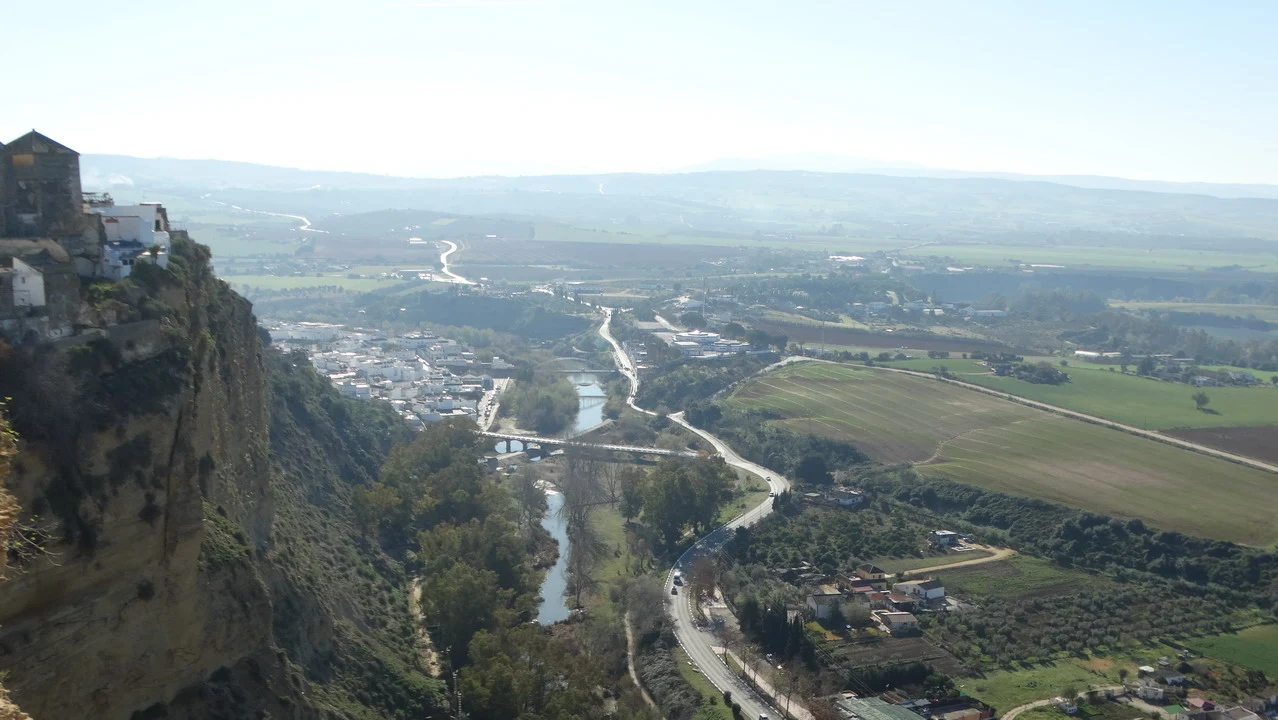
Arcos de la Frontera seems to have been designed to attract tourists: inevitably located on top of a hill, with the usual narrow streets where cars must be very careful not to step on pedestrians, and vice versa. We park quite far away, which, while forcing us to take a long walk, also allows us to observe a typical urban daily life. Rich in viewpoints from which to see the endless expanse of rural landscapes, religious buildings, and a central square full of orange trees where the castle stands out against a white backdrop. Upon closer inspection, there isn't much to see, but overall it appears as a charming little town where you can take a great step back in time. After all, the name itself, "de la Frontera," tells us about its origins, during the times when this and other nearby towns served as a border between the Christian kingdom of Castile and the Islamic kingdom of Granada – we are between 1250 and 1492.
A unique feature of Arcos is the presence of lottery ticket vendors, around which groups of older people gather in search of the right one. We leave this perhaps the largest of the white villages to head to Jerez de la Frontera, the first city that somewhat disappoints us – possibly due to a dense cloud cover: poor cleanliness, numerous weathered monuments, and aimless people wandering around. This is not the clear image we had formed from the rest of Spain visited during these days, and therefore it contrasts even more. However, this will not be an unproductive visit since Jerez has a beautiful Alcazar accompanied by the Cathedral, which was nearby.
El Puerto de Santa María and Cadiz
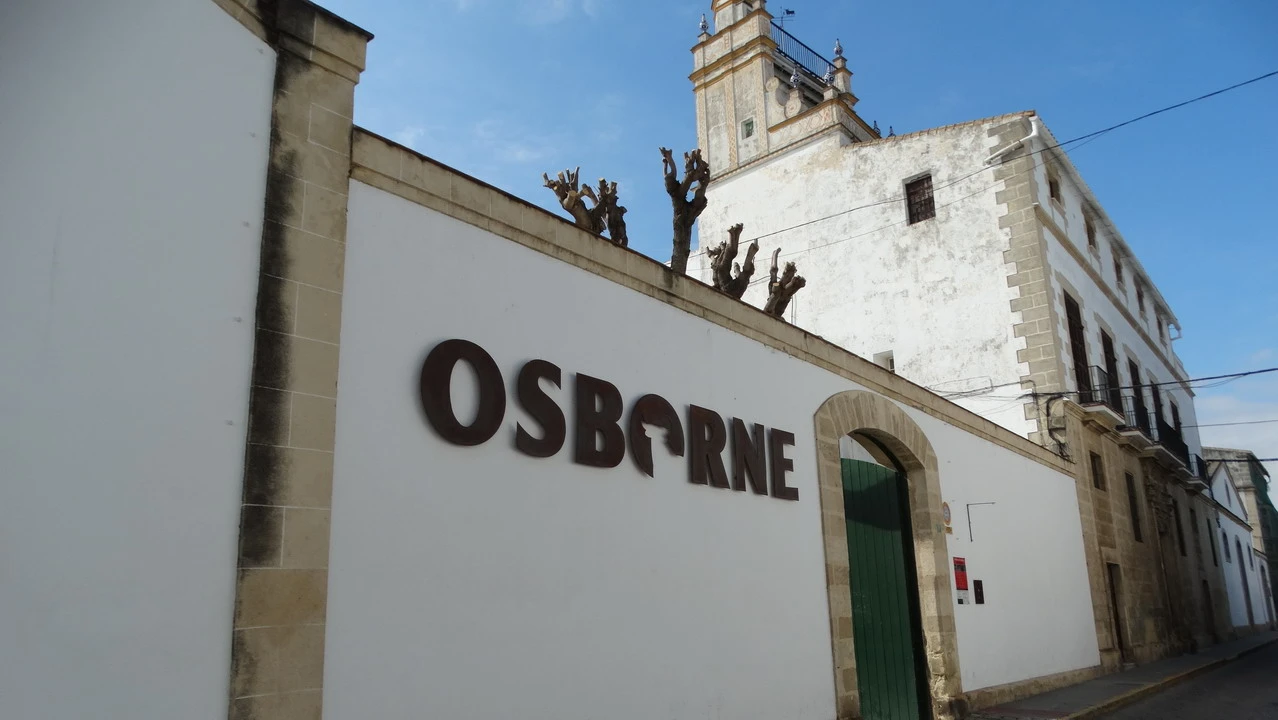
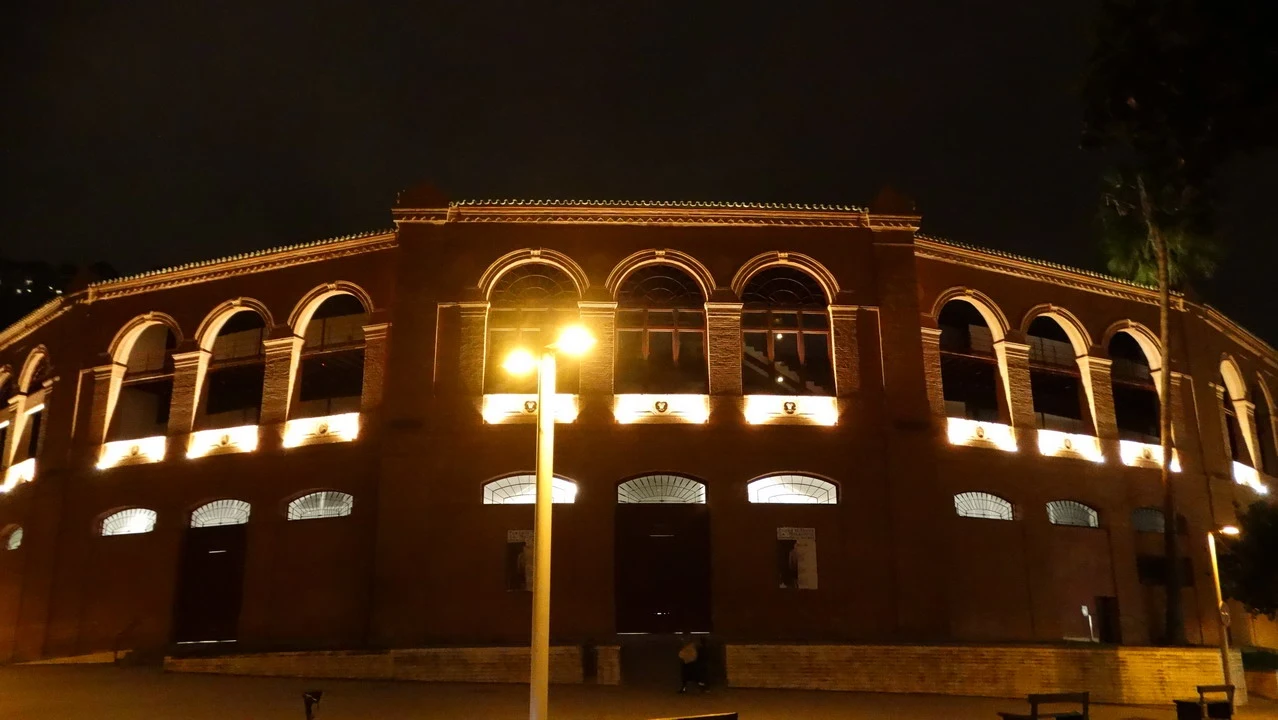
Next stop is in the nearby town of El Puerto de Santa María, where we will visit the Plaza Real de Toros — having a view of the arena from the ground, and also the bull — and the San Marcos Castle It is also one of the leading cities for sherry production, the famous alcoholic wine that is exported worldwide – so much so that it gets its name from Jerez. But we don't plan to visit the… Osborne establishment Nor are any from the area. It would still be interesting to understand its history and production process, as we did last year in Ireland with Guinness and a few years earlier in Scotland with Glenfiddich. Perhaps we should ask ourselves some questions about our passion for alcoholic beverage production sites, but we easily conclude that this is also culture. We end the visit to the town by having lunch not far from the port area, with sardines and mackerel; finally, we go to taste a glass of sherry. until at a typical local bar.
Our next destination is Cadiz, which presents itself very well with the Puente de la Constitución de 1812 – a bold construction that directly projects us into the city center, where we find an underground parking lot and set off to explore the old town. Cadiz is essentially an island, connected to the mainland only by a strip of land that connects it southwards. It is probably the oldest city in Europe, founded by the Phoenicians – skilled navigators who saw in the sheltered natural ports of the area the ideal location for a settlement. A place that also became attractive to the Arabs and all those who followed in the centuries that followed, until it became the central hub for expeditions to discover new continents. Even though it is located on a flat platform, here too, everything is a maze of narrow streets where the sun only manages to penetrate when it is directly overhead. Rich in shops, it deserves a renovation of some of its monuments. There are interesting sites such as Cathedral, but nothing comparable to what we saw in the previous days; let's start with a long walk through the city center and then continue by car, enjoying beautiful views of the sea and fortified structures built for defense. After exiting via the isthmus that connects it to the rest of the Iberian Peninsula, we take the highway towards Tarifa, starting to see the first signs for Málaga – our final destination – which remind us that the journey is about to end. We pass through green fields and wind farms not far from the sea.
Vejer de la Frontera and the Pillars of Hercules
Although with some clear skies, the day from Jerez onwards is mostly characterized by thick cloud cover. Another stop, this time at Vejer de la Frontera — absolutely worth it. A large and charming white village where time has been skillfully stopped to allow visitors to experience its Arab essence. We climb along narrow streets that become increasingly steep and winding, where it's easy to get lost but also easy to find your way back. The white walls are dotted with hanging geranium pots, wherever you have stunning views of the colorful plains below, while the sunset atmosphere begins to take shape. A nice walk, but we can't afford to linger: there are still several dozen kilometers left to reach Tarifa, whose visit will be postponed until the following morning.
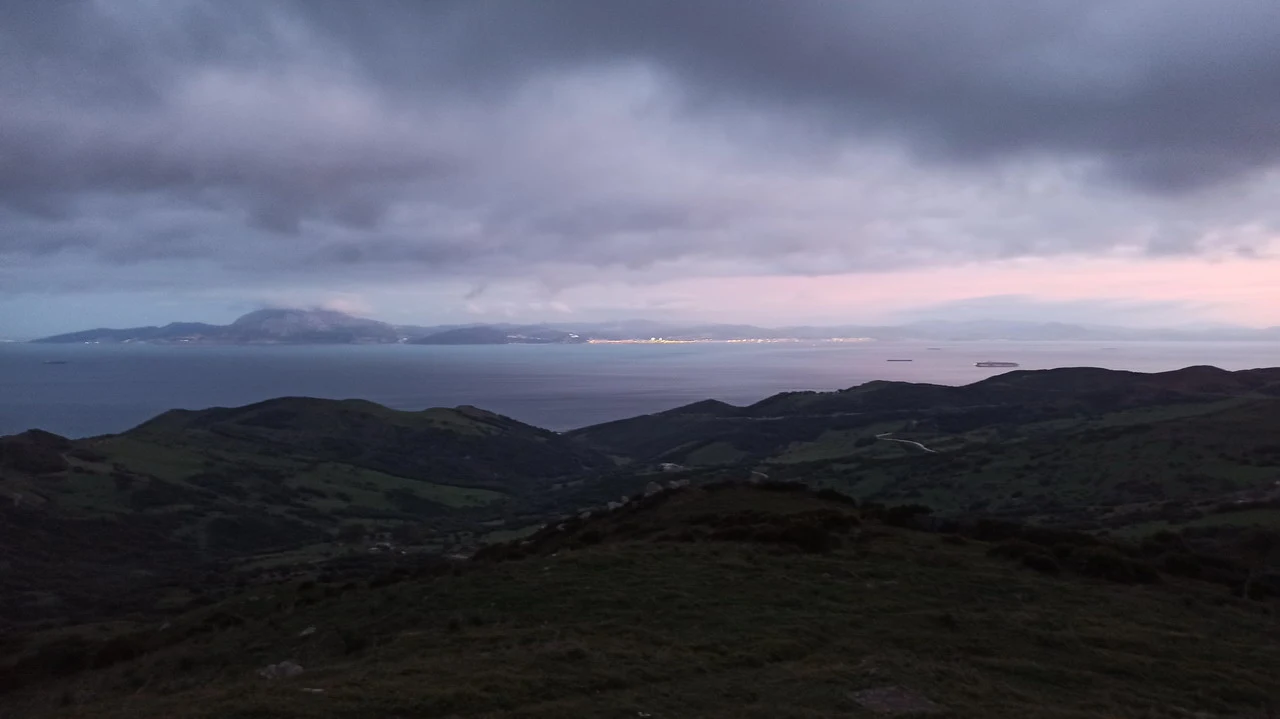
After Vejer, the road becomes single-lane in each direction but remains smooth. Just a short distance from our accommodation is the Mirador del Estrecho, a scenic viewpoint offering views of Africa – particularly the Moroccan city of Tanger, which is just beginning to light up after sunset. Being here brings together a whole range of historical, geographical, political, and anthropological reasons and emotions. We are at the Pillars of Hercules, where in antiquity it was believed that the world ended; and it's interesting to think that for many people today, even the world doesn't reach this far. Ignoring the mental constraints of contemporaries, we realize that we are in a crucial point for humanity, perhaps not even considered worthy of what it truly represents. Some clouds add further sense of mysticism, and we promise to return tomorrow morning when we will pass by again to visit Tarifa. We are just a couple of kilometers away from our comfortable accommodation where we will have dinner and enjoy a well-deserved rest.
It's difficult to determine if it's linked to immigration from Africa, but there are many police and civil guard units around. On the highway heading towards Seville, a bright sign indicated that transit for goods to Africa is exclusively for commercial purposes. We later learn that Morocco closed its maritime borders, but the reason remains unknown. In Málaga, there is a large concentration of campers; several arrive in Tarifa, but it's impossible to embark to reach Morocco.
In the afternoon in Vejer, we saw an old windmill – a well-known scene depicted in historical paintings – while in the area around the narrow passage, we see many wind turbines, against which it is difficult to imagine Don Quixote fighting. We also discover the meaning of the prefix Guadal, present in almost all the names of the rivers in the region – Guadalquivir, Guadiana, Guadalmansa, Guadarranque: Arabic etymology that simply means riverThe Guadalete River, which we will encounter on several occasions and flows into El Puerto de Santa María, gets its name from the Lute – the river of oblivion – as a result of a war between Phoenicians and Greeks on one side and other enemy populations: they reached an agreement to forget the reasons for the conflict.