Day 4
Córdoba
The mosque, an incredible intersection between Islamic and Christian art. History comes alive in Cordoba.
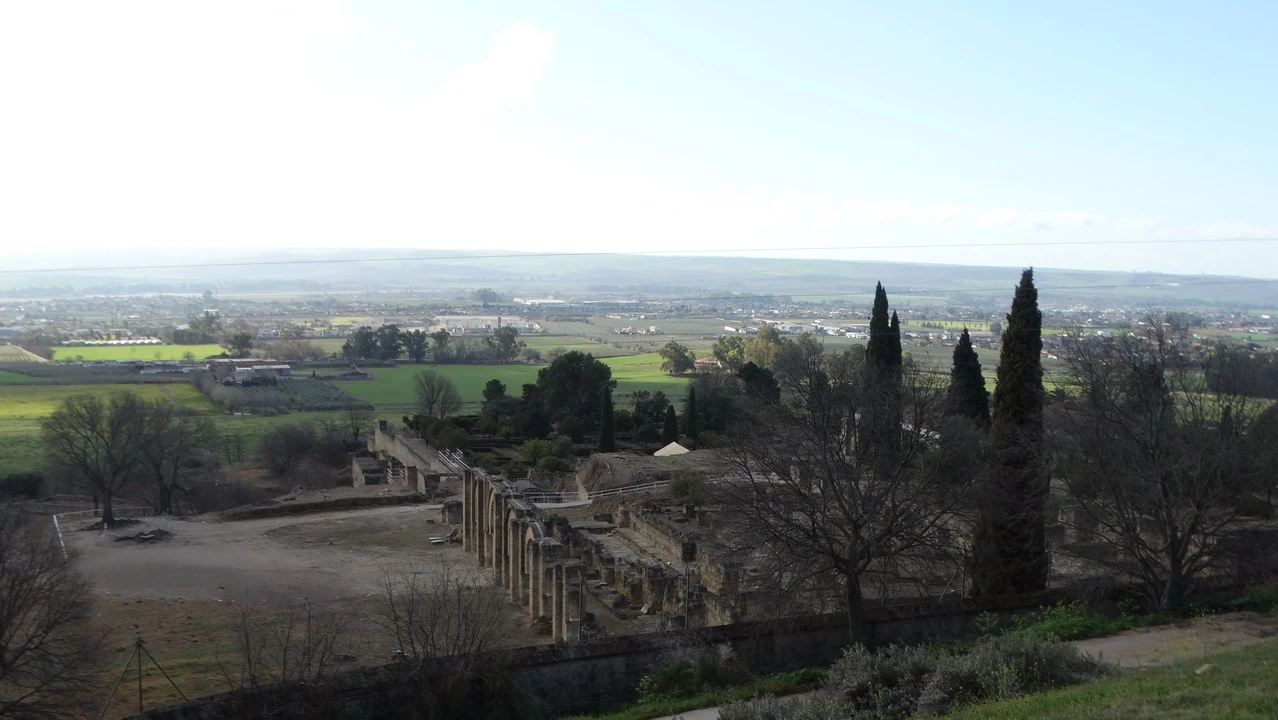
Towards Cordoba: olive groves and Medina Azahara
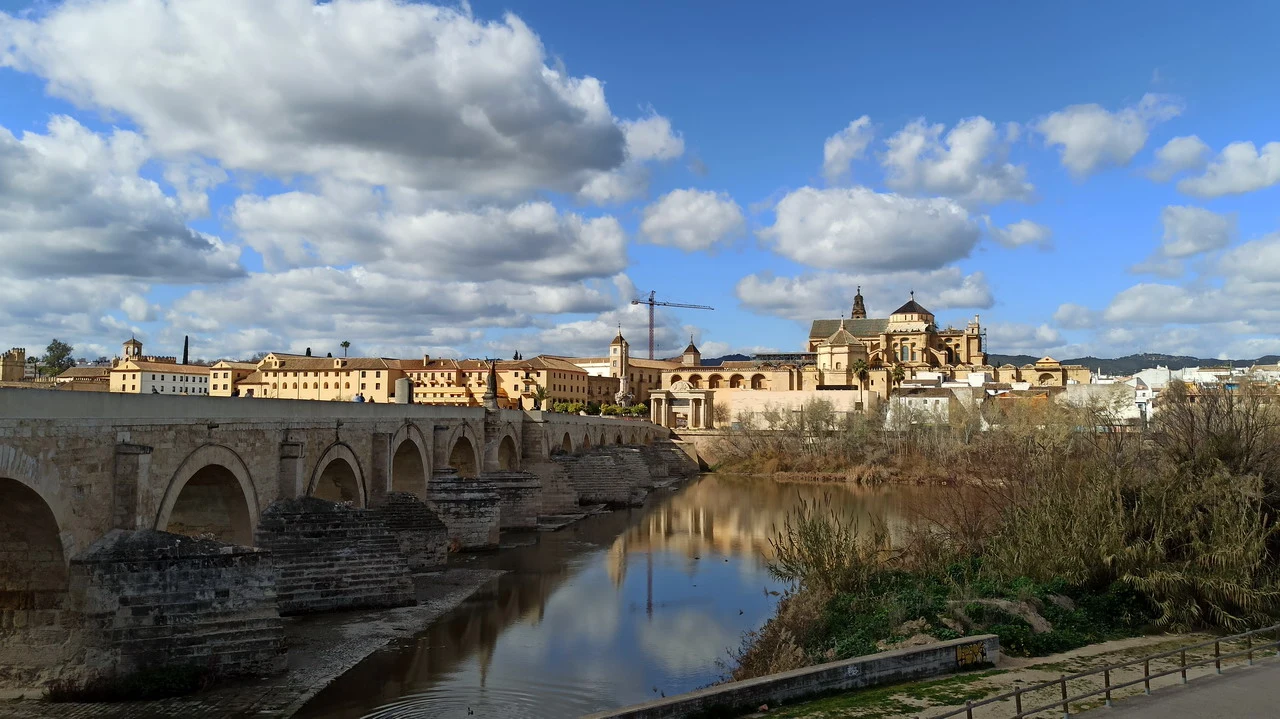
During a winter season with no rain in our area, we find ourselves needing to collect water for the second time in three days. After the downpour on Saturday in Granada, there was another – brief but intense – one just as we were preparing to go out for breakfast. This one also lasted only a few minutes, but without an umbrella, the morning shower would have taken place outdoors. We reach the bar for our usual menu and are ready to depart for Córdoba. We take a close look at the olive groves that seem to stretch endlessly along a landscape of soft hills, and we observe once again the planting system in groups of three or four trunks protruding outwards to increase production; when we leave the hilly areas, this system gives way to traditional rows of trees, although with a trunk that is more massive than what we are used to seeing. The trees are accompanied by the regular presence of a PVC pipe that ensures irrigation when needed. The landscape results in a pleasantly monotonous scene with these green patches in an ochre setting, the undergrowth perfectly clean and weed-free. Meanwhile, the clouds have given way to floating steam just above our heads; already dissolving at the time of departure, it gives way to a clear sky as we descend into the flat area. Along a comfortable highway, we reach the city, which has approximately 300,000 inhabitants. Medina Azahara, located 8 kilometers from the city – the ruins of a palace belonging to the Caliph, currently inaccessible due to weekly closures; we can only observe it from the outside. But in the center of Córdoba, the monument that will likely be the highlight of the entire trip is: the Mezquita. The sky is clear, except for the presence of some clouds which provide a valuable chromatic complement in photos, unless they obscure the subjects being photographed. We leave the car in an underground parking lot and walk to the guesthouse, located in the pedestrian zone. It's a simple place, but it has the advantage of being very conveniently located in the center and having a beautiful inner courtyard In a local style. After enjoying the acorn ham (about 100 grams for around ten euros) in the room, we prepare to explore the city: we cross the beautiful Plaza de las Tendillas and start from... Roman Temple, whose ruins are located in the heart of the city and still feature beautiful columns that symbolize the importance of a fundamental site on the route connecting Barcelona to Seville. These were later replaced by the Visigoths, then the Arabs, and finally conquered by the Spanish monarchy in the mid-1200s. A walk through the central streets of the Judería – the old Jewish quarter, easily recognizable everywhere for its narrow alleys where it is easy to get lost – and we carefully purchase tickets for entry to the Mezquita at 16:00. We continue towards the Roman Bridge along the Guadalquivir River, a popular spot for photographers; on the other side, we visit the two restaurants recommended by the friendly receptionist at the guesthouse. We return, taking numerous photos thanks to a particularly beautiful sky with white clouds that seem literally hanging like in a theatrical performance. We walk along the Jardines del Alcázar de los Reyes Cristianos, passing through the Puerta de Sevilla and then Las Cabellerizas Reales, where straight streets are lined with white houses, ending at the palm grove opposite. at the Alcazar.
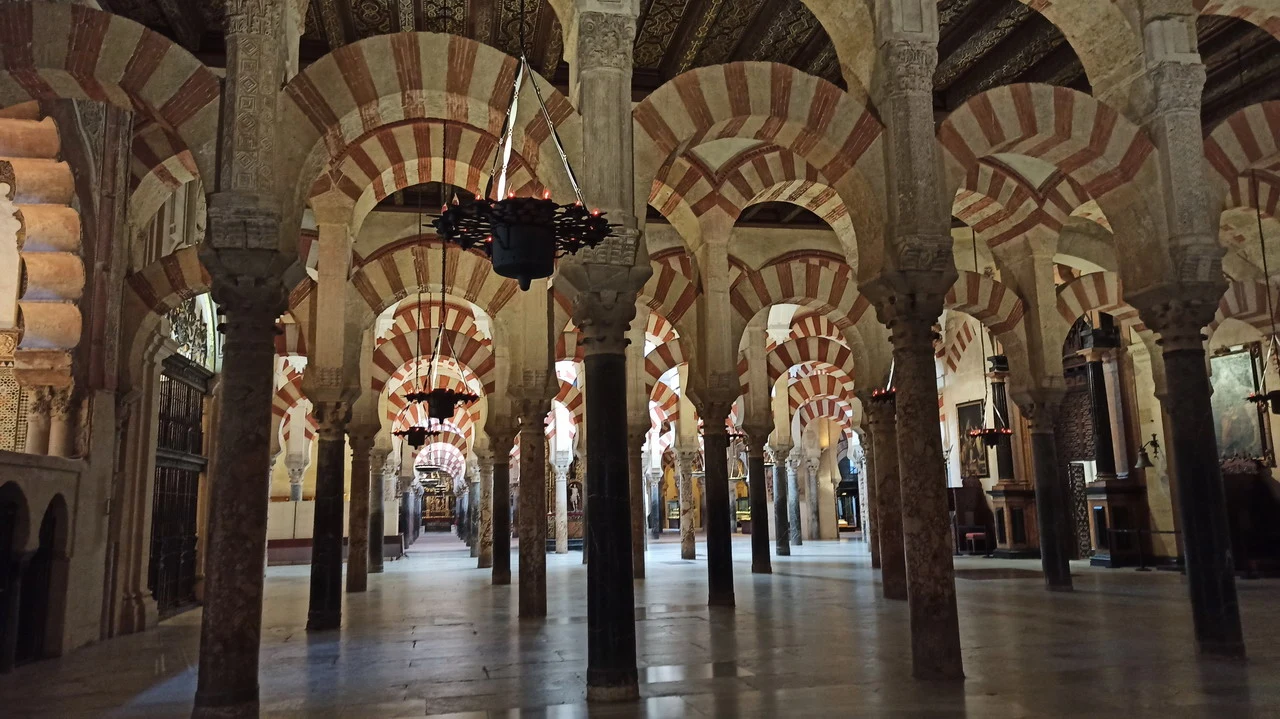
The Mosque: a mosque and cathedral all in one.
From the outside, the Mezquita doesn't look as impressive as other historical Andalusian masterpieces. Seen from the outside, it appears as a fortress surrounded by high walls – nothing comparable to the majesty of the Seville Cathedral or the imposing Alhambra that stands out against the sky on the hill in Granada. It is only when you enter that the play of light begins to take effect and... column forest gives the building its true majesty. After all, it was deliberately designed to prioritize spaciousness over verticality. Luck and a little intuition allow us to arrive early – we are among the first to enter this place of worship, in order to find common ground between what is at once a Mosque and a Cathedral. Our eyes fall upon a dense arched colonnade We are captivated by such vast beauty, trying not to pay attention to the voices behind us and focusing on the view before us; time seems to move backwards at an incredible speed, stopping just before the year 1000. Nothing has changed, and the place's mystique remains intact. The columns seem identical to each other, but a closer look reveals that the materials are often different, and the capitals can have various origins – the result of requests made in ancient times among the Roman ruins, imported or built with local material. It seems that the Arabs in this case did not pay particular attention to the uniformity of details as much as to the beauty overall. I had never seen one The cathedral is literally incorporated into the building. inside a mosque. This was made possible thanks to the extension of the Islamic building, and it offers opportunities for reflection. Building a Christian structure inside a Muslim one can appear simply sacrilegious – almost a desecration – and this is our idea of people in the 21st century; but looking back, we should be grateful that the existing mosque was not completely destroyed, as has almost always happened in this region to make way for Christian buildings. The most likely scenario is that it was so well-liked that people didn't dare to tear it down. However, we are inside a beautifully decorated Islamic site, where the light passage It was meticulously cared for in every detail, and it houses the splendor of the prevailing styles from the 16th century at its center. It is remarkable to find two such different styles within the same perspective, and there is no doubt that the simple style, with its floral or geometric designs, will ultimately prevail over the visually rich Baroque-Renaissance style. Only the Niche and the screened area — the area adjacent to the caliph and court — features splendid decorations with verses from the Quran intended to highlight the iris. It is also interesting to note the syncretism of Christian decorations on the Arab columns. This is an experience unlike any other, and probably unique in the world; it positively surprises how, during the dark period of the Spanish Middle Ages, blind religious fervor did not destroy as much as it created previously. Finally, we will wander around carefully observing the overall and specific details for two hours, until we understand that it is about to close. Outside, the warm sun sometimes gives way to a cool breeze, further intensified when the clouds cover it.
We see many tourists – like in Granada, especially French people – who are enjoying their school holidays and have started to travel around Europe again. This will also be the case in the following days.
Let's take another walk in the Jewish restaurant: The Jews were expelled shortly after the Reconquista, but the neighborhood remained, although there are now very few Jewish people in the city. The center of Córdoba, unlike Granada, has wider streets, is much more airy and well-maintained – except for the historic center, which offers small, picturesque alleys. There are many young people here, due to its university status; however, it is somewhat lacking in souvenirs, making them less original and definitely more expensive than in other cities.
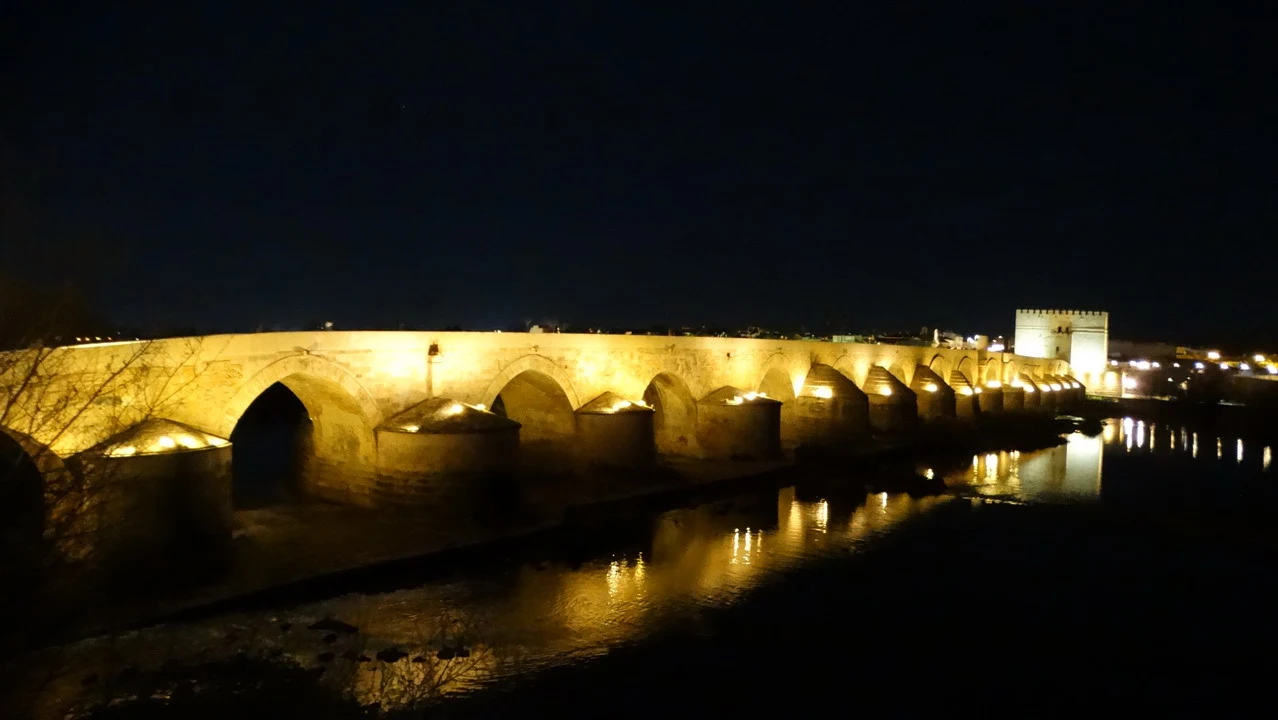
Let's go to dinner at the restaurant we chose earlier. across the river — a peaceful place like a small town pub, but with food that meets expectations. It's here that I try the flamenco, a sort of slide with considerable dimensions. We don't pay, we can still treat ourselves to a dessert at a nearby establishment. Mosque... where we can taste the traditional orange dessert: oranges with cinnamon and liqueur. Elegant setting, with the restaurant separated by glass and a view of the area where cooked dishes are prepared on an open grill.