Day 5
Seville
The heart of Andalusia, a huge cathedral and a city designed for people.
From Córdoba to Écija: bitter oranges and first cold
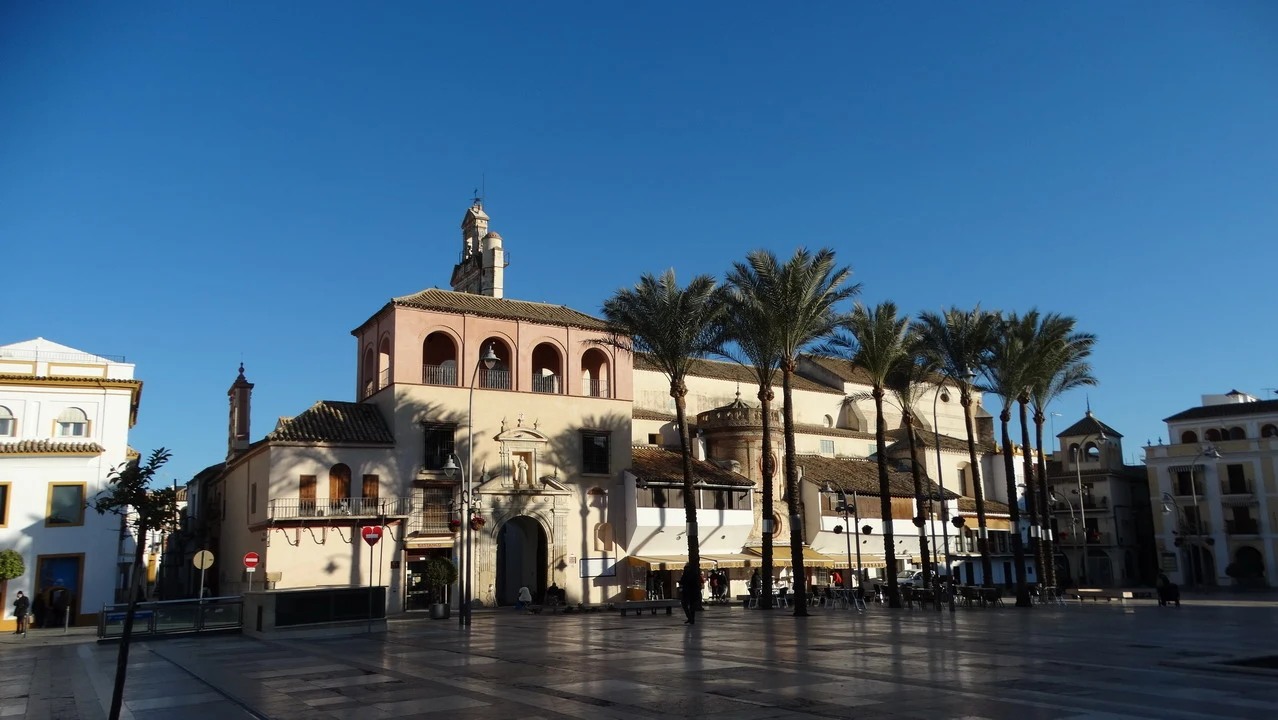
At 8:30 it's 6°C and we prepare to leave the city of the Caliph, after a good breakfast at the bar in Plaza de las Tendillas. While walking towards the parking lot on Paseo de la Victoria, we witness an interesting scene where some workers with canes and a horizontal trident stuck in their tips appear to be playing billiards with orange trees, trying to make the fruit fall, collect it, and squeeze it – in order to discard it, as it is not edible. A pleasant citrus scent fills the air while the first commuters head to work. Today's first stop is Écija... where we are greeted by a chilly sun – 1.5 °C – in the deserted Plaza de España; afterwards we walk to the Palacio de Peñaflor with its beautiful balconies and paintings on the walls. Returning to the parking lot, we venture into the residential streets along narrow alleyways with low houses, where the maids chat amongst themselves about various things, and life unfolds slowly in the typical Andalusian style.
Carmona and arrival in Seville
Along the road, the terrain turns reddish and the olive groves are extensive – as it is a flat area, they consist of a single trunk. However, the path leading up to the top of the hill where Carmona is located is worth taking. the view of the green plains Initially, it seems paradoxical to see a country built on steep slopes with narrow streets where it is difficult to pass through, yet with all that space underneath; however, the needs related primarily to defense have led almost all ancient cities to be founded on hills rather than in the fertile plains – today everything becomes complicated for traffic and parking. Although it is easily visited with a 30-minute walk, it is definitely worth seeing the elaborate urban center and the beautiful complex where the Puerta de Sevilla, with Roman, Visigothic, and Arab influences, as well as the Alcazar located at the top of the hill in a position that would now be considered panoramic, but was once strategically important. In the center of town, we find a square surrounded by arcades Now occupied by small shops and cafes: essentially the spaces that once defined a typical caravanserai, beautifully preserved, which evoke memories of places much further East. And, as in a logical continuation, the road leads us to Seville, just 35 kilometers away, the capital of the province and the entire Andalusian region. We had already spotted a public parking lot near the hotel we had booked; we go to check-in at the comfortable Hotel Zaida and start exploring the city. Since we hadn't yet eaten lunch, we choose a sunny bench in Plaza del Ayuntamiento to enjoy excellent ham with goat cheese, accompanied by a delicious half bottle of Rioja that only our shyness prevented us from finishing last night for dinner.
The largest Gothic cathedral in the world
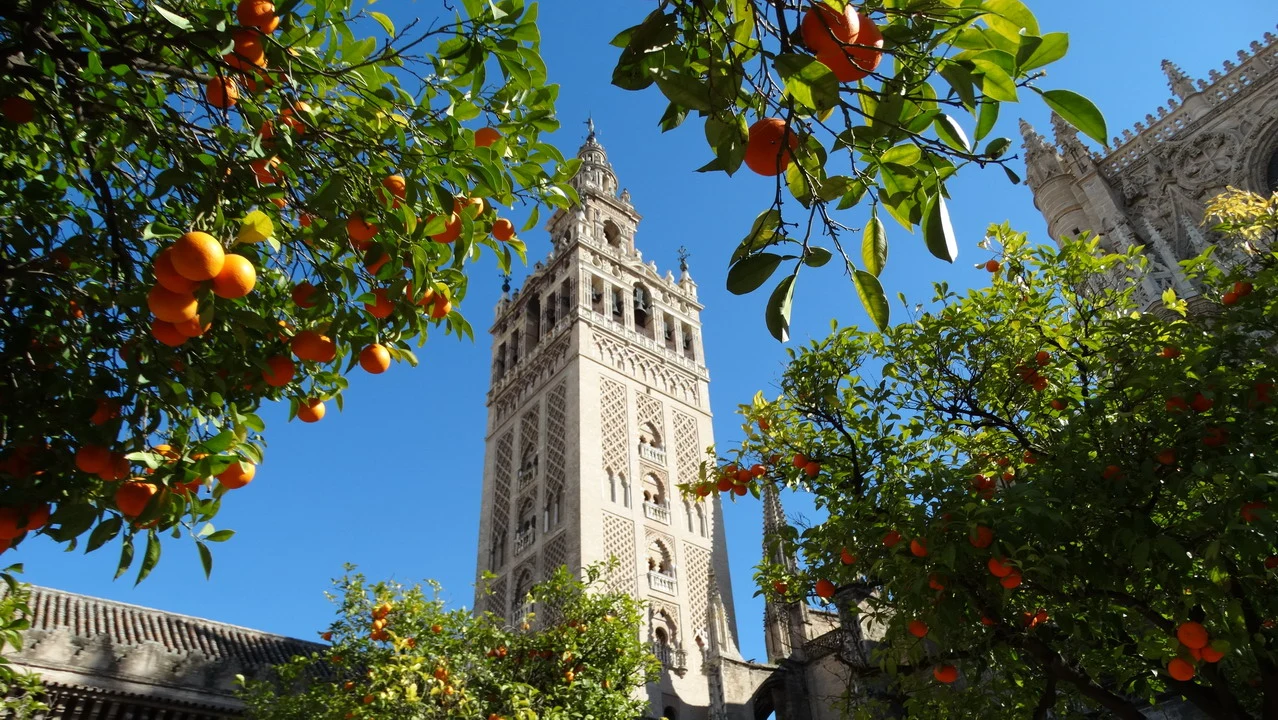
Now that we've had a snack to fuel us up, let's head straight to the main attraction: the Cathedral the largest Gothic cathedral in the world. The person who designed it wanted to make it so large that future generations would think they were crazy for building such a massive structure – and they were right, when you stand before such majesty. Perhaps the grandeur is best perceived from the outside, as the interior is "broken up" by the central choir, which on one side contains the enormous altar – the retablo – and on the other, the finely decorated wooden stalls. This rectangular perimeter prevents a complete view that it would make it seem enormous. Instead, the intimate atmosphere is enhanced by the many side chapels, which often open into rooms that are as large as a church itself, as well as niches dedicated to the various saints worshipped here. In place of one of these, there is the one that should be... Christopher Columbus' tomb The conditional is essential, given the voyages undertaken by this great navigator, even after his death – with an additional journey across the Atlantic. Apparently, for some, fate reserves a quiet life within four walls, while for others, it is to travel beyond even the inevitable passage. The climb up the Giralda – the bell tower whose internal ascent does not have stairs, except for a few at the top, in order to allow the muezzin to access it on horseback and call the faithful to prayer – offers a view from here. a view that spans the entire city It also helps to plan the next steps. Speaking of the muezzin, it's clear that the tower was once the minaret of a mosque, later adapted for Christian worship. We return and conclude our visit to the Cathedral, which is worthy of interest in every way – including its beautiful patio with orange trees loads of fruit. Let's see how much we can explore without entering the Real Alcázar; by walking through the Jardines de Murillo and the Parque de María Luisa, we arrive at the beautiful Plaza de España.
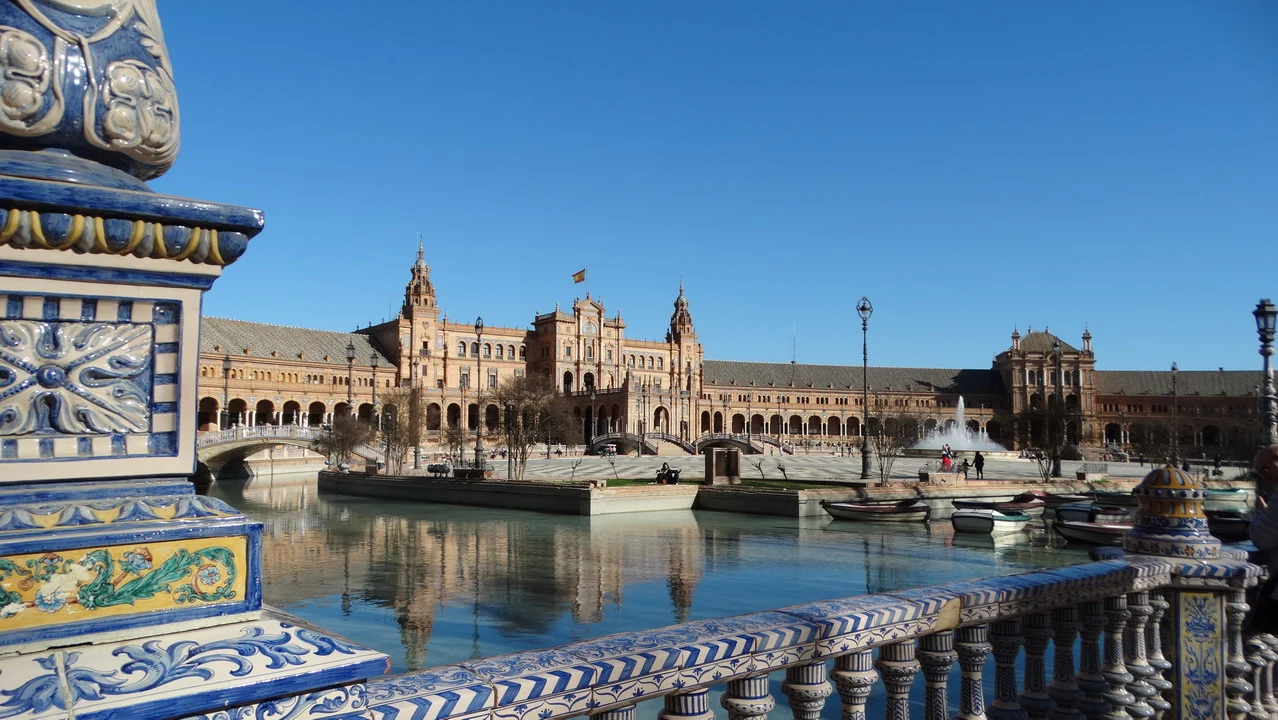
The Plaza de España and its historical tiles.
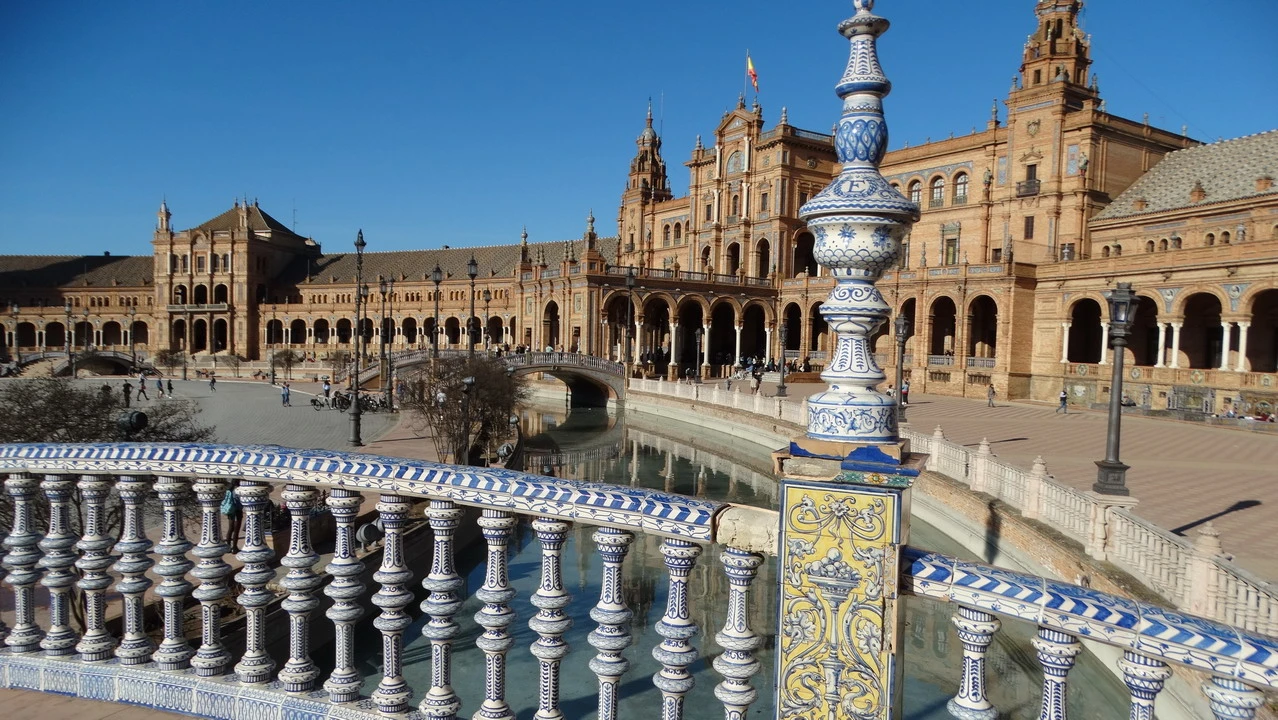
In this place, during the Ibero-American Exhibition of 1929, a memorial was built that well represents Spain in its administrative divisions and local characteristics. Seeing it completely translates into a pleasant lesson in geography and history of the Iberian country; all enhanced by waterways and bridges that hint at Venetian style but decorated with azulejos. The The complex appears pleasant. at a glance, although it risks becoming slightly heavy and kitsch upon closer inspection. In any case, it's definitely worth the detour on an afternoon when the temperature reaches 23°C, and we are still wearing fairly heavy clothing, as required by the morning temperatures and the interiors of historical buildings.
Giralda, Metropol Parasol and a Sevillian dinner.
Leaving the park, we head along the riverbank to see the Tower of Gold and the Bullring, as well as some interesting buildings in the El Arenal neighborhood. A quick shower at the hotel and we wait for dinner time, which is at 8:30 PM. Being in the city center, we take a few photos. at the Town Hall and also to Metropol Parasol, a modern and unusual building that looks like a giant waffle, where the architects have really let their creativity run wild. It appears very interesting in the late afternoon light, and it will also be impressive with the night lights The area with the local restaurants is not far away, and thanks to a helpful recommendation, we end up at a place where we can satisfy our hunger. fried cod and pork belly — a kind of stew with red wine and spices.
Seville is more impressive than Cordoba in terms of the number of monuments and the prevalence of tapas bars compared to restaurants – this is clearly the local culture; however, it's not necessary to do extensive research to find a good place to stay and enjoy a full meal. Just a few more steps – perhaps one or two – to see the Parasol, the Cathedral, the Alcázar, and some buildings at night. With this, we close the Seville chapter, remaining unsure which of the three major Andalusian cities visited so far – Granada, Cordoba, and Seville – is the best. And we still haven't seen Malaga.