Day 7
Algarve
The ocean relentlessly crashes against those rocks, from which great navigators set sail.
Sagres, Cape St. Vincent and the Point of Piedade
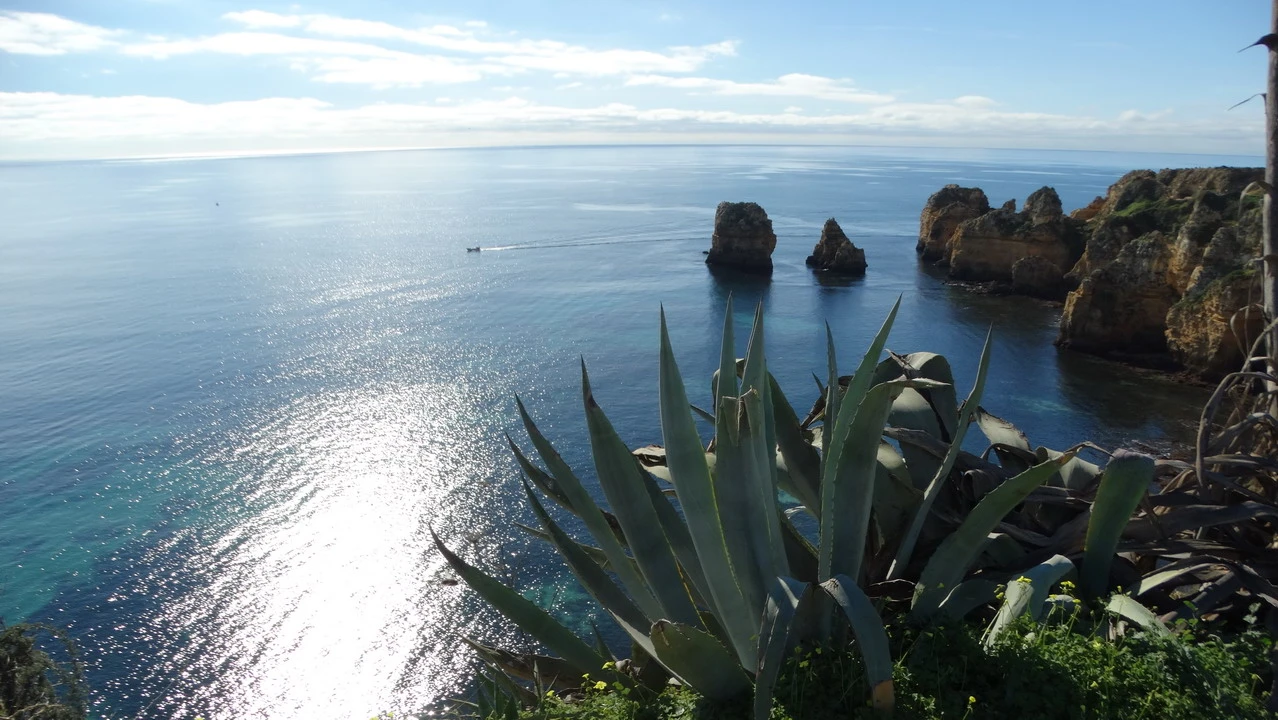
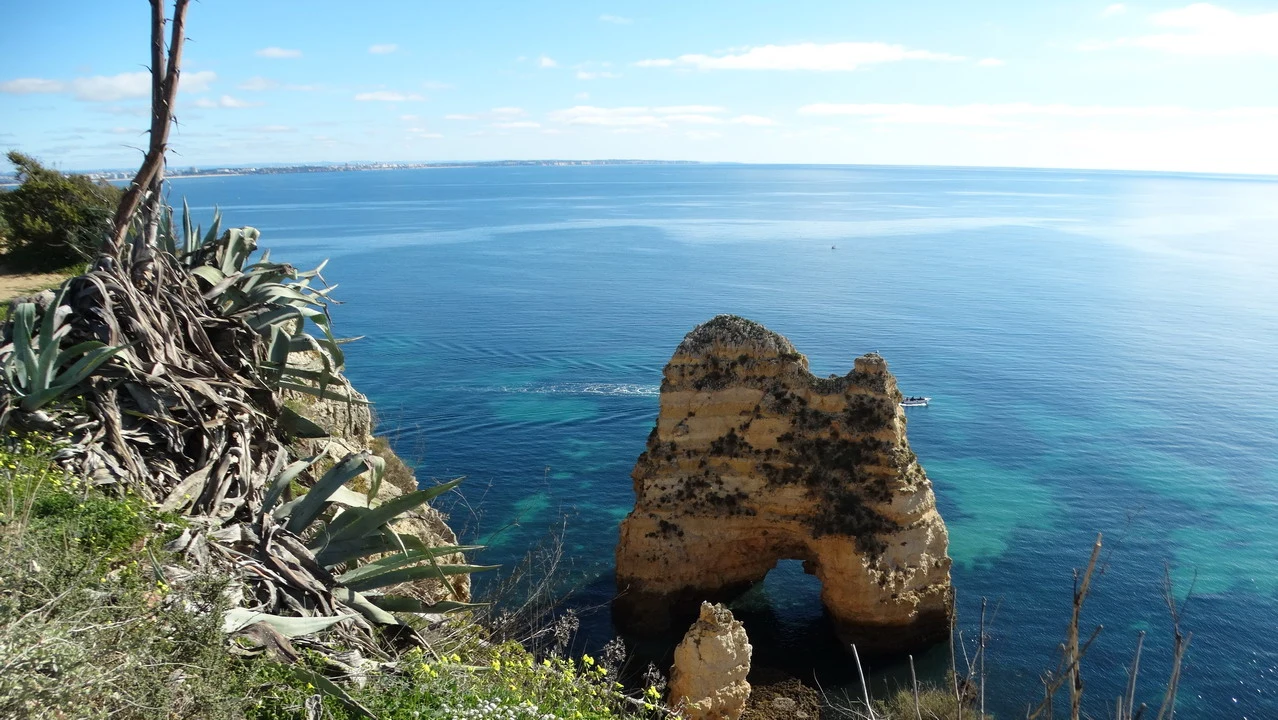
At 7:22, there is sunrise, but when we put our heads out at 7:00, we immediately notice a very low mist – so we decide to make it more comfortable. Actually, shortly after… Sagres port It is immediately illuminated by the sun, which peeks through a layer of delicate clouds. While we are wandering around alone, we see the cages used to deceive and catch the lobsters and other inhabitants of the seabed. We head to see the Fortaleza and the Cabo São Vicente, with fortified ends, battered by wind and waves that crash relentlessly against the rocks. Right next to this, we will find a place that is so idyllic, how wild... with a series of steps that are clearly marked but visually impressive. The sky is pleasantly changeable: alternating between sunny and cloudy areas, perfect for photography. We are in the most southwestern part of Europe – which was missing from our collection after seeing the westernmost one, closest to the American continent, just last August in Ireland. The temperature remains slightly warmer despite constant ventilation, as evidenced by the presence of numerous wind turbines. By 10:00 am, it's already 16°C and the sky has become a perfect blue mirror reflecting the ocean. Traveling through a landscape of soft green hills, meadows, and fields, we move towards Lagos, a city with a glorious past. From here departed the ships of merchants that sailed the oceans during the Portuguese colonial period. We visit the fort located at Ponta da Piedade, also here amidst extraordinary things. steep rock jumps where you can directly dive into the ocean, alongside flowering bushes with pastel colors ranging from yellow to pink.
We notice how this area is also a destination for hippie tourism, mainly consisting of Northern Europeans with camper vans and vintage cars – somewhere between naive and kitsch, perhaps both. Young people who adopt a less touristy way of traveling, in the sense of opulence, rather more spiritual and contemplative. Many are also cycling or travelling with backpacks, thanks to the still mild temperatures.
Silves, Praia da Marinha and return to Spain
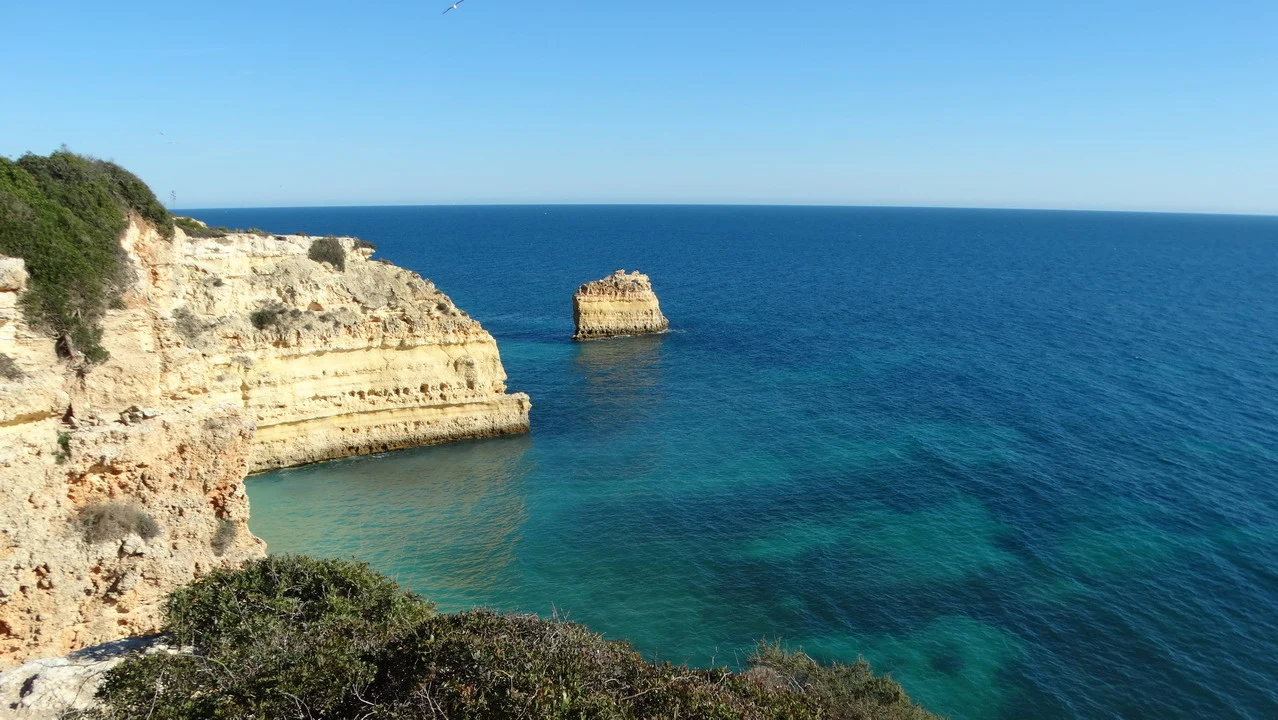
Let's go to a supermarket in Lagos to buy sardines and chorizo, which we will eat on a bench with a view of the Miradouro di Praia da Rocha. Along the road, we see what appears to be a carrion birds gathering with related nests – provided that it can be considered a breeding ground. We move around to see a couple more scenic viewpoints along the coast – Algar Seco — and then continue inland to visit Silves, a historic town also perched on a hillside but with wider streets that converge towards the beautiful cathedral and castle — which seems to have been built with Lego bricks in dark red earth, definitely distinctive. A coffee in the sunshine at 20°C, and before returning to Spain, we enjoy one last detour to Praia da Marinha, walking down to the beach where high cliffs of sandstone create two beautiful natural arches. On a board, we read that the term Algiers It means "cave" in Arabic, while in Phoenician it has another meaning that refers to the infinite depth of the sea – the two interpretations from which the name Algarve is believed to derive.
The plan is to drive along the coast, exploring new visual experiences, but the sun sets relentlessly towards the west, telling us that we need to move in the opposite direction for about 230 kilometers. We still need to reach Seville – or rather, its surrounding countryside, specifically Aznalcázar, which is about thirty kilometers away. Dinner at a typical restaurant – although it might be difficult to find one that isn't – where we can sample the local cuisine. ox head The room is decorated with rural tools hanging on the walls and bullfighting scenes. We chat with the waitress and learn that even here, drought is a very real concern. Throughout the winter, they only had one day of rain, mostly heavy showers that didn't penetrate the soil. The restaurant owner, whom we have a brief conversation with when paying the bill, also expresses his concerns about the persistent drought: he tells us how life in the area is still pleasant, with favorable weather and constant tourist traffic. A walk down the main street, full of sparsely frequented bars – but those that are open are very lively – makes it clear that we are in a decidedly rural setting. No one on the street; a distinctly rural tranquility. Both the sights we see and the people we talk to express a strong religious and conservative atmosphere. In essence, it feels like we are much further from the capital of Andalusia than we actually are.
An interesting note concerns olive trees: in certain areas, they grow as wild bushes, in a configuration completely unfamiliar to us. Rosemary – or rather, one of its varieties – is used as an ornamental plant, trimmed within the flowerbeds and employed to create geometric and perfect borders.