

Day 5
Land of Fire
Christmas Eve with transfer to the southernmost city in the world.
Morning in Tierra del Fuego
We rest until just before 6:30 am, at which time breakfast is kindly served to us earlier. Today we have a very busy schedule: we need to cover almost 600 kilometers, cross four borders (two on entry and two on exit), and take a ferry. But let's go step by step.
Blue Lagoon
The departure takes place according to the pre-set schedule, and after 67 kilometers we are approaching the border. Shortly before, we make a detour towards the Blue Lagoon (near Mount Aymond), a dormant volcano with a green emerald lake inside. It's a shame that the sun is absent and doesn't contribute to illuminating the view, which is already beautiful in itself. Just before the lake, we have an interesting encounter: a group of travelers who left Rio de Janeiro a couple of months ago and are headed towards Quito, completing a journey around South America. They are guided by an Italian-made "flower child," traveling in a truck equipped for transporting people, sleeping in tents, and cooking with camping equipment. While I'm not particularly fond of certain philosophies, I can't help but be impressed by the sense of freedom that emanates from their expressions.
Arrival in Tierra del Fuego
We arrive at the pass of the Integración Austral The border crossing formalities are no longer as complicated as they used to be, but the stamps still need to be affixed, and time is ticking away. First, the officials must stamp the passports (without paying much attention to whether the documents match the people), then you move on to the vehicle-related documentation at another counter. Finally, when entering Chile, you must complete a form declaring that you are not bringing any fruits, vegetables, or other goods that could contaminate the local flora. This is followed by a brief inspection of the vehicle. The staff are usually friendly and, as Italians, they always greet us with smiles and jokes, trying to speak some of our language. We try to reciprocate their jokes and get on with it as quickly as possible.
We are going to explore a approximately 30 kilometers until the intersection with the road leading to the Strait of Magellan and from there we continue for several kilometers south to Punta Delgada. Fortunately, the waters of the strait are calm, while a robust ferry They are approaching to load us. The vehicles waiting in line are few, which makes us believe we will be loaded first. The day is turning out beautifully, and so is our mood: a border successfully crossed and a ferry arriving.
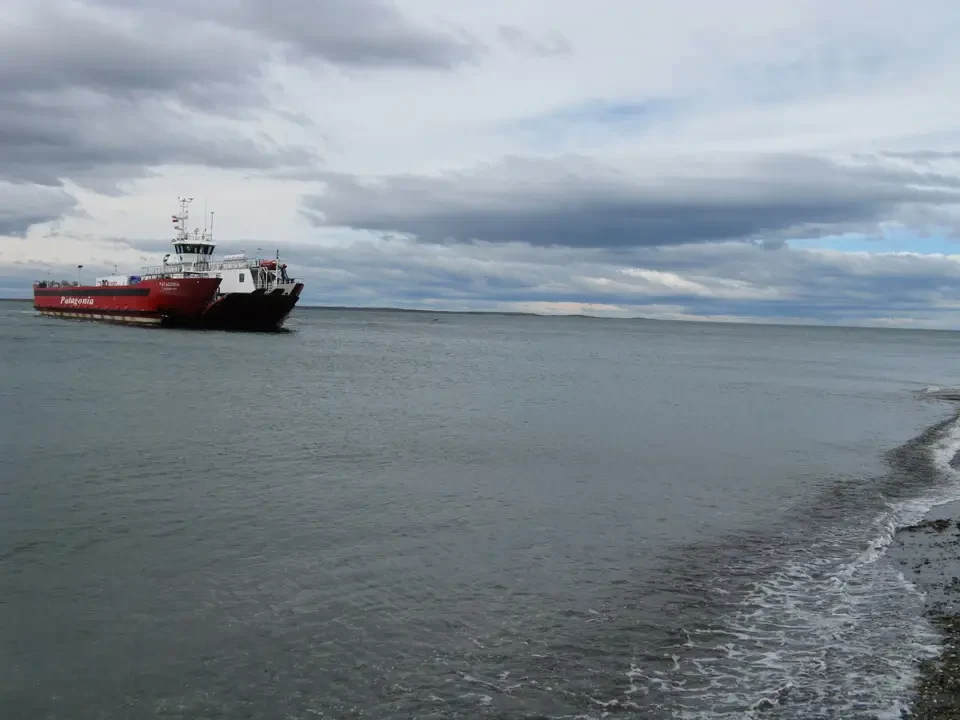
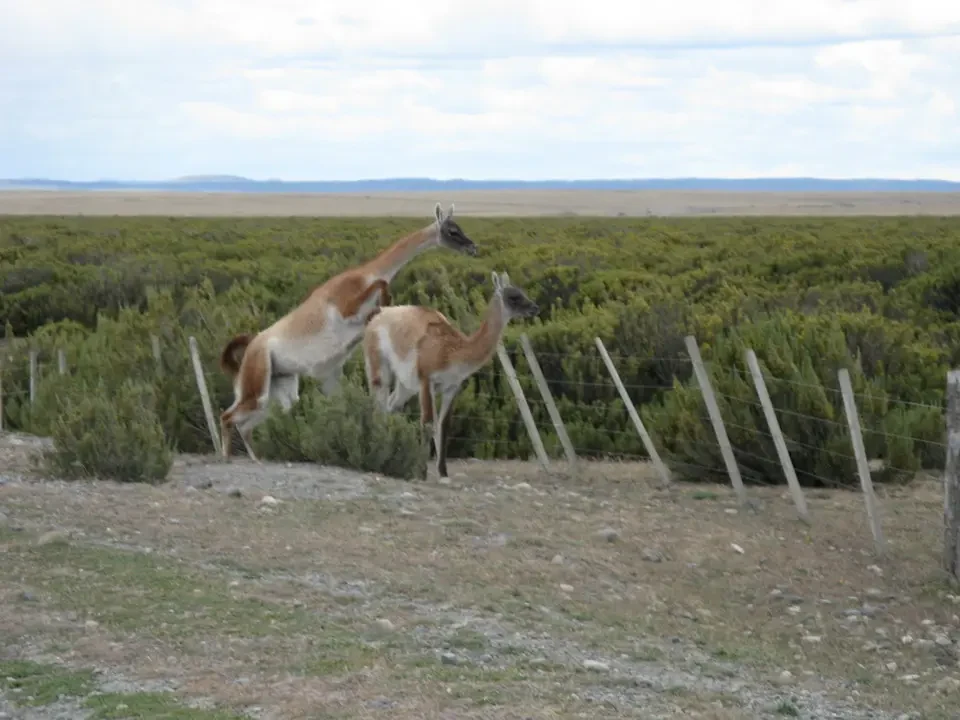
Even though Ushuaia is still quite far away. The coast of Tierra del Fuego at that point is only 4,650 mt away, and the ferry will take only 20 minutes to cover it. Along the crossing, we are accompanied by some dolphins (or animals belonging to the family) who are swimming under the water's surface, as if they were there to escort us to the landing. We continue for about 20 km (we are always in Chilean territory) on a well-paved road, only slowed down by the need to take photos. guanachi, pink flamingos and a dried-up lake covered with salt minerals. Like all beautiful things, the asphalt is also destined to deteriorate and we are starting... 110 endless kilometers of unpaved road (un dirt road) where the cruising speed decreases to 50/60 km/h and the need to avoid damage must instead increase. The area contains deposits of gas and oil, with typical pumps for extracting hydrocarbons. The dust settles in SAN SEBASTIAN, a group of houses that are clustered around it. Chilean border... On the other side of the border, there are others that also seem to have been simply placed there by the wind; they are called San Sebastian as well, and they revolve around the Argentine customs office. After crossing the border twice, we start to get an idea of how they function and appreciate the greater efficiency of Chile, accompanied by the organic disorganization of the Argentinians. In fact, with a little patience, it is possible to complete the formalities in decent time, and the experience is not as bad as it used to be, at least according to what the guides say. It is still curious how the officials, too focused on applying stamps, do not even check if the photos in the passports match the people who actually pass through. In the strong wind, a friendly Argentine gas station attendant fills our tanks, and when I ask him to come into the small office to pay so that the pesos don't fly away, he looks at me with the expression of someone about to do something superfluous. I comment that the wind is very strong, but his reply is disarming: in this place, it is normal, sometimes it even breaks the windows. He is surprised when he discovers that in Italy we call the wind blowing at a different speed "Patagonian". Obviously, he did not think that the wind of his region was so well known on the other side of the world. We encounter several species of birds, including... banjo (family of Ibis) and the Cauquen community.
Lake Fagnano
We continue through a desert landscape, reaching Rio Grande and then further south. The scenery transforms from steppe to arid land with scrubland, and it already feels like paradise. Indeed, the lakes and snow-capped mountains surrounding them help reinforce this feeling. A beaver dam... creating small water jumps between artificial lakes, attracts our attention. A stop at the famous Tolhuin bakery, open 24 hours, represents a rest for every traveler passing through the area. From this point on, every kilometer deserves a photo stop: we manage to capture only the Fagnano Lake, located in the depression of a glacier, 104 km from Ushuaia, and the Passo Garibaldi, which crosses the last Andean ridge and offers a panoramic view of... Hidden Lake, of a pastel blue.
It's now 8 PM when we arrive at USHUAIA... at a latitude of 54°45' south. Diego, the friendly owner of Cabo San Diego Apartments, is waiting for us and the surprise of such a beautiful environment is already a welcome Christmas gift. The rooms are tastefully decorated and festive, and this will be the best accommodation we have found on our trip, even among others that are extremely good. But again, there's no time to waste: at our request, Diego had contacted a couple of restaurants where we could have dinner on Christmas Eve and booked places to avoid having to eat a large meal with just a sandwich. Not that we were particularly keen on a big meal, but we would sincerely have avoided the frugality of fast food. Tonight is Noche Buena (as they call it here), and our appetite intends to honor it properly (centolla, flambéed seafood, salmon, bife de chorizo, etc.). At midnight we will celebrate Christmas as well as Gianni's birthday. It's now one o'clock when we feel it's the right time to end this exhausting day with a well-deserved rest.


