Day 2
Buenos Aires II
Visit to the capital and evening of tango.
Morning in Puerto Madero
We had left two days earlier and were departing for a day dedicated to the gaucho fiesta at an estancia. We met the rest of the group for breakfast, and then began our adventure towards the capital city of Argentina. The twelve hours of flight on the international flight gave us plenty of time to prepare a detailed plan for visiting the city. Like in all major cities of the new world, the range of tourist attractions is definitely more limited than elsewhere, but for a day and a half there is enough to keep you entertained; by the end, Buenos Aires will prove to be better than we had expected. Not getting bored means waking up at 7 am and being on the streets shortly after 8:30 am, hailing the first taxi that passes by and getting it to take us to La Boca. In Argentina, taxis are not called through a central dispatch; you simply stop the first available one that is passing by. This taxi driver is also friendly and provides us with some useful information to help us understand the social context.
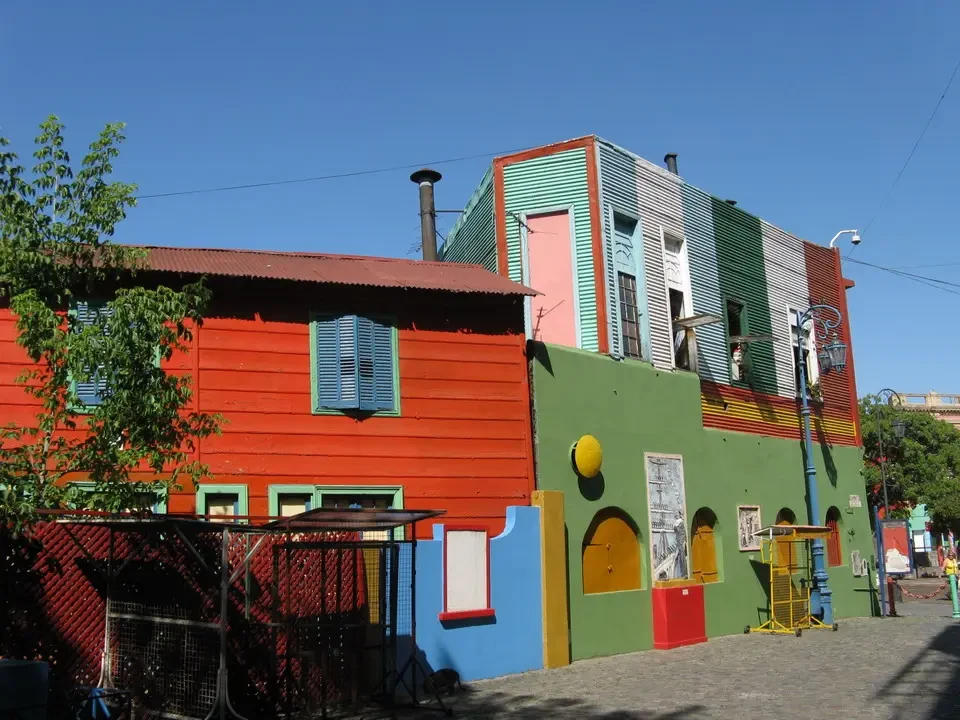
The sun is already high and it's 28.5°C, indicating that today is the longest day of the year and we won't experience any cold. Although La Boca remains an extremely popular but somewhat rough neighborhood, a morning walk allows us to see this port area, which originated from Italian immigrants. The Caminito, the street framed by painted houses with imaginative pastel shades (from the remnants of ship paint) begins to shine in the morning light, while the first vendors start setting up their stalls.
The urban face of Puerto Madero
Everything is incredibly quiet, and it's easy to imagine the immigrants who arrived a century ago, landing on these shores with a history of poverty at home, searching for a fortune that would only arrive for a few. The neighborhood was founded by a group of Genoese immigrants, and it is where you can most strongly feel the Latin flair, perceiving the desire to live that existed while stubbornly seeking out the positive aspects of life, despite the everyday hardships. Although it was a poor neighborhood, it had a certain autonomy and pride; at one point, they even asked to found the Republic of La Boca in order to be free from the Spanish regime, as Buenos Aires already was, and thus be part of Italy. It is precisely in this neighborhood that tango was born, a very popular dance that was initially unwelcome by the bourgeoisie and Catholic practitioners due to its lascivious movements and close physical contact between dancers.
Let's also see La Bombonera, the legendary stadium where Boca Juniors plays (formerly Maradona's team and one of the strongest in the Argentine league). It is located right in the middle of the neighborhood and painted with the team's colors: yellow and blue.
Many children walk past us, accompanied by their mothers, heading to training sessions. Perhaps one of them will become a future champion.
We took a taxi to the San Telmo neighborhood, not far away, where the city's upper class used to live. We got off at Plaza Dorrego; nothing special except for the peaceful atmosphere with many benches, outdoor tables from bars, and trees that provide good shade in the urban summer. Visit to the Church of San Pedro Gonzalez and the covered market in Plaza Carlos Calvo.
Politics and society
We also saw a couple of inscriptions on the walls: Cristina Fernandez, the President of the Council and widow of Nestor Kirchner. This is particularly striking as we are in a country where there has always been a strong distrust of those in power, but everyone recognizes the good work done by the presidential couple over the past 8 years. There will be elections next year, but many believe that Fernandez can succeed and continue the reforms started by her husband after the near-total collapse of the Argentine state in 2001. The taxi driver from Bergamo, who brought us from the airport to the hotel last night, was also surprised by how a country with enormous potential has such a high rate of poverty. He explained that it is enough to drive just a few dozen kilometers outside the city to find herds of cattle grazing, kill them, and bring them back into the city to feed people. The land is so fertile that even planting one seed will grow a tree. In addition, there is the problem of undocumented immigrants (Bolivian, Peruvian, and in smaller numbers Paraguayan), who are unemployed and thus contribute to the growth of crime. The lack of development certainly stems from the low value placed on politicians over the past decades, but at this point we should start discussing whether the chicken or the egg came first.
Traditions and spirituality
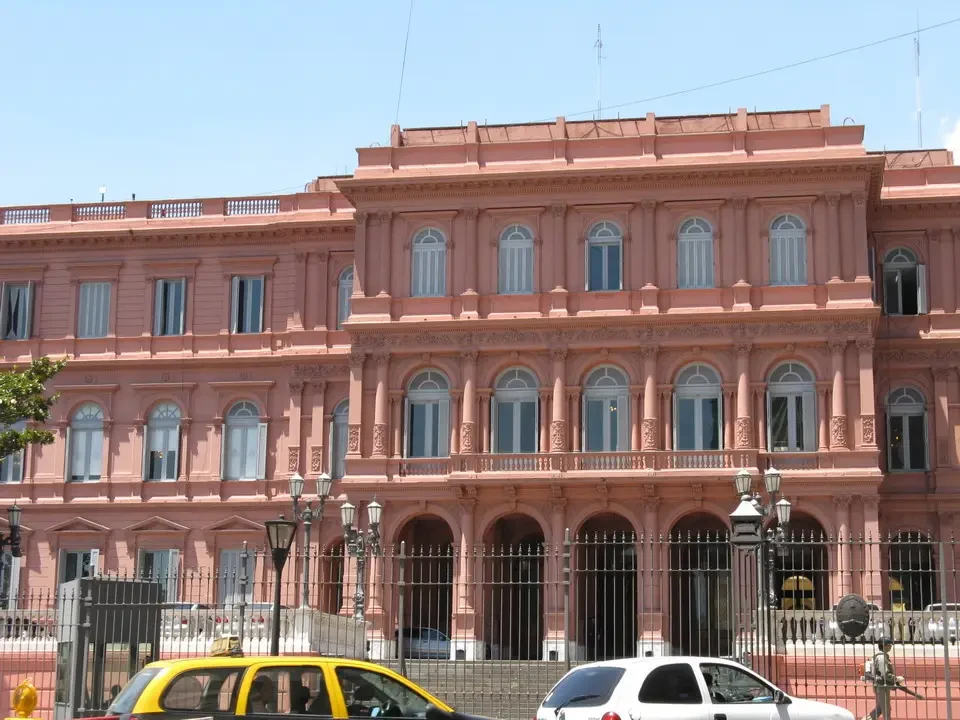
We cross the Manzana de la Luces neighborhood, where there are some interesting churches. We start with that of Saint Ignatius, which is quite plain inside but houses the mausoleum of General Belgrano. The church of San Francisco has a single nave and is enriched by several paintings and statues. We pass in front of the engineering faculty (in classical style) and the monument to labor, represented by two workers pulling a huge rock to demonstrate that the unity of workers can lead to great results. A visit to the Estrella pharmacy with its nineteenth-century architecture and then continue on Avenida Defensa to reach Plaza de Mayo: the vibrant heart of the city, with views of the Casa Rosada (presidential palace), The Cabildo (former headquarters of Spanish viceroys) the Cathedral (where St. Martin's tomb is located), the Banco de la Nacion. On one side of the square, there is a permanent guard of war veterans (from the Falklands War), who have been facing the indifference of the state for twenty years, as it does not provide them with any pensions after suffering during the conflict. The color of Casa Rosada wants to represent a compromise between the red of the federalists and the white of the unitarians, who competed throughout the 19th century.
Towards Puerto Madero
We walk to the new Puerto Madero district, once a rundown port area, now one of the most beautiful, with elegant offices and residences. Significant capital has been invested in renovating the area, where the old brick docks (now used as commercial spaces) have been skillfully combined with modern glass buildings. Along the dock canal, some Ansaldo cranes remain, as a reminder of a distant past, when passengers and goods were plentifully unloaded at the port of Buenos Aires. The first arrivals were those fleeing poverty in the poorest areas of Europe, while the second group came to build the new South American state. It's not even necessary to close your eyes to imagine the scenes that this neighborhood must have witnessed.
Fregata Sarmiento
Make sure the elastic is secure. mobile bridge of the woman in the shape of a harp (dedicated specifically to women) and the Fregata Sarmiento... which has sailed the seas for over thirty years, performing around forty circumnavigations of the globe. We also visit the interior, where, among other things, there is the embalmed dog Lampazo, who was for many years the ship's mascot. The bridge was scheduled to be inaugurated around the end of 2001, but it came into operation without a proper celebration because at that time there was a financial crisis and there were much more pressing issues to address.
It's amazing to think that five different presidents of the Republic took office within just one month.
Puerto Madero
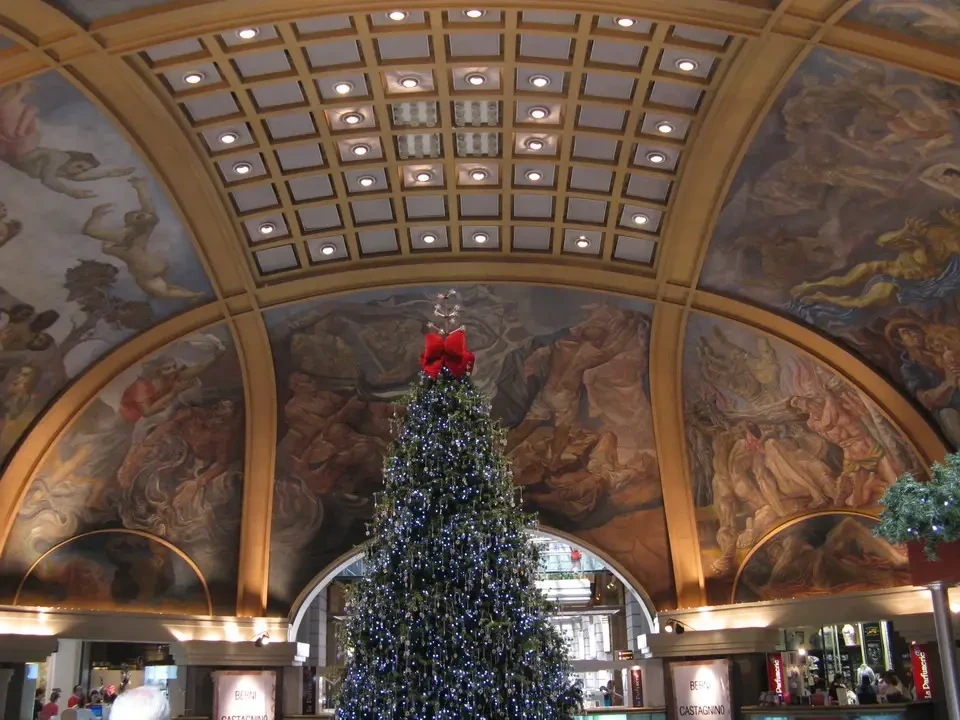
Passing near the renovated Central Post Office, we take the two-story tourist bus in Plaza de Mayo. We return to Boca after passing through Sant'Elmo, obtaining further explanations. We stop at a local/tavern for tourists, but quickly leave due to the commercial temptations offered and go to a nearby bakery to taste dulce de leche and see the Caminito from a different temporal perspective. Continuing with the tourist bus, we cross the La Villa neighborhood, which seems more like a shantytown, returning to Puerto Madero from the outside, along Avenida Calabria. We then see the entire skyline that outlines itself between Puerto Madero and the city center. We get off at Av. Cordoba to enter the Galleria Pacifico, a shopping mall. We ignore the products on sale to admire the beautiful glass-covered dome There's a huge crowd despite it being only mid-afternoon. We exit onto the pedestrian street, Calle Florida, when we get the idea to exchange some money. Here, we encounter the most systematic disorganization that an Italian accustomed to this could face. An employee "explains the situation" by asking you how much money you want to exchange, as well as your personal details and passport. And the operation is completed in a matter of seconds. If there are other customers, three of her colleagues are ready to serve them. We then move on to the official who needs to process the transaction, i.e., take the currency and hand over the pesos. And here's where things get complicated: there's a queue of about ten people waiting, and only one employee at the counter, who performs the operation slowly, leaving at least a couple of minutes between each transaction. Everything is carefully monitored by an attentive officer in uniform who directs customers to their turn. Even if we were exchanging gold bars!
However, it's important to consider the positive side: the extreme friendliness and helpfulness of the people we met. This gives the impression that Argentinians are collaborative and available on a personal level, while public services suffer from inefficiency. Two examples illustrate this: the woman in Recoleta (a beautiful neighborhood with several embassies) stopped us on the street and advised us to be careful with our camera. Conversely, everywhere we see protests against the government, pensions, or anything of public importance. Perhaps this social animosity is responsible for Argentina's economic difficulties in recent decades.
The metro of Puerto Madero
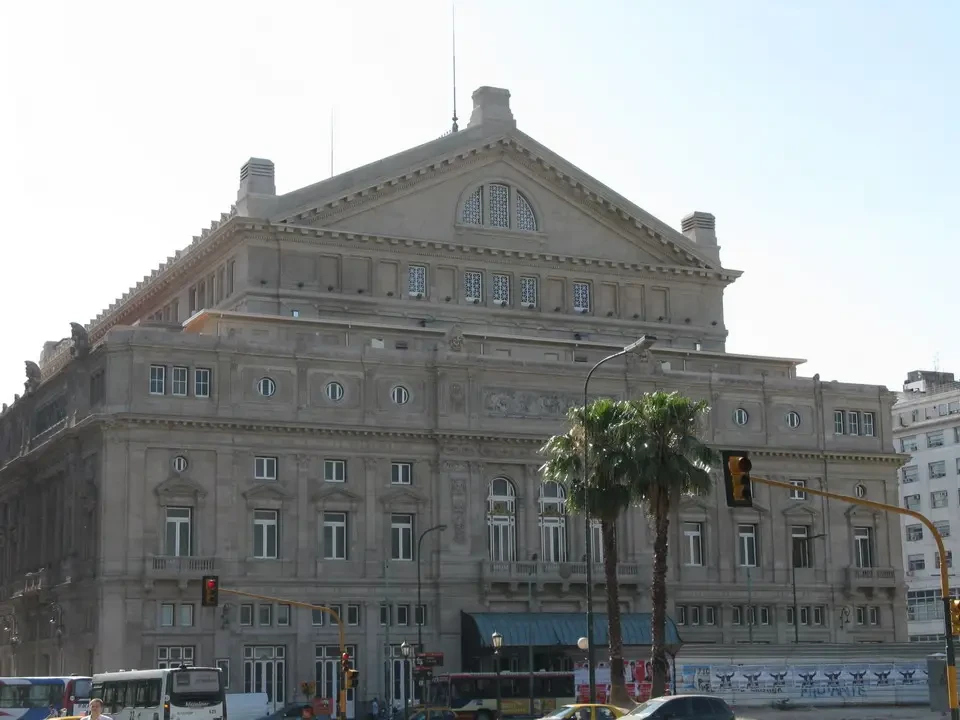
They say that some subway stations are particularly interesting. We then visit the one in Peru, on Avenida de Mayo. It's interesting, but even more so are the carriages with wooden interiors, benches from yesteryear, and dimmed lamps as if we had taken a leap back over fifty years. We get off at... Conference, the federal parliament with a dome that emulates the White House and a beautiful fountain in front of it. We walk along the wide Avenida de Mayo, a beautiful avenue where luxury hotels are located. Lined with trees, it was planned according to the rich French style, and essentially connects the Parliament to Casa Rosada. On this street is the Café Tortoni, the most noble and sought-after one in all of Buenos Aires. We don't even enter because we don't think it's appropriate to wait in line to be called when other customers are leaving. Noblesse oblige, but we also feel obliged to continue our tour. There is also the building of the Industrial Union, covered with red paint thrown during a demonstration. At some point we cross the Av. 9 de Julio... the one they say is the widest street in the world. It consists of a remarkable 22 lanes, and crossing it requires being prepared for when the traffic light turns green, taking deep breaths to cope with the smog hanging over the city, and moving quickly. The taxi driver this morning told us that driving through this street in the afternoon is often impossible due to constant demonstrations, but today everything seems calm. At least during Christmas time, things seem more peaceful. In the center of the street, there is an obelisk commemorating the 400th anniversary of the city's founding. Continuing on, we encounter... Teatro Colón, impressive in its construction and one of the most important opera houses in the world.
At this point, the itinerary still includes a visit to the Retiro Park, particularly in the area of the park where the square dedicated to General San Martin is located, with his equestrian statue in the center. Even here, a group can be heard drumming as soon as they are visible from afar. You will also find a couple of beautiful palaces and the Tower of the English... whose square was renamed after the Falklands War. Not far away is also the monument to the 695 fallen in this war, with the eternal flame in memory of those who gave their lives for a cause that was intended only as a diversion during the economic and systemic crisis of the 1970s dictatorship.
We cross Avenida 9 de Julio to reach the beautiful church of Nuestra Señora del Pilar, with a single nave and an altar completely covered in gold. We finally arrive on Avenida Pueyrredon, in the Recoleta neighborhood, where our hotel is located.
Evening in Puerto Madero
We are getting ready to go to the tango evening. at a theatre venue Named after one of its most prominent performers, Carlos Gardel. At 7:15 pm, a minibus picks us up from the hotel and joins a crowd of tourists preparing for dinner before seeing the show. Both performances are of excellent quality. In particular, some performances literally leave you breathless. Seeing the dancers' acrobatics and their movements convinces even the most skeptical people about the beauty of dance. We return before it gets too late, so we enjoy another coffee at a nearby bar near the hotel. There is no risk that it will ruin our sleep.