

Day 3
Buenos Aires and El Calafate
Another half day in Buenos Aires and finally, Patagonia!
The urban face of Buenos Aires
We still have a few hours to see what's left of the capital, at least what fits within our plans and interests. With a taxi, we are dropped off at Piazza Italia, where the... Garibaldi equestrian monument, we continue with a walk through the parks of the Palermo neighborhood, where we see the famous pet sitter to take out numerous groups of dogs, near the square where the Los Españoles monument is located.
We pass by the Japanese Garden, which is closed until 10 am, and then head to Recoleta where we visit the cemetery of the neighborhood, which, along with Père Lachaise and Staglieno, is one of the most important cemeteries in the world. Initially, a quick visit while waiting for 11 am, when a guided tour in Italian will begin. In the meantime, we move a few blocks to take a look at the Church of Las Esclavas and the square Vicente Lopez.
Museums and memory in Buenos Aires
During the visit to the cemetery, we realize that we are visiting a true human museum of Buenos Aires. There are only two of us, and Susy, our guide who is a history teacher from Tuscany, explains everything in detail, focusing on the allegories present in the funerary art of the chapels. Those who made the city's history can be found here. In particular, we find Evita Perón...in a family tomb without any official investment. This is also because there are certain people in Argentina who travel more as if they were dead than alive. These are prominent individuals who are kidnapped and hidden, or hidden simply to avoid being kidnapped. After the death of Evita in 1955 (due to uterine cancer) and the coup that overthrew her husband's government, she was buried in Milan secretly, unbeknownst even to those responsible for transporting her remains. After the fall of the coup government, the new executive did not want her return officially out of fear of being kidnapped. At this point, the Peronists kidnapped the body of a coup general (Aramburu) and used it as leverage. Evita continued to visit several tombs until she returned to the possession of her original family, the D'Huarte, and was finally buried in her own tomb at a depth of eight meters with all necessary precautions. In the same cemetery is also the former president of the republic, Raul Alfonsin, as well as other prominent figures from the last one and a half centuries. It costs more to die in Recoleta than to live in any other neighborhood of Buenos Aires, which clearly shows that VIPs know how to stand out even when they go to the afterlife. The history of the cemetery. With these extremely interesting explanations, which have nothing macabre about them and actually help us further understand the relatively young history of this country, we can finally take a taxi to the hotel to pick up our luggage and then to Aeroparque (the second airport in the city, dedicated mainly to domestic flights, located close to the center and along the Rio de la Plata) to catch the 15:40 flight bound for El Calafate. The Aerolineas Argentinas plane after takeoff flies over the murky waters of the Rio de la Plata, darkened by the debris it carries until its journey ends in the Atlantic Ocean.
We leave Buenos Aires from here. We hadn't come here for this purpose, although it is a city that deserves to be visited. But what awaits us is another 3 and a half hours by plane south, where the southern cone of South America narrows into a narrow strip of land crisscrossed by the last extension of the Andes. It’s the southern Patagonia: a harsh and difficult land, so much so that on the Argentine side, the province is called "End of the World," while on the Chilean side it's called "Last Hope."
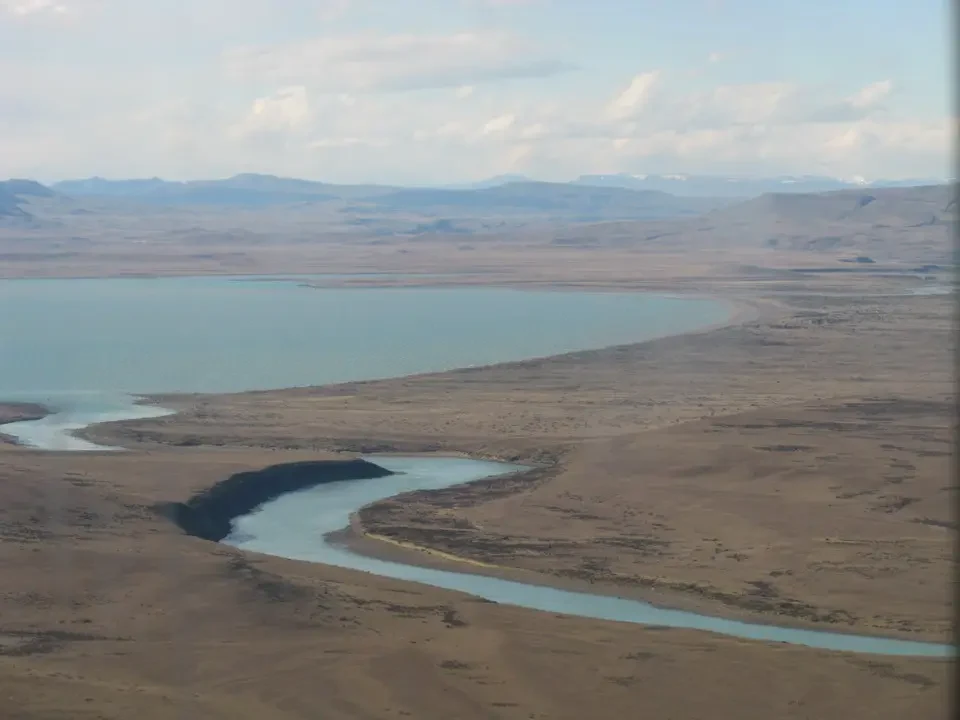
The flight doesn't raise any particular concerns, as the legendary Patagonian wind isn't blowing too strongly. The arrival in EL CALAFATE (8,000 inhabitants) immediately offers us a breathtaking view on Lake Argentino with its pastel turquoise and ochre colors of the surrounding steppe-like plains, extending all the way to the Cordillera.
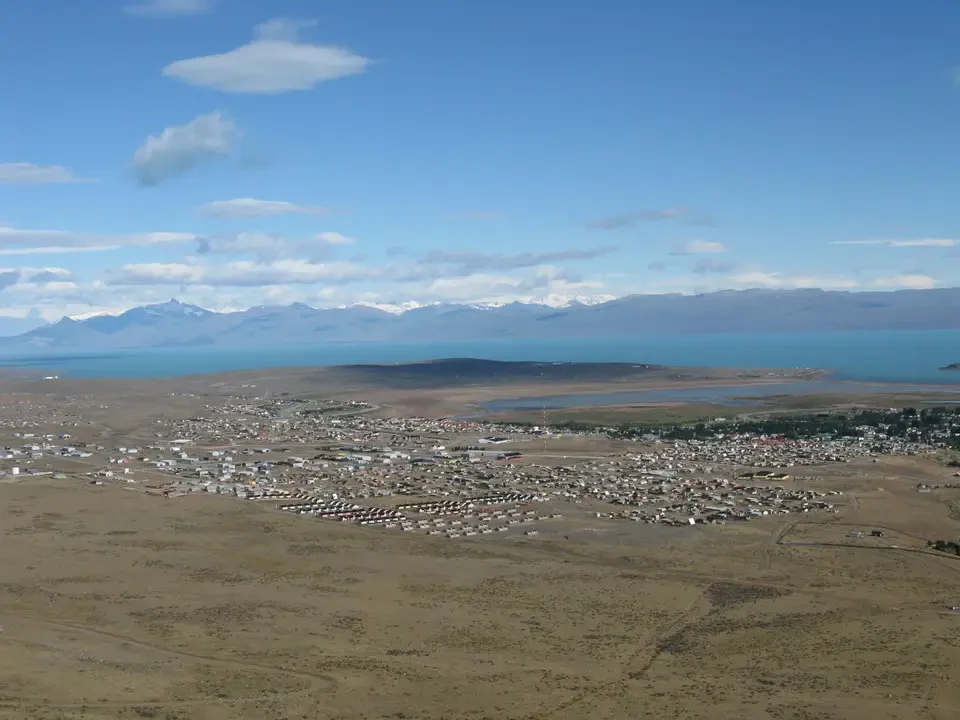
Shortly after 19:00, we met Luis Riera, the owner of the rental company Nunatak, who accompanied us on the 20 km journey to his office in town to complete the necessary bureaucratic formalities for the rental. The Hyundai H1 is only four years old, but even vehicles here tend to age quickly. However, it must be very robust, as there are many similar ones around. It probably has a good ability to handle rough roads. Afterwards, we went to check out the bungalows that had been booked in advance, Cabañas Nevis, and finally had dinner at the restaurant Michelangelo, which seems to have only an Italian name. In any case, we enjoyed a meal with… delicious steak and with this we say goodbye to a long day. Pleased with the service, we decide to book for the evening of December 31st, when it will be difficult to find accommodation at the restaurant.


