Day 2
Santiago de Compostela
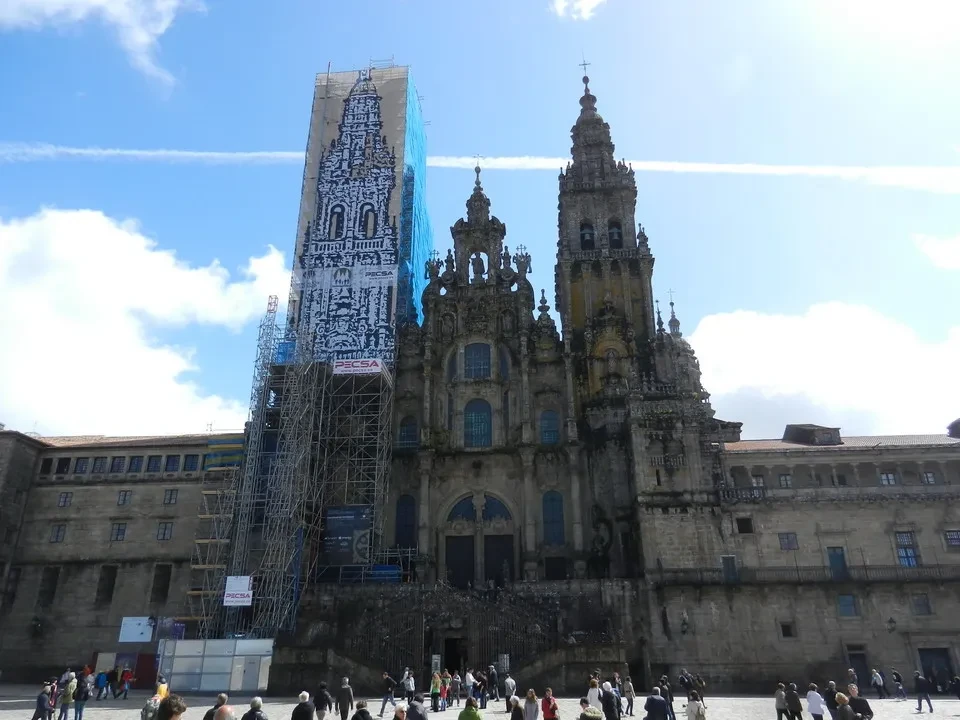
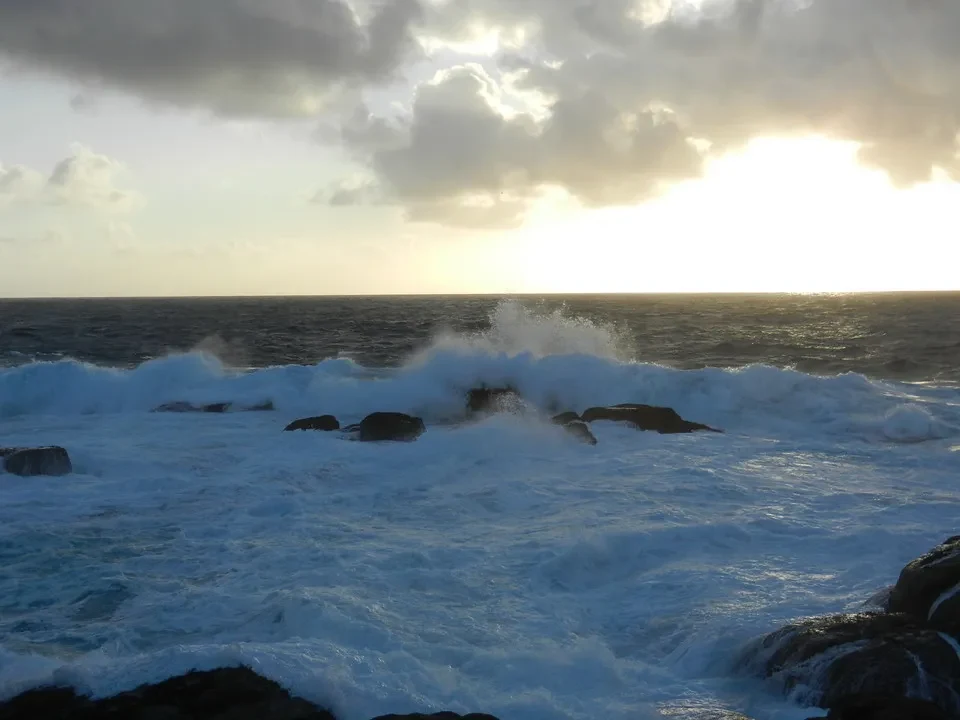
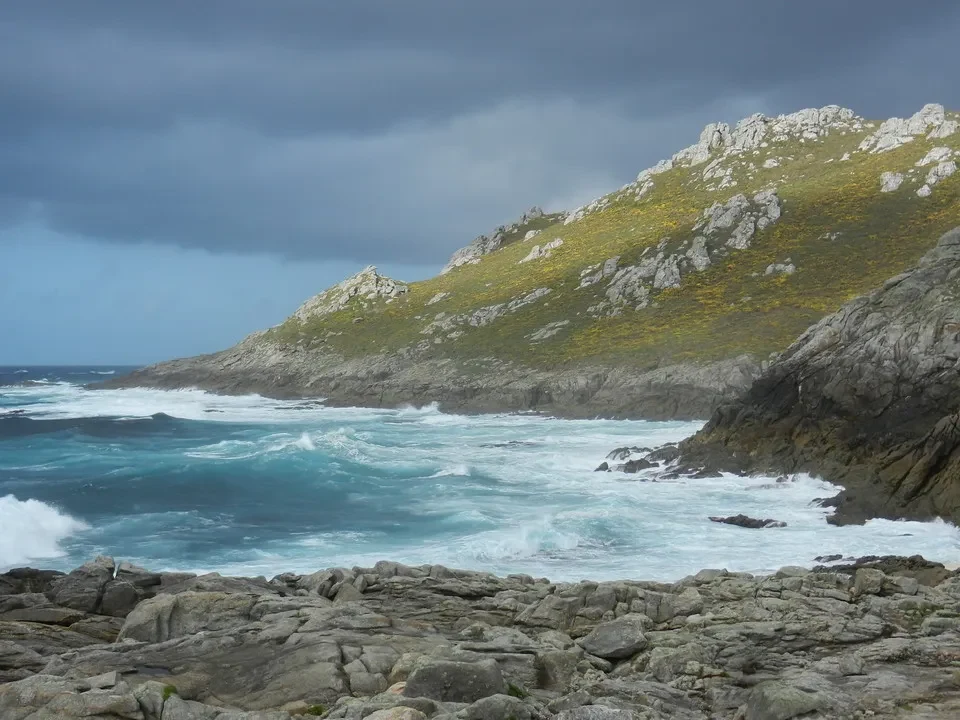
Santiago de Compostela, the mystical destination of the Camino de Santiago. The Galician coast, where land and ocean collide, creating majestic waves.
Santiago de Compostela and the Camino
A thick morning fog accompanied by the usual light rain gives us a wake-up call. Today's itinerary includes visiting some cities in northern Portugal, but given the weather forecast, we are heading directly to Galicia, specifically to... Santiago de Compostela... where the sun is even visible. We arrive late in the morning and have our first truly touching experience of the trip: the cathedral itself is beautiful, and the complex of buildings that surround it It doesn't seem to be any less impressive. If one also considers the religious aspects and wants to believe that it contains the remains of St. James, other cities also claim this privilege, which adds a mystical dimension.
What really touches our souls is the presence of pilgrims who have arrived here at the end of their journey: small groups arriving on foot or by bicycle embrace each other, exchanging photos in which they proudly display the stamps from the places they have visited, essentially confirming what they have accomplished. We exchange a few words with a couple of Spanish teenagers: they completed it entirely in three stages over several years and now they are enjoying their well-deserved moment of glory. It is perfectly possible to confuse hiking with spirituality; however, we feel inferior to them, and we are. We arrived comfortably by car while they faced the challenges of a journey that may not have been difficult but certainly demanding, especially in terms of weather conditions, as days with rain are more frequent than those without, and also in terms of physical effort. The dream of completing it entirely doesn't make sense if you work, unless you do it in stages over subsequent years. We finally had the good fortune of enter the church right at the moment when the celebration is about to end and we witness the ritual that involves a a very large and heavy suitcase, weighing over 50 kg swinging along the central aisle to scatter incense on the worshippers. Apart from the 33-meter rope from which it hangs, seeing this swinging object almost touching the ceiling is a truly impressive sight. For pilgrims, it represents the culmination and end of their journey: from here begins the celebration and remembrance of what they have just accomplished.
From Santiago to La Coruña
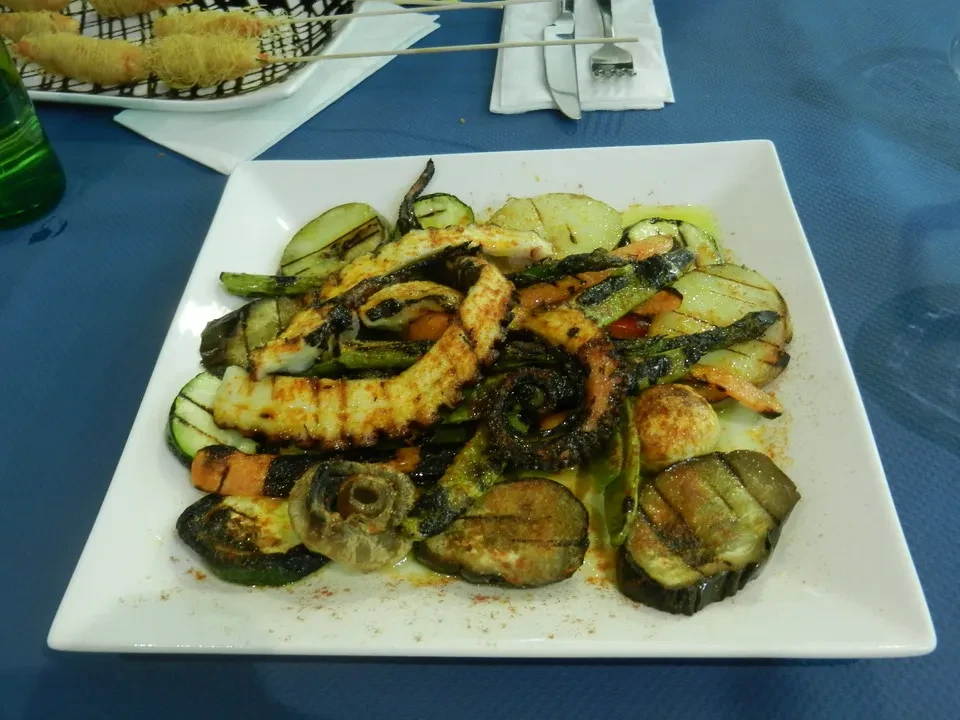
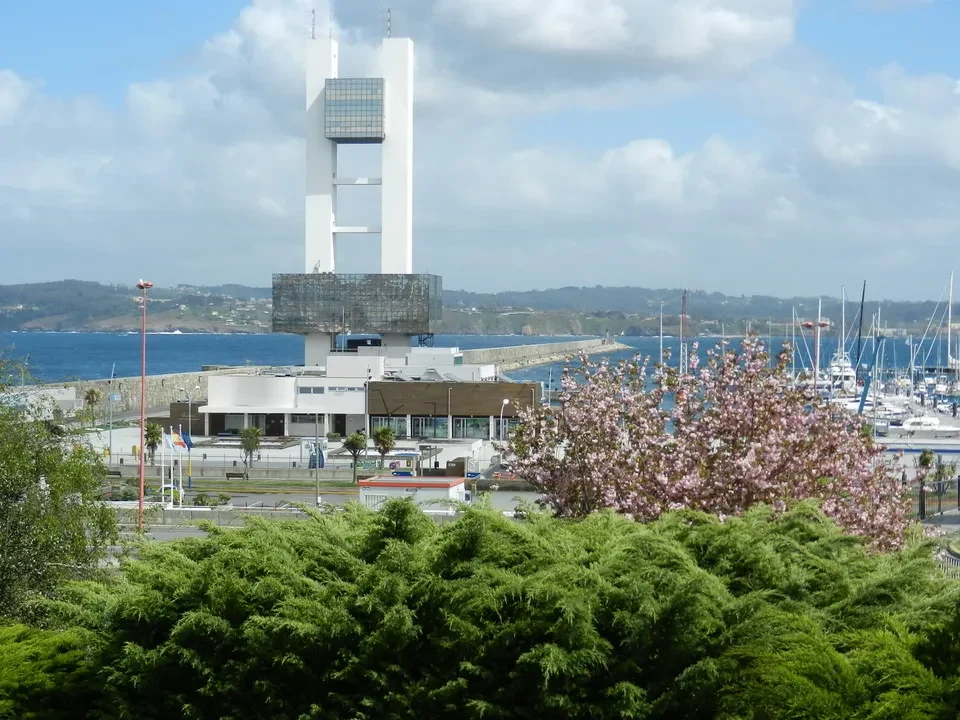
It's lunchtime now, so let's find a place to try the famous. octopus at the market, also known as the name used in the rest of Spain, and we head north to reach La Coruña The city is a pleasant surprise: those who expected the usual grey area of industry and fishing are instead favorably impressed by the order and... major renovations that have been carried out recently Works that are not yet completely finished, to the point that many public spaces are still under construction. The port offers a great preview of what we will see in the coming days, while the network of... streets of the old town It transports us back a few centuries. What really strikes me is... the balconies that rise like a glass wall in front of the port, with decorations that make the waterfront a huge mirrored display of boats. Among these are still many fishing boats alongside some luxurious yachts. A little further away, on the northern headland, you can see the outline of the Tower of Hercules, monumental and ancient, dating back 2000 years, during a time when the sun still revolved around the Earth, and this is where the world ended.
Death Coast to Muxia
We leave the city to explore the green countryside and come across the first horreos, stone-built grain silos designed to allow cereals to dry in an area where rain is common, while also preventing access for rodents. In the rounded shapes of the stones between the supporting pillars, we see a resemblance to Valdostan barns. We return towards the coast to visit Malpica, a large village nestled between the port and a hill. We see fishermen busy preparing their nets, in a ritual that dates back millennia, ready for a new adventure in the ocean, as facing this sea is still the only option even today. Stop at Cormes to see the lighthouse stayed at the peak of Punta do Roncudo: the clouds in the sky show their intensity like the sea, whose waves fiercely crash against the cliffs, creating mist and spray around. They seem to be allies, making humans feel small, and they succeed perfectly. Some rays of sunlight illuminate the crosses erected as memorials for those who lost their lives off these coasts. After all, if it's called Death Coast, there must be a reason, and it doesn't take much imagination to figure it out. Sailing here requires courage that only the desperation of having to feed one's family can provide. For tonight, we decide that's enough and book a wonderful hotel at A de Lolo. Muxia We had read a lot about this proud but unfortunate village. It seems like a disaster: in 2002, the Prestige, the infamous oil tanker, ran aground along the coast, making it unusable for many years and killing the rich fauna contained within. On Christmas of last year, a lightning strike, not uncommon in these areas where winds from the sea collide with those arriving from inland, destroyed a shrine located right on a rocky coastline, which tradition associates with the place where Mary landed to help Saint James. To make matters worse, the human tragedy is compounded by that of nature. Once again, the people, struck by misfortune, rise up and continue, although many have emigrated permanently. Restoring the monastery will take time, and it will be impossible to restore it to its former state as some works of art have been lost forever. The flow of tourists and pilgrims will be reduced, making this one of the last stops on the Camino de Santiago de Compostela. It is incredible the combination of faith and suffering, mysticism and disaster. This explains, among other things, why Galicia has historically had more witches: a favorite target for the Inquisition and its more recent followers.
Sunset and night in Muxia
There are still a couple of hours until dinner, and on the promontory, a performance is about to begin that only nature can interpret: it could be called "sunset over the ocean." The lighthouse and the Church of Saint Mary of the Barcas The tradition says that the Virgin Mary landed on this coast to help Saint James, who was preaching here. Right in front of the church is a stone, wide but thin enough to keep it intact. It seems this was the sail of the boat. It becomes difficult, if not impossible, to find a compromise between faith, legend, history and belief. We don't ask too many questions, even though it's hard to remain silent in front of the church, which on Christmas Day last year was struck by lightning, taking with it the roof and everything inside. A thousand-year-old place of worship, a pillar of the Camino de Santiago, reduced to a skeleton awaiting restoration. The friendly young man we will talk to at the hotel shows us a video that he uploaded to YouTube, filmed on Epiphany this year, where you can see the waves of a storm crashing against the church, almost as if the sea wanted to caress the historic walls, asking for forgiveness for what the lightning had inflicted just a few days before. If you want to think about it more prosaically, you cannot help but think about the power of the waves that surge several meters high, overcoming everything. We climb to the top of the promontory, while in a distant point to the west, the sun disappears into the Atlantic.
The horizon is painted with a palette of colors. that goes from yellow to intense red, the constant waves take on a glassy reflection, gradually darkening. The buildings around us turn yellowish while the cross at the top extends its shadow as a reminder and warning for those below. We return, descending along a rocky path, barely marked with a few signs. We arrive at the location where the cemetery is located, with an attached church. It's in a higher position, almost to allow those who rest there an eternal view of the ocean, which has often represented life but also death. The port is about to be swallowed by shadows; the sailors have gone ashore. We should do the same for enjoy the seafood specialties Offers from the restaurant. Afterwards, we chat with the handyman, from the waiter to the receptionist and anyone else who is needed. He speaks fluent Italian and tells us how life is hard in that area. But it's his home, and he doesn't want to leave his homeland. After all, "Death Coast" says a lot about the difficulties sailors might encounter when setting out to sea in search of fish, along coastlines dotted with crosses that recall shipwrecks and accidents at sea. In the center of the villages, where tall obelisks stand as memorials, it seems like we are far away, but we are actually in a remote corner of the European Union, where civilization has reached only halfway, and it seems that this stretch of coastline facing the Atlantic, which roars like a lion and sends its waves like claws, has been forgotten. Another walk while thick clouds gather, and although they are thin, they bring down heavy rain that quickly dampens our clothes. There is no tourism here; some fishermen chat happily in bars and taverns along the main road; it's Saturday night even on this stretch of coast in the extreme northwest of Spain.