

Day 1
Porto
Porto: On the 40th anniversary of the revolution, a portrait of a vibrant and lively city.
First day in Porto.
Porto: The journey along the westernmost part of our continent begins right here, in the city that most people associate with the famous wine. In reality, there are also significant historical and monumental aspects to explore, and we will certainly see those too. We arrive on the day when… 40th anniversary of the Carnation Revolution April 25th, 1974 marked the end of the long dictatorial period under Salazar and the opening towards a parliamentary republic, which within a decade would allow the country to join the European Union. As we walk through the central streets, the procession has just ended; we see elderly people with carnations in their buttonholes, while on Avenida dos Aliados, a group similar to Inti Illimani performs, attracting several hundred remaining protesters. The songs are an anthem for justice, drawing from the past to project concepts into the future. At the edge of the square, there are scattered stalls displaying symbols of the hammer and sickle, anti-euro, anti-system, and anti-everything slogans, ignored by passersby. Young people listen to the pleasant rhythms of the concert, while the older ones pay attention to the music but form small groups: perhaps they are reliving times when hope was not thwarted by unemployment and the decline of ideals. The grey day, which occasionally brings a little rain, completes the picture.
From the wonderful accommodation at Hotel Castelo de Santa Catarina, we walk down to the Mercado do Bolhao, which is currently closed, after passing in front of the Church of Souls Here we are immediately introduced to what can be considered the artistic peculiarity of the country: the azulejos, ceramic tiles decorated and painted like paintings, used to cover entire walls, both inside and outside.
We enter Avenida dos Aliados and stop briefly to admire the impressive town hall on the upper side and listen to some of the concert music playing.
Churches, tiles and bridge over the Douro River
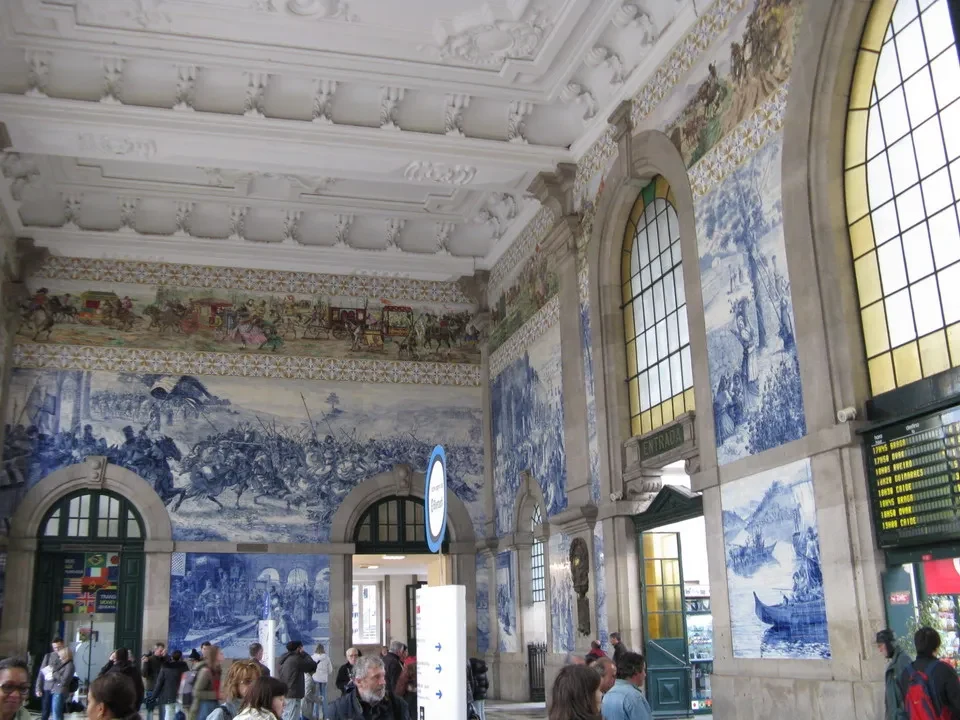
Next, I will be Carmel Church, the Church of the Clerics with its tower, the Lello & Irmão bookstore, closed for the festival, and inside you can see the magnificent wooden staircase. São Bento Station... where you can admire wonderful scenes of everyday life and historical portraits painted with azulejos. The station is located at the foot of a hill, so that trains, after covering just a few meters, enter a tunnel.
Palace of Commerce, which includes a library room with a beautiful coffered ceiling and a wooden globe.
The cathedral, located in a prominent position with excellent views of the lower part and the river.
Dom Luís I Bridge... which we cross on the upper level, designed for pedestrian and tram traffic. The lower level is dedicated to vehicles, as well as a narrow pedestrian passage. It's made of iron and evokes the French style, immediately reminding you of the Eiffel Tower.
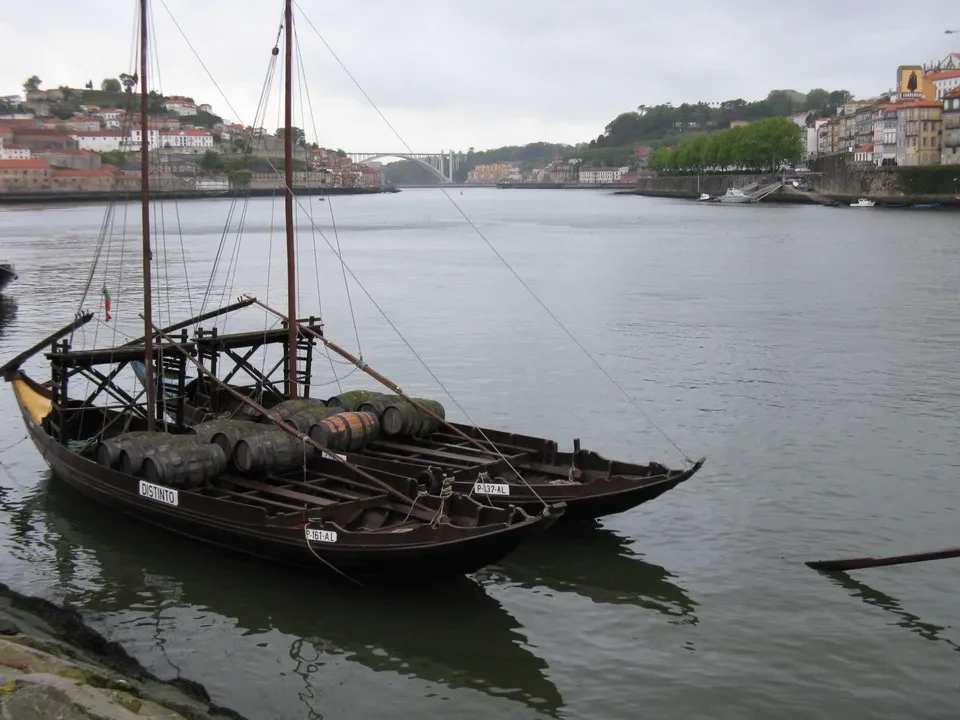
We then cross over to the opposite bank of the Douro River, which is traditionally known for its wineries and establishments dedicated to the famous wine. Once, this area was... Rabelos, flat-bottomed boats used to transport barrels, descended the river from the production areas to store them in this part of the city. It was a difficult job to move the boats along the river with its fluctuating currents, but once they reached their destination, the valuable liquid represented a source of wealth. Today, you can still see various rabelos moored along the shore, now mainly for tourist photography, just like the restaurants, bars and cellars that are open to the public.
It goes without saying that we eat fish and drink vinho verde, a light wine, perfectly suited for the amount consumed, best enjoyed chilled, from the northernmost region of Portugal. When we go out, an intense Atlantic rainstorm hits us, we cross the bridge and walk through the lower district along the river, known as Ribeira, which is now deserted due to the annoying rainfall. From there, we take a taxi and head to our hotel to rest, with its small rooms but 130 years of history and an elegant interior.


