

Day 5
Halifax + Ferry
Nova Scotia and ferry to Newfoundland. The closest part of Canada to Europe, but further from the rest of Canada.
Morning in North Sidney
Wake up as usual at 6:45 am. It had been raining for most of the night and it was still not very nice in the morning. We take a walk around Halifax; the foggy city center gives us a rather sad impression of the town. The Saturday morning, which keeps people indoors, adds to the feeling of isolation.
We continued on comfortable highways towards Truro, New Glasgow, and arrived in Port Hastings, where we crossed the Canso Causeway, a stretch of sea that connects mainland Nova Scotia to Cape Breton Island. It rains frequently, but the scenery is unremarkable. We have lunch. on the shores of Bras d'Or Lake, lake connected to the sea, with low salinity. We visit the remains of a large steel plant, with coke slag sucked into the ocean by the tides, at a distance. A desolate and depressing sight in the most polluted area of North America. The surrounding neighborhoods feature dilapidated houses, due to the abandonment by their owners. It is one of the areas with the highest incidence of cancer throughout Canada. Perhaps the inhabitants of some of the empty houses we saw were unable to escape in time. We arrive at North Sidney, where the departure The departure was scheduled for 4 pm, but we will be departing with more than two hours of delay. Inside the ticket office, we find a comprehensive information center. It is also worth mentioning the availability of staff and the perfect organization encountered. Also inside the ticket office, we can pass the time by looking at photos from when crossing to Terranova was much more difficult, as well as the difficulties encountered in winter when the sea completely freezes over. Before departing, we meet a friendly gentleman whom we tell about our two-day adventure with the moose. He looks at us in surprise and repeats several times that we are "very lucky". He even pats me on the shoulder to bring good luck, although he doesn't seem to be very unlucky. He owns a large caravan (normal for Canadian habits) pulled by a pickup truck. He is retired and spends his summers near St. John’s (his hometown), then winters in Alabama. We have dinner onboard, noting that the prices are definitely affordable. The menu includes cod (caught on the day), seasoned with onions and sauce, served with various vegetables. During the journey, we are entertained by a country music concert by two very talented musicians, equipped with guitars, drums, etc. We also meet Mary Law, an English-speaking teacher married to an Englishman, originally from Terranova who lives and works in Moncton (NB), returning for a few days of vacation with her parents. She feels fully Canadian and doesn't appreciate the extreme linguistic style of the Quebecois.
Their kindness and willingness to offer us advice on what to see on the island were truly impressive. It's true that there are fewer tourists here than in other places, but this level of hospitality should be a defining characteristic of the local culture.
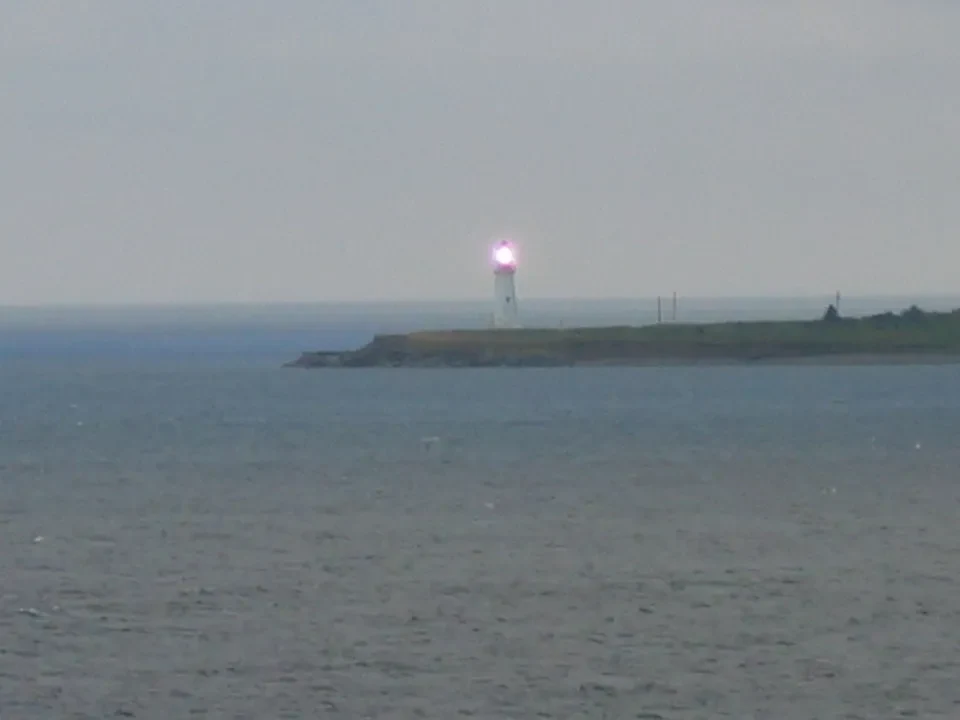
Arrival in Port aux Basques occurs around one o'clock in the morning due to the delay caused by the ferry, after more than five hours of sailing. It’s one of those experiences you won’t forget: amidst thick fog, the ship slowly proceeds towards the dock. It feels like living a scene from a pioneering era while the ferry glides across the calm sea. Nothing is visible except the lights of the harbor that gradually approach. Apart from the excitement of arrival, it was a great shame not to have arrived earlier, because the Heritage B&B where we stayed is located in a very beautiful place and itself is a lovely chalet perfectly furnished and equipped with all amenities.


