Day 10
Gaspe
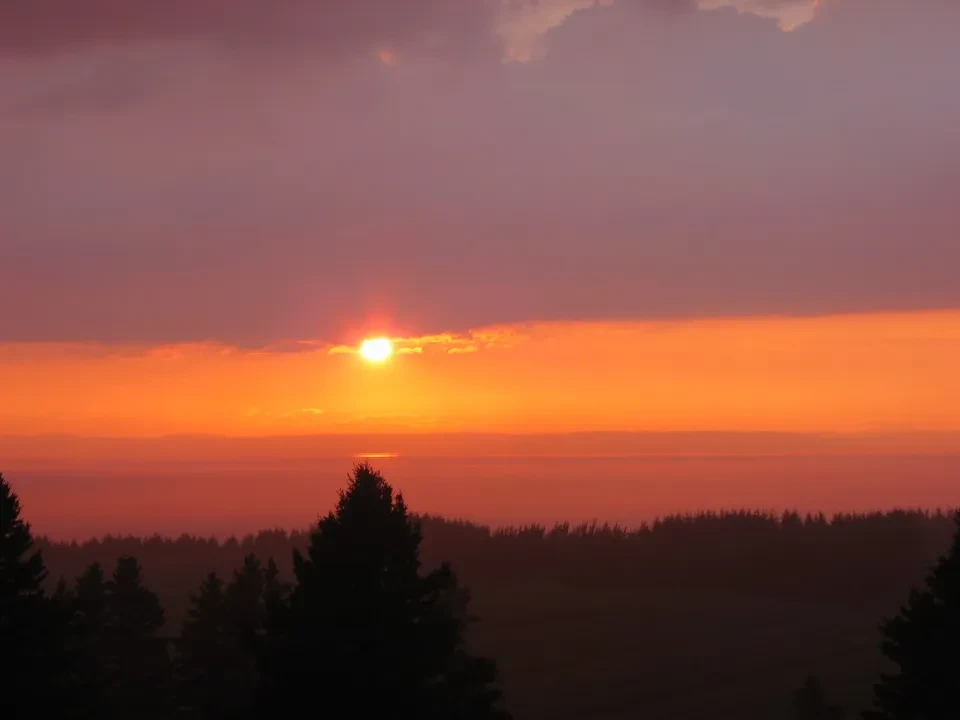
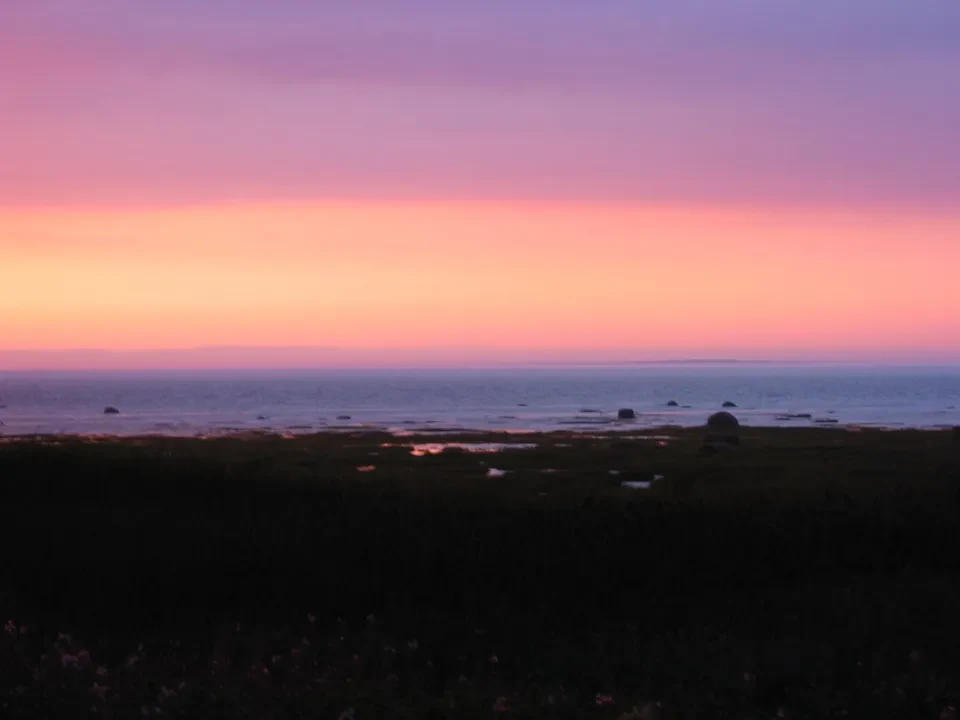
Along the Gaspésie peninsula, now back in Quebec. Unforgettable sunset over the Saint Lawrence.
Morning in Gaspésie
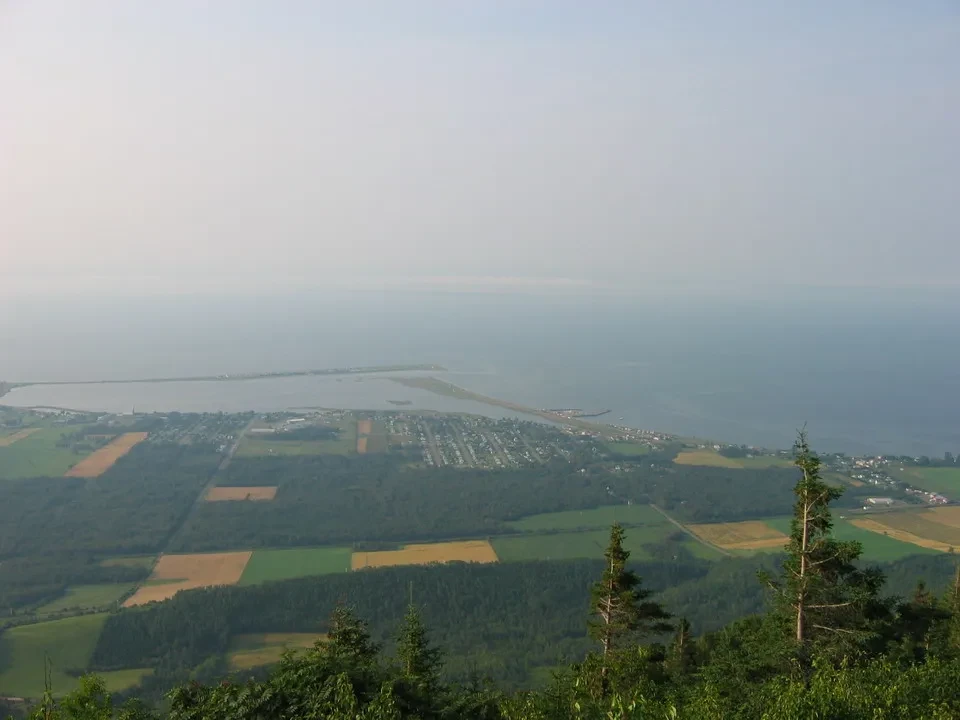
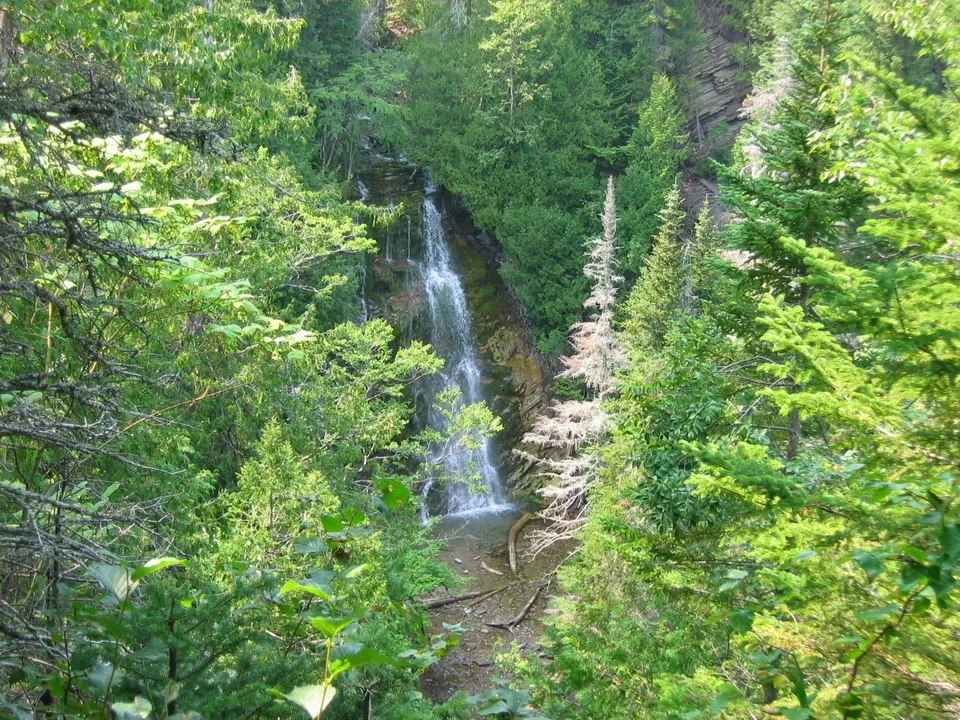
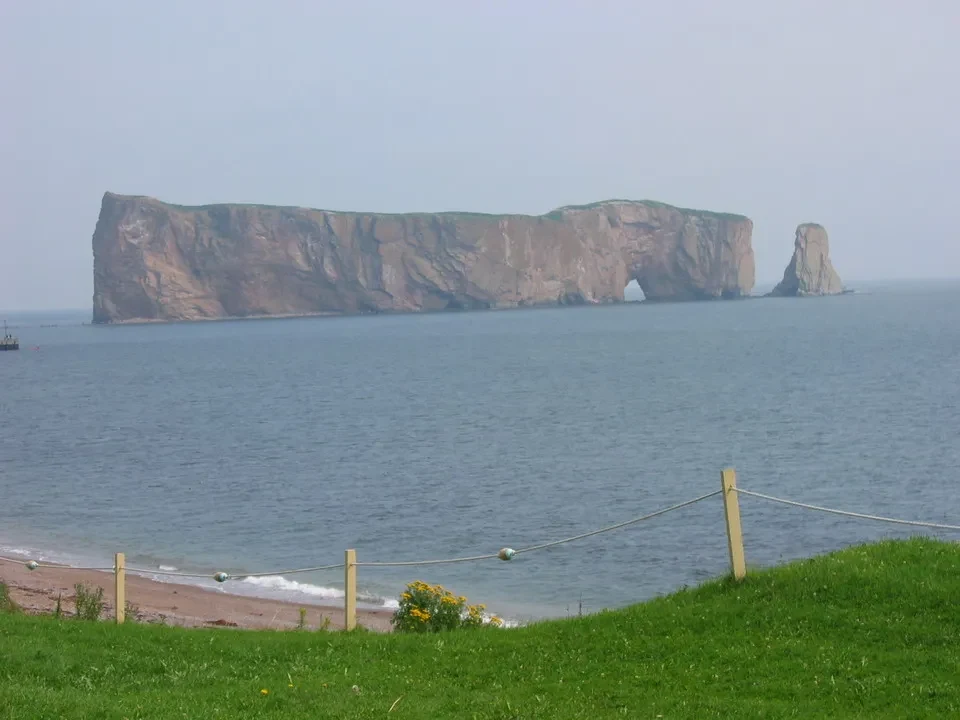
Breakfast with delicious homemade jams of blueberries, apples, rhubarb and strawberries made by the owner. Everything was seasoned with the usual maple syrup. While chatting, they told us that in January and February, the temperatures easily drop to -30/32°C, with average temperatures around -20°C. The town hall still keeps all the roads open, making extensive use of salt. We climb to 582 meters at Cap Ferret, from where we enjoy a magnificent view over the entire Chaleur Bay, just touched by a low-lying fog that doesn't help to make the opposite coast of New Brunswick clear. Under a beautiful sun, we set off. towards Perse. Unlike Newfoundland and Nova Scotia, we start to see some European tourists arriving, before they were only Canadians or Americans who arrived from Maine with convenient ferry connections. At 11 am, we arrive at the Faraglione of Parise that It rises from the sea with a tunnel. in the furthest part. We noticed with interest how in this area, the signs indicate distances using imperial measurements rather than metric ones, as is common elsewhere in Canada. Marie Claire's husband also used imperial units of measurement. We visited Forillion Park, where we walked a one-hour trail that winds through beautiful waterfalls, whose soil is covered with moss The fallen logs are also quickly covered with a dense, hairy moss. We discover that there are three varieties of maple tree, one of which is the source of sap used to make syrup and whose leaf appears on the Canadian flag. Another has leaves with almost straight angles, while the last has a rounded leaf base and is known as the Pennsylvania maple. The undergrowth is kept clean by coniferous trees and maples. Another interesting and common tree is the cedar, which emits its classic fragrance when the leaves are rubbed.
As soon as we exited the Forillon Park in Cap de Rosieres, we came across a beautiful series of houses exposed to all four winds and the vegetation struggles to thrive. We realize that it is not necessary to build a town right on this promontory, but there must have been a reason. The most beautiful houses are those at the highest point and therefore more exposed to the weather, obviously the more wind a house takes, the more prestigious it becomes. However, the fact remains that the two rows of houses along the main road is the most common layout in all villages in eastern Canada. Probably also for a reason related to snow removal, it is easier to exit from the garage or courtyard. In small towns, side streets are almost non-existent. The structure of the houses is usually made of wood and well insulated. These, even though built entirely of wood, have a chimney that starts at the base and is covered in stone. Some public buildings and many churches are instead entirely made of stone. Churches are often white, with black or dark blue borders, surrounded by green lawns and located on scenic viewpoints, on elevations or near the sea. Cemeteries are also in a scenic location and directly face the road, but in a prominent position relative to the village. The north coast of Gaspesie gives us an impression that is less majestic than described in guidebooks, due to the cloudy sky and the superb landscapes seen in recent days, for example in Cape Breton. Only near Gros Morne do high cliffs descend perpendicularly onto the road. On the other side are St. Louis and Mont St. Pierre, as well as other nearby villages, which are all identical: they rise at the bottom of a bay where a river flows into it and opens up to the valley. High cliffs can be found before and after, which drop steeply onto the coast, where the road is located. The inhabitants seem even clumsy when driving slowly. However, we understand them when they speak French, unlike the Quebecois on the other side, where we have difficulty translating. Given the increasingly harsh weather and the landscape that does not warrant long stops, we decide to continue to Riviere du Loup. Near Trois Pistoles, we are enveloped in a strange, very dark and dense fog, but which still allows for acceptable visibility.
Politics and society
After a few kilometers, suddenly the scenery opens up and presents itself. a sunset near San Lorenzo that alone would be worth the trip Ignoring the mosquitoes feasting on our blood, we take some photos to capture a moment that our minds would have remembered anyway. We enjoy a meal of shrimp salad and grilled salmon.