Day 2
Madonna di Campiglio and the Brenta Dolomites
Famous steps (Foscagno, Mortirolo and Tonale). The Vallesinella waterfalls.
The clouds are still present but have risen and there are also glimpses of clear skies; they have also left a white layer on the upper edges, not very high up. Let's take a walk through the town as it wakes up, breathing in the real life of Livigno, altered by the hustle and bustle of tourists. The shopkeepers receive their first deliveries and prepare to open their businesses, while exchanging friendly conversations with each other. Before leaving, it is necessary to refuel at 0.785€/liter, just a little more than half the price in the rest of Italy. The weather seems to be improving and we head towards the Foscagno, where we were allowed to pass through customs without inspection.
The next stop is Bormio (1250 meters), where we will spend a walk through the city center with the clouds quickly giving way to a clear blue sky and the temperature is definitely warmer. The Adda River, although small and well before reaching Lake Iseo, flows rapidly due to the recent rains. The town, though beautiful, we visit quickly and are ready to go to Santa Caterina di Valfurva, when we discover that the road has been closed for safety reasons due to possible landslides. We return via the only available route, the one from which we came to exit before Tirano, thus avoiding Edolo, and
confronting the epic ascent of Mortirolo without having anticipated it beforehand. A wonderful surprise and experience, but one that requires careful attention due to the narrow, steep, and winding road (32 uphill turns and 17 downhill turns to reach Monno). We were fortunate enough to encounter vehicles traveling in opposite directions at accessible points. However, it is still amazing to see how many people cycle all the way up to the pass (not e-bikes), making us feel quite inferior to them.
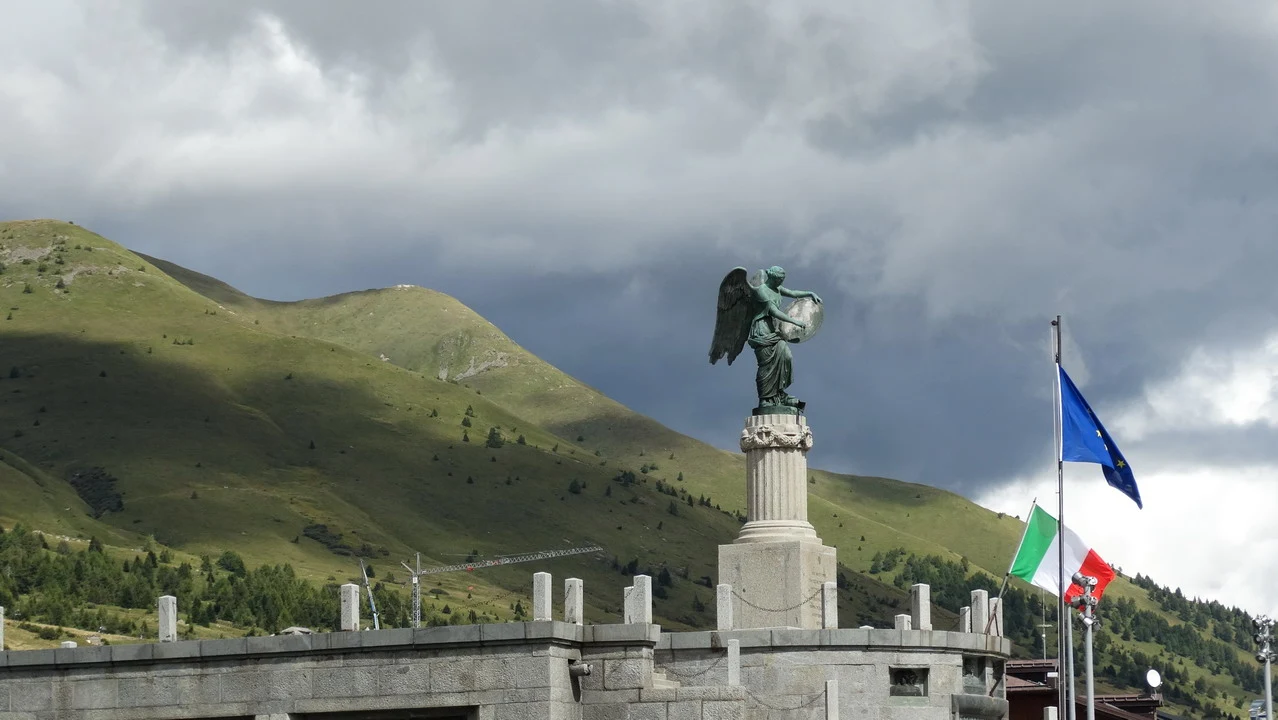
From above, the view is stunning and the sky is clear. We reach the Tonale After having lunch in a wonderful picnic area near Ponte di Legno, where the tables were spaced apart for Covid reasons, we found ourselves along the river. It was easy and imaginative to create water channels that flowed through the meadows and relaxation areas, in a decidedly pleasant setting. At the top of the hill, we saw the memorial and the... World War I ossuary, where the soldiers who were buried in various cemeteries near the battle zones were collected, including some Austrians. We are now in the province of Trento; the sky is clear towards Lombardy while the Trentino side still has clouds. The pass isn't particularly beautiful; it probably owes its fame more to geographical reasons than scenic ones. You can find many ski resorts here, and there are three cube-shaped buildings without balconies or any apparent purpose, typical of Eastern European countries but useful for skiers who prefer a quick style.
The descent was smooth and pleasant, arriving at Dimaro.
returning to Madonna di Campiglio, checking into the hotel located 7 km before the town, and then going to pick up the
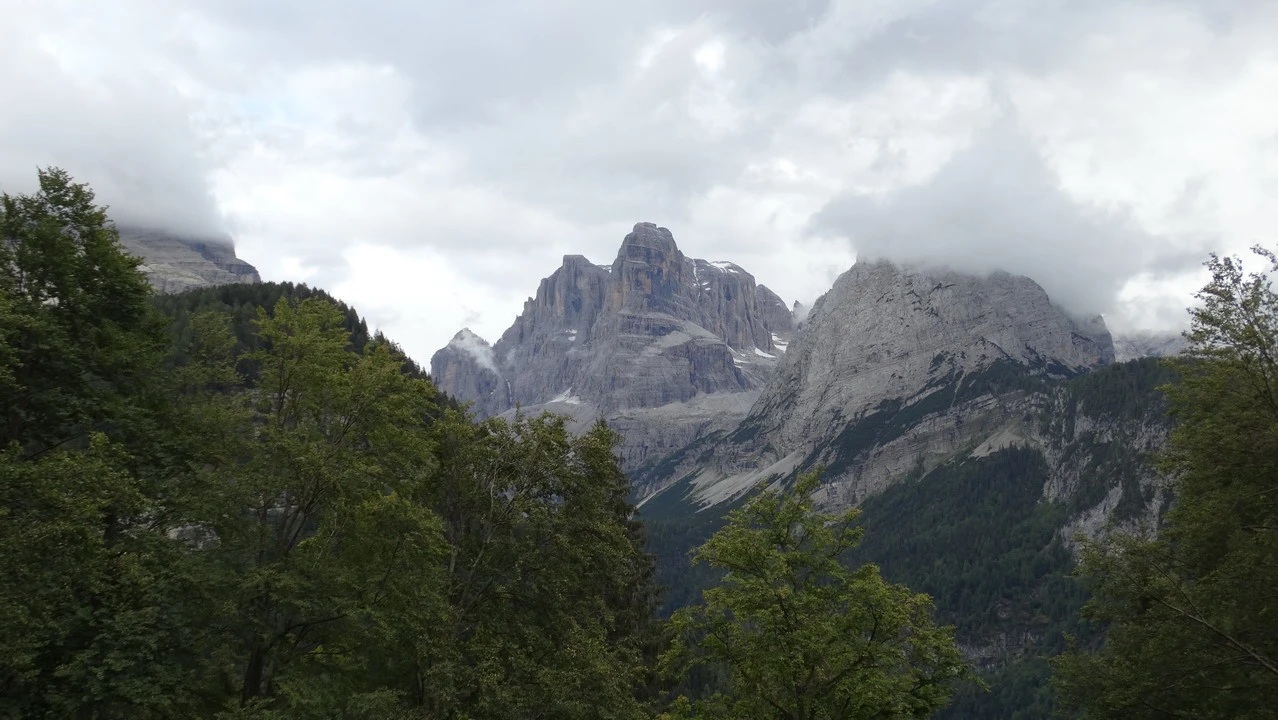
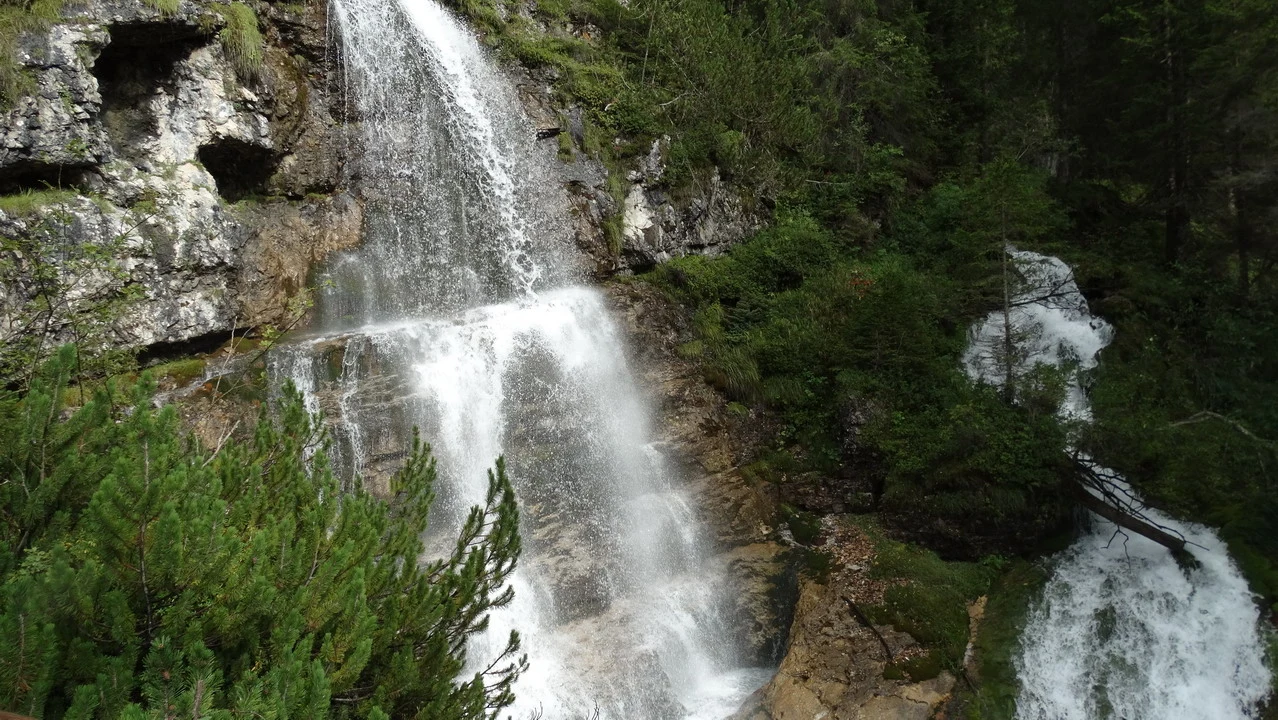
path no. 10 leading to high waterfalls of Vallesinella where the Sarca river originates. The path is nice, it goes uphill well, but the signage isn't particularly clear: we will also see the Middle waterfalls and from there, with a short climb, back to Madonna di Campiglio. Meanwhile, it starts to rain even though we are partially sheltered by the forest; fortunately, when we reach the high waterfalls, they seem to open up and the water begins to sparkle with... Dolomites of Brenta They peek through the mist in the background. Tall pine trees surround us at higher elevations, with denser fir forests lower down. We descend to see the waterfalls that cascade into a stone amphitheater, then return to retrieve the paved road we would have driven up on, after booking a ticket or paying €10, which fortunately we didn't do: this allowed us to complete the entire loop on foot in a sort of circle. It starts to get cold and we are slightly wet from the rain, around 6:30 PM we return to Madonna di Campiglio for a quick and refreshing walk through the center to see what little it has to offer, but especially to admire the steep men's slalom course (the 3-Tre) that almost overhangs the city center: this year the race will be held at night on December 22nd. The town doesn't have much that is distinctive; it stretches out along the bottom of a shallow valley with limited exposure. The architecture isn't great either, with only a few flower pots and an exclusively touristy atmosphere in a valley unlike Livigno. To ensure good traffic flow, they created a tunnel parallel to the town, dug into the mountain with three exits, before descending towards Pinzolo (a town that shares a comune with Madonna di Campiglio). Otherwise, it's a succession of shops, tourists, and green surroundings. The Genzianella hotel looks almost old from the outside, with poorly maintained flower beds in an area not very touristy. The rooms are also modest, although suitable for our needs. On the other hand, the restaurant is frequented by people from big cities who are staying in Madonna di Campiglio. Everything is well set up, with Roman-accented waiters who show professionalism and refined food at the expense of a rustic atmosphere. This is something we appreciate, given the portions that aren't exactly tavern-style. In the end, we will eat well, but in a particular setting that doesn't quite meet our expectations. There are more tourists than in Livigno, and we will see even more in the coming days in the central part of the Dolomites. It has started to rain again, so there is no space for a walk.