Day 1
Lithuania – Šiauliai
The Hill of the Crosses – A reflection on past tenses of the country.
Arrival in Lithuania, Šiauliai
The COVID pandemic and its negative consequences continue to affect those who love to travel, even during this summer of 2021. The ban on traveling outside the EU for tourism purposes remains in place, so it is necessary to find destinations within the continent, particularly within the European Union. To leave, you need a Green Pass (for Lithuania, you need at least two vaccinations with at least 14 days between them), complete online forms for Lithuania, Latvia, and your return to Italy, receiving a QR code in exchange that allows you to demonstrate registration and access the data contained therein. This will then be attached to your boarding pass as documentation, with the anxiety of not having complied exactly or not reading something carefully. Luck and attention to detail will ensure everything goes smoothly. Regarding masks, Lithuania and Latvia follow the same rules as Italy (wearing them indoors, but not outdoors), while in Estonia, we are enjoying the pleasure of entering a shop or restaurant without protection for the first time in a long time. The rules here were issued on Friday and applied the following week. The Ryanair flight is also regular and arrives in Kaunas with about twenty minutes ahead of schedule. The airport is small (there are currently around 6 flights per day) and there are no checks upon arrival. We go to a building near the terminal to pick up our car, but there's nobody; we call the number on the agency door and after about ten minutes, an official appears, who confirms that we were expected to arrive later. The process requires attention as the warnings are always lurking: we obtain an upgrade and move from a VW Polo to a Tiguan (paying attention that the allowance also gets upgraded and increases from €400 to €600 due to the larger vehicle). Another significant increase is the extra fee if you travel outside Lithuania, which is almost safe given the limited territory, plus another €52 (€26 for LV and €26 for EE) for on-site assistance.
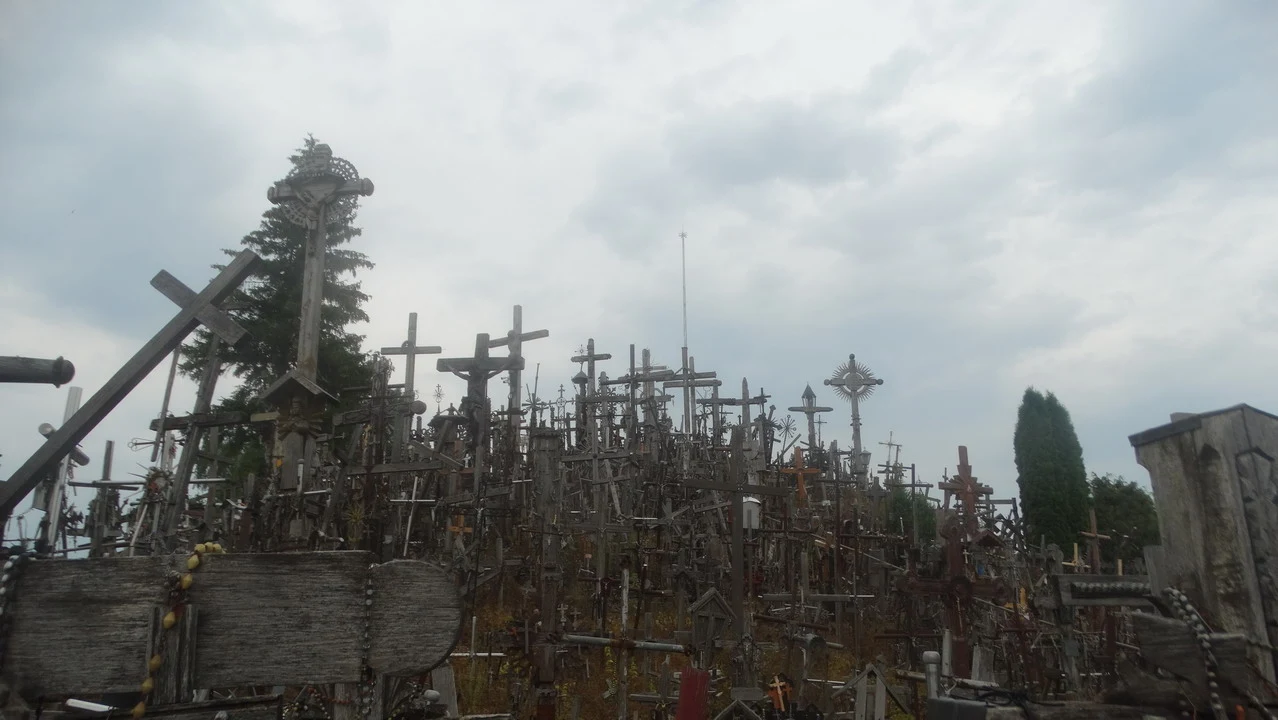
It's hot, with a temperature of 32° and high humidity due to the presence of lakes nearby. We head towards Siauliai, first by highway in the direction of Klapeida, then on comfortable roads. We arrive around 6:30 PM. We immediately go to... Hill of the Crosses 10 km north of the city center, which represents the only reason to reach the area. The sky is overcast but does not threaten rain; there are few people on site, which gives the environment an additional mystical significance. Since the Middle Ages, people have come to this place to... bring a cross... whatever the reason and size. The Soviet criminal fury repeatedly flattened the hill and destroyed the crosses, but human persistence (perhaps even more than divine will) ensured that everything soon returned to normal. The strength of willpower can overcome the armored vehicles' defenses, spiritual motivations add a touch, but the first remains crucial. A few years ago, there were reportedly 100,000 crosses; now, there will be many more, impossible to count or even estimate. The scene is not aesthetically pleasing: weeds creep between the crosses, which are usually made of wood and have a grayish color due to the weather. The sacredness of the place comes from its history, its reasons, from those who passed through here to ask or thank, or simply to offer a testimony in favor of those for whom those crosses truly had a meaning of suffering. There is a serious but at the same time serene atmosphere, as if the presence of all these testimonies of hope and faith could refresh anyone taking a walk around the hill and along the paths that delimit the various parts of the site.
Politics and society
Here, it's important to touch on a theme that represents a constant of our journey, a guiding thread for those visiting the Baltic countries. This year marks the thirtieth anniversary of the "new" independence, as a fleeting two-decade period already existed between the world wars. However, unlike other satellite countries like Poland and Hungary, this territory was an integral part of the Soviet Union. And the situation becomes much more serious: Russification was definitely more pronounced, with forced immigration and emigration, imposed language, and the direct presence of the KGB in central buildings and other aspects that characterized the previous regime. Even today, the fear of being absorbed by the powerful neighbor remains a significant source of anxiety, which is why there was a rushed entry into NATO, the EU, and immediate adoption of the Euro, in an attempt to reach irreversible points that would prevent us from once again being under forced foreign control, specifically Moscow in this historical context. It should not be forgotten that Russians (Zarist or Soviet) have dominated the last two centuries, while previously there were long Polish, Swedish, and Prussian occupations. 30 years have brought incredible development to Estonia, Lithuania, and Latvia, but they have not erased the past, which still exists in the form of popular architectural structures consisting of dilapidated buildings where people live as if in a cage. Estonia has a language and culture similar to Finland and has been somewhat adopted by Helsinki, which is only 80 km away. Thanks to Scandinavian and general European investments, it has managed to recover remarkably. Lithuania is historically more closely linked to Poland, which extended its sphere of influence by supporting the young neighbor. Finally, Latvia is part of the Baltic region and has had fewer opportunities to connect with a leading nation, but development is evident everywhere. In any case, we have confirmation that the Baltic republics were the most developed from an economic point of view and therefore served as an example for the rest of the USSR. This led to some small privileges in terms of art, culture, perhaps even practical/economic aspects, certainly not from an ideological or political perspective. Being different cultures ethnically and with a spirit of immediate independence, they were under special surveillance by the KGB and other control agencies.
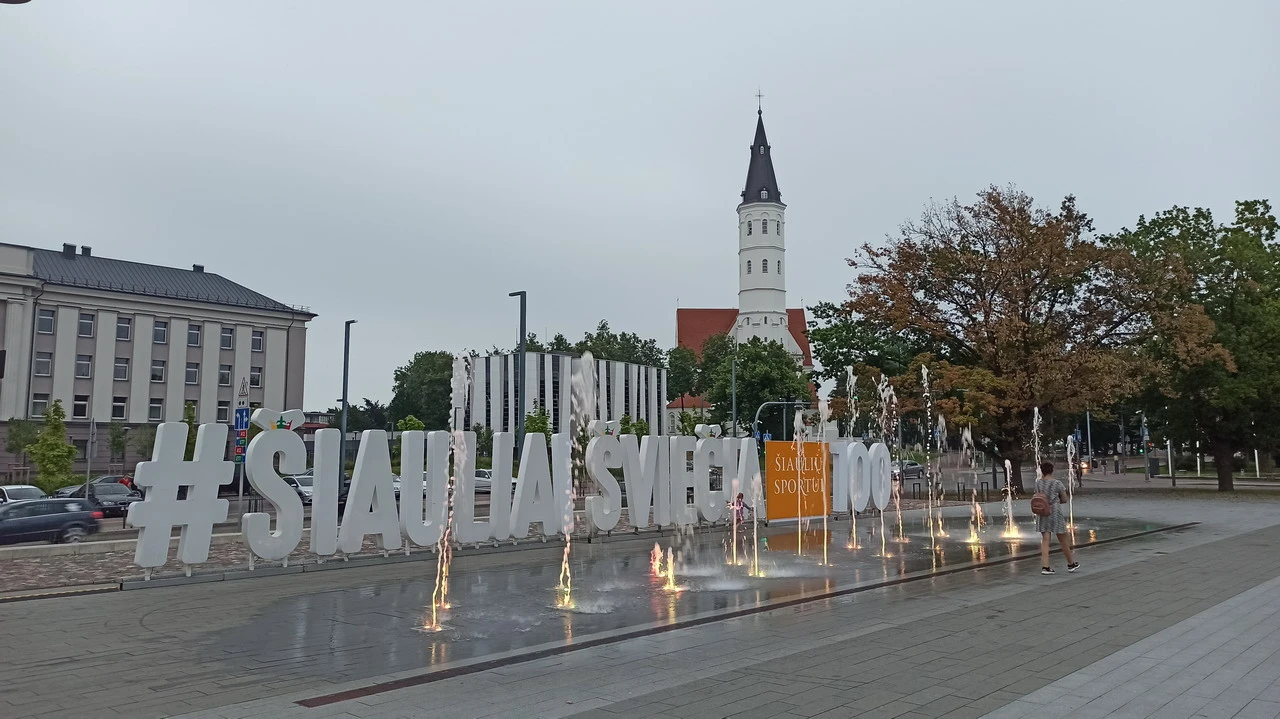
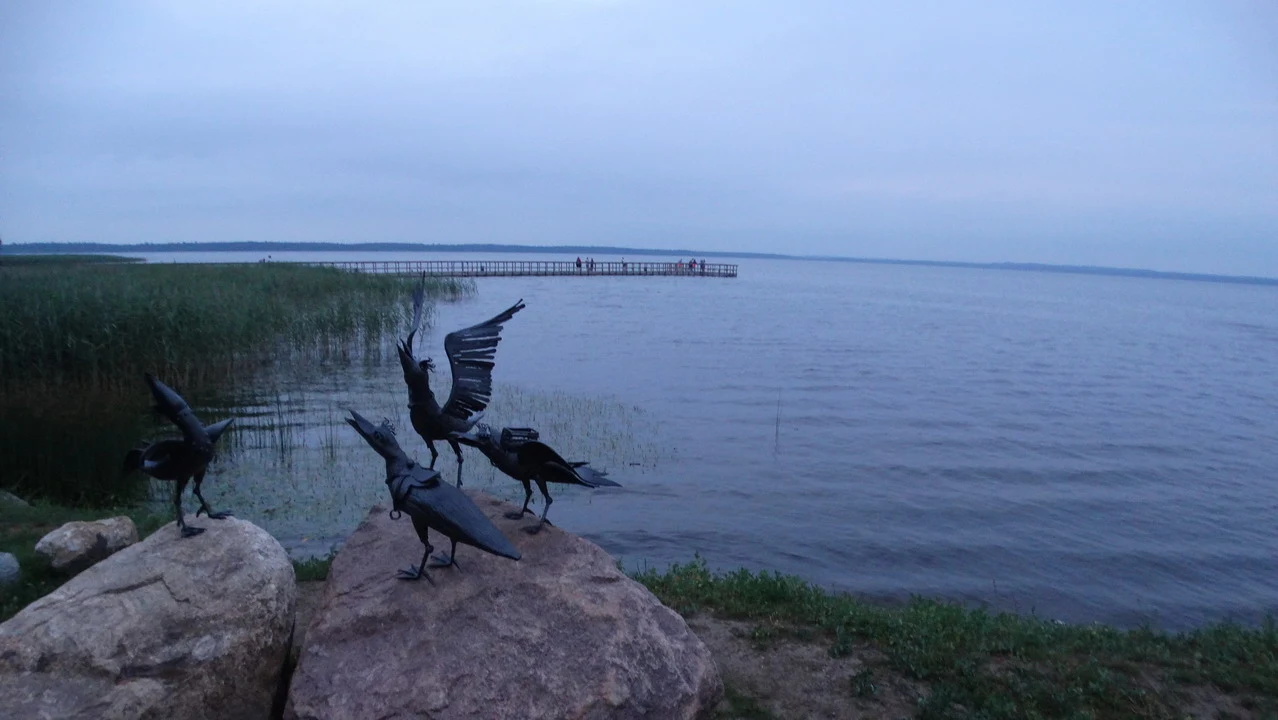
The day is coming to an end, and we also think it's time to set the GPS towards the hotel, which is located on the shore of a lake. We go for dinner in the city center, where it starts to rain, at Arkus to enjoy the first Lithuanian specialties in a historic setting. A walk around... central modern square at whose edges are located the Church and the most commercial districts; it's time to return for a walk along the lake, it's 10:00 PM (we are an hour ahead of Italy), and there are still some parents playing with their children in the water. The magic of long Nordic days mixed with the strangeness of unusually warm weather. We retire for a relaxing night in a room with a sloping ceiling. window overlooking the lake, decorated in a Nordic style, with plenty of wood and lamps to create a magical atmosphere.