

Day 9
Boston
Boston: a vibrant mix of old and new. The origins of a nation and its development.
The urban face of Live Boston
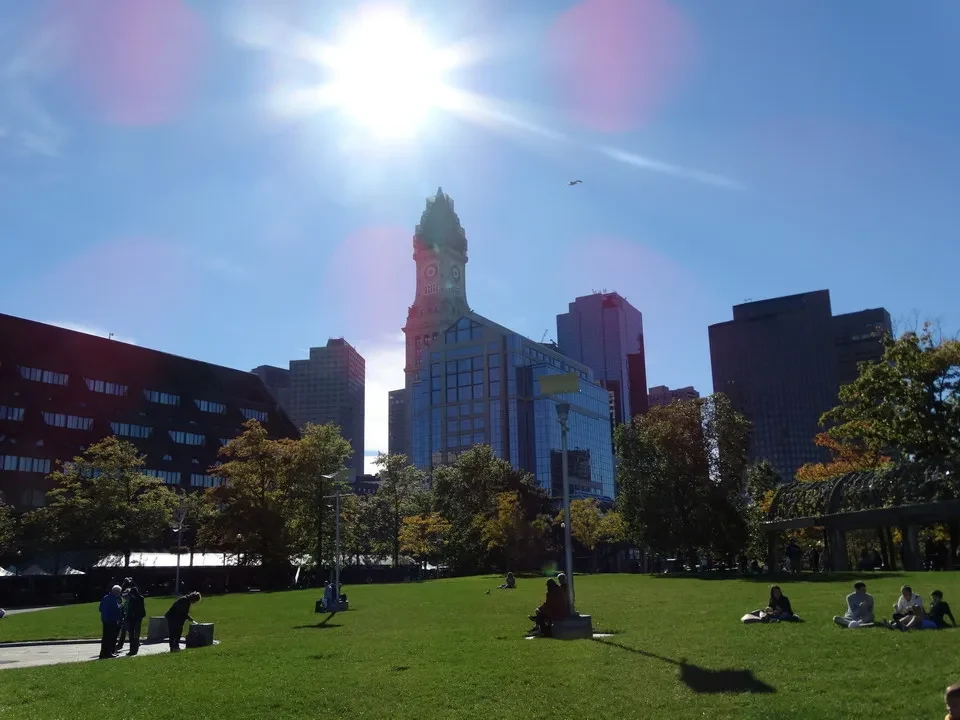
The extensive outskirts of Boston require about 45 minutes on the highway to reach the first destination today: Cambridge, which is. Harvard, where the first is the name of the town that hosts the famous university – quite a coincidence! Also here, nothing particularly striking; life flows quietly on campus with young people from wealthy backgrounds, moving at their own pace. After all, a yearly tuition of $30,000 isn't affordable for everyone. We get back in the car and are now in Boston, parking near a gas station. Trinity Church "offers" parking spaces for just $20 per day, while others in the area charge up to $40. From here we begin our visit of the metropolis, going to see the... inside of Trinity The main curiosity is seeing the neo-Romanesque place of worship surrounded by skyscrapers with glass facades that reflect the small church, creating a contrast not only between ancient and modern but also between the material and the spiritual. We continue on Boylston Street, starting from... Public Garden Let's start the Freedom Trail, which is about 4 kilometers long. We will actually deviate from it almost immediately to follow another route. Black Heritage Trail (which is of relative interest) that takes us to an old black neighborhood during the time when Boston represented American avant-garde against slavery. Returning to the original Freedom route, we start from Beacon Hill where the golden dome of the State House stands out, which we initially mistake for a mosque. The city seems almost designed for the path marked on the ground by a red line to guide tourists.
Next, we will see:
Old State House
– Old State House, also surrounded menacingly by skyscrapers that surrounds it in an unreal shadow, illuminated by the reflection of the windows;
– Place of massacre, perpetrated by British soldiers in 1770 against the local population;
Fanheuil Hall
– We cross the Rose Kennedy Greenway, a wide green space created on the site previously occupied by a section of an underground urban highway.
Little Italy
– Little Italy in the North End
Museums and memory in Live Boston
– Dog Tag Garden Memorial As a memorial to the fallen from the wars in Afghanistan and Iraq, located near the Old North Church; there is a plaque for each of them with their name inscribed (similar to those for dogs). No matter what angle you view it from, the fact remains that many young lives have been tragically and, one might add, unnecessarily cut short.
– Copp's Hill Burial Ground, historic city cemetery
We cross the bay to reach:
Fregata USS Constitution
– Fregata USS Constitution, built in 1797, whose oak wood armor was even able to deflect cannon fire. Here we are carefully checked and the backpack is passed through a metal detector: the ancient ship belongs to the Navy, and caution is essential.
Arrival at Live Boston
– Bunker Hill Monument... an obelisk with a spiral staircase inside, which has 294 steps and allows you to see the entire city. The queue inside the narrow staircase is certainly not ideal for those who suffer from claustrophobia.
We have always maintained that if you want to see historical cities, it's best to stay in Europe or go to Asia, but Boston is capable of changing our minds. We shouldn't expect ancient artifacts, however, there is plenty of interesting material to observe.
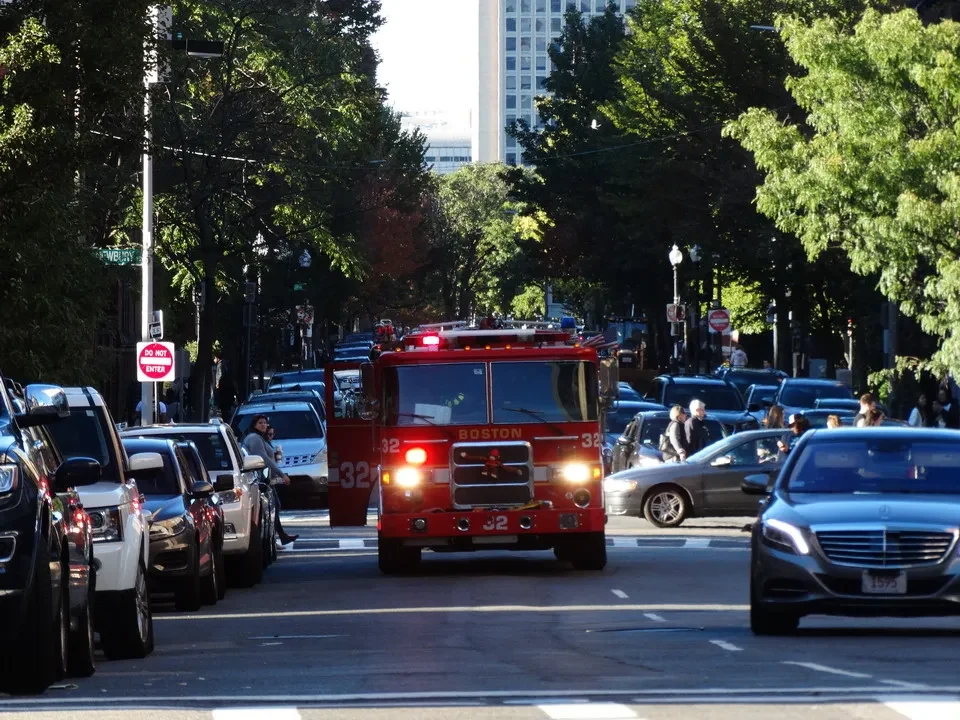
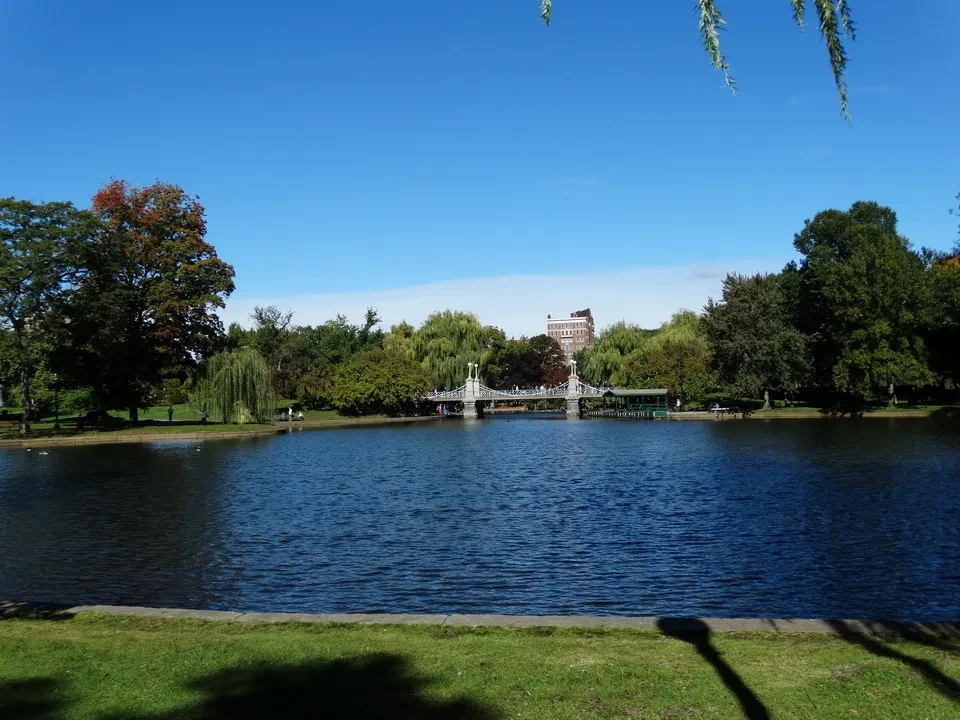
The Trail is closed, so we'll head out to see the Waterfront, which is usually bustling with people on a typical Saturday afternoon. Even in Boston, the old docks have been transformed into luxury residential buildings and office complexes, seamlessly integrated without any extravagance. We will cross the... Financial District we arrive at Chinatown. Similar to the Chinese district of other cities, but nothing comparable for example to San Francisco. It's getting late, our journey is about to end and the tiredness of those who have done everything possible to see and remember. how it appeared before us I begin to make its presence felt: we spend our last moments in a Vietnamese restaurant that takes us back a few years. We go to pick up the car, while driving along a city park where a group of ducklings crosses the lake water. Even though we are not flying, but crossing the lake on foot, we also set off to cross the lake called the Atlantic Ocean. But before that, just two steps to see Fenway Park: not a park as we understand it, but rather the stadium where the legendary Red Sox play. It's amazing to find yourself in front of such a monument, and also to understand something about baseball...
At this point, it's really over. We head to the airport with plenty of time to spare, where we pay our respects before departing. 9/11 Memorial One shouldn't forget that the two planes that exploded inside the Twin Towers took off from Logan Airport in Boston, and it is heartbreaking to think that we are walking in the same footsteps as those lives that 14 years ago passed through here and would have remained so for a little while longer. No forgiveness is possible or deserved; instead, remembering them is essential. It's a shame that the Memorial is quite hidden and few people know where it is located. When we are just a few meters away and ask a taxi driver standing in front of the Sheraton for directions, he doesn't even know which monument we are talking about. We wish him not to take the wrong flight one day.






COMMENTS:
Politics and society
The refined and civil wealth seen in many homes, far removed from the ostentatious splendor of Newport's villas, nevertheless creates a contrast with other types of housing that have fallen into disrepair. From this perspective, the American stereotype is confirmed, which sees opposing situations: the middle class of European style struggles to find space. A good example are the frequent second-hand shops. Alongside vintage and still usable pieces for decorative purposes after cleaning and painting, there is another type of merchandise more suitable for customers with limited funds. In essence, these are vendors who display whatever they have collected around. Work is generally available: everywhere you can find signs saying "help wanted," especially in commercial establishments, but the wages probably aren't sufficient to generate enough wealth to create a middle social class. What is lacking, however, are American flags, practically one in front of every house. Even in the green cemeteries where the gray of the tombstones stands out, you can often see small flags with stars and stripes. We have no way of verifying whether they belong to soldiers who died in service or to people with a strong sense of patriotism. However, there are many.
In general, the character of the average American is very different from the stereotype we have in Europe. Perhaps the epic cinematic image of the cowboy rather than the gangster, combined with a political stance that wants the US to play the role of an arrogant world policeman, tends to lead us to have a distorted view of the ordinary citizen. I had already encountered this system of civil relations on previous trips, characterized by a marked respect for others and attention to avoid causing any disturbance or harassment. Moreover, people are very willing to help anyone who needs it, even just with information, without any ulterior motives, but with a concrete focus on solving the problem. This also reflects the public sector: as an example, consider the attention given to people with disabilities, with parking spaces, removal of architectural barriers and everything else that can facilitate their movement; the prevention of road accidents is almost obsessive. The impression is that this comes from a strict education received at school and in the family, which makes the attitudes seem almost professional. The towns of New England are very different from these metropolitan areas, but in our neighborhoods (metropolitan or not), the way of interacting remains very different.